Birth in the Capital
Born in Yingtian (Nanjing) as the second son of Zhu Yuanzhang by Empress Ma.
朱樉
Zhu Shuang (朱樉, 1356–1395) was an imperial prince of the Ming Dynasty, the second son of Emperor Taizu (Zhu Yuanzhang) by Empress Ma (Empress Xiaocigao). Initially created Prince of Qin, he was given the posthumous title "Min," being historically known as Prince Min of Qin. As the senior prince among Emperor Taizu's sons, his house was celebrated as the "Premier Princedom under Heaven." In April 1370 (third year of the…
Zhu Shuang (朱樉, 1356–1395) was an imperial prince of the Ming Dynasty, the second son of Emperor Taizu (Zhu Yuanzhang) by Empress Ma (Empress Xiaocigao). Initially created Prince of Qin, he was given the posthumous title "Min," being historically known as Prince Min of Qin. As the senior prince among Emperor Taizu's sons, his house was celebrated as the "Premier Princedom under Heaven." In April 1370 (third year of the Hongwu reign), Zhu Shuang was created Prince of Qin during the dynasty's first mass investiture of imperial sons. In April 1378 (eleventh year of the Hongwu reign), having undergone his capping ceremony, he departed Nanjing to assume residence at his designated princely seat in Xi'an Prefecture, Shaanxi. Xi'an was the ancient capital of the Han and Tang dynasties and the paramount strategic fortress of the northwest. Emperor Taizu granted Zhu Shuang extensive political and military powers, charging him with the supervision of all garrisons across Shaanxi and Gansu. Zhu Shuang commanded multiple successful northwestern campaigns, suppressing Qiang rebellions in Taozhou, taking tens of thousands of enemy captives, and pacifying over twenty border tribes. However, Zhu Shuang developed an autocratic, violent, and insolent disposition in Xi'an. Within his palace, he unlawfully manufactured imperial garments, executed soldiers and commoners without trial, and imposed harsh corporal mutilations. He neglected his primary consort Lady Wang (sister of Northern Yuan general Köke Temür) while excessively favoring secondary consort Lady Deng (daughter of grand general Deng Yu). In 1391, enraged by his rampant transgressions, the Hongwu Emperor summoned Zhu Shuang to Nanjing and placed him under house arrest, contemplating stripping him of his princely rank. Only the fervent intercession of his elder brother Crown Prince Zhu Biao secured his pardon. In 1395, following another victorious expedition to pacify Taozhou rebels, Zhu Shuang died suddenly of illness in Xi'an at the age of forty. Emperor Taizu granted him the posthumous title "Min" (denoting regret and sorrow for unfulfilled virtue) and personally composed a funerary stele enumerating his misdeeds as a warning to posterity.
Born in Yingtian (Nanjing) as the second son of Zhu Yuanzhang by Empress Ma.
Formally created Prince of Qin, taking preeminence as the head of all regional princes.
Married the younger sister of Northern Yuan general Köke Temür (Wang Baobao) as primary consort.
Departed Nanjing to take up residence in Xi'an, commanding the regional defenses of the northwest.
Commanded imperial generals to crush the Taozhou rebellion, pacifying dozens of indigenous tribes.
Recalled to the capital in disgrace for tyranny; spared and restored through Crown Prince Zhu Biao's pleas.
Led imperial frontier armies on a punitive campaign across Lintao and Taozhou, achieving total victory.
Died suddenly upon return to Xi'an at age forty; Emperor Taizu bestowed the posthumous title Prince Min.
Zhu Shuang was born on December 3, 1356, during the chaotic final years of the Yuan Dynasty, the second legitimate son of Zhu Yuanzhang by his first wife, Lady Ma. Growing up alongside his elder brother Crown Prince Zhu Biao during his father's warlord campaigns, Zhu Shuang enjoyed deep parental affection and was recognized early as an energetic, formidable prince.
On May 2, 1370 (third year of Hongwu), Emperor Taizu conducted his inaugural princely investiture in the Fengxian Palace in Nanjing. The fourteen-year-old Zhu Shuang was invested as Prince of Qin. Historically, "Qin" designated the ancestral heartland of the Guanzhong basin. By assigning this premier peerage to his second son, the emperor positioned him as the foremost guardian of the dynasty.
In October 1371, seeking to persuade Northern Yuan grand general Köke Temür (Wang Baobao) to submit to Ming suzerainty, Emperor Taizu arranged for Zhu Shuang to marry Köke Temür's younger sister, Lady Wang. In 1375, the emperor arranged a second marriage for Zhu Shuang, taking the eldest daughter of dynastic founding pillar Deng Yu (Duke of Weiguo) as his secondary consort.
In April 1378, following his capping ceremony, Zhu Shuang departed Nanjing to establish his princely seat in Xi'an Prefecture, Shaanxi.
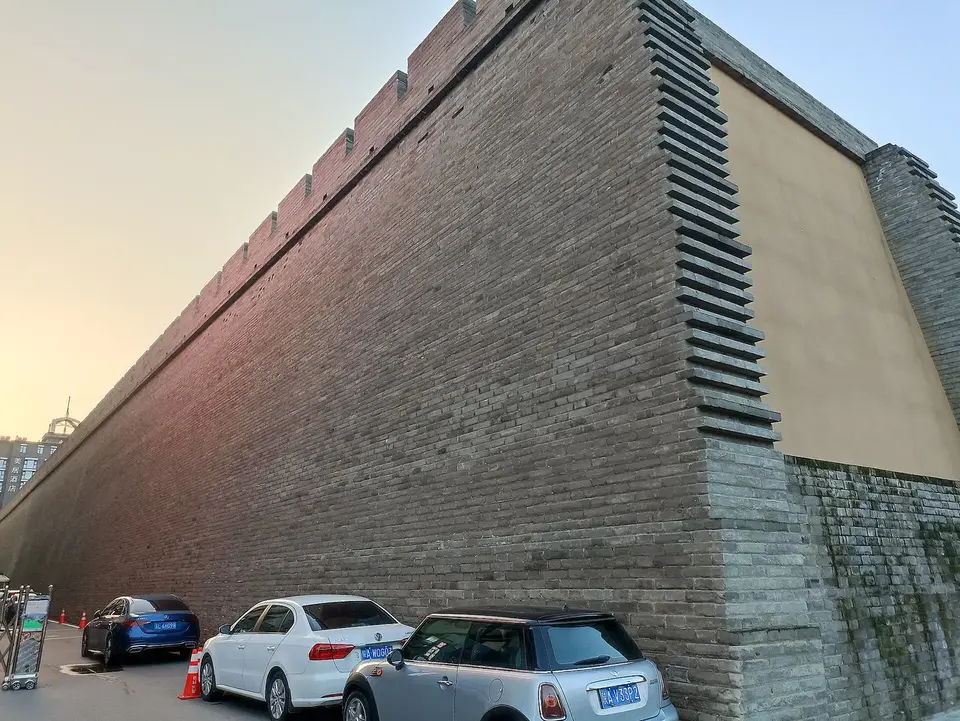
As the historic capital of ancient empires, Xi'an guarded the approaches to Central Asia and the northern steppes. To project dynastic majesty, Emperor Taizu mobilized garrison troops to construct the formidable Xi'an Prince of Qin Palace (the "Wangcheng"). The compound was protected by massive stone ramparts and majestic gates. The Hongwu Emperor granted Zhu Shuang direct command over the Shaanxi Regional Military Commission and all border garrison detachments, making him the supreme military commander of the northwestern frontier.
In 1389, Tibetan and Qiang tribes around Taozhou in Gansu launched a major uprising, cutting off vital trade routes into the Western Regions. Emperor Taizu ordered the Prince of Qin to assume overall command of the campaign. Zhu Shuang directed imperial division commanders with tactical skill, defeating the insurgents, beheading and capturing more than ten thousand rebels, and seizing tens of thousands of horses and cattle. Over twenty indigenous tribes submitted to imperial rule. The emperor was delighted, issuing an imperial commendation celebrating Zhu Shuang's military achievements.
Despite his military successes, Zhu Shuang grew increasingly reckless, cruel, and abusive.
Within his walled palace in Xi'an, he constructed unlicensed buildings and manufactured five-clawed yellow robes and nine-dragon thrones reserved exclusively for the emperor. In his daily affairs, he inflicted horrific tortures—including castration, tongue excision, flaying, and facial branding—upon palace servants and soldiers, beating dozens to death. He imposed illegal corvee labor throughout Shaanxi, extorting private fortunes and seizing civilian women for his harem. Domestically, Zhu Shuang indulged his secondary consort Lady Deng, confining his primary consort Lady Wang (Köke Temür's sister) to an unheated rear courtyard on meager rations. Lady Deng also behaved arrogantly, secretly having imperial phoenix headdresses fashioned.
In 1391, Shaanxi civil inspectors secretly memorialized the throne, detailing twenty-eight major crimes committed by the prince. The furious Hongwu Emperor dispatched secret police to arrest Zhu Shuang and bring him in chains to Nanjing, while ordering Lady Deng to commit suicide. The emperor prepared to revoke his princely rank and banish him. At this critical juncture, Crown Prince Zhu Biao wept before their father, begging for mercy on grounds of fraternal love. In autumn 1391, Zhu Biao traveled to Shaanxi to inspect the princely administration personally and settle public unrest. Persuaded by the crown prince, Emperor Taizu relented and permitted Zhu Shuang to return to Xi'an in 1392.
Following his return to Xi'an, Zhu Shuang moderated his behavior. When Crown Prince Zhu Biao died in 1392, Zhu Shuang became the eldest surviving legitimate son of the Hongwu Emperor, elevating his dynastic seniority.
In January 1395, nomadic insurgents revolted anew in Taozhou. Recognizing Zhu Shuang's familiarity with northwestern geography, Emperor Taizu again entrusted him with supreme command. Zhu Shuang led frontier cavalry deep into the highlands, smashing rebel encampments and securing total pacification.
In March 1395, Zhu Shuang returned triumphantly to Xi'an. However, years of continuous military strain combined with heavy drinking took a lethal toll on his constitution. On April 9, 1395, Zhu Shuang died suddenly in his bedchamber at the age of forty. Contemporary rumors suggested that abused palace maids had poisoned his medicine, though official chronicles recorded only sudden natural death.
Following his death, his primary consort Lady Wang committed suicide to accompany him, and the court granted her an honorable burial. Mourning his son's premature death while condemning his lifelong misconduct, Emperor Taizu chose the posthumous title "Min" (denoting regret for unfulfilled promise), making him Prince Min of Qin. The emperor personally composed the funerary epitaph detailing Zhu Shuang's sins as a cautionary tale for royal descendants. His fourteen-year-old son Zhu Shangbing succeeded him as the second Prince of Qin. The Xi'an Qin princely lineage flourished for sixteen generations across two hundred and seventy-three years, lasting until Li Zicheng's forces conquered Xi'an in 1643.
As the senior regional prince created by Emperor Taizu, Zhu Shuang combined formidable northwestern military prowess with egregious tyranny, standing as a vivid portrait of early Ming princely contradictions.
The History of Ming recorded in summary: "Zhu Shuang, Prince Min of Qin, was the second son of Taizu. Enfeoffed in the 3rd year of Hongwu, he relocated to Xi'an in the 11th year. Commanded to supervise frontier expeditions, he pacified the Guanlong region. Yet in his princedom he committed many unlawful acts. Taizu repeatedly summoned and reprimanded him, and he was preserved only through the mediation of the Crown Prince. Returning from Taozhou in the 28th year, he died suddenly. The Emperor composed a text condemning his faults and posthumously titled him Min."
Early Qing historian Tan Qian noted in State Deliberations: "The Qin princedom was the foremost under heaven, guarding the imperial foundation in the northwest. Prince Min was valiant and daring, achieving great victories on the western borders. Yet his unrestrained cruelty and defiance of the law nearly cost him his head. Taizu's profound forbearance and Crown Prince Biao's fraternal devotion preserved his status, but the posthumous name 'Min' remains a timeless lament."
Modern historians view Zhu Shuang as both the founder of the prestigious Xi'an Qin princely establishment and a quintessential example of the systemic dangers inherent in the early Ming policy of granting vast military commands to regional princes, which directly precipitated the Jianwen purges and the later institutional disempowerment of the imperial clan.
FIGURES ASSOCIATED WITH THIS DYNASTY