Birth in Yingchuan
Born in the cultural heartland of Yingchuan; reared with a resolute moral disposition and spiritual ambition
朱士行
Zhu Shixing, monastic name Bajie, was a pioneering Buddhist monk and translator of the Cao Wei and early Western Jin dynasties from Yingchuan Commandery. He was the first ethnic Han Chinese to receive full monastic ordination according to formal Indian Vinaya precepts, and the first Chinese pilgrim in history to undertake an expedition to Central Asia in search of original Sanskrit Buddhist sutras. In 250, when the Indian…
Zhu Shixing, monastic name Bajie, was a pioneering Buddhist monk and translator of the Cao Wei and early Western Jin dynasties from Yingchuan Commandery. He was the first ethnic Han Chinese to receive full monastic ordination according to formal Indian Vinaya precepts, and the first Chinese pilgrim in history to undertake an expedition to Central Asia in search of original Sanskrit Buddhist sutras. In 250, when the Indian Vinaya master Dharmakala established the first formal ordination platform at Baima Temple in Luoyang, Zhu Shixing was the first to ascend the altar, receiving the monastic lineage. While lecturing on the early translation of the Perfection of Wisdom Sutra in 8,000 Lines (Daoxing Banruo Jing) in Luoyang, Zhu Shixing realized that existing translations suffered from omissions, dialect errors, and doctrinal fragmentation. Vowing to recover the complete Mahayana scriptures, he led disciples westward from Yongzhou in 260. Enduring lethal perils across the Taklamakan Desert, he reached the kingdom of Khotan (present-day Hotan, Xinjiang), the premier center of Mahayana Buddhism in Central Asia. In Khotan, he copied ninety chapters of the Larger Prajnaparamita totaling 600,000 Sanskrit words. In 282, his disciples escorted the precious manuscripts to China, where they were translated into the twenty-volume Fangguang Prajnaparamita Sutra, fundamentally transforming Chinese Buddhist philosophy. Zhu Shixing remained in Khotan until his death in 282 at eighty, pioneering the heroic pilgrimage tradition that later inspired Faxian and Xuanzang.
Born in the cultural heartland of Yingchuan; reared with a resolute moral disposition and spiritual ambition
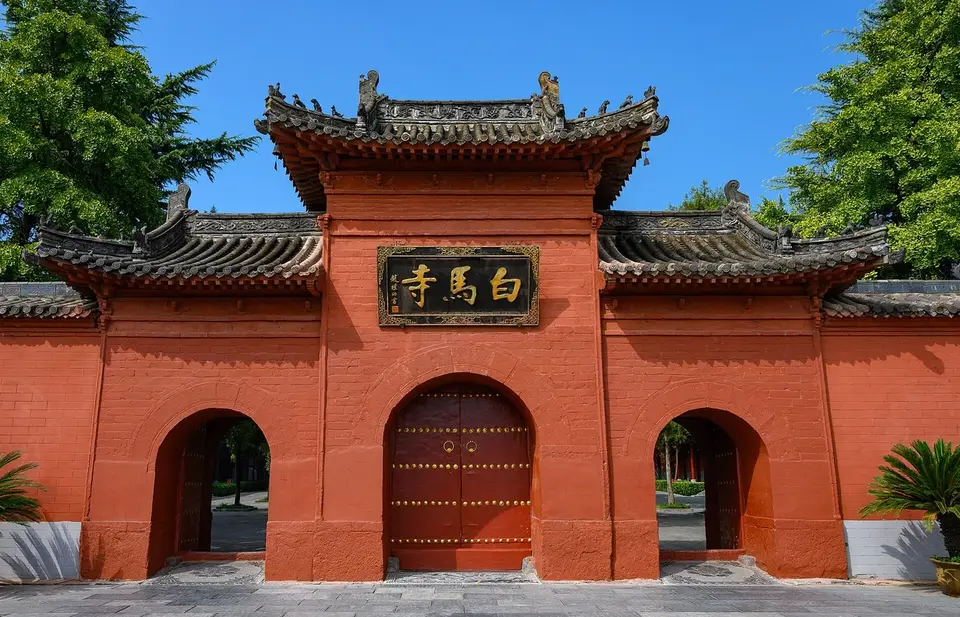
Indian master Dharmakala built the first Vinaya altar at Baima Temple; Zhu Shixing became the first ordained Han Chinese monk
Lectured on the Daoxing Banruo Jing in Luoyang, lamenting that early translations obscured Buddhist philosophy
Embarked from Yongzhou across the western deserts, braving sandstorms to reach the kingdom of Khotan
Dispatched disciples to transport the Sanskrit text to Luoyang; passed away in Khotan at eighty years of age
Zhu Shixing hailed from Yingchuan in the Central Plains. The sixth-century Buddhist chronicle Records of the Collection of the Tripitaka by Sengyou described him as "pure in spiritual purpose, radiant in character, unbending in rectitude, and immovable by threats or dissuasion." Confronting the constant warfare of the late Han and Three Kingdoms periods, Zhu Shixing sought spiritual truth through the Dharma. Although Buddhism had reached China two centuries earlier, Chinese monks had merely shaved their heads without receiving formal ordination under the Vinaya (monastic legal code). In 250, the Central Indian master Dharmakala arrived in the Cao Wei capital Luoyang. Distressed that Chinese monks lacked regular monastic disciplines, Dharmakala translated monastic statutes and erected an ordination altar at Baima Temple. Zhu Shixing was the first to ascend the altar to take the full Pratimoksha vows, receiving the Dharma name Bajie and becoming the first historically verified fully ordained Han monk in China.
Settling in Luoyang, Zhu Shixing studied the Daoxing Banruo Jing translated by the Kushan monk Lokaksema. As he delivered lectures to monks and laymen, Zhu Shixing observed severe textual defects: the translators had abridged difficult philosophical passages and smoothed complex Sanskrit logic into Daoist terminology, distorting the doctrine of emptiness (sunyata). Convinced that without the original Indian Sanskrit manuscripts the sublime meaning of the Mahayana could never be unlocked, Zhu Shixing learned that full Sanskrit texts of the Larger Prajnaparamita were preserved in the Western Regions. He resolved to journey west across the deserts to locate the authentic texts.
In 260, Zhu Shixing and a small retinue of disciples left Yongzhou, crossing the Jade Gate Pass into the Taklamakan Desert. Navigating dry waterholes, scorching sandstorms, and bandit ambushes, several companions perished, yet Zhu Shixing pressed forward. After an exhausting multi-year trek, he arrived in the Oasis Kingdom of Khotan along the southern Silk Road.
Khotan was an illustrious bastion of Mahayana Buddhism, home to thousands of monks and extensive libraries. In Khotan's grand monasteries, Zhu Shixing discovered the complete Sanskrit palm-leaf manuscript of the Larger Prajnaparamita. Employing scribes, Zhu Shixing spent years meticulously transcribing the text, producing ninety chapters and over 600,000 Sanskrit words packed into dozens of cases.
When Zhu Shixing prepared to dispatch the manuscripts to Luoyang, conservative Hinayana monks in Khotan intervened, warning the King of Khotan: "This Chinese monk seeks to export heretical Brahmanic texts to corrupt the Han empire; if the King permits their export, the Dharma will be ruined!" Paralyzed by sectarian intrigue, the king prohibited the transport of the texts.
Distressed by this obstacle, Zhu Shixing demanded a public trial by fire before the king, nobility, and clergy. Piling dry wood in the royal courtyard, Zhu Shixing cast the Sanskrit palm-leaves toward the flames, praying: "If this scripture is the true Word of the Tathagata destined to illuminate China, let it not burn; if it is false, let it turn to ash!" The fire roared, yet when the flames subsided, the palm leaves remained completely uncharred, their ink fresh and radiant. Overwhelmed with awe, the king fell to his knees in repentance, immediately granting royal escorts to protect the scriptures.
In 282, realizing that age and infirmity barred him from surviving the return journey across the desert, Zhu Shixing entrusted the Sanskrit texts to his chief disciple Punyadhana (Fu Rutai) and nine companions to transport them east.
The arrival of the Sanskrit corpus in Luoyang astonished the Western Jin court. In 291, Indian master Moksala and layman Zhu Shulan translated the manuscript at Shuinan Temple in Chenliu, producing the twenty-volume Fangguang Prajnaparamita Sutra. This definitive translation ignited intense intellectual debates across northern and southern China, fostering the Prajna schools that shaped Chinese Buddhism.
Zhu Shixing remained in Khotan, preaching and meditating until his death in 282 at eighty years of age. When his body was cremated, his bones remained intact amid the embers until sprinkled with consecrated water, astonishing regional witnesses.
Zhu Shixing was the first Chinese monk in history to travel to Central Asia in search of primary Sanskrit scriptures. Preceding Faxian by 140 years and Xuanzang by nearly four centuries, his courageous expedition established the great tradition of Chinese Buddhist pilgrimage.
His recovery of the Fangguang Prajnaparamita freed Chinese Buddhism from crude reliance upon Huang-Lao Daoist metaphors, providing the comprehensive textual foundation for the Madhyamaka, Sanlun, Tiantai, and Chan traditions.
Ascending the altar at Baima Temple in 250, Zhu Shixing established regular monastic ordination in China, inaugurating the formal Chinese Sangha.
FIGURES ASSOCIATED WITH THIS DYNASTY