Birth in Xin'an
Born into a farming and scholar family in Taizishang Village, Jiongxi Township, Xiuning County, Huizhou; precocious and diligent from youth.
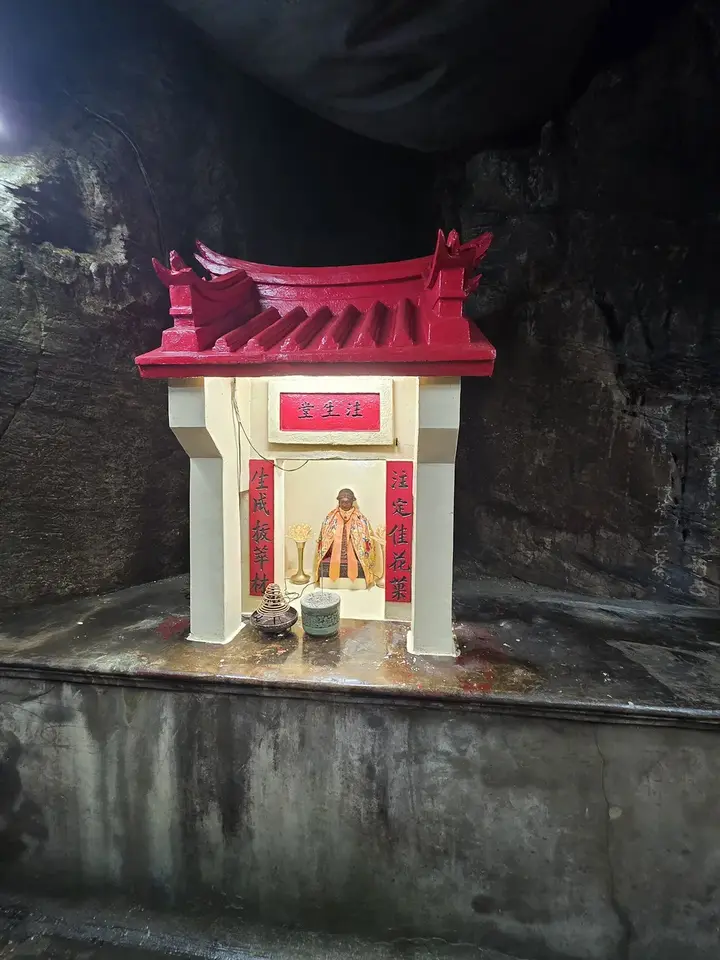
朱升
Zhu Sheng (朱升, 1299 – December 1370), courtesy name Yunsheng and pseudonym Master Fenglin, was a native of Xiuning, Huizhou (modern Xiuning County, Huangshan City, Anhui Province). He was a renowned Neo-Confucian philosopher, classicist, educator, and premier founding strategist of the Ming Dynasty. In his early years, he immersed himself in Xin'an Neo-Confucianism under the eminent master Chen Lie. During the Yantong and…
Zhu Sheng (朱升, 1299 – December 1370), courtesy name Yunsheng and pseudonym Master Fenglin, was a native of Xiuning, Huizhou (modern Xiuning County, Huangshan City, Anhui Province). He was a renowned Neo-Confucian philosopher, classicist, educator, and premier founding strategist of the Ming Dynasty. In his early years, he immersed himself in Xin'an Neo-Confucianism under the eminent master Chen Lie. During the Yantong and Zhizheng eras of the Yuan dynasty, he lectured at the Ziyang Academy and Shimen Academy, placed second in the Jiangzhe provincial civil service examination, and served as Confucian Director of Studies of Chizhou Route and Vice Commissioner of Confucian Studies of Jiangdong, winning broad renown across southern China for unblemished virtue and canonical erudition. During the chaotic collapse of the Yuan dynasty as rival warlords contended for supremacy, Zhu Yuanzhang captured Huizhou in 1357. Eager to recruit seasoned talent, Zhu Yuanzhang traveled in plain clothes to visit Zhu Sheng in his secluded retreat in the Shimen Mountains of Xiuning. Discerning the broader geopolitical landscape, Zhu Sheng offered the monumental nine-character strategic maxim that anchored the foundation of the Ming Dynasty: "Build high walls, store abundant grain, and be slow to claim the kingship." This strategic blueprint enabled Zhu Yuanzhang to accumulate military strength, fill state granaries, avoid becoming the primary target of competing warlords and the Yuan imperial court, and ultimately secure total victory across China. Following the founding of the Ming Dynasty, Zhu Sheng entered the central administration as Academician Reader-in-Waiting of the Hanlin Academy, Grand Master of Forthright Consultation, Drafter of Imperial Edicts, and Compiler of National History. Constantly attending Emperor Taizu, he participated in drafting founding edicts, standardizing ancestral temple rituals, compiling the Precepts for Women, and determining the Confucian curriculum for imperial examinations. In 1369, perceiving the volatility of court politics, seventy-year-old Zhu Sheng resolutely retired from public office, requesting an imperial certificate of immunity to safeguard his descendants. In the winter of 1370, he passed away peacefully at home at age seventy-one. His scholarly legacy encompasses dozens of comprehensive canonical works, including Interlinear Annotations on the Four Books, Interlinear Annotations on the Five Classics, and Collected Works of Master Fenglin, earning him enduring veneration as a Confucian master and founding statesman.
Born into a farming and scholar family in Taizishang Village, Jiongxi Township, Xiuning County, Huizhou; precocious and diligent from youth.
Studied under Xin'an Neo-Confucian master Chen Lie for seventeen years, analyzing the classics and earning high praise from examiners for his lucid prose.
Traveled to Penpu (modern Jiujiang, Jiangxi) with fellow scholar Zhao Fang to study the Book of Changes and Spring and Autumn Annals under master Huang Ze.
Lectured at Ziyang Shrine in Huizhou and began compiling interlinear commentaries; placed second in the Jiangzhe provincial civil examination; subsequently observed four years of mourning for his parents.
Appointed Confucian Director of Studies of Chizhou Route; eliminated corruption, restored academy kitchens, and delivered daily dawn lectures, attracting scholars from across the Yangtze valley.
Following the eruption of the Red Turban Rebellion, retired to the secluded Shimen Mountains in Xiuning, living as an ascetic hermit and writing tirelessly.
After capturing Huizhou, Zhu Yuanzhang visited Zhu Sheng at his mountain retreat; Zhu Sheng proposed the grand strategy: "Build high walls, store abundant grain, and be slow to claim the kingship."
When Zhu Sheng completed a new study tower, Zhu Yuanzhang dispatched messengers with his personal calligraphy reading "Plum Blossoms and Crescent Moon."
Summoned to Jiankang (Nanjing); appointed Academician Reader-in-Waiting of the Hanlin Academy, Drafter of Imperial Edicts, and Compiler of National History.
Accompanied the emperor to Kaifeng; standardized seasonal ancestral temple rites, drafted palace edicts, compiled Precepts for Women, and was excused from exhausting daily dawn court bows.
Resolutely resigned at age seventy; Emperor Taizu hosted a farewell banquet and presented poems; Zhu Sheng requested an imperial pardon certificate to protect his son Zhu Tong.
Traveled across Jiangnan before returning home; passed away in the eleventh lunar month at age seventy-one.
Zhu Sheng was born in 1299 into a modest agrarian household in Taizishang Village, Jiongxi Township, Xiuning County, Huizhou. Located along the upper reaches of the Xin'an River in southern Anhui, Huizhou had been a vibrant cultural center since Zhu Xi established his Neo-Confucian school there during the Southern Song. Because Zhu Sheng was born at sunrise, his father Zhu Xiu named him Sheng (meaning ascent) and styled him Yunsheng to symbolize auspicious flourishing.
Precocious and attentive from childhood, Zhu Sheng enrolled at age eight in the village school of local scholar Jiang Minqiu, mastering foundational texts including the Classic of Filial Piety and the Analects. At twelve, he entered the academy of elder scholar Jin Zhaiyu in Haiyang, studying historical chronicles and ancient literature for four years until the aged master closed the school.
In 1315, sixteen-year-old Zhu Sheng became a disciple of Chen Lie, the premier Neo-Confucian master of the Xin'an tradition. Over seventeen years of discipleship, Zhu not only mastered the Four Books, Five Classics, and Song metaphysical treatises, but also critically questioned obscure passages, proposing original interpretations that earned Chen Lie's profound esteem. Chen Lie submitted Zhu's examination papers to Hu Bingwen, head of the Mingjing Academy, who lauded Zhu's prose as clean and penetrating, predicting he would become an intellectual luminary.
In 1343, hearing that renowned scholar Huang Ze was lecturing on the Book of Changes and the Spring and Autumn Annals at Penpu in Jiangxi (modern Jiujiang), forty-five-year-old Zhu Sheng joined fellow scholar Zhao Fang on an academic pilgrimage to seek his guidance. Studying under Huang Ze for a year broadened Zhu's philosophical horizons.
Returning to Huizhou in the spring of 1344, local gentry invited Zhu Sheng to oversee the Ziyang Shrine. He established regular lectures, attracting ambitious young literati, and conceived the project of compiling accessible interlinear commentaries for classical texts. In the autumn of 1344, Zhu sat for the provincial civil examination in Hangzhou, placing second among thousands of elite candidates from Jiangzhe. Soon afterward, both of his parents passed away, and Zhu observed four years of strict filial mourning, reading canonical works in seclusion.
In 1348, upon completing his mourning period, the Yuan administration appointed Zhu Sheng as Confucian Director of Studies of Chizhou Route. Although Chizhou possessed abundant school farmland, corrupt clerks and local elites had long embezzled revenues, leaving school buildings dilapidated and failing to provide students even one daily meal.
Upon arriving, Zhu Sheng acted decisively. Invoking ancient philosophical metaphors to reprimand negligent staff, he audited school accounts, expelled corrupt administrators, and overhauled dining hall finances to ensure that agricultural revenues supported student stipends and structural renovations.
Simultaneously, Zhu led by personal example, donning ritual attire at dawn to deliver daily lectures on the classics and Song metaphysics. His moral rigor and accessible teaching style galvanized regional scholarship, drawing scholars from across the Yangtze River valley to Chizhou and transforming the local school into a renowned center of learning.
In 1351, the Red Turban Rebellion erupted across the Huai River basin, plunging the Yuan empire into terminal crisis. In 1352, as Zhu Sheng's four-year term in Chizhou concluded, rebel armies swept into Huizhou, severing regional transport and sparking persistent warfare.
To shield his family from devastation, Zhu relocated to the rugged Shimen Mountains of western Xiuning. In a secluded mountain glen, he erected a thatched hermitage, farming to sustain himself. While many literati abandoned studies amid the turmoil, Zhu Sheng remained steadfast, studying canonical texts beside oil lamps.
During his years in Shimen, Zhu synthesized his scholarship into extensive written works, authoring interlinear commentaries on the Changes, Documents, Poetry, Rites, and Spring and Autumn Annals, alongside commentaries on Daoist and military texts. He gathered disciples within his hermitage, preserving core Confucian teachings during the transition between the Yuan and Ming dynasties.
In July 1357, rising warlord Zhu Yuanzhang captured Huizhou. Recognizing that imperial conquest required the strategic counsel of seasoned scholars, Zhu Yuanzhang traveled in plain attire to Shimen to recruit Zhu Sheng.
Fifty-nine-year-old Zhu Sheng was impressed by Zhu Yuanzhang's disciplined forces and statesmanlike demeanor, welcoming him into his cottage. When Zhu Yuanzhang earnestly inquired how to conquer the empire and bring peace to the people, Zhu Sheng offered his legendary strategic maxim: "Build high walls, store abundant grain, and be slow to claim the kingship."
Zhu Sheng provided a penetrating analysis of the geopolitical landscape: while the realm was fractured, the Yuan court retained formidable armies in the north, Zhang Shicheng controlled the wealthy commercial hubs of western Zhejiang, Chen Youliang commanded massive fleets along the middle Yangtze, and Fang Guozhen held the southeast coast. Most rebel chieftains had prematurely declared royal titles, exposing themselves to concentrated attacks from imperial armies and rival factions.
Zhu Sheng urged Zhu Yuanzhang to fortify existing defense bastions (build high walls), organize military agricultural colonies to amass grain reserves (store abundant grain), and deliberately refrain from proclaiming royal titles (be slow to claim the kingship). Zhu Yuanzhang embraced this counsel wholeheartedly, adopting the nine-character policy as his supreme operational doctrine throughout his subsequent campaigns.
Following Zhu Sheng's strategic formula, Zhu Yuanzhang prioritized agricultural production and territorial fortification while defeating Chen Youliang at Poyang Lake and Zhang Shicheng at Pingjiang. In 1358, learning that Zhu Sheng had built a new study at Shimen, Zhu Yuanzhang sent an imperial emissary bearing a commemorative plaque inscribed with his own calligraphy: "Plum Blossoms and Crescent Moon."
In the winter of 1367, having unified southern China and assumed the title King of Wu, Zhu Yuanzhang summoned Zhu Sheng to Jiankang. The sixty-nine-year-old scholar was immediately appointed Academician Reader-in-Waiting of the Hanlin Academy, Grand Master of Forthright Consultation, Drafter of Imperial Edicts, and Compiler of National History.
In the Hanlin Academy, Zhu Sheng attended the sovereign daily to advise on statecraft and draft critical proclamations. He submitted comprehensive geographical surveys of Zhejiang, recommending that imperial forces capture strategic border passes before laying siege to Pingjiang. In recognition of his advanced age and service, Zhu Yuanzhang exempted him from the physical exertion of daily dawn court bows.
In early 1368, Zhu Yuanzhang proclaimed the founding of the Ming Dynasty in Nanjing, inaugurating the Hongwu era. The imperial court confronted the urgent task of restoring Chinese ceremonial traditions after a century of Mongol rule.
In February 1368, Zhu Sheng collaborated with the Court of Imperial Sacrifices to codify ancestral temple rituals. Addressing the debate over separate or unified temple sacrifices, Zhu cited classical precedents to establish that seasonal rites should be unified within the primary ancestral temple. Emperor Taizu adopted this formula as permanent dynastic law.
In March, Zhu accompanied the emperor on an inspection tour to Kaifeng, advising on tax relief and regional rehabilitation across the Central Plains. During this tour, he supervised the compilation of the Precepts for Women, gathering historical accounts of virtuous empresses to establish ethical guidelines for the imperial household. He also helped formulate examination standards, establishing Cheng-Zhu Neo-Confucianism as the official curriculum for civil service examinations.
In March 1369, as imperial institutions stabilized, seventy-year-old Zhu Sheng recognized that Emperor Taizu's suspicious and severe temperament would eventually imperil founding civil and military officials. Recalling ancient philosophical teachings on retreating after achieving success, Zhu requested permission to retire due to advancing age.
Emperor Taizu repeatedly urged him to remain, but Zhu Sheng persistently petitioned to withdraw. Recognizing his upright character, the emperor granted his request, hosting an imperial farewell banquet, bestowing gifts, and composing farewell poetry in his honor.
Before his departure, Zhu Sheng foresaw that his outspoken and talented eldest son, Zhu Tong, might encounter political danger at court. Falling to his knees, Zhu Sheng petitioned: "Your humble servant asks for no aristocratic titles or wealth, but only an imperial certificate of immunity from execution to protect my descendants." Moved by his past strategic contributions, Emperor Taizu granted the iron certificate of immunity.
Zhu Sheng traveled with his wife through scenic landscapes across Jiangnan before returning home. In the winter of 1370, he passed away peacefully at age seventy-one and was buried in Xiuning. Through his strategic vision, foundational scholarship, and timely retirement, Zhu Sheng achieved lasting renown as a paramount model of Confucian statecraft and wisdom.
Zhu Sheng's preeminent political achievement was proposing the nine-character national strategy: "Build high walls, store abundant grain, and be slow to claim the kingship." When rival insurgent chieftains prematurely assumed royal titles and exhausted their forces in open warfare, Zhu Sheng provided Zhu Yuanzhang with a cohesive grand strategy.
By emphasizing fortified regional strongholds, extensive agricultural colonies, and diplomatic restraint, the strategy enabled Zhu Yuanzhang to accumulate superior logistical and military resources while avoiding premature conflict with the Yuan imperial army. This operational blueprint served as the foundation for the ultimate unification of China under the Ming Dynasty.
As Academician Reader-in-Waiting, Zhu Sheng served as a principal architect of early Ming ceremonial restoration. Confronting the erosion of classical Chinese rites under the Yuan, he harmonized ancient canons with practical governance.
He resolved contentious ritual debates by formulating unified seasonal sacrifices in the imperial ancestral temple, establishing liturgical precedents that endured throughout the Ming dynasty. In addition, his drafting of suburban sacrifice liturgies and court audience protocols established imperial majesty for the newly founded state.
In social ethics and court governance, Zhu Sheng directed the compilation of the Precepts for Women (Nü Jie). Drawing from canonical histories, he anthologized the conduct and counsel of virtuous empresses and consorts from ancient times through the Tang and Song dynasties.
The text emphasized frugality, personal rectitude, and strict non-interference in state politics, establishing dynastic conventions that prevented maternal consort clans from usurping imperial power. Emperor Taizu endorsed the work, adopting its principles as standard imperial household regulations.
Zhu Sheng was a towering master of the Xin'an Neo-Confucian school. Recognizing that traditional commentaries had grown overly arcane, creating pedantic obstacles for students, he pioneered an accessible interlinear annotation method for canonical texts.
He authored extensive commentaries on the Changes, Documents, Poetry, Rites, and Four Books, presenting philosophical principles in clear, accessible prose. His works were widely printed and utilized across government academies and village schools, functioning as essential study guides for imperial examination candidates throughout the Ming period.
Beyond Confucian canons, Zhu Sheng distinguished himself by commenting upon Daoist, military, and legal classics, producing works such as Interlinear Annotations on Laozi, Interlinear Annotations on Sunzi, and legal treatises.
Anchoring his scholarship in Confucian ethics, he integrated Daoist concepts of tranquility and military principles of tactical flexibility, fostering an intellectual tradition that harmonized diverse philosophical systems. This broad intellectual range directly informed his pragmatic statecraft advice during the founding of the Ming.
In an era when many early Ming founding ministers subsequently suffered purges, Zhu Sheng stood out as one of the few statesmen who retired completely unscathed.
Recognizing the perils of concentrated power, he stepped down at age seventy, declining high ministerial offices and securing an imperial pardon certificate for his family. His timely retirement and profound foresight were celebrated by subsequent historians as an exemplary manifestation of Confucian wisdom and moral integrity.
FIGURES ASSOCIATED WITH THIS DYNASTY