Birth in the Capital
Born in the Forbidden City in Nanjing as the seventeenth son of the Hongwu Emperor by Consort Yang.
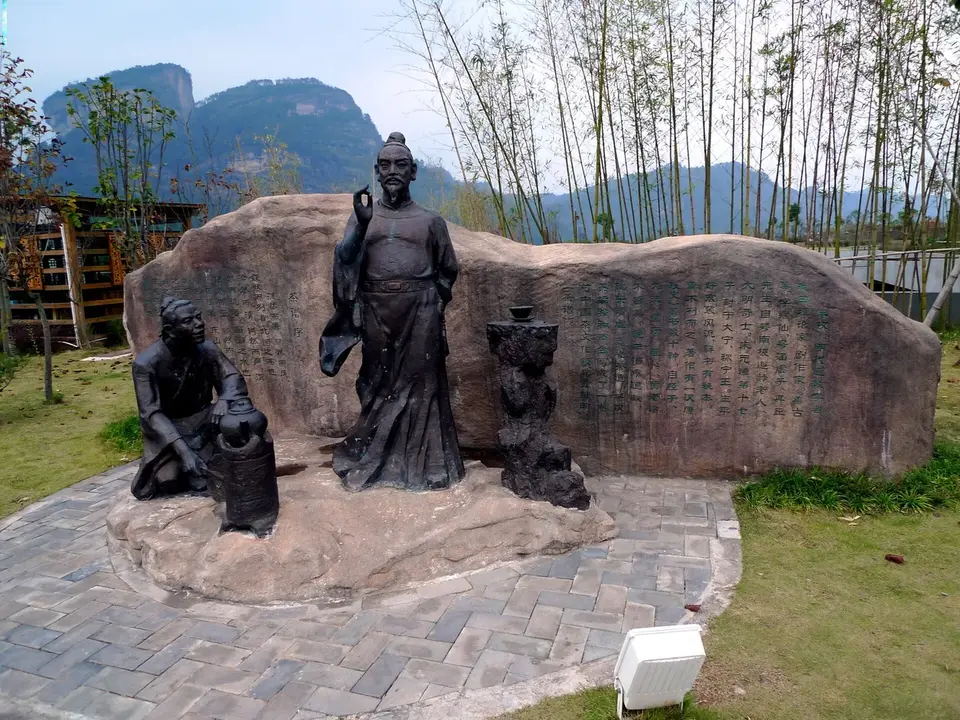
朱权
Zhu Quan (朱权, 1378–1448) was an imperial prince of the Ming Dynasty, the seventeenth son of Emperor Taizu (Zhu Yuanzhang) by Noble Consort Yang. Initially created Prince of Ning, he was given the posthumous title "Xian," being historically known as Prince Xian of Ning. He adopted the Daoist literary pseudonyms Danqiu Xiansheng, Hanxuzi, and Quxian. In 1391, Zhu Quan was invested as Prince of Ning. In 1393, at the age of…
Zhu Quan (朱权, 1378–1448) was an imperial prince of the Ming Dynasty, the seventeenth son of Emperor Taizu (Zhu Yuanzhang) by Noble Consort Yang. Initially created Prince of Ning, he was given the posthumous title "Xian," being historically known as Prince Xian of Ning. He adopted the Daoist literary pseudonyms Danqiu Xiansheng, Hanxuzi, and Quxian. In 1391, Zhu Quan was invested as Prince of Ning. In 1393, at the age of sixteen, he arrived at Daning (modern Ningcheng County, Inner Mongolia) to command the critical northern defense frontier. At Daning, he presided over eighty thousand armored warriors, six thousand war carriages, and the ferocious cavalry units of the Three Uriankhai Garrisons (Duoyan Sanwei). Known for strategic brilliance and strict discipline, he was widely regarded as the most formidable general among the early Ming frontier princes. In 1399, during the Jingnan Campaign, the Prince of Yan (Zhu Di) launched a surprise maneuver to Daning, coercing Zhu Quan into joining his rebellion and seizing his troops while pledging to divide the empire equally upon victory. After ascending the throne as the Yongle Emperor, Zhu Di reneged on his promise and transferred Zhu Quan south to Nanchang, Jiangxi, in 1403. Aware of the emperor's intense suspicion, Zhu Quan withdrew completely from statecraft and military affairs. For over forty years in Nanchang, he immersed himself in Daoist contemplation, zither (guqin) music, operatic dramaturgy, and scholarship. He compiled Shenqi Mipu (Mysterious and Secret Tablature), the earliest surviving collection of Chinese guqin musical scores, and authored Taihe Zhengyin Pu (Register of Correct Sounds of Supreme Harmony), the first comprehensive treatise on northern musical theater (zaju), along with numerous historical and medical works. He died in 1448 at seventy-one.
Born in the Forbidden City in Nanjing as the seventeenth son of the Hongwu Emperor by Consort Yang.
Formally invested as Prince of Ning during the nationwide enfeoffment of imperial sons.
Took up official residence at the frontier fortress of Daning, supervising the northern defense network.
The Prince of Yan entered Daning by subterfuge, seizing Zhu Quan and absorbing his border cavalry.
Yongle Emperor broke his vow of dividing the realm and relocated Zhu Quan to Nanchang, Jiangxi.
Lived quietly in retirement; compiled Shenqi Mipu and Taihe Zhengyin Pu while practicing Daoist cultivation.
Passed away at his princely residence in Nanchang at age seventy-one; granted the posthumous title Prince Xian.
Zhu Quan was born in 1378, the seventeenth son of Ming Taizu. From childhood, he exhibited extraordinary intelligence, wide learning in classical texts, and keen skill in archery and military strategy. In 1391, the Hongwu Emperor created him Prince of Ning. In 1393, at sixteen, he took up his provincial command at Daning.
Daning (located in present-day Ningcheng, Inner Mongolia) commanded the territory north of the Great Wall, controlling the strategic pass between Liaodong and the northern metropolitan region. The Hongwu Emperor established the Daning Regional Military Commission, stationing five garrisons and organizing surrendered Mongol units into the Three Uriankhai Garrisons (Duoyan, Taining, and Fuyu). Under Zhu Quan's leadership, the frontier command possessed eighty thousand soldiers and six thousand war carriages, supported by fearsome Mongol mounted archers. Zhu Quan conducted regular defensive patrols, effectively deterring incursions by Northern Yuan remnants. Contemporaries remarked: "Among the border princes skilled in warfare, none matches the Prince of Ning."
In 1398, the Hongwu Emperor died. His successor, the Jianwen Emperor, immediately launched a campaign to reduce the power of regional principalities, deposing the Princes of Zhou, Qi, Dai, and Min, and driving the Prince of Xiang to suicide. In July 1399, Zhu Di (Prince of Yan) rose in rebellion in Beiping, starting the Jingnan civil war.
Distrustful of Zhu Quan's massive frontier army, the Jianwen Emperor summoned him to the capital, but Zhu Quan feigned illness and remained at Daning, prompting the court to revoke his guard commands. Recognizing that imperial control over Daning would expose his rear, and coveting the cavalry of the Three Garrisons, Zhu Di marched his troops swiftly through Liu Pass to strike Daning in autumn 1399.
Arriving outside Daning alone on horseback, Zhu Di feigned helplessness, weeping before Zhu Quan and claiming that he had taken up arms solely in self-defense. Zhu Quan welcomed his brother into the city. Within days, however, Zhu Di's agents covertly bribed Uriankhai tribal chieftains and Daning garrison commanders with gold and princely ranks. When Zhu Di departed the city, Zhu Quan accompanied him to the suburbs to bid farewell, where hidden Yan forces sprang an ambush, capturing Zhu Quan and his household. Daning's entire army was incorporated into the Yan rebellion. Zhu Di held Zhu Quan's hand and vowed: "If I secure the realm, I will share the empire equally with you, my brother!" Deprived of his army, Zhu Quan was forced to accompany the rebel host southward, drafting manifestos and official communications.
In June 1402, Zhu Di captured Nanjing and ascended the imperial throne. After the coronation, Zhu Quan requested to be reassigned to Suzhou or Hangzhou to live in peace. The Yongle Emperor refused, claiming that those regions lay in the imperial heartland. When Zhu Quan suggested Jianning in Fujian, the emperor again declined. In February 1403, the emperor formally decreed Zhu Quan's relocation to Nanchang, Jiangxi.
In Nanchang, Zhu Quan understood the suspicious nature of the new emperor, noting that his residence was heavily monitored by imperial secret agents. In 1404, an informant falsely accused Zhu Quan of practicing witchcraft. Although an imperial inquiry found no evidence, Zhu Quan took warning and completely severed all ties with worldly politics. He constructed a secluded retreat in the Western Hills outside Nanchang, adopting the Daoist titles "Danqiu Xiansheng" and "Hanxuzi." Dressed in Daoist vestments, he burned incense, practiced the guqin, wrote poetry, and composed treatises, thereby ensuring the survival of his family lineage.
During his forty-five years of retirement in Nanchang, Zhu Quan channeled his immense talents into cultural scholarship, becoming one of the most prolific polymaths among Ming royalty.
In the realm of guqin music, Zhu Quan collected rare and ancient musical scores from across the empire, culminating in the publication of Shenqi Mipu in 1425. This masterpiece is the earliest surviving printed compilation of guqin tablature in China, preserving sixty-four classic compositions dating from the Wei-Jin period to the Song and Yuan dynasties (including Guangling San, Gaoshan, Liushui, and Xiaoxiang Shuiyun), accompanied by detailed fingerings and historical annotations.
In Chinese theater and dramatic theory, Zhu Quan made pioneering contributions. In 1398, he completed Taihe Zhengyin Pu, the earliest systematic treatise on northern dramatic tunes (beiqu). The text established standard musical modes, codified phonetic rhymes, and compiled hundreds of classic tune templates, while offering insightful aesthetic critiques of major Yuan playwrights like Guan Hanqing, Bai Pu, and Ma Zhiyuan. In addition, Zhu Quan authored twelve zaju plays, including Jingchai Ji.
Beyond music and drama, Zhu compiled important medical texts like Zhouhou Beiji Fang and alchemical guides like Gengxin Yuce, while writing extensive historical studies including Tongjian Bolun and Hantang Mishi. On October 12, 1448, this extraordinary prince passed away in Nanchang at the age of seventy-one, having witnessed the reigns of six successive Ming emperors.
Zhu Quan stands out as one of the most culturally distinguished and multifaceted imperial princes of the early Ming Dynasty, combining the strategic acumen of a frontier general with the refined intellect of a master scholar.
The History of Ming recorded in the Biographies of Princes: "Quan was diligent in learning and ancient lore; from divination, medicine, and Daoism to Buddhist studies, guqin melodies, and operatic drama, there was nothing he did not master. At Daning, commanding eighty thousand armored soldiers and six thousand carriages, he was skilled in planning and warfare. After moving to Nanchang, he daily enjoyed the company of literati, completing hundreds of volumes before his death."
Ming dramatic critic Wang Shizhen praised him in Yiyuan Zhiyan: "Prince Xian of Ning's Taihe Zhengyin Pu serves as the golden rule for operatic melody. Were it not for the Prince of Ning, the peerless arts of Yuan dramatic masters would have been lost forever."
Modern historians recognize Zhu Quan as a pivotal figure in the Jingnan crisis whose cavalry decided the imperial succession, as well as an immortal cultural figure whose compilations of Shenqi Mipu and Taihe Zhengyin Pu remain cornerstones of Chinese classical music and theatrical history.
FIGURES ASSOCIATED WITH THIS DYNASTY