Born in Beiping
Born on the fourth day of the twelfth lunar month in the Yan princely palace to Zhu Di and Lady Xu.
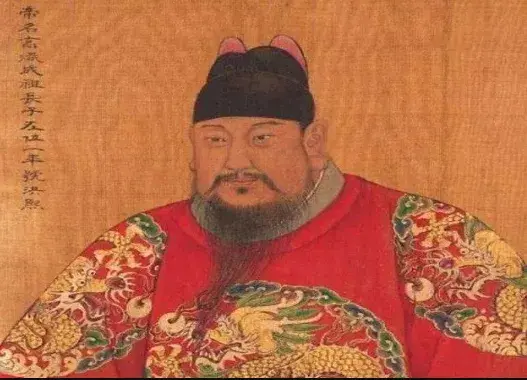
朱高煦
Zhu Gaoxu (朱高煦, December 30, 1380 – October 6, 1426) was an imperial prince of the Ming Dynasty, grandson of the founding Emperor Hongwu (Zhu Yuanzhang), second legitimate son of Emperor Yongle (Zhu Di), and younger full brother of Emperor Renzong (Zhu Gaochi), born to Empress Renxiaowen (Empress Xu). Initially created Prince of Gaoyang, he was elevated to Prince of Han in 1404. Zhu Gaoxu was a formidable cavalry general…
Zhu Gaoxu (朱高煦, December 30, 1380 – October 6, 1426) was an imperial prince of the Ming Dynasty, grandson of the founding Emperor Hongwu (Zhu Yuanzhang), second legitimate son of Emperor Yongle (Zhu Di), and younger full brother of Emperor Renzong (Zhu Gaochi), born to Empress Renxiaowen (Empress Xu). Initially created Prince of Gaoyang, he was elevated to Prince of Han in 1404. Zhu Gaoxu was a formidable cavalry general during the Jingnan Campaign, repeatedly rescuing Zhu Di from critical encirclement and securing decisive battlefield victories. However, characterized by cunning, arrogance, and cruelty, he harbored relentless ambitions to usurp the crown prince position, culminating in an armed rebellion in 1426 during the Xuande reign. Defeated, stripped of royal rank, and imprisoned, he was ultimately executed at the age of forty-five alongside his sons. During the Hongwu era, Zhu Gaoxu studied in Nanjing, where his arrogant demeanor and violent behavior earned his grandfather Zhu Yuanzhang's deep disapproval. When the Jingnan Campaign erupted in 1399, Zhu Gaoxu served as Zhu Di's vanguard cavalry commander. At the Battle of Baigou River, his shock cavalry charge killed southern imperial generals Qu Neng and his sons, turning near defeat into victory. At Dongchang, he led reinforcements to break the southern encirclement, rescuing Zhu Di. At Puzikou, he crushed imperial forces defending the northern banks of the Yangtze, securing the river crossing to Nanjing. Zhu Di famously encouraged him by remarking that the crown prince was sickly, igniting Zhu Gaoxu's enduring obsession with the throne. In 1404, Zhu Di invested Zhu Gaochi as Crown Prince and created Zhu Gaoxu the Prince of Han, assigning his fief to distant Yunnan. Bitterly resentful, Zhu Gaoxu refused to depart, remaining in Nanjing for over a decade, where he formed private armed retinues and conspired against eastern palace ministers, causing the imprisonment of Huang Huai and Yang Pu and the death of Grand Secretary Xie Jin. In 1417, Zhu Di uncovered his treasonous preparations and forcefully relocated him to Le'an in Shandong. Following Renzong's sudden death in 1425, Zhu Gaoxu laid ambushes to assassinate Crown Prince Zhu Zhanji, which failed when the prince took an alternate route. In August 1426, Zhu Gaoxu revolted openly at Le'an. Emperor Xuande led an imperial expedition in person, surrounding Le'an and forcing Zhu Gaoxu's unconditional surrender. Transported to Beijing as a commoner, he was confined to the Xiaoyao City compound. Later, after tripping Emperor Xuande during an imperial visit, he was trapped beneath a massive three-hundred-pound bronze cauldron and roasted to death with charcoal, after which his sons were executed.
Born on the fourth day of the twelfth lunar month in the Yan princely palace to Zhu Di and Lady Xu.
Enfeoffed as Prince of Gaoyang by grandfather Zhu Yuanzhang; sent to Nanjing to study, displaying violent temperament.
Permitted to return from Nanjing, fled on stolen horses to join Zhu Di's rebellion as vanguard cavalry commander.
Rescued Zhu Di at the Battle of Baigou River and Dongchang, killing southern general Qu Neng and securing Yan withdrawals.
Crushed imperial river defenses at Puzikou, enabling the Yan crossing of the Yangtze and the capture of Nanjing.
Created Prince of Han with fief in Yunnan; resentfully refused to leave Nanjing and schemed against the Crown Prince.
Illegally recruited private guards and death squads, leading to imperial reprimand and reassignment to Qingzhou and Le'an.
His armed guards were stripped after his plots against palace ministers were exposed; forcefully escorted to Le'an.
Following Emperor Yongle's death, Emperor Renzong increased his stipend and treated him with leniency, which Zhu Gaoxu exploited.
Laid ambushes to murder Crown Prince Zhu Zhanji returning from Nanjing, but the prince bypassed the traps.
Launched an armed revolt at Le'an in August; surrendered to Emperor Xuande's army and was executed in Beijing in October.
Zhu Gaoxu was born on December 30, 1380, the second son of Zhu Di, Prince of Yan, and Empress Renxiaowen. In 1395, he was created Prince of Gaoyang. During his teenage years, he was sent to the Imperial University in Nanjing alongside his elder brother Zhu Gaochi and other imperial cousins. While Zhu Gaochi was gentle, scholarly, and respected, Zhu Gaoxu was arrogant, unruly, and cruel. He neglected his classical studies, rode recklessly through the markets of the capital, and associated with brawlers, earning the censure of his grandfather Emperor Hongwu.
In 1398, Emperor Jianwen ascended the throne and initiated policies to curtail princely power. In 1399, Zhu Di sent his sons Zhu Gaochi, Zhu Gaoxu, and Zhu Gaosui to Nanjing for the anniversary memorial of the late emperor. Minister of War Qi Tai and Duke of Wei Xu Huizu urged the court to detain the brothers as hostages. However, Jianwen hesitated and released them. Before leaving, Zhu Gaoxu stole Xu Huizu's prized thoroughbred horse and murdered posthouse couriers on his ride back to Beiping. Shortly afterwards, Zhu Di launched the Jingnan Campaign under the banner of pacifying court disloyalty.
Throughout the four-year civil war, Zhu Gaoxu served as Zhu Di's most daring battlefield commander, leading shock cavalry units at the vanguard. In 1400, at the Battle of Baigou River, southern imperial commander Li Jinglong encircled Zhu Di's main camp. With Zhu Di's horses killed, arrows spent, and sword broken, Zhu Gaoxu led several thousand heavy cavalry in a flank charge, killing southern general Qu Neng and turning the tide of the war. Later that year at Dongchang, when general Zhang Yu was killed and Zhu Di was pursued by imperial armies, Zhu Gaoxu arrived with fresh cavalry to beat back the pursuers and escort his father to safety.
In 1402, as the Yan army approached the Yangtze, southern forces halted their advance at Puzikou. When Zhu Gaoxu arrived with fresh cavalry, Zhu Di patted his back and whispered that the crown prince was frequently unwell, encouraging his son to fight desperately. Convinced that the succession would be his, Zhu Gaoxu spearheaded the breakthrough, securing the crossing of the Yangtze and the fall of Nanjing.
In 1404, Zhu Di ascended the throne in Nanjing. The court divided over the imperial succession: military commanders led by Qiu Fu championed Zhu Gaoxu for his martial brilliance, while civilian officials such as Xie Jin and Huang Huai argued for the eldest son Zhu Gaochi on Confucian primogeniture, pointing out the virtues of grandson Zhu Zhanji. Zhu Di ultimately invested Zhu Gaochi as Crown Prince and created Zhu Gaoxu the Prince of Han, granting him a fief in Yunnan.
Furious at the decision, Zhu Gaoxu protested publicly that he had committed no crime to be banished to a remote frontier. Zhu Di permitted him to remain temporarily in Nanjing. Residing in the capital for over a decade, Zhu Gaoxu established private networks and openly compared himself to Emperor Taizong of Tang, who had seized the throne through the Xuanwu Gate Incident. He demanded that the newly formed Tiance Guard be assigned to him as a private bodyguard.
Zhu Gaoxu directed intense hostility against the civilian officials advising the Crown Prince. Between 1412 and 1414, while Zhu Di was campaigning in the north and Zhu Gaochi was administering the capital, Zhu Gaoxu accused the eastern palace of exceeding authority. His slanders led Zhu Di to imprison eastern palace officials Huang Huai and Yang Pu in the Embroidered Uniform Guard prison for a decade, while former Grand Secretary Xie Jin was murdered in prison by Commander Ji Gang, who buried him drunk under a snowbank in 1415.
Zhu Gaoxu's conduct in Nanjing grew increasingly lawless. He assembled three thousand private shock troops known as the "Submerged Dragons," indulged in street robberies, and had military inspector Xu Yelü bludgeoned to death in public with copper mallets.
In 1415, Zhu Di resolved to remove him from the capital, reassigning his fief to Qingzhou in Shandong. Zhu Gaoxu delayed his departure with constant excuses. In October 1416, upon returning from a northern expedition, Zhu Di uncovered dozens of treasonous acts, including unauthorized weapon manufacturing and private recruitment of bandits. Enraged, Zhu Di stripped Zhu Gaoxu of his princely robes, confined him in the West Flower Gate, and prepared to demote him to commoner status. Only the desperate pleas of Crown Prince Zhu Gaochi persuaded Zhu Di to spare his life. Zhu Di stripped his private escort guards, executed his closest accomplices, and banished him to the isolated district of Le'an in Shandong.
Arriving in Le'an, Zhu Gaoxu felt deeply humiliated. He deepened moats, fortified Le'an's walls, recruited fugitives, and waited for an opportunity to rebel.
In July 1424, Emperor Yongle died during his fifth northern campaign. Crown Prince Zhu Gaochi ascended the throne as Emperor Renzong. Known for his generous disposition, Renzong treated Zhu Gaoxu with exceptional warmth, summoning him to Beijing, granting large monetary gifts, raising his grain stipend to thirty thousand piculs, and creating his sons regional princes. Zhu Gaoxu accepted these honors while expanding his spy networks across the capital.
In May 1425, Emperor Renzong died suddenly after a reign of only ten months. Crown Prince Zhu Zhanji was stationed in Nanjing and had to ride north to Beijing for the funeral. Seeing an opportunity, Zhu Gaoxu dispatched ambushes along the road to assassinate the heir. However, Zhu Zhanji anticipated danger, travelling lightly via alternate routes to reach Beijing safely and ascend the throne as Emperor Xuande.
In August 1426, Zhu Gaoxu entered open rebellion at Le'an alongside Shandong Commander Jin Rong. Forging imperial decrees, he sent memorials demanding the execution of senior ministers Xia Yuanji and Yang Shiqi, while soliciting the support of Duke of Britain Zhang Fu.
Zhang Fu immediately reported the treason to the emperor. Minister of War Zhang Ben and Grand Secretary Yang Rong urged Emperor Xuande to lead an imperial expedition in person. On August 28, 1426, Xuande marched north with imperial armies, encircling Le'an with modern artillery units from the Shenjiying. The barrage shattered rebel morale, and defenders surrendered in droves. Realizing resistance was futile, Zhu Gaoxu surrendered on September 8, dressed in plain white robes.
Following the surrender of Le'an, ministers demanded that the rebel prince be put to death. Reluctant to shed kin's blood, Emperor Xuande spared his life, demoted him to commoner status, and confined him in the Xiaoyao City compound inside the Xi'an Gate of Beijing.
However, Zhu Gaoxu remained defiant. Months later, when Emperor Xuande visited the compound, Zhu Gaoxu deliberately stuck out his leg and tripped the emperor as he walked past. Humiliated and furious, Xuande ordered palace attendants to invert a three-hundred-pound bronze cauldron over him. Possessing immense physical strength, Zhu Gaoxu lifted the heavy vessel onto his shoulders, swaying across the floor. Outraged, the emperor ordered thousands of pounds of burning charcoal piled around the cauldron. The bronze vessel grew white-hot, roasting Zhu Gaoxu to death inside. His sons were subsequently executed, and the princely branch was permanently extinguished.
During the Jingnan civil war from 1399 to 1402, Zhu Gaoxu demonstrated exceptional cavalry shock tactics, serving as the essential combat general who repeatedly rescued Zhu Di's armies from total destruction.
At the Battle of Baigou River, when the Yan army was encircled by superior imperial forces, Zhu Gaoxu led a flank cavalry charge that killed general Qu Neng, transforming disaster into decisive victory. At Dongchang, his rear-guard cavalry counterattack held off imperial pursuers following the death of Zhang Yu, ensuring Zhu Di's survival. At Puzikou, his breakthrough against entrenched southern river defenses opened the path for the Yan crossing of the Yangtze, securing the capture of Nanjing.
Driven by his ambition to displace the Crown Prince, Zhu Gaoxu orchestrated a devastating factional purge in the central court during the middle Yongle reign. Viewing the scholarly cabinet ministers as obstacles to his ascension, he established surveillance networks to frame the eastern palace.
His machinations resulted in the arrest and prolonged torture of cabinet ministers Huang Huai and Yang Pu in the imperial prison. Furthermore, former Grand Secretary Xie Jin was banished to Jiaozhi and ultimately frozen to death in a snowbank by the secret police. This sustained intrigue disrupted early Ming cabinet governance and left scars on the literati bureaucracy.
Following his enfeoffment as Prince of Han, Zhu Gaoxu openly compared himself to Li Shimin, Emperor Taizong of Tang, demanding the Tiance Guard as his private retinue.
Refusing his appointed fief in Yunnan, he established private armed forces in Nanjing, recruited outlaws, and assaulted judicial officers in public markets. His rejection of imperial authority and reliance on brute force transformed him from an accomplished general into a dangerous political rebel.
Zhu Gaoxu's revolt in Le'an in 1426 was the final armed attempt by a Ming regional prince to challenge the central throne with private armies. Misjudging the political landscape, he sought to replicate his father's Jingnan Campaign, failing to realize that imperial centralisation and the Three Capital Battalions had rendered local princely rebellions obsolete.
Emperor Xuande's swift suppression of the rebellion marked the definitive end of princely military autonomy in the Ming dynasty. Following this campaign, the court confiscated the private guard units of remaining princes, including Prince of Zhao Zhu Gaosui, permanently transforming imperial princes into stipendiary nobles without administrative or military authority.
FIGURES ASSOCIATED WITH THIS DYNASTY