Entering the Palace and Adoption by Consort Zhang
Followed her aunt into the imperial palace as an attendant at age four; adopted by Noble Consort Zhang (Empress Wencheng).
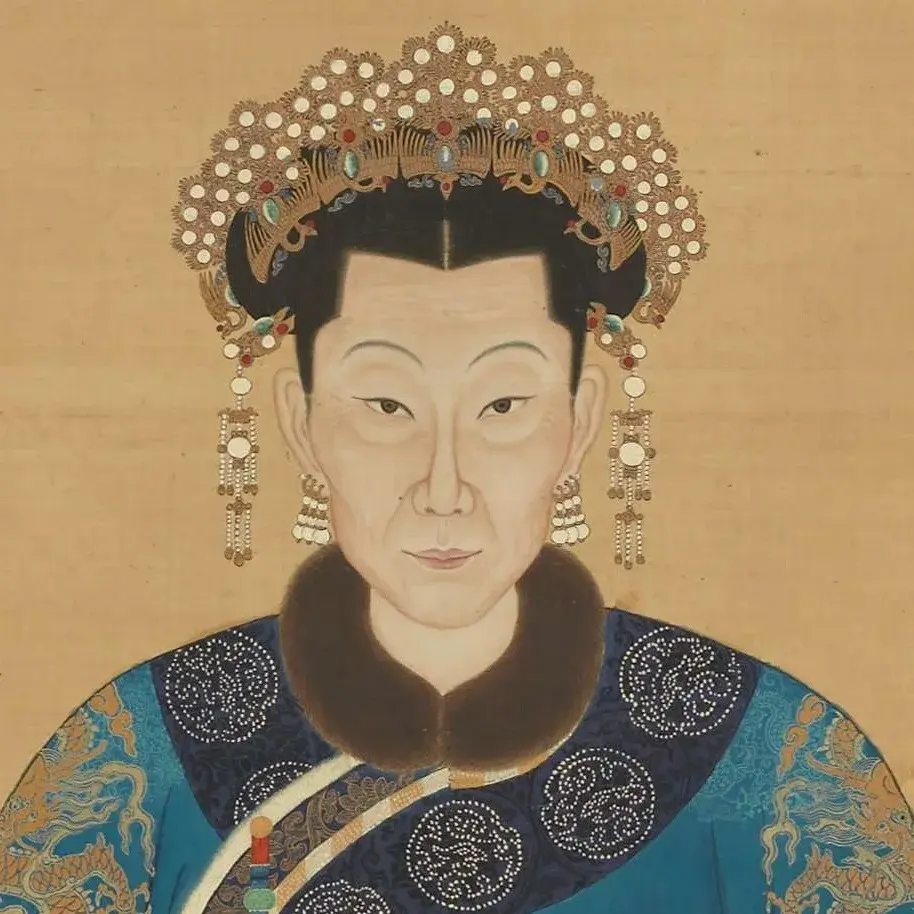
周贵妃
Consort Zhou (周贵妃, 1022–1114), a native of Kaifeng (modern Kaifeng, Henan Province), was an imperial consort of Emperor Renzong of Song (Zhao Zhen), the biological mother of Princess Qingshou (Grand Princess Lingde Jingxing) and Princess Baoshou (Grand Princess Yimu), posthumously honored as Noble Consort Zhaoshu (昭淑贵妃). At four years of age, Lady Zhou entered the inner palace as an attendant following her paternal aunt. Due…
Consort Zhou (周贵妃, 1022–1114), a native of Kaifeng (modern Kaifeng, Henan Province), was an imperial consort of Emperor Renzong of Song (Zhao Zhen), the biological mother of Princess Qingshou (Grand Princess Lingde Jingxing) and Princess Baoshou (Grand Princess Yimu), posthumously honored as Noble Consort Zhaoshu (昭淑贵妃). At four years of age, Lady Zhou entered the inner palace as an attendant following her paternal aunt. Due to her refined bearing and gentle temperament, she was adopted by Emperor Renzong's favored consort, Noble Consort Zhang (posthumously Empress Wencheng). Upon reaching adulthood, she was enfeoffed as Lady of Anding Commandery and admitted to imperial bedchamber service. In 1059, she gave birth to Emperor Renzong's tenth daughter, Princess Qingshou, and was promoted to Handsome Companion (Meiren); in 1060, she gave birth to his twelfth daughter, Princess Baoshou, advancing to Lady of Handsome Deportment (Jieyu). In 1063, she became Lady of Gentle Countenance (Wanrong). Following Emperor Renzong's passing in the fourth month of 1063, Lady Zhou withdrew into a secluded palace hall, practicing strict Buddhist vegetarianism and continuous scripture recitation for more than forty years, sleeping only briefly without undoing her robe garments. Because her daughters married into prestigious lineages—Princess Qingshou marrying Qian Jingzhen (a descendant of the Qian royal house of Wuyue) and Princess Baoshou marrying Guo Xianqing—Lady Zhou advanced through palace ranks. She was elevated to Worthy Consort (Xianfei) in 1076, Virtuous Consort (Defei) in 1083, and Pure Consort (Shufei) in 1085. In 1100, upon Emperor Huizong's accession, she was honored as a venerable elder spanning five reigns and created first-rank Noble Consort (Guifei). Consort Zhou lived through the reigns of Emperors Renzong, Yingzong, Shenzong, Zhezong, and Huizong. Maintaining lifelong frugality, she spent her savings of 60,000 strings of cash entirely on constructing a family tomb and monastic lodging. In 1112, following Princess Baoshou's demise, Emperor Huizong permitted her to dwell in an exterior private mansion with her relatives. She passed away at ninety-three, receiving the posthumous title Noble Consort Zhaoshu.
Followed her aunt into the imperial palace as an attendant at age four; adopted by Noble Consort Zhang (Empress Wencheng).
Formally served Emperor Renzong upon maturity, receiving the outer court rank of Lady of Anding Commandery.
Gave birth to the tenth imperial daughter, Princess Qingshou, and was promoted to Handsome Companion (Meiren) in the sixth month.
Gave birth to Princess Baoshou and was elevated to Lady of Handsome Deportment (Jieyu) in the seventh month.
Promoted to Lady of Gentle Countenance (Wanrong) in the third month; entered four decades of secluded monastic practice upon Renzong's passing in the fourth month.
Promoted to Worthy Consort (Xianfei) upon Princess Qingshou's imperial marriage to Qian Jingzhen.
Elevated to Virtuous Consort (Defei) upon Princess Baoshou's marriage to Guo Xianqing; further promoted to Pure Consort (Shufei) in 1085.
Bestowed the paramount title of Noble Consort (Guifei) as a five-reign imperial elder upon Emperor Huizong's accession.
Granted imperial dispensation to reside outside the Forbidden Palace following Princess Baoshou's death, socializing freely with relatives.
Passed away peacefully at age ninety-three after serving five reigns, posthumously named Noble Consort Zhaoshu.
Noble Consort Zhou hailed from Kaifeng Prefecture (modern Kaifeng, Henan Province), born into a family of urban gentry and palace functionaries. In the fourth year of the Tiansheng era (1026), at the age of four, she followed her paternal aunt, who served as a palace woman, into the inner court of the Northern Song imperial palace as a child attendant.
Naturally gentle, refined, and intelligent, young Lady Zhou was well liked within the palace quarters. During this era, Noble Consort Zhang (posthumously proclaimed Empress Wencheng) held Emperor Renzong's exclusive imperial favor, eclipsing the rest of the inner court. Lacking surviving adult offspring, Consort Zhang was charmed by young Lady Zhou's decorous manners and petitioned Emperor Renzong to formally adopt the girl into her own palace residence.
Under Consort Zhang's protective care, Lady Zhou grew into an educated and virtuous young woman, thoroughly trained in court etiquette, textile needlework, and classical deportment. Recognizing her daughter's maturity, Consort Zhang presented her to Emperor Renzong. Lady Zhou received imperial favor and was granted the aristocratic title Lady of Anding Commandery, entering the formal ranks of Emperor Renzong's consort registry.
Throughout his four-decade reign, Emperor Renzong was plagued by the early deaths of all his biological sons, making the birth of surviving daughters a matter of major joy in his later years. On the twenty-fifth day of the fifth month in 1059 (Jiayou Year 4), Lady Zhou gave birth to Emperor Renzong's tenth daughter, Princess Qingshou (later styled Grand Princess Lingde Jingxing under Emperor Huizong). Overjoyed by the healthy child, Renzong issued an imperial edict the following month promoting Lady Zhou to Handsome Companion (Meiren, rank 4a).
Thirteen months later, in the sixth month of 1060, Lady Zhou gave birth to Emperor Renzong's twelfth daughter, Princess Baoshou (later styled Grand Princess Yimu). Having successfully delivered two healthy princesses in rapid succession, Lady Zhou's status among the imperial consorts increased significantly. In the seventh month of 1060, Emperor Renzong elevated her to Lady of Handsome Deportment (Jieyu, rank 3a).
In the third month of 1063 (Jiayou Year 8), during general palace investitures aimed at bringing spiritual blessings to the ailing monarch, Lady Zhou was elevated to Lady of Gentle Countenance (Wanrong, rank 2b). However, on the fourth month's Xinchou day, Emperor Renzong passed away at the age of fifty-four. The widowed Lady Zhou, together with her young daughters, faced a profound transition as the dynasty entered a new era.
Upon the accession of Emperor Yingzong (Zhao Shu), appropriate palace quarters were arranged for the consorts of the late monarch. Disillusioned by secular vanity and grieving the deceased emperor, Lady Zhou resolved to devote her remaining decades to spiritual contemplation and Buddhist devotion.
For more than forty years following Renzong's death, Lady Zhou adhered to an ascetic lifestyle comparable to an ordained nun. As recorded in the History of Song: "Upon the Emperor's demise, the Consort ate a single vegetarian meal a day, secluding herself within a solitary room to chant Buddhist scriptures. When weary, she rested briefly; upon waking, she resumed chanting, never undoing her clothing day or night for forty years." She partook of only one simple vegetable meal daily, living secluded in an inner palace chamber, continuously studying and reciting the Diamond Sutra and Lotus Sutra. Whenever exhaustion overcame her, she merely dozed in her chair, waking immediately to continue her recitations, maintaining continuous spiritual vigil across four decades.
During this period, her two daughters entered marital alliances with prestigious aristocratic families. In 1076 (Xining Year 9), Princess Qingshou married Qian Jingzhen, a great-grandson of King Qian Chu of Wuyue. Emperor Shenzong elevated Lady Zhou to Worthy Consort (Xianfei, rank 1b). In 1083 (Yuanfeng Year 5), Princess Baoshou married imperial in-law Guo Xianqing, and Consort Zhou advanced to Virtuous Consort (Defei). In 1085, on his deathbed, Emperor Shenzong elevated her to Pure Consort (Shufei).
In the first month of 1100 (Yuanfu Year 3), Emperor Zhezong passed away without issue, and his younger brother Zhao Ji acceded to the throne as Emperor Huizong. Promulgating an empire-wide amnesty, Huizong sought to honor the venerable senior figures of the imperial household. Recognizing that Consort Zhou was the sole surviving mother of Emperor Renzong's biological daughters and a paragon of four dynasties, Huizong issued an imperial proclamation elevating her to the supreme status of first-rank Noble Consort (Guifei), showering her with generous annuities.
Consort Zhou remained remarkably frugal. Rather than spending her palace stipends and imperial gifts, she accumulated her financial rewards. Outside Kaifeng, to the south of her ancestral clan graveyard, she purchased land to construct a funerary tomb, alongside which she erected a serene Buddhist monastery where resident monks prayed for the repose of Emperor Renzong. The entire project cost 60,000 strings of copper cash, funded entirely from her personal savings without burdening state coffers.
In 1112 (Zhenghe Year 2), Princess Baoshou passed away. Sympathizing with the ninety-year-old Noble Consort's maternal sorrow, Emperor Huizong broke traditional palace isolation protocols, granting her imperial permission to move out of the Forbidden Palace and reside in a specially furnished private estate outside the imperial walls, where she could socialize freely with relatives.
Noble Consort Zhou spent her final years in tranquility, passing away peacefully in 1114 at the age of ninety-three. Spanning the reigns of Emperors Renzong, Yingzong, Shenzong, Zhezong, and Huizong, she was one of the longest-lived imperial consorts in Chinese dynastic history. Grieved by her loss, Emperor Huizong suspended court audiences and conferred the exalted posthumous title Noble Consort Zhaoshu, burying her with full imperial honors in the tomb she had personally prepared.
Entered the Forbidden Palace at age four, receiving comprehensive education and care under Noble Consort Zhang (Empress Wencheng).
Conducted herself with grace and propriety, entering Emperor Renzong's bedchamber and earning the title Lady of Anding Commandery.
Gave birth to Princess Qingshou and Princess Baoshou in the Jiayou era, securing dynastic continuity in Emperor Renzong's mature years.
Rose steadily from Handsome Companion and Handsome Deportment to Gentle Countenance in the inner court hierarchy.
Maintained continuous ascetic discipline for over forty years following Emperor Renzong's death, partaking of one vegetarian meal a day.
Recited Buddhist scriptures day and night without loosening her robe garments, earning universal veneration across five imperial reigns.
Endowed 60,000 strings of personal savings to construct a family cemetery and monastic hermitage without utilizing treasury funds.
Elevated to Noble Consort by Emperor Huizong and granted imperial permission to reside outside the palace, living to ninety-three.
FIGURES ASSOCIATED WITH THIS DYNASTY