Birth in Jiangxi
Born into a scholarly clan in Gao'an, direct descendant of Zhou Dunyi; mastered classics, poetry, and musical tuning.
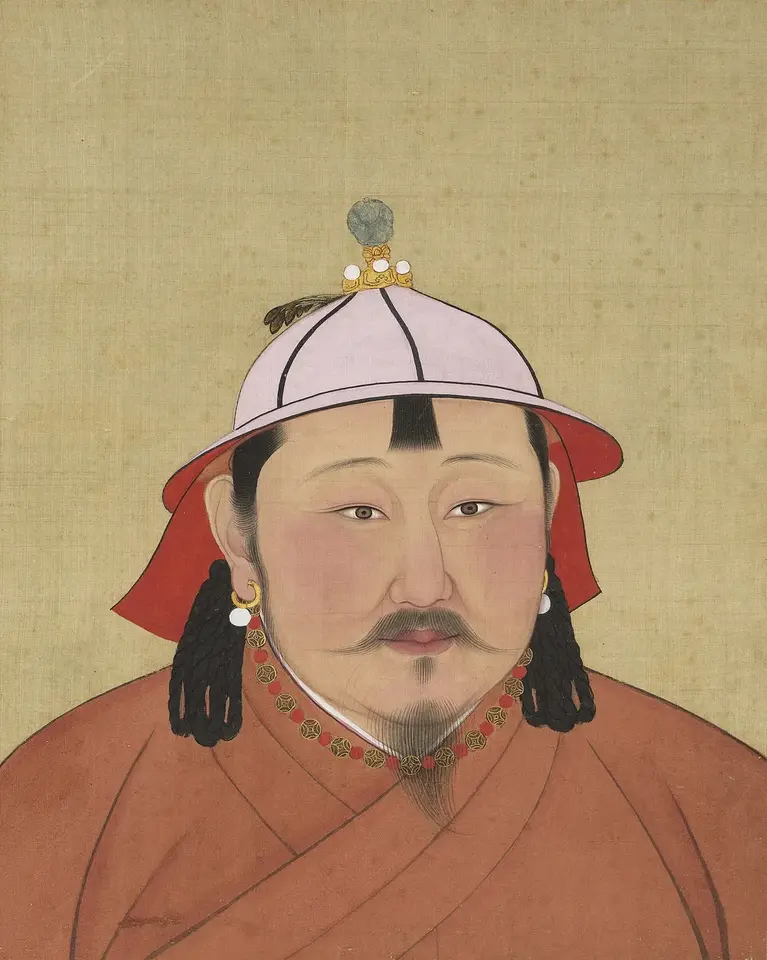
周德清
Zhou Deqing (周德清, 1277–1365), courtesy name Rizhan, pseudonym Tingzhai, native to Gao'an, Jiangxi, was an illustrious phonologist, sanqu playwright, and musical theorist of the Yuan Dynasty. A ninth-generation descendant of the prominent Northern Song philosopher Zhou Dunyi, he declined public civil service to remain a commoner throughout his life, dedicating himself to phonology, musical metrics, and lyric poetry. During the…
Zhou Deqing (周德清, 1277–1365), courtesy name Rizhan, pseudonym Tingzhai, native to Gao'an, Jiangxi, was an illustrious phonologist, sanqu playwright, and musical theorist of the Yuan Dynasty. A ninth-generation descendant of the prominent Northern Song philosopher Zhou Dunyi, he declined public civil service to remain a commoner throughout his life, dedicating himself to phonology, musical metrics, and lyric poetry. During the middle of the Yuan Dynasty, northern dramatic zaju and sanqu lyrics flourished nationwide; however, composers suffered from the lack of a standardized phonetic canon, caught between ancient medieval rime books like Guangyun and disparate southern dialects. In 1324 (Taiting 1), Zhou Deqing published the groundbreaking phonetic treatise Zhongyuan Yinyun (Rhymes of the Central Plains), grounded in the spoken vernacular of Dadu (modern Beijing) and the Central Plains. The work formulated pivotal laws of early Mandarin phonology, notably the split of the level tone into yin and yang and the distribution of the entering tone into the other three tones, while establishing nineteen rhyme categories. Standardizing Northern drama composition, Zhongyuan Yinyun stands as an indispensable linguistic landmark for modern Standard Chinese. Zhou died peacefully in 1365 at age eighty-nine.
Born into a scholarly clan in Gao'an, direct descendant of Zhou Dunyi; mastered classics, poetry, and musical tuning.
Traveled across the Central Plains to the imperial capital Dadu, investigating spoken phonetics and dramatic stage performance.
Completed his epochal phonological treatise Zhongyuan Yinyun, establishing standardized rhyming rules for northern drama.
Returned to his hometown in Gao'an, composing lyrical sanqu poetry that circulated widely across literary circles.
Passed away peacefully in his native Gao'an at the age of eighty-nine; his poetic corpus was preserved in Tingzhai Yuefu.
Zhou Deqing was born in 1277 during the Zhiyuan reign of Kublai Khan. His lineage was rooted in Gao'an, Jiangxi, tracing direct descent from Zhou Dunyi, the celebrated pioneer of Northern Song Neo-Confucianism. Inheriting an intellectual domestic tradition, Zhou immersed himself in the Confucian classics and historical treatises from early youth, displaying exceptional sensitivity toward pitch pipes, musical tuning, and Tang-Song lyric genres.
Following the Mongol unification of China, the suspension of imperial examinations for decades restricted administrative avenues for southern intellectuals. Possessing an independent and lofty temperament, Zhou renounced the pursuit of bureaucratic titles, choosing the quiet life of an unattached commoner scholar. He cultivated friendships with poets and actors across northern and southern provinces, frequenting commercial urban theaters to examine the burgeoning performing arts of Yuan drama and song.
During the Yanyou era, the northern dramatic tradition (Beiqu) emerged as the predominant literary and theatrical medium throughout China. Nevertheless, mid-Yuan dramatists faced profound aesthetic confusion regarding rhyming norms. Conservative literati adhered strictly to medieval rhyme books dating to the Sui and Tang, which had diverged from living speech for centuries. Conversely, southern lyricists frequently forced rhymes based on local Wu dialects, resulting in discordant melodic cadences on stage.
Convinced that dramatic lyricism must reflect genuine spoken communication, Zhou traveled extensively through the Central Plains and resided in Dadu. He conducted rigorous empirical surveys of the living colloquial speech of northern China, systematically analyzing the rhyming practices of premier playwrights Guan Hanqing, Bai Pu, Ma Zhiyuan, and Zheng Guangzu. After more than a decade of research, he published Zhongyuan Yinyun in 1324, which was immediately adopted across the empire as the definitive guide for playwrights and performers.
Following the completion of his treatise, Zhou not only instructed aspiring writers but also authored a substantial body of sanqu lyrics characterized by clear elegance and buoyant rhythm. In his mature years, he returned to Gao'an, adopting the literary moniker Tingzhai and enjoying a tranquil rustic retirement.
In 1265 (Zhizheng 25), on the eve of the dynastic upheaval that toppled the Yuan Dynasty, Zhou passed away peacefully in his native village at the advanced age of eighty-nine. His disciples collected his surviving verses, preserving a rich lyrical and musical heritage for posterity.
Zhou Deqing's Zhongyuan Yinyun represents an epochal milestone in Chinese historical phonology, marking the definitive transition from Middle Chinese to Early Mandarin. Comprising the Rhyme Tables and the Composition Manual, the work broke completely with the rigid Fanqie tradition of medieval texts. Zhou classified contemporary northern speech into nineteen distinct rhyme categories, including Dongzhong, Jiangyang, and Zhisi. Crucially, he formulated the core evolutionary principles of northern phonetics: the bifurcation of the level tone into yin and yang registers, and the redistribution of ancient entering-tone syllables into the other three tones. This phonetic architecture aligns remarkably with modern Standard Chinese (Putonghua), providing modern linguists with an invaluable baseline for tracing Mandarin phonological development.
Beyond its linguistic significance, the appendix of Zhongyuan Yinyun, entitled Rules for Composing Correct Lyrics, served as a comprehensive manual of dramatic rhetoric, metrics, and vocalization. Zhou expounded the fundamental aesthetic doctrines of dramatic verse, emphasizing unadorned naturalness and round, articulated phrasing.
In poetic practice, Zhou was an accomplished sanqu artist whose verses combined vigorous grace with musicality. In Continued Ghost Register, the dramatist Jia Zhongming acclaimed: \"Tingzhai's lyrics are not merely peerless in Jiangnan, but truly unmatched under heaven.\" His surviving corpus includes thirty-one individual songs (xiaoling) and three suites (taoshu), notable for works such as Saihongqiu and Zheguiling, which display profound musicality and literary polish.
FIGURES ASSOCIATED WITH THIS DYNASTY