Birth in Yingchuan
Born into a prominent gentry clan of Changshe, Yingchuan, exhibiting early intelligence and devotion to scholarship and calligraphy.
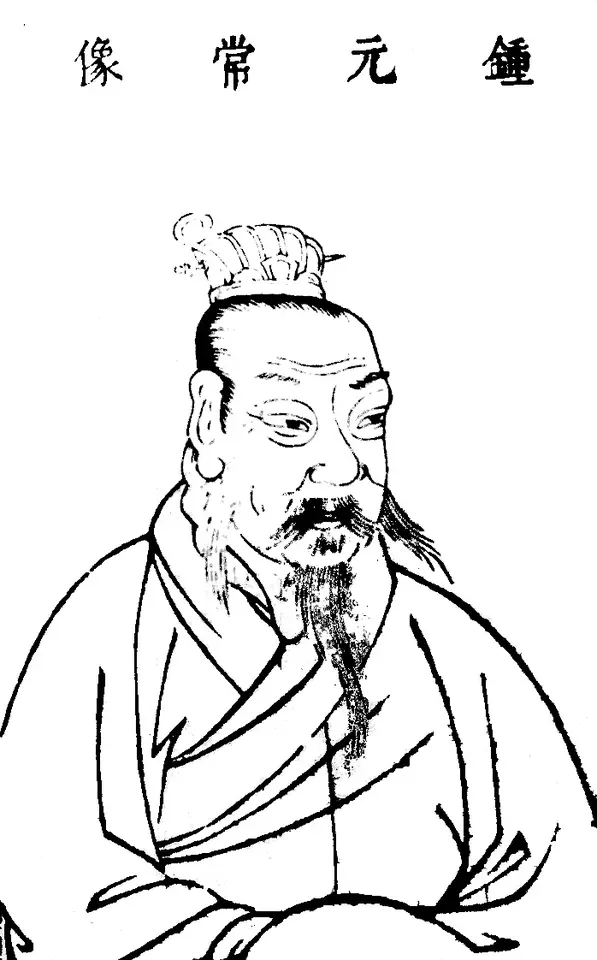
钟繇
Zhong Yao (钟繇, 151–230), courtesy name Yuanchang (元常), was an eminent statesman and foundational master calligrapher of the late Eastern Han dynasty and the Three Kingdoms period of Cao Wei, hailing from the prestigious Zhong lineage of Yingchuan. In the turbulent late Han era, he served successively as Gentleman of the Yellow Gates, Palace Assistant Imperial Clerk, Attendant Gentleman, and Vice Director of the Imperial…
Zhong Yao (钟繇, 151–230), courtesy name Yuanchang (元常), was an eminent statesman and foundational master calligrapher of the late Eastern Han dynasty and the Three Kingdoms period of Cao Wei, hailing from the prestigious Zhong lineage of Yingchuan. In the turbulent late Han era, he served successively as Gentleman of the Yellow Gates, Palace Assistant Imperial Clerk, Attendant Gentleman, and Vice Director of the Imperial Secretariat. During the chaotic strife between warlords Li Jue and Guo Si, he adroitly protected Emperor Xian during the royal flight east toward Luoyang and actively facilitated initial communications between the imperial court and Cao Cao. Following Cao Cao's reception of the emperor, Zhong Yao was appointed to hold the tally, superintend the armies of Guanzhong, and serve as Colonel Director of Retainers, exercising supreme administrative and military authority over the western territories. He pacified warlords Ma Teng and Han Sui, crushed the rebel armies of Guo Yuan and Southern Xiongnu forces, suppressed the rebellion of Wei Gu, rehabilitated displaced populations, and continuously transported two thousand battle horses to the frontline during the critical Battle of Guandu, earning high praise from Cao Cao as equal in merit to Xiao He of the Western Han. Following the founding of Cao Wei, Zhong Yao served in premier offices including Commandant of Justice, Grand Commander, and Grand Tutor, being enfeoffed as Marquis of Dingling. He was honored alongside Hua Xin and Wang Lang as one of the Three Excellencies of Cao Wei. In jurisprudence, he repeatedly advocated the restitution of ancient corporal punishments to replace capital execution, embodying a philosophy of cautious penalty and preservation of the populace. In art and culture, Zhong Yao was a transcendent figure in Chinese calligraphic history who first codified standard regular script, transforming traditional clerical script into the structured regular script model. Revered by posterity as the Father of Regular Script, he is paired alongside Wang Xizhi as the two greatest masters of calligraphic history, occupying a preeminent position in the political and cultural developments of the Han-Wei transition.
Born into a prominent gentry clan of Changshe, Yingchuan, exhibiting early intelligence and devotion to scholarship and calligraphy.
Recommended as Filial and Incorrupt, promoted by Commandery Administrator Yin Xiu, and served in regional and central positions including Gentleman of the Yellow Gates.
Dissuaded Li Jue and Guo Si from harming Cao Cao's envoy Wang Bi, and plotted the escape of Emperor Xian to return east to Luoyang.
Following Cao Cao's reception of the emperor in Xuchang, enfeoffed as Marquis of Dongwu Pavilion and promoted to Vice Director of the Imperial Secretariat.
Commissioned with the tally to supervise Guanzhong armies and serve as Colonel Director of Retainers, persuading Ma Teng and Han Sui to send their sons as hostages.
Delivered two thousand cavalry horses from the western provinces to reinforce Cao Cao's army during the stalemate at the Battle of Guandu.
Jointly commanded forces with Ma Chao and Pang De to crush Yuan Shang's general Guo Yuan and the Southern Xiongnu Chanyu, beheading Guo Yuan.
Crushed the insurrection of Wei Gu, Fan Xian, and Zhang Yan in Hedong, executing Wei Gu and restoring agrarian order in the capital region.
Reassigned to Front Army Advisor upon the reorganization of provincial jurisdictions, and became Grand Judge upon the establishment of the State of Wei.
Implicated and dismissed from office following the rebellion of Wei Feng, later presenting the celebrated Memorial on Congratulating Victory during the winter.
Reinstated as Grand Judge by Cao Pi, retitled Commandant of Justice after the founding of Wei, and advanced to Marquis of Chonggao District.
Promoted to Grand Commander and transferred to Marquis of Pingyang District, forming the legendary Three Excellencies alongside Hua Xin and Wang Lang.
Ennobled as Marquis of Dingling by Emperor Ming of Wei (Cao Rui) with an estate of 1,800 households, promoted to Grand Tutor, and granted the privilege of sedan-chair access to court.
Died in the fourth month at age eighty; Emperor Ming attended the mourning in plain garments, granted the posthumous title Marquis Cheng, and later enshrined him in Cao Cao's imperial temple.
Zhong Yao was born into a prominent scholarly lineage of Changshe County in Yingchuan Commandery. From his youth, he possessed an exceptional countenance, acute intellect, and serious dedication to learning. According to historical anecdotes, during his early years he traveled toward Luoyang accompanied by his elder clan relative Zhong Yu. Along the way, they met a physiognomist who observed Zhong Yao's features and remarked that the boy was destined for high nobility, yet warned that he would soon encounter a peril of drowning and urged caution. Before they had traveled another ten leagues, while crossing a bridge, Zhong Yao's horse suddenly bolted in terror, hurling him into a rushing current where he nearly drowned. After his rescue, Zhong Yu was deeply convinced of the prophecy and provided generous financial resources to support Zhong Yao's scholarly pursuits, enabling him to thoroughly master the classical canons and calligraphic traditions.
Upon reaching adulthood, Zhong Yao was nominated as Filial and Incorrupt and served as Merit Officer in Yingchuan Commandery, earning high regard from Administrator Yin Xiu. Subsequently, he served as Gentleman of the Secretariat and Magistrate of Yangling, resigning briefly due to illness. Later, he was concurrently summoned by the Three Excellencies, appointed Director of the Commandant of Justice, and transferred to Gentleman of the Yellow Gates, entering the inner court secretariat. This period coincided with extensive turmoil across the Han Empire: following Dong Zhuo's destruction of Luoyang and forced relocation of the capital to Chang'an, warlords Li Jue and Guo Si took power, holding Emperor Xian under duress and cutting off communication between the court and eastern warlords.
Prior to the Jian'an era, Cao Cao, then Governor of Yan Province, dispatched his envoy Wang Bi to Chang'an to present a memorial pledging allegiance to the throne. Suspicious that eastern warlords harbored ambitions to install a new emperor and doubted Cao Cao's sincerity, Li Jue and Guo Si planned to detain the envoy and reject the imperial tribute. Zhong Yao stepped forward to remonstrate with Li Jue and Guo Si, arguing that amidst widespread regional warlordism, only Cao Cao remained steadfastly devoted to the imperial house, and that refusing his loyalty would alienate public goodwill. Convinced by Zhong Yao's counsel, Li Jue and his confederates treated Wang Bi honorably and permitted imperial communications, reestablishing direct diplomatic ties between Cao Cao and Emperor Xian.
In 195, factional strife between Li Jue and Guo Si intensified into urban warfare in Chang'an, completely destabilizing the Guanzhong region. When Li Jue held Emperor Xian hostage within his military camp, Zhong Yao secretly collaborated with Attendant Gentleman Yang Qi, Gentleman of the Yellow Gates Ding Chong, Left Vice Director of the Secretariat Lu Chong, and Li Jue's general Yang Feng to eliminate Li Jue and incite his subordinate commanders to defect. As Li Jue's support disintegrated, Emperor Xian seized the opportunity to break out of captivity and begin the royal flight east toward Luoyang. In 196, the imperial entourage arrived at the ancient capital, and Zhong Yao was rewarded for his escorting merits with the post of Palace Assistant Imperial Clerk, soon advancing to Attendant Gentleman and Vice Director of the Imperial Secretariat. In the eighth month, when Cao Cao welcomed the court to Xuchang, Zhong Yao was ennobled as Marquis of Dongwu Pavilion.
Following the establishment of the court at Xuchang, although Cao Cao secured central China, the strategic Guanzhong region remained deeply unstable. Warlords Ma Teng and Han Sui held tens of thousands of hardened troops in the western valleys, alternating between fierce rivalry and alliance, posing an imminent threat to Cao Cao's flank. Cao Cao was anxious about the situation, but his foremost strategist Xun Yu strongly recommended Zhong Yao, asserting that his profound wisdom and diplomatic authority made him the ideal commander for the west. In the twelfth month of 199, Cao Cao officially memorialized that Zhong Yao, in his capacity as Attendant Gentleman, assume concurrent command as Colonel Director of Retainers, holding the imperial tally to supervise all armies in Guanzhong with broad discretionary authority outside standard institutional constraints.
Upon arriving in Chang'an, Zhong Yao demonstrated consummate diplomatic skill and political prestige. In close coordination with Governor of Liang Province Wei Duan, he dispatched personal letters to Ma Teng and Han Sui, thoroughly analyzing geopolitical trends and the advantages of imperial allegiance over armed resistance. Moved by Zhong Yao's persuasive authority and clear reasoning, both warlords ceased hostilities and agreed to send their sons to the imperial capital as hostages, formally accepting the authority of the central government and stabilizing the western border.
In 200, the decisive confrontation between Cao Cao and Yuan Shao erupted at the Battle of Guandu. While Yuan Shao commanded overwhelming forces and abundant provisions, Cao Cao suffered from acute troop shortages and logistical exhaustion. In Guanzhong, Zhong Yao maintained rigorous order, mobilized regional supplies, and procured two thousand superior cavalry mounts, having them transported directly across hundreds of leagues to reinforce Cao Cao's forces at Guandu. Upon receiving the horses, Cao Cao sent a letter warmly thanking Zhong Yao, declaring that pacifying Guanzhong and relieving the court of all western anxiety was entirely Zhong Yao's achievement, matching the historical deeds of Xiao He during the founding of the Western Han dynasty.
Alongside his military and administrative oversight, Zhong Yao actively pursued economic rehabilitation and the resettlement of displaced populations. Since the devastation wrought by Dong Zhuo and Li Jue, the fertile valleys of Guanzhong and the outskirts of Luoyang had been rendered desolate, with thousands of inhabitants fleeing south. Zhong Yao welcomed returning refugees and organized their settlement. Adopting the counsel of Assistant Imperial Clerk Wei Ji, he established his administrative base at Hongnong and instituted regular household registration, restoring thousands of individuals previously absorbed into private warlord retinues back to state registers and rapidly reviving regional agricultural production.
In 202, the northern Yuan clan sought to bypass Cao Cao's defensive lines by opening a western front in the Guanzhong corridor. Yuan Shang dispatched Administrator of Hedong Guo Yuan and Inspector of Bing Province Gao Gan to advance south into Hedong Commandery, joining forces with the Southern Xiongnu Chanyu Luanti Huchuquan to lay siege to Pingyang. Facing the overwhelming enemy coalition, several Guanzhong commanders secretly vacillated, and many officers advised Zhong Yao to abandon Pingyang and retreat behind defensive mountain passes. Zhong Yao firmly rejected their advice, asserting that Guo Yuan was arrogant and overconfident, and that the local warlords had not yet openly defected solely out of respect for imperial prestige; withdrawing would surrender the allegiance of the local population and leave the army with nowhere to retreat.
Zhong Yao immediately dispatched his officer Zhang Ji and the scholar Fu Gan to persuade Ma Teng of the imperative need for joint action. Recognizing that the fall of Hedong would expose his own domains, Ma Teng agreed and dispatched his eldest son Ma Chao with more than ten thousand elite troops, accompanied by general Pang De, to rendezvous with Zhong Yao's army at Pingyang. When Guo Yuan's army reached the Fen River, Guo Yuan ignored warnings from his subordinates and began forcing a river crossing. Observing the enemy divided and struggling in mid-stream, Zhong Yao launched a decisive assault, shattering the enemy formation. In the chaotic melee, Pang De personally decapitated Guo Yuan, and the demoralized Southern Xiongnu Chanyu surrendered his remaining forces.
Guo Yuan was, in personal relation, Zhong Yao's maternal nephew. When Pang De presented Guo Yuan's severed head after the victory, Zhong Yao wept bitterly at the sight. Pang De was alarmed and offered profuse apologies, but Zhong Yao wiped away his tears and sternly responded that while Guo Yuan was his nephew, he was an enemy of the state, and that Pang De had performed a great public service for which no apology was needed. Zhong Yao's impartial dedication to state duty profoundly impressed the western commanders, securing their enduring loyalty to the court and allowing Cao Cao to focus his efforts on eradicating Yuan clan strongholds in northern China.
In 205, Gao Gan launched a renewed rebellion in Bing Province while Cao Cao was campaigning against the Wuhuan. In Hedong, local officials Wei Gu, Fan Xian, and regional rebel Zhang Yan joined the revolt, while Zhang Sheng led tens of thousands of brigands to ravage the mountain passes between Xiao and Mian, besieging the newly appointed Administrator Du Ji. Holding himself accountable for administrative lapses in his jurisdiction, Zhong Yao submitted a self-impeachment memorial to the throne, but was graciously absolved and ordered to lead the suppression campaign. Coordinating once more with Ma Teng and western contingents, Zhong Yao engaged the rebel forces, routed Zhang Sheng's host, and executed Wei Gu and Zhang Yan, completely restoring stability to Hedong and the crucial transportation corridors connecting Chang'an and Luoyang.
In 213, the Han imperial court restored the ancient nine-province system, resulting in the abolition of the post of Colonel Director of Retainers. Cao Cao, deeply valuing Zhong Yao's astute intellect and comprehensive vision, invited him to serve as advisor to the army and soon appointed him Front Army Advisor. In the same year, Zhong Yao, alongside Middle Army Advisor Xun You, submitted memorials urging Cao Cao to accept the title of Duke of Wei and assist in formulating the administrative apparatus of the newly created state. Upon the formal founding of the State of Wei, Zhong Yao was appointed the first Grand Judge, directing judicial affairs across the realm. In this role, he was assigned to interrogate the minister Mao Jie on charges of slander against Cao Cao, handling the trial with strict adherence to evidence and legal propriety.
In 216, when Cao Cao advanced in nobility to King of Wei, Zhong Yao was elevated to Chancellor of the State of Wei, assuming headship over the entire civil bureaucracy. After Cao Pi was designated Crown Prince, he held Zhong Yao in the highest esteem, specially commissioning the casting of an exquisite Five-Cooking Vessel (Wushufu) as a gift for him. The vessel was inscribed with a laudatory text celebrating Zhong Yao as the pillar of the state and an exemplary mentor for all civil officials. In the ninth month of 219, an insurrection led by West Bureau Clerk Wei Feng broke out in Ye; because Zhong Yao had previously recommended Wei Feng for office, he was held collectively responsible and dismissed from the chancellorship. During the winter of that year, following Cao Ren and Xu Huang's triumph over Guan Yu at Fancheng, Zhong Yao composed the celebrated Memorial on Congratulating Victory (Hejie Biao) to express his congratulations to the court.
In 220, following Cao Cao's demise, Cao Pi succeeded as King of Wei and immediately reinstated Zhong Yao as Grand Judge. Late in that year, Zhong Yao headed the civil and military leadership in petitioning Cao Pi to accept the abdication of the Han emperor and ascend the imperial throne. After Cao Pi founded the Cao Wei dynasty, the office of Grand Judge was renamed Commandant of Justice, and Zhong Yao was advanced to Marquis of Chonggao District. In 223, Cao Pi elevated Zhong Yao to Grand Commander and transferred his fief to Marquis of Pingyang District. Alongside Minister of Education Hua Xin and Minister of Works Wang Lang, Zhong Yao formed the core of the Three Excellencies of Cao Wei. Cao Pi frequently expressed great admiration for the trio, remarking after court sessions that these three elder statesmen were singular giants of the age whose stature future generations would find difficult to equal.
When Emperor Ming of Wei (Cao Rui) ascended the throne in 226, he conferred even higher honors upon the foundational ministers. Zhong Yao was elevated to Marquis of Dingling, receiving an additional five hundred households of tax revenue, bringing his total estate to one thousand eight hundred households. In the twelfth month, he was appointed Grand Tutor, the most elevated rank among the civil aristocracy. In his twilight years, Zhong Yao suffered from severe ailments in his legs that rendered customary kneeling and rising exceedingly painful; Emperor Ming specially decreed that both Zhong Yao and Hua Xin be exempt from formal court kneeling protocols, permitting them to be carried directly into the imperial audience hall in small sedan chairs, setting an unprecedented mark of imperial deference toward ailing elder statesmen.
Throughout his tenure as Grand Tutor, Zhong Yao remained deeply devoted to governance, continuing to advise the throne on crucial national policies despite being over seventy years of age. Drawing upon his profound knowledge of jurisprudence, he repeatedly submitted memorials regarding the structural reform of the legal code. Observing contentious debates among court officials regarding penalties, Zhong Yao adhered to a governing philosophy blending Confucian benevolence with Legalist precision, persistently petitioning the throne to reinstate ancient physical mutilation penalties in place of capital execution to preserve human life. Although comprehensive implementation was deferred due to ongoing wars against Wu and Shu, his judicial insights were widely revered by contemporary jurists.
In the fourth month of 230, Zhong Yao passed away peacefully at his residence in Luoyang at the venerable age of eighty. Emperor Ming was overcome with sorrow upon receiving the news, personally wearing plain unadorned robes to pay his respects at the funeral. The emperor conferred generous funerary gifts and posthumously enfeoffed him with the title Marquis Cheng. Following his death, his younger son Zhong Hui inherited remarkable strategic brilliance, eventually playing a pivotal role in the conquest of Shu Han and continuing the family's prominence in the upper echelons of imperial governance.
In 243, during the reign of Cao Fang, the Wei court evaluated the foundational merits of the ministers who assisted Cao Cao in creating the dynastic enterprise. An imperial edict was issued enshrine the late Grand Tutor Zhong Yao in the imperial temple of Cao Cao alongside over twenty foremost founding figures, including Xun Yu, Xun You, Cheng Yu, and Guo Jia. From his pivotal role in late Han court politics to his decades of administrative stewardship in Guanzhong and his paramount standing as Three Excellencies under the Wei emperors, Zhong Yao exemplified the finest qualities of a classic statesman, leaving an enduring legacy across both statecraft and cultural history.
Zhong Yao's most enduring and transformative cultural legacy resides in his establishment of the formal parameters of standard regular script, inaugurating a revolutionary epoch in Chinese calligraphic history. The Han-Wei transitional era was the critical turning point in the evolution of Chinese writing systems, as official administrative scripts shifted from the heavy, horizontal clerical script of the Qin-Han period toward the emerging regular, running, and cursive scripts of the Wei-Jin era. Within this historical matrix, Zhong Yao synthesized the artistic achievements of Han masters, broke away from the rigid horizontal flare and flattened forms of clerical script, and refined informal shorthand into a disciplined, elegant, and perfectly balanced script suitable for formal governance and enduring literature.
Historians and art critics throughout imperial China have held Zhong Yao's artistic accomplishments in highest reverence. The Song dynasty imperial catalog Xuanhe Shupu stated that his calligraphy fully mastered all rules and principles, hailing him as the Father of Regular Script. In the Tang dynasty treatise Shuduan, Zhang Huaiguan wrote that Zhong Yao's regular script was supreme in the world, combining structural strength and gentle grace, exhibiting extraordinary subtlety and ancient refinement between each brushstroke, unmatched since the Qin and Han eras. In the Southern Dynasties, Yang Xin categorized Zhong Yao's mastery into three functional scripts: monumental inscription script (clerical script), standardized procedural script (regular script used for archival copies and basic pedagogy), and everyday correspondence script (running script).
Zhong Yao's style is characterized by ancient solemnity, balanced horizontal proportions, and a profound inner tensile strength that harmonizes the gravitas of clerical script with the clarity of regular script. His foremost surviving compositions, preserved through stone rubbings and copies, are known as the Five Memorials: Xuanshi Biao (Memorial of Proclamation), Hejie Biao (Memorial on Congratulating Victory), Jian Jizhi Biao (Memorial Recommending Ji Zhi), Liming Biao (Memorial on Strength and Fate), and Qingxu Wuzhu Weizhi Biao (Memorial Requesting Acceptance of Wu's Hostages). Among these, Xuanshi Biao stands as the quintessential paradigm of early regular script, admired for its rounded strokes, concealed brushwork tips, and tranquil composure. His innovations directly inspired the Eastern Jin calligraphic giants Wang Xizhi and Wang Xianzhi; Wang Xizhi studied Zhong Yao's models assiduously in his youth, synthesizing Zhong's structural discipline with flowing ease to form the standard of Chinese calligraphy, leading subsequent generations to revere the two masters jointly as Zhong-Wang.
Beyond his extraordinary practical achievements, Zhong Yao formulated systematic theoretical doctrines and established the direct transmission lineage of elite Chinese brushwork. According to the historical transmission recorded in Zhang Yanyuan's Fashu Yaolu in the Tang dynasty, the foundational principles of brushwork passed from the Eastern Han master Cai Yong to Cui Yuan and Cai Yong's daughter Cai Wenji; Cai Wenji, upon returning to central China from the northern steppes, transmitted these principles to Zhong Yao, who later instructed Lady Wei (Wei Shuo), who in turn served as the primary calligraphic mentor to Wang Xizhi. Acting as the indispensable bridge linking Han clerical traditions with the Jin calligraphic golden age, Zhong Yao occupied a paramount structural position in Chinese aesthetic history.
Zhong Yao's dedication to the calligraphic art was legendary for its intensity. Historical accounts record that he devoted over thirty years of continuous, immersive labor to mastering brushwork, practicing at all times and in all environments. When conversing with friends, he frequently sketched characters with his fingers on the surrounding earth; upon retiring to bed at night, he traced stroke movements across his blankets, eventually wearing holes through the fabric. Whenever he observed natural phenomena—such as the swaying of trees, the forms of beasts, or the flight of birds—he intuitively abstracted their dynamics into calligraphic rhythms. He engaged in frequent, demanding technical debates on brushwork with contemporary masters including Cao Cao, Handan Chun, and Wei Dan, perpetually refining his art.
Zhong Yao's theoretical insights into spatial construction and stroke execution were codified across classical literature. Emperor Wu of Liang (Xiao Yan) composed Guan Zhong Yao Shufa Shi'eryi (Twelve Principles from Observing Zhong Yao's Calligraphy), summarizing his brushwork into twelve fundamental canons: levelness, straightness, balance, density, pointed energy, strength, lightness, decisiveness, supplementation, reduction, ingenuity, and proportion. These doctrines articulated a complete philosophy of dynamic equilibrium, balance between concealed and exposed brush tips, and proportional harmony. Subsequent master calligraphers down through the centuries, including Zhang Xu, Huaisu, Yan Zhenqing, Huang Tingjian, and Mi Fu, drew deep inspiration from Zhong Yao's principles, ensuring that the Zhong lineage remained foundational to Chinese visual culture.
In addition to his artistic genius, Zhong Yao was a farsighted statesman deeply versed in jurisprudence and governance. Throughout the rule of Cao Cao and the reigns of Emperor Wen and Emperor Ming of Wei, he consistently focused on judicial reform and the human costs of criminal legislation. Under the late Eastern Han legal structure, the death penalty was applied to a wide array of criminal offenses, resulting in extensive executions and severe demographic attrition during a time of widespread warfare. Early in Cao Cao's administration, a general court discussion was convened to consider whether ancient corporal punishments could be reintroduced to commute capital sentences. Zhong Yao emerged as the foremost proponent of this humanitarian reform.
Zhong Yao articulated a comprehensive legal philosophy in his court memorials. He pointed out that ancient sage kings instituted physical punishments—such as toe amputation or nose-slitting—specifically to preserve the convict's life, allowing wrongdoers to survive, labor in fields, and perpetuate their ancestral lines, thereby penalizing guilt without exterminating population. When Emperor Wen of Han abolished corporal punishments, the state replaced them with widespread execution or brutal flogging, which in practice caused massive casualties and put to death countless individuals whose crimes did not warrant annihilation. Zhong Yao proposed that convicts facing the death penalty for lesser capital offenses be sentenced instead to amputation of the left big toe, sparing their lives and preserving vital agricultural labor for the realm.
Zhong Yao's proposals provoked decades of intense debate at the imperial court. During the Huangchu and Taihe eras, Emperor Wen and Emperor Ming repeatedly reconvened ministerial conferences attended by over a hundred officials to deliberate the question. Although senior ministers such as Wang Lang and Hua Xin argued that altering penal codes while the realm remained divided between three warring states might confuse the populace, preventing the full codification of Zhong's proposal, his forward-looking concepts of sparing lives, caution in applying capital punishment, and prioritizing demographic regeneration left a profound imprint on subsequent dynasties' legal thought.
FIGURES ASSOCIATED WITH THIS DYNASTY