Enfeoffment at Zhongshan
Created King of Zhongshan by Emperor Jing after the suppression of the Seven States Rebellion.
刘胜
Liu Sheng (刘胜, died 113 BCE), posthumously known as King Jing of Zhongshan (中山靖王), was an imperial prince of the Western Han dynasty. He was the son of Emperor Jing (Liu Qi) by Consort Jia, and an elder half-brother of Emperor Wu (Liu Che). In 154 BCE, following the suppression of the Rebellion of the Seven States, Emperor Jing enfeoffed Liu Sheng as the first King of Zhongshan, with his capital at Lunu (modern Dingzhou,…
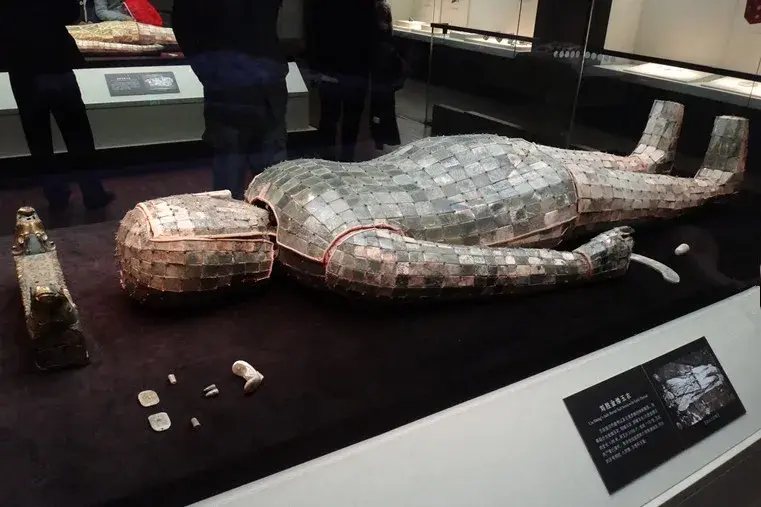
Liu Sheng (刘胜, died 113 BCE), posthumously known as King Jing of Zhongshan (中山靖王), was an imperial prince of the Western Han dynasty. He was the son of Emperor Jing (Liu Qi) by Consort Jia, and an elder half-brother of Emperor Wu (Liu Che). In 154 BCE, following the suppression of the Rebellion of the Seven States, Emperor Jing enfeoffed Liu Sheng as the first King of Zhongshan, with his capital at Lunu (modern Dingzhou, Hebei). Reigning for forty-two years through the reigns of Emperor Jing and Emperor Wu, Liu Sheng governed during a tumultuous era of increasing central control over regional principalities. In 138 BCE, during an imperial banquet in Chang'an, Liu Sheng famously wept upon hearing the court orchestra, moving Emperor Wu with an eloquent plea that vividly described how overzealous imperial inspectors harassed loyal princes. Persuaded by his tears and reasoned rhetoric, Emperor Wu mitigated surveillance and honored imperial kin. Realizing that the centralization drive was inevitable, Liu Sheng embraced political neutrality, indulging in wine, banquets, and music to demonstrate his lack of political ambition. He fathered over 120 sons, with Liu Bei, founder of Shu Han during the Three Kingdoms period, claiming direct descent from him. In 1968, the unlooted tomb of Liu Sheng and his consort Dou Wan at Mancheng yielded priceless treasures, including the celebrated jade burial suits sewn with gold thread.
Created King of Zhongshan by Emperor Jing after the suppression of the Seven States Rebellion.
His younger half-brother Emperor Wu ascends the throne; imperial control over feudal principalities intensifies.
Weeps at an imperial banquet in Weiyang Palace, delivering an eloquent petition that persuades Emperor Wu to curb administrative persecution of princes.
Engages in a famous dialogue with his elder brother, King Pengzu of Zhao, defending his hedonistic retreat as legitimate royal conduct.
Dies after forty-two years of reign; interred with royal honors at the Mancheng rock-cut tombs.
Liu Sheng was born in the imperial palace at Chang'an to Emperor Jing and Lady Jia, who also bore his elder full brother, Liu Pengzu, King of Zhao. In 154 BCE, regional princes led by the King of Wu rebelled against the Han throne. Following their defeat by imperial general Zhou Yafu, Emperor Jing sought to stabilize the northern marches by establishing loyal imperial sons on critical frontier thrones. In the sixth month of that year, the Emperor carved out the Kingdom of Zhongshan from former Zhao lands, investing Liu Sheng as its founding sovereign at Lunu (modern Dingzhou, Hebei).
Assuming authority over northern territories scarred by war, Liu Sheng implemented policies of benevolent moderation, reducing corvee labor and tax obligations to allow the populace to recover. In 141 BCE, Emperor Jing died and Crown Prince Liu Che ascended the throne as Emperor Wu. The new monarch initiated sweeping centralizing reforms, instructing regional chancellors, governors, and censors to maintain vigilant surveillance over feudal princes. Living under constant scrutiny, the vassal kings found themselves vulnerable to trivial accusations.
In 138 BCE, Liu Sheng and several of his royal brothers—including King Deng of Dai and King Fa of Changsha—traveled to Chang'an to pay formal homage to Emperor Wu. At an elaborate banquet in Weiyang Palace, as the imperial musicians performed classical pieces, Liu Sheng bowed his head and wept profusely. Surprised, Emperor Wu inquired why he displayed profound grief amidst such joyful celebration.
Stepping forward, Liu Sheng delivered a brilliant address steeped in classical allusions. He confessed that deep sorrow cannot be suppressed, explaining that the current imperial officials treated the Emperor's closest kin not with fraternal warmth, but as treasonous suspects. Local inspectors scrutinized every minor domestic infraction to fabricate memorials and claim administrative promotions. Liu Sheng likened the coordinated slander of the bureaucracy to "a multitude blowing together to move a mountain" and "swarms of mosquitoes creating the roar of thunder." Deeply moved by this impassioned appeal to fraternal bloodlines, Emperor Wu ordered imperial censors to cease vexatious surveillance, increased royal subsidies, and accorded greater respect to the princely courts.
Though Liu Sheng successfully shielded the imperial princes from immediate prosecutorial excess, he recognized that Emperor Wu's ultimate consolidation through the Decrees of Bestowing Grace (Tui'en Ling) was inevitable. To avert suspicion of harboring dynastic ambitions, Liu Sheng deliberately abandoned all participation in statecraft, devoting himself entirely to sensory pleasures, literature, and concubines.
His elder full brother, King Liu Pengzu of Zhao, pursued an entirely different lifestyle, patrolling streets at night and personally prosecuting criminals. Pengzu dispatched envoys to criticize Liu Sheng, claiming that indulging in wine and domestic concubines was negligent of royal obligations. Liu Sheng responded candidly: "As a royal prince, my brother busies himself with the menial duties of magistrates! A feudal lord's true purpose is to enjoy melodies, appreciate artistic performances, and delight in companionship. For you to usurp the magistrates' role is contrary to princely dignity." Pengzu had no retort. Liu Sheng lived in opulent security, fathering more than one hundred and twenty sons.
In 113 BCE, Liu Sheng passed away in Lunu after a reign of forty-two years. Emperor Wu conferred upon him the posthumous title of King Jing (Jing Wang).
At a critical juncture when imperial centralization threatened the autonomy of all feudal houses, Liu Sheng deployed strategic emotional candor at the imperial court. His dramatic tears and lucid memorial temporarily curbed bureaucratic excesses without provoking Emperor Wu's wrath, securing vital breathing space for the imperial nobility.
Recognizing the irresistible historical momentum toward centralized bureaucracy, Liu Sheng renounced administrative power, deploying a reputation for hedonism as a protective shield. By disavowing political ambitions, he preserved the tranquility of Zhongshan throughout decades of imperial purges, serving as a textbook model for aristocratic survival.
Liu Sheng's rock-cut cliff tomb in Mancheng, Hebei, discovered in 1968, remains one of the greatest archaeological discoveries in world history. Excavated alongside the adjacent tomb of his queen Dou Wan, the site yielded over ten thousand exquisite artifacts, including complete jade burial suits crafted with thousands of jade plaques linked by gold wire, the Changxin Palace Lamp, and intricate bronze burners inlaid with gold and silver. These masterpieces provide unprecedented insight into Western Han metallurgical sophistication, burial ideology, and aristocratic material culture.
FIGURES ASSOCIATED WITH THIS DYNASTY