Birth in Guangdong
Born into a Tanka seafaring family in Xinhui; gained deep expertise in maritime hydrology.
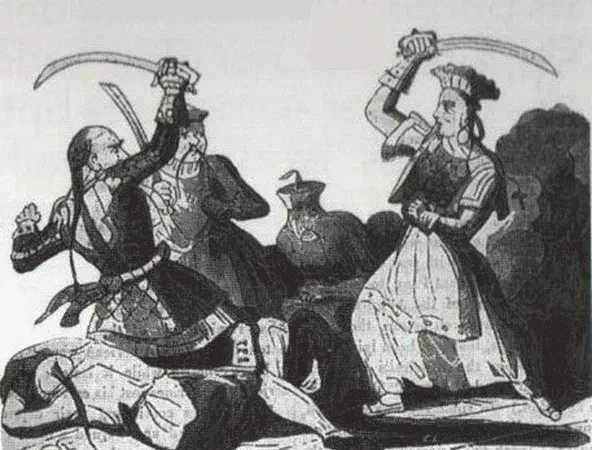
郑一嫂
Zheng Yisao (郑一嫂, 1775–1844), originally named Shi Xianggu (石香姑) and internationally known as Ching Shih or Madame Cheng, was a native of Xinhui, Guangdong. She rose from the marginalized Dan (Tanka) boat population to command the Red Flag Fleet, the largest and most formidable pirate confederation in world history during the Jiaqing reign of the Qing Dynasty. Originally married to pirate warlord Zheng Yi in 1801, she assumed…
Zheng Yisao (郑一嫂, 1775–1844), originally named Shi Xianggu (石香姑) and internationally known as Ching Shih or Madame Cheng, was a native of Xinhui, Guangdong. She rose from the marginalized Dan (Tanka) boat population to command the Red Flag Fleet, the largest and most formidable pirate confederation in world history during the Jiaqing reign of the Qing Dynasty. Originally married to pirate warlord Zheng Yi in 1801, she assumed supreme command after his accidental drowning in a typhoon in 1807. Allied with her adopted son and martial lieutenant Zhang Baozai, Zheng Yisao transformed the Red Flag Fleet into a disciplined armada of over six hundred junks and upwards of forty thousand fighters. Her fleet repeatedly routed Qing provincial navies, repelled Portuguese and British naval incursions, and ruled the South China Sea. In 1810, facing an imperial blockade and seeking a durable future for her people, she unarmed entered Guangzhou to negotiate terms directly with Viceroy Bai Ling, securing a full amnesty, retaining private property, and integrating thousands of pirates into the Qing maritime forces, with Zhang Baozai appointed naval commander and herself granted the rank of Imperial Noble Dame. Settling in Guangzhou in her later years, she provided strategic naval counsel to Imperial Commissioner Lin Zexu during the First Opium War, passing away peacefully in 1844 at the age of seventy.
Born into a Tanka seafaring family in Xinhui; gained deep expertise in maritime hydrology.
Married Red Flag pirate leader Zheng Yi, co-directing organizational and logistical affairs.
Took command of the Red Flag Fleet upon Zheng Yi's death, forming a partnership with Zhang Baozai.
Annihilated Zhejiang Provincial Admiral Xu Tingxiong and Guangdong Vice-Admiral Lin Guoliang's fleets.
Outmaneuvered a joint Sino-Portuguese armada at Lantau Island, breaking an eight-day naval encirclement.
Walked unarmed into Guangzhou to negotiate peaceful pacification with Viceroy Bai Ling, obtaining imperial amnesty.
Advised Commissioner Lin Zexu on coastal artillery and counter-British naval tactics during the Opium War.
Died peacefully in Guangzhou at age seventy.
Zheng Yisao was born in the fortieth year of the Qianlong reign (1775) into a Tanka (Danmin) family in Xinhui, Guangdong. The Tanka were a marginalized boat-dwelling population who lived aboard watercraft, legally barred from taking civil examinations or residing permanently ashore. From childhood, Shi Xianggu traversed the maritime estuaries of the Pearl River Delta, gaining an intimate understanding of tides, shoals, hidden harbors, and typhoon cycles. She possessed exceptional resourcefulness, mental resilience, and sharp organizational intelligence.
In 1801, Zheng Yi, a pirate chieftain belonging to a hereditary maritime clan dating back to the Ming-Qing transition, raided the coastal waters and married Shi Xianggu. Welcomed as "Zheng Yisao" (Elder Sister-in-law Zheng), she became an indispensable co-planner in fleet governance. At that time, coastal piracy was fragmented. Working together, Zheng Yi and Zheng Yisao united disparate maritime factions into a six-color pirate confederation (Red, Yellow, Blue, White, Black, and Purple flags), with Zheng Yi chosen as supreme confederate commander and his personal Red Flag Fleet standing as the foremost fighting force.
On November 16, 1807, Zheng Yi drowned off the coast of northern Vietnam when his flagship capsized in a sudden typhoon. His sudden death threatened to fracture the confederation into bloody internecine warfare. Stepping into the power vacuum, the thirty-two-year-old Zheng Yisao asserted her authority over the Red Flag Fleet. To secure martial loyalty, she elevated Zhang Baozai, a charismatic young commander originally adopted by Zheng Yi, to serve as her primary naval commander. The two formed an unbreakable marital and operational partnership that consolidated internal stability.
Upon consolidating leadership, Zheng Yisao instituted an unprecedentedly rigorous legal and operational code that transformed the rough maritime marauders into a disciplined naval hierarchy. The pirate code strictly mandated death by beheading for anyone who disobeyed orders, pilfered private loot, or deserted their post, with ears sheared off for minor infractions. Plundering from local coastal villagers without market compensation was punishable by death, ensuring peaceful commercial relations with fishermen and provisioning merchants.
Her behavioral regulations concerning female captives were strikingly progressive for the era. Sexual assault against female prisoners was punishable by immediate summary execution. Consensual relations required formal marriage registered with the fleet, and unfaithful husbands or abusers were put to death or cast overboard. These uncompromising rules elevated morale and operational unity above those of regular government naval forces, gaining the Red Flag Fleet extensive intelligence networks and supplies across Guangdong.
By 1809, Zheng Yisao commanded more than six hundred ocean-going junks and an army of thirty to forty thousand seasoned sailors, equipped with British and European heavy cannon. The imperial authorities were paralyzed by repeated catastrophes. In 1808, the Red Flag Fleet ambushed and killed Zhejiang Provincial Admiral Xu Tingxiong off the Leizhou Peninsula; months later, they destroyed Guangdong Vice-Admiral Lin Guoliang's fleet in the Pearl River estuary, capturing twenty naval vessels. In late 1809, Viceroy Bai Ling marshaled provincial forces alongside Portuguese gunboats from Macao to trap the Red Flag Fleet at Chek Lap Kok off Lantau Island. Zheng Yisao directed deceptive maneuvers and fireship sorties, turning favorable winds against the enemy and shattering the eight-day siege with minimal pirate casualties.
Recognizing that military confrontation was futile, Viceroy Bai Ling shifted from armed suppression to economic blockade and diplomatic pacification. Meanwhile, internal rivalry surfaced when the Black Flag Fleet under Guo Podai surrendered independently to the Qing court, tilting the balance of forces. Foresighted and pragmatic, Zheng Yisao realized that an insurgent fleet could not indefinitely outlast the logistical depth of the Qing Empire. She resolved to leverage her military supremacy to negotiate from a position of absolute strength.
On April 17, 1810, Zheng Yisao executed an extraordinary act of diplomatic courage. Defying the apprehensions of her captains, she traveled unarmed to Guangzhou accompanied only by an entourage of pirate women and children, walking straight into the yamen of Viceroy Bai Ling. Surprised and disarmed by her poise, Bai Ling received her with full protocol. The ensuing negotiations were intense: Zheng Yisao refused to kneel as a submissive criminal, demanding full pardons, retention of plunder, and military commissions for her leadership.
The two sides brokered a landmark agreement. Emperor Jiaqing granted general amnesty to the Red Flag Fleet; Zhang Baozai received a direct imperial commission as an officer in the Qing Imperial Navy, later rising to Brigade Vice-Admiral of the Penghu Islands. Zheng Yisao herself was formally bestowed the noble title of Imperial Dame. Tens of thousands of crewmen were pardoned and integrated into peaceful professions or naval crews, ending decades of devastating warfare in the South China Sea without further bloodshed.
Following their formal wedding officiated by the viceroy, Zheng Yisao accompanied Zhang Baozai across his imperial naval postings in Fujian, Guangdong, and the Pescadores. Zhang Baozai died in 1822 while serving as Vice-Admiral of Penghu. Following her husband's death, Zheng Yisao relocated with her young son Zhang Yulin to Guangzhou, establishing residence in the prosperous Thirteen Factories commercial district.
In 1839, Imperial Commissioner Lin Zexu arrived in Guangzhou to suppress the British opium trade, sparking the First Opium War. Despite being in her late sixties, Zheng Yisao demonstrated profound patriotic commitment. Drawing upon her peerless mastery of coastal hydrology, shoal dynamics, and western artillery firepower, she sought audience with Lin Zexu and provincial authorities. She offered invaluable tactical blueprints detailing how the Qing military could counter British deep-draft steam gunboats through shoal maneuvers, chain barriers, and specialized fire craft.
Zheng Yisao passed away peacefully at her residence in Guangzhou in the twenty-fourth year of Daoguang (1844) at the age of seventy. Her dramatic journey from Dan boatwoman to pirate queen and imperial noble dame cemented her stature as one of the most brilliant and formidable female naval commanders in global history.
Zheng Yisao's seminal historical contribution was the creation of a formalized legal code that governed dozens of pirate squadrons across the South China Sea. Unlike western corsairs who operated under loose articles of agreement, Zheng Yisao's code established institutional bureaucratic controls: all captured cargo was deposited into a collective treasury, with twenty percent redistributed to the capturing crew and eighty percent conserved for fleet maintenance, gunpowder replenishment, and provisions. Her strict penalization of sexual violence and protection of civilian trade enabled the confederation to sustain an autonomous maritime economy that rivaled the provincial state.
During the naval campaign of November 1809, a combined fleet of ninety-three Qing war junks and six heavily armed Portuguese gunboats trapped the Red Flag Fleet inside the narrow bay of Chek Lap Kok. Faced with superior firepower and a land blockade, Zheng Yisao maintained absolute discipline. She dispatched silent divers to foul the enemy rudders, deployed wind-driven fire rafts to disperse the Portuguese squadron, and launched a coordinated breakout during a wind shift, inflicting heavy casualties on the Qing provincial navy while losing fewer than forty men. The engagement compelled western trading companies and imperial governors to acknowledge her absolute supremacy over coastal waters.
FIGURES ASSOCIATED WITH THIS DYNASTY