Birth in Liaodong
Born into a banner scholarly family in Tieling; accompanied his father across Shaanxi and Shanxi in youth.
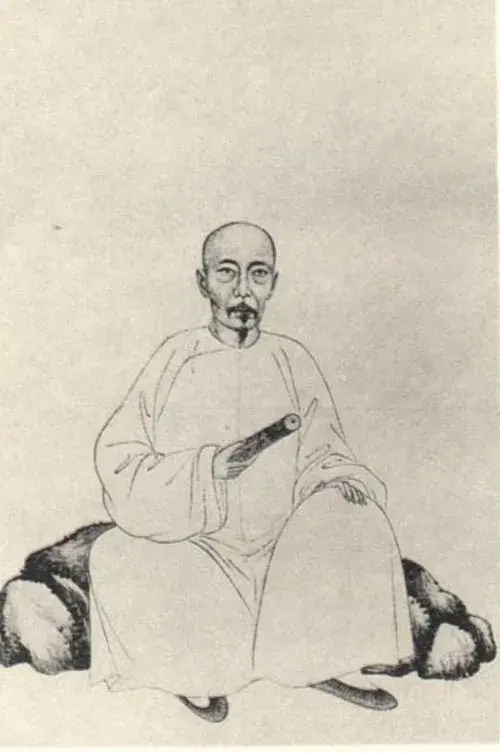
郑文焯
Zheng Wenzhuo (1856–1918), courtesy name Junchen, secondary courtesy name Shuwen, and pseudonyms Dahe, He'weng, Hedao'ren, Lenghong Cike, and Shoubi, ancestral home in Tieling, Fengtian (modern Tieling, Liaoning Province), registered under the Plain Yellow Banner Han Army, claimed descent from Han dynasty scholar Zheng Xuan. He was a celebrated late Qing lyric poet (Ci master), epigrapher, painter, and traditional medical…
Zheng Wenzhuo (1856–1918), courtesy name Junchen, secondary courtesy name Shuwen, and pseudonyms Dahe, He'weng, Hedao'ren, Lenghong Cike, and Shoubi, ancestral home in Tieling, Fengtian (modern Tieling, Liaoning Province), registered under the Plain Yellow Banner Han Army, claimed descent from Han dynasty scholar Zheng Xuan. He was a celebrated late Qing lyric poet (Ci master), epigrapher, painter, and traditional medical scholar, revered alongside Wang Pengyun, Zhu Zumou, and Kuang Zhouyi as one of the "Four Great Ci Poets of the Late Qing." Passing the provincial civil examinations as a Provincial Graduate (Juren) in 1875, he obtained the nominal rank of Cabinet Central Secretary. Following repeated failures at the metropolitan examinations, he abandoned civil career ambitions, engraved a personal seal reading "Retired Scholar of Jiangnan," and wandered through the Wu region, serving as a respected counselor to successive Jiangsu governors for four decades. Zheng championed the aesthetic ideals of pure elevation, mellow elegance, and metrical discipline, upholding Song dynasty masters Zhou Bangyan, Jiang Kui, and Wu Wenying as orthodox models, compiling Shoubi Ci, Lenghong Ci, and Bizhu Yuyin, gathered in The Complete Works of Dahe Shanren. A consummate philologist, he collated dozens of rare Song and Yuan lyric compendia including Juemiao Haoci and Qingzhen Ji. In painting, his finger paintings of plum blossoms were praised by Wu Changshuo as peerless since the early Qing. In his final years, he practiced surgery and medicine in Shanghai and Suzhou as a Qing loyalist, declining a chair in epigraphy at Peking University, passing away in Suzhou.
Born into a banner scholarly family in Tieling; accompanied his father across Shaanxi and Shanxi in youth.
Executed finger paintings at age thirteen, demonstrating precocious calligraphic and pictorial balance.
Passed the provincial examination as a Juren and acquired the rank of Cabinet Central Secretary.
Abandoned examination pursuits after repeated setbacks, joining Jiangsu Governor Wu Yuanbing's secretariat in Suzhou.
Dedicated his primary creative energies to ci poetry, establishing enduring friendships with Zhu Zumou and Wang Pengyun.
Published Annotated Juemiao Haoci and treatises on historical phonology and musical prosody.
Traveled briefly to Japan amidst the Boxer crisis, returning to reside between Shanghai and Suzhou, keeping cranes.
Maintained loyalist seclusion following the 1911 Revolution, refusing administrative positions under the Republic.
Declined Cai Yuanpei's invitation to become Professor of Epigraphy and campus physician; his wife Lady Zhang died.
Died of grief and chronic infirmity at his Dahe Mountain Studio in Suzhou at sixty-two.
In 1856 (the sixth year of the Xianfeng reign), Zheng Wenzhuo was born in Tieling, Fengtian Province. His family belonged to the Plain Yellow Banner Han Army establishment dating back to the early Qing dynasty, claiming descent from the Han dynasty classical commentator Zheng Xuan, leading Zheng to frequently sign his works as "Zheng of Gaomi." His father, Zheng Yingqi, served as a prominent imperial official, rising to become Governor of Shaanxi and Governor of Shanxi.
During his youth, Zheng accompanied his father to official postings across Shaanxi and Shanxi, enjoying affluent literati circumstances that afforded him access to rare imperial libraries and scenic landscapes. He possessed exceptional intellectual gifts, memorizing historical treatises with ease. At thirteen, he began painting with ink-dipped fingers; his finger-painted portrait Master Hanshan demonstrated ancient vigor that astonished regional connoisseurs. However, around his twentieth year, his father died amidst official intrigues, plunging the household into poverty. The sudden reversal transformed him from a privileged scion into a solitary scholar, imbuing his worldview with melancholic detachment.
In 1875 (the first year of the Guangxu reign), twenty-year-old Zheng passed the provincial civil service examinations in the capital, attaining the Juren degree and purchasing the rank of Cabinet Central Secretary. Over the following years, he sat seven times for the metropolitan examinations in Beijing, but his unyielding, archaic prose style failed to find favor with imperial examiners. Recognizing the vanity of civil examination competition, he engraved a seal reading "Retired Scholar of Jiangnan," swearing never again to pursue courtly advancement and turning his life entirely toward poetry, epigraphy, and painting.
In 1880 (the sixth year of the Guangxu reign), Jiangsu Governor Wu Yuanbing, admiring Zheng's literary talents, invited him into his provincial secretariat in Suzhou. Enchanted by the tranquil canals, historic gardens, and cultivated atmosphere of the ancient city, Zheng resolved to make Suzhou his permanent home.
For the next four decades, successive Governors of Jiangsu (including Chen Baozhen and Lu Chuanlin) retained Zheng as an honored guest and secretary. In the governor's yamen, Zheng handled cultural projects and foreign affairs documentation while refusing involvement in civil litigation and revenue disputes. Residing in his Dahe Mountain Studio outside the Chang Gate of Suzhou, he spent his leisure carrying a guqin and rare books on boat journeys across Lake Tai and Tiger Hill.
Around age thirty, Zheng transitioned from writing shi poetry to specializing in ci lyric poetry. Dismayed that post-Song lyric poetry had degenerated into shallow decorative sentimentalism or pedantic stiffness, he sought to restore classical purity. Forming an intimate friendship with fellow Jiangnan exile Zhu Zumou (Qiangcun), the two spent decades analyzing historical rhyme tables and four-tone musical balance, mastering Southern Song masters Jiang Kui, Wu Wenying, and Zhou Bangyan, formulating an aesthetic centered on pure elevation and classical restraint.
During the middle and late Guangxu period, as cultural societies flourished across Jiangnan, Zheng became a leading figure of regional arts. Alongside Wang Pengyun, Zhu Zumou, and Kuang Zhouyi, he formed the celebrated "Four Great Ci Poets of the Late Qing." The four masters convened regular poetic gatherings across Suzhou, Shanghai, and Wuxi, setting the aesthetic standards of late imperial lyricism.
Zheng lived with eccentric refinement. He cherished cranes, keeping white cranes at his studio that danced across the stone courtyard as he played the guqin, earning him the sobriquet "Dahe Shanren" (Recluse of the Great Crane Mountain).
Simultaneously, Zheng channeled immense intellectual energy into epigraphy and textual collation. He examined ancient rubbings and manuscripts in regional private libraries, demonstrating expertise in bronze inscriptions, guqin restoration, and classical garden horticulture. Leading Shanghai School masters such as Wu Changshuo, Lu Hui, and Gu Yun were his intimate companions; Wu Changshuo frequently sought Zheng's colophons and poetic evaluations for his masterworks.
In 1900, the Boxer Uprising devastated northern China. While the Southeast Mutual Protection agreement maintained regional peace, widespread anxiety prevailed. Zheng traveled briefly to Japan to inspect preserved classical manuscripts before returning to settle between Shanghai and Suzhou.
Following the 1911 Revolution and the Qing abdication, Zheng adhered to his banner loyalist heritage, choosing the life of an uncompromising Qing loyalist (Yimin). Identifying with the fourth-century recluse Tao Yuanming, he refused any administrative appointment under the Republic of China. Relocating to the Fuli Compound on Hankou Road in the International Settlement of Shanghai, he supported himself by selling paintings and practicing traditional medicine.
The Republican government made repeated attempts to recruit him. The Qing History Office invited him to compile dynastic biographies. In 1917, Peking University Chancellor Cai Yuanpei offered him the Chair of Epigraphy alongside the position of university campus physician, with a generous salary of eight hundred silver dollars monthly. However, Zheng declined on grounds of illness, preserving his integrity as a dynastic loyalist.
In his twilight years, Zheng devoted himself to traditional Chinese medicine, particularly surgery, dermatology (Yangke), and seasonal febrile diseases. Practicing medicine in Shanghai and Suzhou, he treated impoverished patients free of charge, distributing herbal decoctions without payment and gaining a reputation as an extraordinary healer throughout the Wu region.
In the winter of 1917, his devoted wife Lady Zhang passed away in Suzhou. Overwhelmed by grief, Zheng wept constantly before her shrine, planting white plum trees around his cottage and composing sorrowful elegies.
Shattered by bereavement and declining health, Zheng's condition deteriorated rapidly. In the autumn of 1918, the celebrated lyricist and medical master passed away at his Dahe Mountain Studio in Suzhou at sixty-two. Friends Wu Changshuo and Zhu Zumou oversaw his burial, and his writings were compiled into The Complete Works of Dahe Shanren.
In the history of Chinese lyric poetry (Ci), Zheng was a pivotal master who bridged late imperial aesthetics to modern scholarship. While the mid-Qing Changzhou School emphasized political allegory, late adherents lapsed into strained, obscure pedantry.
Zheng, alongside Wang Pengyun, Zhu Zumou, and Kuang Zhouyi, spearheaded the late Qing lyric revival. He formulated the aesthetic standard of "pure elevation and mellow grace," advocating a return to authentic song lyric forms. He traced lyric poetry back to Tang masters Wen Tingyun and Wei Zhuang, Southern Tang poets Li Jing and Li Yu, northern Song master Zhou Bangyan, and southern Song innovators Jiang Kui and Wu Wenying.
Zheng's lyric output was compiled into Shoubi Ci, Lenghong Ci, Bizhu Yuyin, and Tiaoya Yuji, later unified as The Lyric Poetry of Dahe Shanren. Characterized by meticulous tonal balance, austere vocabulary, and melancholic resonance, his verse expressed the profound anxiety of late imperial literati witnessing epochal cultural collapse. Theorist Wang Guowei praised his lyrics in Poetic Remarks in the Human World, and modern scholars acknowledge him as the most aesthetically refined of the Four Great Ci Poets of the Late Qing.
Zheng was also a founding pioneer of modern lyric philology and textual collation. Due to the scarcity of Song and Yuan editions, Ming woodblock printings had introduced numerous textual corruptions and metrical distortions into classical song compendia.
Spending decades exploring public and private libraries across Jiangnan, Zheng gathered Song and Yuan manuscripts, applying rigorous evidentiary philological techniques to collate classical texts. He systematically collated Juemiao Haoci, Qingzhen Ji, Mengchuang Ci, Huajian Ji, and Xiaoshan Ci, authoring monographs such as Collation of Juemiao Haoci and Deliberations on the Prosody of Ciyuan.
His collation corrected thousands of long-standing textual errors while verifying correct tonal placements and rhyming patterns according to ancient song meters, providing indispensable, highly reliable critical editions that established the foundation for modern Song lyric scholarship.
Zheng was an accomplished painter who developed an independent literati style. Having practiced finger painting since age thirteen, he infused literati poetic resonance and epigraphic brush strength into traditional painting.
His paintings were celebrated for desolate, antique purity devoid of commercial flashiness. He specialized in finger paintings of aged plum trees, pines, orchids, and autumn river landscapes, applying ink with fingertips, fingernails, and palms to create textured ink washes of monumental weathered weight. Shanghai School leader Wu Changshuo acclaimed his finger paintings as the finest since the early Qing master Gao Qipei.
His calligraphy reflected deep study of Han, Wei, and Six Dynasties steles, particularly the Tianfa Shenchen Stele, creating cold, rugged characters that harmonized with his painted colophons, profoundly shaping early Republican literati painting in Jiangnan.
Among late Qing scholars, Zheng was celebrated for his medical practice, embracing the ancient ideal that "if one cannot be a virtuous minister, one should be a benevolent physician."
Studying medical classics including the Yellow Emperor's Inner Canon and Treatise on Cold Damage, he developed specialized expertise in surgical dermatology (Yangke) and warm diseases. He maintained that external lesions stemmed from internal organ imbalances, requiring systemic herbal treatment alongside topical medicated ointments.
During his clinical practice in Suzhou and Shanghai, Zheng authored Essentials of Surgical Dermatology and Commentary on Dietary Healing from the Qianjin Fang, documenting effective empirical prescriptions. He provided free medical care to the poor, embodying the humane compassion of traditional Confucian literati.
FIGURES ASSOCIATED WITH THIS DYNASTY