Birth in Nan'an
Born on October 25 at the ancestral estate in Shijing, Nan'an, Fujian, as the eldest son of Zheng Chenggong and Lady Dong.
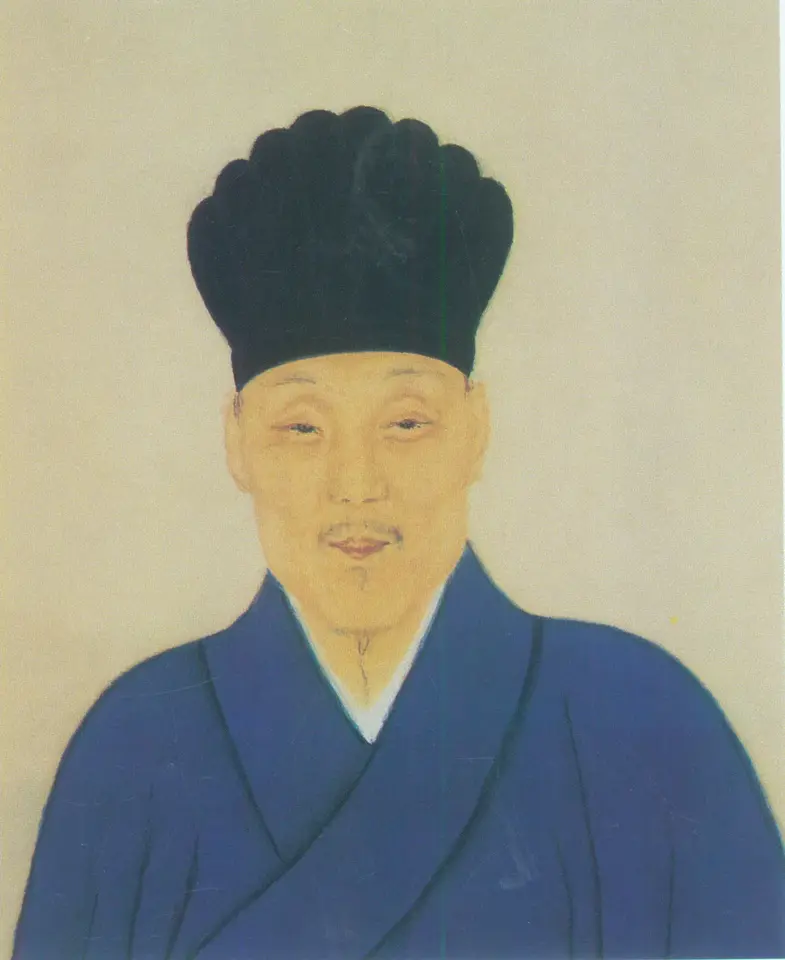
郑经
Zheng Jing (郑经, October 25, 1642 – March 17, 1681), courtesy name Xianzhi and alternate courtesy name Yuanzhi, pseudonym Shitian, was a native of Nan'an County, Quanzhou Prefecture, Fujian. He was a prominent military commander, statesman, and the second ruler of the Kingdom of Tungning (the Ming-Zheng regime on Taiwan), as well as the eldest son of the national hero Zheng Chenggong (Koxinga). In his early years, Zheng Jing…
Zheng Jing (郑经, October 25, 1642 – March 17, 1681), courtesy name Xianzhi and alternate courtesy name Yuanzhi, pseudonym Shitian, was a native of Nan'an County, Quanzhou Prefecture, Fujian. He was a prominent military commander, statesman, and the second ruler of the Kingdom of Tungning (the Ming-Zheng regime on Taiwan), as well as the eldest son of the national hero Zheng Chenggong (Koxinga). In his early years, Zheng Jing was entrusted with defending Siming Prefecture (modern Xiamen), directing logistics, troop mobilization, and provisions for offshore garrisons along the southeastern coast. Following Zheng Chenggong's recovery of Taiwan from Dutch colonial rule in 1661, a succession dispute erupted upon Zheng Chenggong's sudden death in 1662, when commanders on Taiwan proclaimed his uncle Zheng Xi as ruler of the Eastern Capital. Zheng Jing acted decisively, proclaiming his succession in Xiamen, leading a fleet across the Taiwan Strait, storming Anping, and defeating the rebel commanders to secure undisputed control. Ruling Taiwan for nearly two decades, he renamed the domain Tungning, self-styled as the Governor-General of Tungning, and relied heavily on chief civil advisor Chen Yonghua. He established Chengtian Prefecture alongside Tianxing and Wannian counties, enacted a military-agricultural garrison system that converted untamed plains into fertile rice and sugarcane paddies, erected Taiwan's first Confucian Temple to inaugurate higher civil examinations, and concluded commercial treaties with the English East India Company and Southeast Asian kingdoms, laying the institutional and agrarian foundations of modern Taiwanese civilization. In the resistance against the Qing dynasty, Zheng Jing staunchly preserved Ming loyalty, repeatedly rejecting Qing demands to shave his hair and submit to imperial suzerainty. During the Revolt of the Three Feudatories in 1674, he launched an amphibious counter-offensive on mainland China, capturing strategic coastal prefectures including Quanzhou, Zhangzhou, Chaozhou, and Tong'an. However, internal friction with southern feudal lords such as Geng Jingzhong, combined with logistical exhaustion and Qing counter-offensives, forced his retreat to Taiwan in 1680. Broken in health and spirit, Zheng Jing passed away at the Beiyuan Villa in Chengtian Prefecture in March 1681 at age thirty-eight. His defense of Ming institutions and pioneering development of Taiwan left an enduring legacy in early modern East Asian maritime history.
Born on October 25 at the ancestral estate in Shijing, Nan'an, Fujian, as the eldest son of Zheng Chenggong and Lady Dong.
As Zheng Chenggong sailed to liberate Taiwan from Dutch occupation, nineteen-year-old Zheng Jing was assigned to govern Siming (Xiamen) and manage supply lines.
Following Zheng Chenggong's sudden demise, generals on Taiwan elevated Zheng Xi; Zheng Jing declared his succession as Prince of Yanping and sailed to Taiwan, crushing the rebellion.
Under combined naval assaults from Qing forces and the Dutch East India Company, evacuated Xiamen and Kinmen, relocating administrative headquarters to Taiwan, which he renamed Tungning.
Guided by Chen Yonghua, constructed Taiwan's first Confucian Temple and the Minglun Hall in Chengtian Prefecture, establishing civil examinations and Confucian schooling.
Signed a formal trade agreement with the English East India Company in Anping, granting trading rights and importing firearms in exchange for Taiwanese refined sugar.
Responded to the Revolt of the Three Feudatories by launching a naval campaign across the Taiwan Strait, capturing Haicheng, Tong'an, Quanzhou, and Zhangzhou.
Defeated regional Qing commanders and occupied Chaozhou and sections of Huizhou, reaching the apex of his mainland military campaign.
Encircled as Geng Jingzhong surrendered to the Qing; cut off from supplies and defeated in field battles across southern Fujian.
Evacuated Kinmen and Xiamen under heavy Qing pressure; returned to Taiwan in poor health, delegating civil governance to Regent Zheng Kezang.
Passed away on March 17 at Beiyuan Villa in Chengtian Prefecture at age thirty-eight; given the posthumous title Prince of Chao.
Zheng Jing was born on October 25, 1642, in Shijing Town, Nan'an County, Quanzhou Prefecture, Fujian. His father was Zheng Chenggong (Koxinga), the celebrated anti-Qing naval commander and Southern Ming Prince of Yanping, while his mother, Lady Dong Yougu, hailed from an esteemed scholar-gentry lineage. As the eldest son, Zheng Jing received classical Confucian tutoring alongside instruction in maritime warfare and horsemanship, growing into a resolute and spirited youth.
In March 1661, resolving to secure a permanent agrarian and strategic redoubt for his armed forces, Zheng Chenggong launched an expedition with hundreds of war vessels across the Taiwan Strait to expel Dutch colonial forces from the island. Before departing, he entrusted nineteen-year-old Zheng Jing with governing Siming Prefecture (Xiamen) and Kinmen, charging him with the vital responsibility of dispatching provisions, munitions, and reinforcements to the frontlines while maintaining coastal defenses.
While defending Siming, Zheng Jing married the granddaughter of former Minister of War Tang Xianyue. The couple's relationship was distant and strained. During this period, Zheng Jing engaged in a liaison with Lady Chen Zhaoniang, the wet nurse of his younger brother Zheng Rui, fathering a son named Zheng Kezang in late 1661. Zheng Jing initially reported to his father in Taiwan that a concubine had given birth. Delighted by his first grandson, Zheng Chenggong dispatched rewards of silver and silk.
However, Tang Xianyue was outraged by the humiliation of his granddaughter and submitted a scathing letter to Zheng Chenggong, accusing Zheng Jing of violating domestic ethics and questioning how a commander unable to govern his household could govern an army. Bound by strict Confucian ethics and military discipline, Zheng Chenggong was infuriated. He issued secret orders to his elder brother Zheng Tai in Xiamen to execute Lady Dong (for failing to discipline her son), Zheng Jing, Lady Chen, and the infant Zheng Kezang. Stunned by the decree, senior generals Zheng Tai and Hong Xu united in refusing the command, executing only Lady Chen. Compounded by the news that his father Zheng Zhilong had been executed in Beijing and the Yongli Emperor murdered in Burma, Zheng Chenggong fell critically ill and died in Taiwan on June 23, 1662.
Zheng Chenggong's sudden demise plunged the fledgling maritime state into political turmoil. Generals Huang Zhao and Xiao Gongchen on Taiwan claimed that Zheng Jing's domestic conduct disqualified him from succession. They proclaimed Zheng Chenggong's younger brother, Zheng Xi, as the ruler of the Eastern Capital, fortifying Anping to bar Zheng Jing's landing.
Faced with the imminent disintegration of the regime, twenty-year-old Zheng Jing acted with remarkable poise. As the legitimate eldest heir, he declared his succession to the title of Prince of Yanping and Grand General Who Subdues Rivals, establishing a mourning hall in Siming. He appointed the scholar Chen Yonghua as his chief counselor, named Zhou Quanbin Commander of the Five Armies, and placed Feng Xifan in charge of his bodyguard, stabilizing loyalist forces in Xiamen.
Simultaneously, Qing Viceroy Li Shuaitai and Prince Geng Jimao dispatched envoys to Xiamen to offer terms of surrender. To prevent a Qing assault while he focused on Taiwan, Zheng Jing engaged in diplomatic parleys, proposing that Taiwan emulate Joseon Korea as a tributary state without shaving hair or submitting territory. Using the negotiations to buy time, Zheng Jing mobilized his fleet in November 1662 and crossed the Taiwan Strait. At Lu'ermen and Anping, loyalist troops under Zhou Quanbin routed the insurgent forces. Rebel leader Huang Zhao was killed in action, and Xiao Gongchen was executed. Zheng Jing placed his uncle Zheng Xi under house arrest and secured full command of Taiwan, preserving the dynastic continuity of the Zheng regime.
In 1663, Zheng Jing returned to Siming. Discovering that his uncle Zheng Tai had covertly aided the rebels and communicated with Qing officials, Zheng Jing invited him to a banquet in Xiamen and executed him. In response, Zheng Tai's kin and subordinates defected to the Qing with hundreds of vessels, severely weakening coastal defenses. In the winter of 1663, a joint Qing and Dutch armada attacked Kinmen and Xiamen, defeating Zheng Jing's fleet at sea. Realizing that offshore islands were unsustainable against overwhelming force, Zheng Jing ordered a complete strategic withdrawal in March 1664, relocating tens of thousands of soldiers, officials, and civilian families to Taiwan.
Arriving on Taiwan, Zheng Jing resolved to transform the island into a permanent political sanctuary. He renamed the Eastern Capital as "Tungning" (Eastern Peace), established himself as Governor-General of Tungning, and entrusted executive civil governance to Chen Yonghua, inaugurating systemic institutional development across the island.
To organize civil administration, Zheng Jing established Chengtian Prefecture, subdivided into Tianxing and Wannian counties (later elevated to subprefectures), alongside an administrative pacification bureau in Penghu. To counter the Qing dynasty's Great Clearance policy, which evacuated coastal populations and severed maritime supply lines, Zheng Jing instituted an extensive military-agricultural garrison system. Troops were deployed across the central and southern plains, cultivating virgin tracts while maintaining military training. This policy secured self-sufficiency in grain, turning coastal plains into fertile agricultural zones producing record harvests of rice and sugarcane.
Zheng Jing also pursued open international maritime commerce to break the Qing blockade. He dispatched merchant fleets to purchase raw silk, porcelain, and textiles along the Chinese coast, while trading with Japan, the Ryukyu Kingdom, Luzon (the Philippines), and Batavia (modern Jakarta). In 1670, Zheng Jing negotiated a formal trade treaty in Anping with representatives of the English East India Company, granting them commercial privileges and importing munitions, cannon, and textiles in exchange for Taiwanese white sugar and deerskins, establishing Taiwan as a major hub in early modern East Asian trade networks.
In civil and cultural development, Zheng Jing constructed Taiwan's first Confucian Temple in Chengtian Prefecture in 1666, founding the Minglun Hall as the island's supreme academy, celebrated as the "Foremost School of Taiwan." He ordered the establishment of district schools across towns and villages, mandating that boys attend school from age eight to study the Confucian classics. Zheng Jing also introduced the triennial civil service examination system, planting the roots of classical Chinese literacy and scholarship on the island frontier.
In late 1673, Wu Sangui rebelled in Yunnan, initiating the Revolt of the Three Feudatories across southern China. In March 1674, Geng Jingzhong revolted in Fuzhou, sending emissaries across the Taiwan Strait to enlist Zheng Jing's naval power in exchange for coastal territory in Fujian.
Viewing this as an opportunity to restore Ming rule, Zheng Jing sailed with hundreds of warships and tens of thousands of troops to Xiamen in May 1674. However, upon arrival, Geng Jingzhong reneged on his promise to cede Quanzhou and Zhangzhou for supply bases. Infuriated, Zheng Jing clashed with Geng's forces, triggering internecine fighting within the anti-Qing camp.
Deploying his naval superiority under General Liu Guoxuan, Zheng Jing captured key coastal cities including Tong'an, Haicheng, Quanzhou, and Zhangzhou. In 1676, he advanced south into Guangdong, defeating the forces of Shang Zhixin and capturing Chaozhou and parts of Huizhou. Controlling fertile coastal prefectures across Fujian and eastern Guangdong, Zheng Jing's forces disrupted Qing grain transport and threatened the southern empire.
However, the Zheng army excelled in amphibious warfare rather than deep inland cavalry engagements. As the Kangxi Emperor concentrated northern Eight Banners and Green Standard armies southward, Geng Jingzhong surrendered to the Qing and turned his forces against Zheng Jing. Isolated on the mainland, Zheng Jing faced logistical exhaustion as Taiwan's grain shipments dwindled and local populations groaned under heavy wartime levies. Defeated at Tong'an and Quanzhou by Qing forces under Prince Giyešu, Zheng Jing lost Haicheng and Xiamen in early 1680, evacuating Kinmen and retreating across the sea to Taiwan with his shattered army.
The catastrophic collapse of the mainland campaign devastated Zheng Jing's health and morale. Having witnessed the loss of thousands of veteran soldiers and the extinction of his continental ambitions, he withdrew from state affairs.
Beginning in the summer of 1680, Zheng Jing secluded himself at the Beiyuan Villa in Chengtian Prefecture (the site of modern Kaiyuan Temple in Tainan), indulging in wine and poetry. He delegated daily administrative and judicial governance to his capable eldest son, Regent Zheng Kezang, supported by chief minister Chen Yonghua. However, ambitious courtiers led by Feng Xifan conspired against Chen Yonghua, forcing him from military command. Chen Yonghua died of illness and heartbreak shortly afterward, stripping the regime of its primary administrative anchor.
On March 17, 1681, thirty-eight-year-old Zheng Jing passed away at the Beiyuan Villa. On his deathbed, he entrusted the seal of state to Regent Zheng Kezang. However, immediately following his demise, Feng Xifan and members of the Zheng clan staged a palace coup known as the Tungning Incident, strangling the capable Zheng Kezang and installing twelve-year-old Zheng Keshuang on the throne. The coup shattered the moral authority of the regime, leading directly to internal paralysis and paving the way for Admiral Shi Lang's conquest of Taiwan two years later.
Following Koxinga's death in 1662, insurgent generals on Taiwan attempted to partition the realm and install Zheng Xi. Zheng Jing acted decisively in Xiamen, sailing across the strait to suppress the rebellion and secure the capital of Anping.
This decisive action prevented the premature dissolution of the maritime state, consolidating royal authority under the Prince of Yanping and providing Taiwan with two decades of stable governance.
Confronted with the Qing Great Clearance policy that severed food shipments from the mainland, Zheng Jing instituted the military-agricultural garrison system across Taiwan.
Stationing troops across Tianxing and Wannian counties, he directed soldiers to clear wild river basins during agricultural seasons while training during winter months. This policy transformed thousands of hectares of wilderness into productive fields, generating substantial grain and sugar yields that resolved logistical crises and established the foundation of Taiwan's traditional agrarian economy.
Zhan Jing made foundational contributions to cultural development on Taiwan. Collaborating with Chen Yonghua, he founded Taiwan's first Confucian Temple and the Minglun Hall in Chengtian Prefecture in 1666, honored as the "Foremost School of Taiwan."
He established community academies and public schools across local districts, introducing universal education for eight-year-old boys and launching triennial civil examinations. This policy integrated the frontier island into mainstream Chinese literary and intellectual culture.
Zheng Jing pursued open maritime commercial policies to break the Qing economic blockade, operating extensive state-sponsored merchant fleets connecting Japan, the Ryukyu Kingdom, the Philippines, and Southeast Asia.
In 1670, he concluded a formal commercial treaty with the English East India Company in Anping, permitting the establishment of British trading houses and exchanging Taiwanese sugar and raw materials for firearms, gunpowder, and textiles, integrating Taiwan into early modern global trade networks.
During the Revolt of the Three Feudatories, Zheng Jing launched an extensive six-year amphibious counter-offensive on the mainland, capturing Quanzhou, Zhangzhou, and Chaozhou.
Although strategic rivalries with local warlords undermined his campaign, his forces tied down substantial Qing armies along the southeastern coast, demonstrating remarkable maritime tactical skill and unyielding loyalty to the Ming cause.
FIGURES ASSOCIATED WITH THIS DYNASTY