Accession to the Throne
Ascended the throne at a young age following King Beopheung's death, with state affairs managed by Queen Dowager Jiso as regent.
金彡麦宗
King Jinheung of Silla (金彡麦宗, 534–576), whose personal name was Kim Sam-maek-jong, was the 24th monarch of the ancient Korean kingdom of Silla and the principal architect of its golden age. A grandson of King Jijeung and a nephew as well as maternal grandson of King Beopheung, he ascended the throne in 540 under the regency of Queen Dowager Jiso before assuming personal rule. During his thirty-seven-year reign, King Jinheung…
King Jinheung of Silla (金彡麦宗, 534–576), whose personal name was Kim Sam-maek-jong, was the 24th monarch of the ancient Korean kingdom of Silla and the principal architect of its golden age. A grandson of King Jijeung and a nephew as well as maternal grandson of King Beopheung, he ascended the throne in 540 under the regency of Queen Dowager Jiso before assuming personal rule. During his thirty-seven-year reign, King Jinheung fundamentally transformed the geopolitical landscape of the Korean Peninsula. He instituted the Hwarang system to foster elite military and civic leaders, allied with Baekje to seize the Han River basin from Goguryeo, subsequently drove Baekje out to monopolize the entire river plain, and annexed Daegaya. Securing direct maritime access to China across the Yellow River and receiving formal investiture from Northern Qi, King Jinheung tripled Silla's territory and laid the indispensable foundation for its eventual unification of the Three Kingdoms.
Ascended the throne at a young age following King Beopheung's death, with state affairs managed by Queen Dowager Jiso as regent.
Adopted the era name Gaeguk, assumed personal authority, and allied with Baekje to conquer the upper Han River valley from Goguryeo.
Expelled Baekje garrisons from the lower Han River, established Shin Province, and gained vital maritime access to the Yellow Sea.
Baekje launched a massive counteroffensive; Silla crushed the allied forces at Gwansan Fortress, slaying King Seong of Baekje.
Dispatched generals Isabu and Sadaham to conquer Daegaya, completely integrating the Nakdong River basin into Silla territory.
Emperor Wucheng of Northern Qi invested King Jinheung as Bearer of the Imperial Credential, Commandant of the Eastern Barbarians, Duke of Nangnang Commandery, and King of Silla.
Passed away after a reign of thirty-seven years and was interred north of Aegong Temple with the posthumous title King Jinheung.
Kim Sam-maek-jong was the grandson of King Jijeung and the son of Galmunwang Kim Ipjong. In the seventh month of 540, King Beopheung, the 23rd monarch of Silla, passed away without a direct male heir. The young Sam-maek-jong was selected to inherit the sovereign throne. Because of his youth, his mother, Queen Dowager Jiso, acted as regent. Under her stewardship, the court preserved administrative and religious frameworks established during the Beopheung reign.
In 551, having attained majority, King Jinheung inaugurated his personal reign and proclaimed the era name Gaeguk (Founding of the Kingdom). Confronting internal succession turmoil within northern Goguryeo, King Jinheung forged a strategic military alliance with King Seong of Baekje to initiate a joint northern campaign. In 551, allied armies overran southern Goguryeo, with Silla securing ten commanderies across the mountainous upper Han River valley while Baekje recovered six commanderies along the lower reaches.
The fertile and populous Han River basin constituted the geopolitical key to peninsular dominance and provided direct maritime access to imperial China. In 552, Goguryeo, under acute pressure from Northern Qi and the Gokturks, offered a peace accord to Silla. King Jinheung made the bold strategic decision to discard his alliance with Baekje. In 553, Silla armies launched a preemptive strike, expelling Baekje forces from the lower river plains, establishing Shin Province, and appointing General Kim Mu-ryeok as provincial governor.
Outraged by this betrayal, King Seong of Baekje formed a coalition with Yamato forces and Daegaya, mobilizing thirty thousand troops to invade Silla in 554. The decisive confrontation unfolded at Gwansan Fortress (modern Okcheon). Silla forces executed a devastating ambush, annihilating the invasion army and killing King Seong on the battlefield along with four senior ministers and twenty-nine thousand soldiers. The triumph at Gwansan shattered Baekje's offensive capacity for generations and secured permanent Silla hegemony over the Han River valley.
With the northern front secured, King Jinheung directed his military forces toward the southern Nakdong River basin. In 562, Daegaya rebelled against Silla authority. King Jinheung dispatched premier generals Isabu and the youthful prodigy Sadaham to conduct a decisive expedition, rapidly pacifying the resistance and formally annexing Daegaya into Silla's administrative grid.
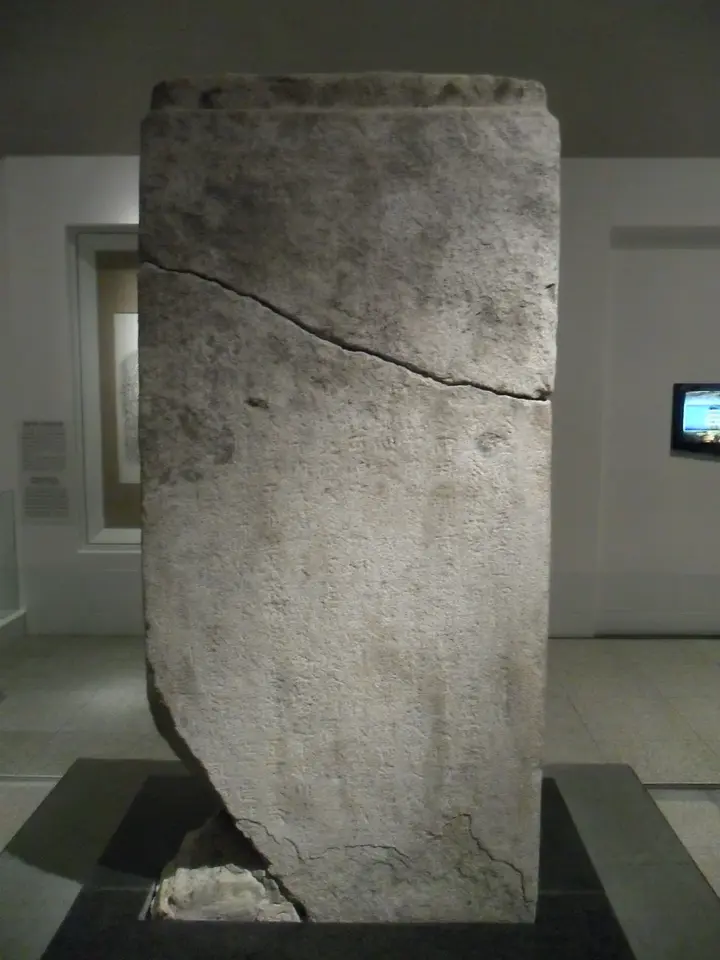
Simultaneously expanding northeastward since establishing Biryeolhol Province in 556, Silla forces advanced deep along the eastern coastal strip, eventually reaching modern Riwon County in South Hamgyong Province. To inspect these frontier garrisons and integrate newly subjugated populations, King Jinheung conducted extensive inspection tours across his realm, erecting monument stelae at Changnyeong, Bukhansan, Hwangchoryeong, and Maunryeong. Under his energetic governance, Silla's geographic extent expanded threefold.
In his mature years, King Jinheung instituted profound social and military reforms. To recruit outstanding administrative and military talents regardless of lineage rigidity, he created the celebrated Hwarang institution. Originally structured around prominent maidens known as Wonhwa, the organization was reorganized for elite aristocratic youths following factional rivalries. Guided by Confucian ethics, martial training, and the Five Secular Precepts, the Hwarang corps became a formidable nursery for future commanders and statesmen who eventually spearheaded peninsular unification.
King Jinheung was an ardent devotee of Buddhism, envisioning himself as a Chakravartin (wheel-turning king) protecting the state. He commissioned the monumental construction of Hwangnyong Temple, which required over a decade to complete, and welcomed Buddhist monks returning from Chen Dynasty China with relics and scriptures. In his final years, King Jinheung renounced worldly splendor, received the monastic tonsure under the dharma name Beobun, and donned monk's robes. He passed away in the eighth month of 576 and was buried north of Aegong Temple.
King Jinheung's most far-reaching geopolitical conquest was the annexation of the complete Han River basin. Securing this vital corridor liberated Silla from geopolitical encirclement and opened unobstructed sea lanes across the Yellow Sea to mainland China. In 565, Emperor Wucheng of Northern Qi formally invested King Jinheung as Bearer of the Imperial Credential, Commandant of the Eastern Barbarians, Duke of Nangnang Commandery, and King of Silla, acknowledging Silla as an independent power within the East Asian tributary sphere.
The Hwarang system established by King Jinheung was both a premier leadership academy and a crucible for aristocratic cohesion. Instilling values of sovereign loyalty, filial piety, camaraderie, courage without retreat, and righteous restraint, the institution nurtured generations of iconic commanders like Sadaham and Kim Yu-sin, providing the military and moral vitality that propelled Silla to ultimate supremacy.
FIGURES ASSOCIATED WITH THIS DYNASTY