Military Birth
Born in Chenzhou as the second son of loyalist commander Zhao Chou, endowed with striking presence.
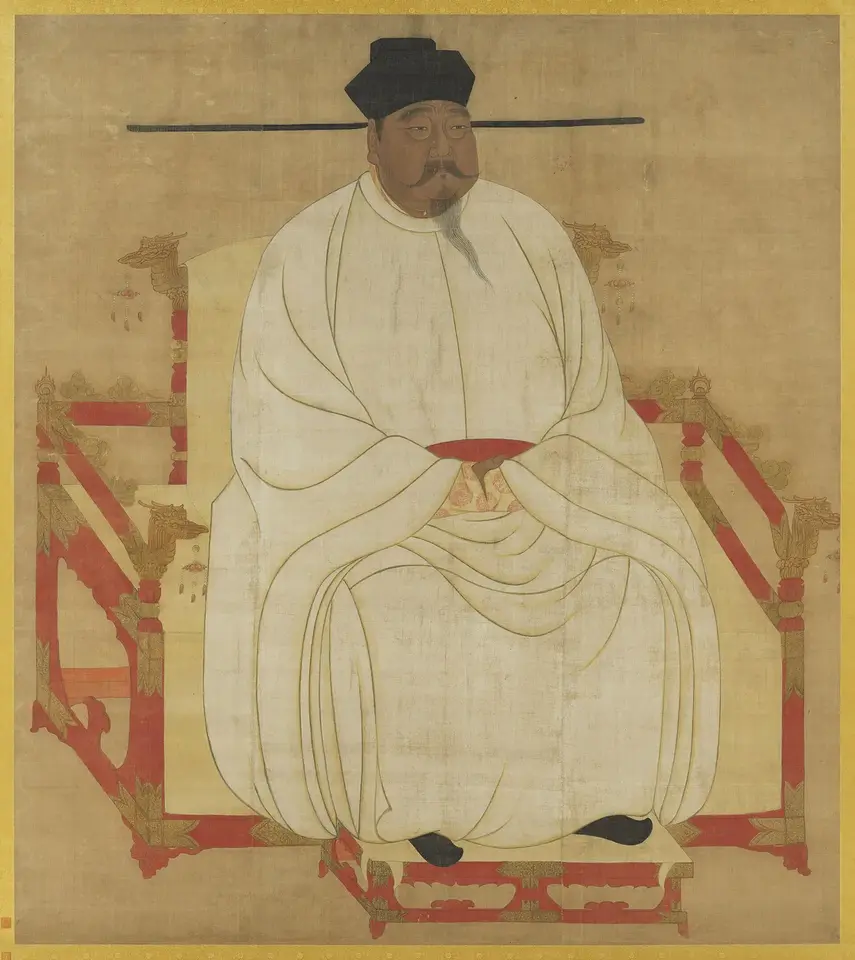
赵颜
Zhao Yan (赵颜, 882–923), an ancestral native of Xiangcheng, Chenzhou (modern Shenqiu County, Henan Province), was an aristocratic official and military scion of the Later Liang dynasty during the Five Dynasties and Ten Kingdoms period. He was the second son of late Tang loyalist general Zhao Chou (Military Commissioner of Zhongwu Army and Prefect of Chenzhou) and the husband of Princess Jinhua, third daughter of Emperor Taizu…
Zhao Yan (赵颜, 882–923), an ancestral native of Xiangcheng, Chenzhou (modern Shenqiu County, Henan Province), was an aristocratic official and military scion of the Later Liang dynasty during the Five Dynasties and Ten Kingdoms period. He was the second son of late Tang loyalist general Zhao Chou (Military Commissioner of Zhongwu Army and Prefect of Chenzhou) and the husband of Princess Jinhua, third daughter of Emperor Taizu of Later Liang (Zhu Wen). Distinguished by handsome posture and familiarity with legal and administrative codes, Zhao Yan earned deep imperial trust due to his lineage's military prestige. Following the founding of the Later Liang dynasty in 907, Zhu Wen wedded Princess Jinhua to Zhao Yan, investing him as Commandant-Escort and appointing him General-in-Chief of the Right Guard. Under Emperor Modi (Zhu Youzhen), Zhao Yan capitalized on royal marital connections, rising rapidly to Commissioner for State Revenue and Minister of Revenue. In these roles, he exercised absolute authority over land taxes, salt monopolies, canal grain transport, and logistical provisions, emerging as a central oligarch in the Later Liang court. During the climactic struggle between Later Liang and the Shatuo Turks of Later Tang, Zhao Yan formed a self-serving faction with fellow imperial in-laws Zhao Yan and Zhang Hanjie. They dominated court affairs, deluded the young sovereign, and alienated veteran commanders, precipitating the systemic breakdown of Liang governance. In 923, Emperor Zhuangzong of Later Tang (Li Cunxu) led a blitzkrieg across the Yellow River, capturing Bianzhou and extinguishing the Later Liang dynasty. Following the fall of the capital, Zhao Yan was captured and publicly executed by beheading in the bustling marketplace of Kaifeng at forty-two.
Born in Chenzhou as the second son of loyalist commander Zhao Chou, endowed with striking presence.
Experienced the heroic defense of Chenzhou against Huang Chao's besieging armies under his father's command.
Zhu Wen founded Later Liang, wedding Princess Jinhua to Zhao Yan and granting him the title of Commandant-Escort.
Appointed Commissioner for State Revenue, directing taxation, agricultural levies, and state finance.
Advanced to Minister of Revenue, dominating metropolitan governance alongside consort kin.
Later Tang forces sacked Kaifeng; Zhao Yan was captured and executed in the market at forty-two.
Zhao Yan was born in 882 into a renowned military clan in the Central Plains during the reign of Emperor Xizong of Tang. His father, Zhao Chou, was a distinguished commander of the late Tang who, during the height of Huang Chao's agrarian insurrection, refortified Chenzhou, hoarded supplies, and led garrison troops in repelling Huang Chao's siege of nearly three hundred days, winning enduring acclaim.
Zhao Yan ranked second among Zhao Chou's sons, his elder brother Zhao Chang succeeding to the Zhongwu military commandery. Amid the chaotic fragmentation of the late Tang, Zhu Wen, Military Commissioner of Xuanwu, placed supreme value on the martial standing of the Chenzhou Zhao lineage, forging an enduring political and marital alliance.
In 907, Zhu Wen deposed the puppet Tang monarch Emperor Aidi and established the Later Liang dynasty as Emperor Taizu. To solidify his regional hegemony, Taizu gave his third daughter, Princess Jinhua, in marriage to Zhao Yan. Zhao Yan was created Commandant-Escort, showered with royal gifts, commissioned General of the Right Thousand Bulls Guard, and promoted to General-in-Chief of the Right Guard, becoming an influential aristocratic fixture in the early Liang court.
Following the death of Emperor Taizu, violent succession struggles shook the Liang court. In 913, Zhu Youzhen murdered his patricidal brother Zhu Yougui to seize the throne as Emperor Modi.
Mild and suspicious by nature, Emperor Modi mistrusted founding statesmen such as Jing Xiang and Li Zhen, choosing instead to place absolute reliance upon his inner circle of marital relatives. Zhao Yan, as the emperor's aunt-husband (consort of Princess Jinhua), quickly consolidated authority alongside another royal son-in-law, Zhao Yan (husband of Princess Changle), and consort brother Zhang Hanjie.
In the early Zhenming era, Modi appointed Zhao Yan Commissioner for State Revenue, concurrently naming him Minister of Revenue. In Five Dynasties administration, the commissioner directed land taxation, state salt and liquor monopolies, twice-yearly revenue collections, and logistical mobilization for the military, serving as the central economic engine of wartime regimes. Zhao Yan was astute with account ledgers, yet to curry favor with the throne, he imposed crushing tax burdens, exactions, and surcharges across Henan and Jianghuai, impoverishing common farmers to fill royal coffers. Concurrently, he accepted bribes from regional military commanders, accumulating immense personal wealth and constructing lavish mansions across the capital.
In the decadelong war of attrition between Later Liang and the Shatuo Jin forces under Li Cunxu, Zhao Yan, along with Zhao Yan and Zhang Hanjie, operated as a monopolistic faction, slandering capable officials before the throne. Whenever battlefield crises emerged, instead of formulating sound military strategies, they cast doubt upon veteran generals such as Liu Xun, Jing Xiang, and Duan Ning, meddling in military commands and causing Later Liang to squander crucial opportunities in the battles of the Yellow River.
In the tenth month of 923, Li Cunxu, having proclaimed the Later Tang dynasty, launched a daring strategic strike. Personally commanding Shatuo cavalry, Zhuangzong bypassed fortified defensive lines, shattered Duan Ning's main army at Yangliu Crossing, and raced unhindered toward the undefended Liang capital of Bianzhou.
Taken completely by surprise, the Later Liang court collapsed in panic. In despair, Emperor Modi ordered his bodyguard Huangfu Lin to end his life, bringing the Later Liang dynasty to an end. Li Cunxu entered the imperial palace of Kaifeng and launched a sweeping purge of corrupt in-laws and oligarchs. Aware of his culpability, Zhao Yan attempted to flee during the chaos but was swiftly apprehended by Later Tang cavalry.
Emperor Zhuangzong decreed that the traitorous relatives who had ruined the realm—Zhao Yan, Zhao Yan, and Zhang Hanjie—be escorted to the public marketplace of Kaifeng. Their crimes of fiscal oppression and dynastic subversion were proclaimed before the assembled populace, and they were summarily beheaded. Zhao Yan was executed at forty-two, and his accumulated fortunes were confiscated by the Later Tang treasury. His tragic end stands as a vivid historical portrait of corrupt imperial in-laws whose rapacious governance hastened dynastic ruin.
As the second son of late Tang loyalist Zhao Chou, he wedded Zhu Wen's third daughter, Princess Jinhua, receiving the titles of Commandant-Escort and General-in-Chief of the Right Guard.
Under Emperor Modi, he was promoted to Commissioner for State Revenue and Minister of Revenue, monopolizing fiscal extractions, transport levies, and military grain logistics.
Forming a dominant faction with consort relatives Zhao Yan and Zhang Hanjie, he suppressed capable commanders and levied crushing taxes that crippled dynastic defenses.
Captured when Later Tang forces stormed Kaifeng in 923, he was condemned for dynastic ruin and beheaded in the public market at age forty-two.
FIGURES ASSOCIATED WITH THIS DYNASTY