Abandoning Civil Examinations
Followed his father's instruction to study medical classics, giving up civil examination pursuits to specialize in pharmacology.
赵学敏
Zhao Xuemin, courtesy name Shuxuan and pseudonym Yiji, was a native of Qiantang County, Hangzhou Prefecture, Zhejiang Province, and one of the most prominent medical scholars and pharmacologists of the Qianlong and Jiaqing eras of the Qing dynasty. Born into an official and scholarly family, his father served as Assistant Subprefect of Yongchun and Magistrate of Longxi in Fujian, where he distributed herbal preparations that…
Zhao Xuemin, courtesy name Shuxuan and pseudonym Yiji, was a native of Qiantang County, Hangzhou Prefecture, Zhejiang Province, and one of the most prominent medical scholars and pharmacologists of the Qianlong and Jiaqing eras of the Qing dynasty. Born into an official and scholarly family, his father served as Assistant Subprefect of Yongchun and Magistrate of Longxi in Fujian, where he distributed herbal preparations that saved tens of thousands during an epidemic, subsequently directing his sons to study medicine alongside Confucian texts. Zhao abandoned civil examination ambitions in his youth to devote his life to medical research. Establishing the "Yangsu Garden" in Hangzhou to cultivate and observe medicinal herbs, he simultaneously ran the "Liji Hall" clinic to diagnose and treat patients for decades. Recognizing that folk pharmacological practice had developed dramatically in the two centuries following Li Shizhen's Ming dynasty masterpiece, Zhao spent over forty years gathering empirical formulas and rare manuscripts. In 1765 (the thirtieth year of the Qianlong reign), he completed the monumental ten-volume Supplement to the Compendium of Materia Medica (Bencao Gangmu Shiyi), incorporating 716 medicinal substances absent from previous pharmacopoeias and correcting dozens of historical errors. In addition, acquiring the empirical wisdom of itinerant healer Zhao Baiyun, he compiled Chuanya, creating the first systematic monograph on Chinese folk itinerant medicine and making foundational contributions to traditional Chinese pharmaceutical science.
Followed his father's instruction to study medical classics, giving up civil examination pursuits to specialize in pharmacology.
Built the "Yangsu Garden" at Hangzhou to cultivate medicinal plants and opened the "Liji Hall" clinic for the destitute.
Formed a close bond with itinerant healer Zhao Baiyun, receiving secret empirical formulas and therapeutic methods.
Systematized itinerant healing arts, completing the four-volume inner and outer treatises of Chuanya.
Concluded the initial ten-volume draft of the monumental Supplement to the Compendium of Materia Medica.
Continuously updated empirical notes and clinical formulas, perfecting the twelve-part Liji medical series in old age.
Zhao Xuemin was born into a distinguished scholar-official household in Qiantang, Zhejiang. His father, Zhao Youcheng, held official posts including Assistant Subprefect of Yongchun and Magistrate of Longxi in Fujian Province. During the early Qianlong period, a virulent epidemic devastated the Xiasha district of Hangzhou, claiming countless lives. Deeply moved by the populace's suffering, Zhao's father engaged prominent physicians and personally financed the mass compounding of medicinal pills and decoctions, saving tens of thousands of victims.
This experience left a permanent impression upon Zhao Xuemin and his younger brother Zhao Xuekai. Their father instructed them: "If Confucian scholarship cannot relieve all under heaven, practicing medicine to save lives accumulates greater virtuous merit." Endowed with intellectual acuity, Zhao studied Confucian classics as an adolescent, yet finding the rigid eight-legged essay system constricting, he abandoned civil examination ambitions. Gathering astronomical, medical, pharmacological, and botanical texts, he immersed himself in medical scholarship, meticulously transcribing thousands of fascicles of historical notes.
To avoid the common failing of literati physicians who debated theoretical texts without practical experience, Zhao created a dedicated herbal botanical nursery beside his residence, naming it "Yangsu Garden." He collected wild seedlings from the hills and valleys of Jiangnan, cultivating them within the garden. Across all four seasons, he documented the life cycle of herbs from sprouting to flowering and seeding, carefully recording their environmental requirements and physiological properties under rigorous comparative trials.
Adjacent to his garden, Zhao established the "Liji Hall" clinic to provide medical treatment and dispense medicines. Zhao and his brother lived and worked within the clinic for decades, attending to patients in all seasons. For impoverished patients, the brothers charged no medical fees and frequently provided rare authentic herbs free of cost. Decades of clinical practice and empirical cultivation provided Zhao with an unrivaled mastery of pulse diagnosis, formula design, herb identification, and processing standards.
In clinical practice, Zhao observed that beyond elite literati physicians, vast numbers of itinerant healers wandered the empire, carrying distinctive brass bells to announce their presence. Although lacking imperial degrees and often disparaged by scholar-doctors, these itinerant healers possessed highly potent emergency remedies and unique manipulation techniques refined across centuries.
Zhao's clansman, Zhao Baiyun, was an itinerant healer renowned throughout eastern Zhejiang. Zhao Baiyun recognized that these empirical remedies risked being lost because they relied entirely on oral transmission, while unscrupulous charlatans exploited secrecy to deceive the public. Around 1755, Zhao Xuemin formed an intimate friendship with Zhao Baiyun. Touched by Zhao Xuemin's integrity, Zhao Baiyun imparted his lifelong treasury of empirical prescriptions, specialized tools, and oral mnemonics. Integrating these with widespread folk recipes, Zhao Xuemin completed Chuanya (both Inner and Outer Treatises) in 1759, elevating grassroots healing into legitimate medical literature.
While studying Li Shizhen's Ming dynasty masterpiece Compendium of Materia Medica (Bencao Gangmu), Zhao noticed that more than two centuries had elapsed since its compilation. In the intervening years, clinical practice had developed substantially, introducing numerous imported Western medicines, borderland remedies, and regional folk herbs that Li had never recorded, while Li's original work contained occasional inaccuracies regarding botanical identification and therapeutic qualities.
Zhao resolved to rectify these omissions and errors. Leveraging Hangzhou's status as a commercial metropolis and intellectual center, he consulted traveling merchants, apothecaries, itinerant physicians, and collectors. Whenever encountering a previously unrecorded substance, he cross-checked textual sources and verified physical specimens. From his initial 1765 manuscript until his final years in the Jiaqing reign, Zhao devoted over four decades to expanding and refining his ten-volume Supplement to the Compendium of Materia Medica, creating a milestone in Qing pharmacology.
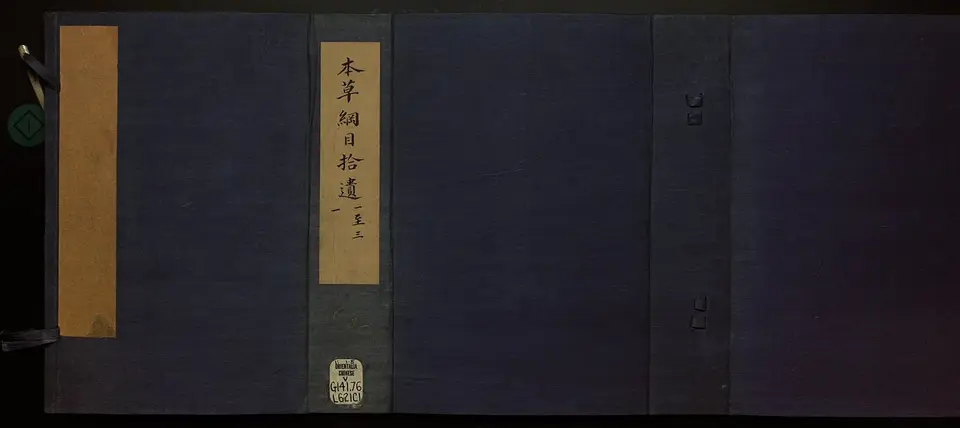
Zhao Xuemin's most enduring scholarly achievement was the compilation of the ten-volume Supplement to the Compendium of Materia Medica. While Li Shizhen's work synthesized earlier pharmacopoeias with 1,892 entries, pharmacological knowledge had expanded dramatically. Adopting a rigorous evidential approach, Zhao undertook an unprecedented documentation of previously unrecorded substances.
The supplement was organized into eighteen major categories: Water, Fire, Earth, Metal, Stone, Herbs, Trees, Vines, Flowers, Fruits, Grains, Vegetables, Utensils, Birds, Beasts, Scales, Shells, and Insects. He compiled 716 medicinal substances absent from Li Shizhen's work, predominantly derived from genuine folk clinical practice. Each entry systematically recorded historical origins, botanical morphology, geographic provenance, thermal nature, flavor, and therapeutic formulas.
Crucially, Zhao opened the first volume with a dedicated "Rectifications" chapter. Discarding blind deference to ancient authorities, he precisely corrected dozens of inaccuracies in Li Shizhen's text concerning taxonomic misclassifications, erroneous properties, and botanical confusions. The work is widely recognized as the most valuable and authoritative pharmacopoeia of the Qing dynasty.
In imperial medical history, itinerant healers were routinely marginalized by orthodox literati physicians due to their oral traditions. Zhao broke with conventional prejudice, recognizing the practical value of itinerant techniques characterized by simple preparations and rapid clinical results.
Collaborating with Zhao Baiyun, he compiled the eight volumes of Chuanya, collecting over a thousand empirical prescriptions. The treatise systematically explained unique itinerant methodologies such as intercepting methods (rapidly halting acute illnesses), emetics, and purges, alongside acupuncture, moxibustion, poultices, herbal fumigation, medicated washes, and nasal insufflation.
Moreover, Zhao candidly exposed fraudulent practices and counterfeit drug preparations employed by deceptive practitioners, providing guidelines for distinguishing genuine treatments. The book rescued valuable folk remedies from oblivion while establishing ethical clinical standards, remaining a foundational classic in the study of Chinese itinerant medicine.
During the Qianlong reign, maritime commerce expanded along the southeastern coast, bringing an influx of Western knowledge and trade goods. Open-minded and intellectually curious, Zhao incorporated numerous Western medicinal products and borderland botanical remedies into his pharmacopoeia.
In the Supplement, Zhao became among the earliest Chinese scholars to systematically document Western substances, including cinchona bark (quinine raw material), essential oils, American ginseng, snuff, vanilla, and nitric acid, recording their properties and dosage protocols.
Furthermore, he documented alpine botanicals from the Tibetan Plateau and southwestern frontiers, such as cordyceps, Tibetan safflower, and snow lotus, explaining their efficacy in clearing heat and tonifying lungs and kidneys. This cosmopolitan perspective expanded the horizons of traditional Chinese pharmacology beyond the Central Plains.
Beyond prolific writing, Zhao placed paramount emphasis on popularizing medical knowledge. Concerned that esoteric medical treatises failed to benefit common people, he organized his lifelong writings into the Liji Twelve Works, covering internal medicine, external medicine, gynecology, pharmacology, emergency care, and longevity practices.
The collection encompassed Chuanya, the Supplement to the Compendium of Materia Medica, Bencao Hua, and Yilin Jiye. Although the high costs of woodblock printing prevented the complete publication of all twelve works during his lifetime, manuscript copies circulated widely across Jiangnan. Throughout decades of practice, Zhao remained committed to charitable medical consultations and free drug distribution, establishing an enduring standard of compassionate, evidential medical practice.
FIGURES ASSOCIATED WITH THIS DYNASTY