Giving Birth to Ying Zheng
Gave birth to Ying Zheng in Handan, State of Zhao, and was established as the primary consort of Qin prince Yiren.
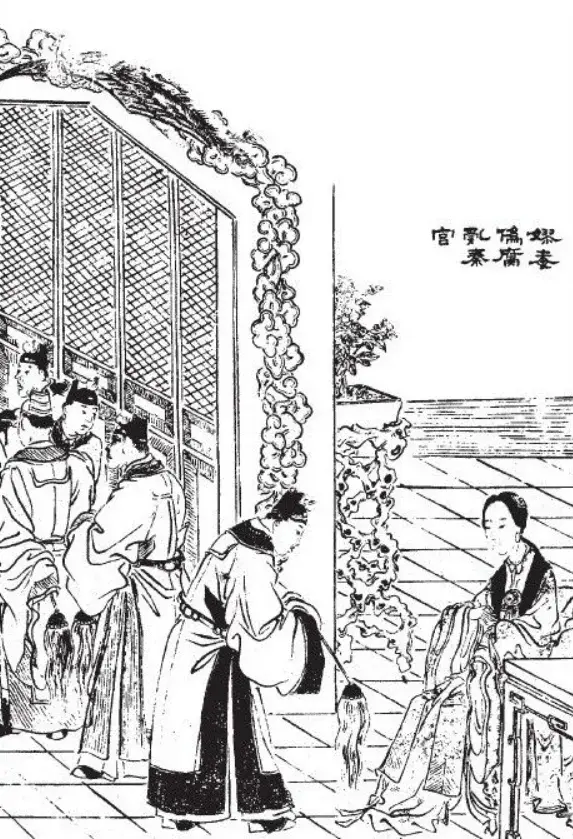
赵姬
Zhao Ji (赵姬, ?–228 BCE), whose personal name is unrecorded in historical annals, was a native of Handan in the State of Zhao during the late Warring States period. She was the Queen Consort of King Zhuangxiang of Qin (Yiren / Zichu) and the biological mother of Ying Zheng, the First Emperor of Qin (Qin Shi Huang). Following the unification of China, Qin Shi Huang posthumously elevated her with the imperial title "Empress…
Zhao Ji (赵姬, ?–228 BCE), whose personal name is unrecorded in historical annals, was a native of Handan in the State of Zhao during the late Warring States period. She was the Queen Consort of King Zhuangxiang of Qin (Yiren / Zichu) and the biological mother of Ying Zheng, the First Emperor of Qin (Qin Shi Huang). Following the unification of China, Qin Shi Huang posthumously elevated her with the imperial title "Empress Dowager Di". Born into an affluent merchant lineage in Handan, Zhao Ji was renowned for her physical beauty and musical elegance, initially entering the household of wealthy merchant Lü Buwei as a concubine. During the late reign of King Zhaoxiang of Qin, the impoverished Qin princely hostage Yiren resided in Handan. Recognizing Yiren as a unique political investment ("rare merchandise worth hoarding"), Lü Buwei hosted a banquet where Yiren became infatuated with Zhao Ji. Lü Buwei presented her to Yiren, and in January 259 BCE, Zhao Ji gave birth to Ying Zheng in Handan, subsequently becoming Yiren's principal consort. Following the Battle of Changping, when Qin forces besieged Handan and Zhao authorities ordered the execution of the Qin hostage's family, Yiren fled with Lü Buwei; Zhao Ji utilized her mother's powerful clan connections in Handan to conceal herself and her infant son for six perilous years. In 251 BCE, Zhao Ji and the nine-year-old Ying Zheng safely returned to Xianyang. Following the accession of King Zhuangxiang, she was elevated to Queen Consort. When King Zhuangxiang died after a three-year reign in 247 BCE, the thirteen-year-old Ying Zheng ascended the throne, honoring Zhao Ji as Queen Dowager. In her widowhood, she engaged in political affairs, favored the false eunuch Lao Ai, granted him the title of Marquis of Changxin, and secretly bore him two sons. In 238 BCE, Lao Ai staged an armed rebellion at Qinian Palace; King Zheng swiftly crushed the insurrection, executed Lao Ai and his clan, eliminated the two illegitimate sons, and placed Zhao Ji under house arrest at Yongcheng. Following persuasive remonstrance from the Qi envoy Mao Jiao, who emphasized the moral optics essential for conquering the realm, King Zheng escorted his mother back to Xianyang. Zhao Ji passed away in 228 BCE and was buried alongside King Zhuangxiang at Zhiling.
Gave birth to Ying Zheng in Handan, State of Zhao, and was established as the primary consort of Qin prince Yiren.
As Qin besieged Handan and Yiren escaped, Zhao Ji concealed herself and Ying Zheng among her maternal clan to escape execution.
Escorted with nine-year-old Ying Zheng back to Qin following King Zhaoxiang's death, being named Crown Princess Consort.
King Xiaowen died after three days; Zichu ascended as King Zhuangxiang, formally establishing Zhao Ji as Queen Consort.
King Zhuangxiang passed away; thirteen-year-old Ying Zheng ascended the throne, honoring Zhao Ji as Queen Dowager.
Resided at the Dazheng Palace in Yongcheng; favored Lao Ai and bore two illegitimate sons; Lao Ai was enfeoffed as Marquis of Changxin.
Lao Ai's armed rebellion was crushed; King Zheng executed Lao Ai, eliminated his sons, and placed Zhao Ji under confinement at Yongcheng.
Persuaded by Qi scholar Mao Jiao regarding the imperial necessity of filial virtue, King Zheng restored Zhao Ji to Ganquan Palace in Xianyang.
Passed away in Xianyang; buried with queenly honors alongside King Zhuangxiang at Zhiling, later posthumously titled Empress Dowager Di.
Zhao Ji was born into a wealthy merchant lineage in Handan, the capital of the State of Zhao. While her personal name was omitted from dynastic records, she was universally designated by later historians as "Zhao Ji" (the Lady of Zhao). Renowned for her extraordinary grace and artistic mastery of dance and stringed instruments, she initially entered the household of the wealthy merchant Lü Buwei in Handan.
During the late reign of King Zhaoxiang of Qin, Prince Yiren (later renamed Zichu), a grandson of the king and son of Lord Anguo, was stationed in Handan as a diplomatic hostage. Because armed conflicts between Qin and Zhao were frequent, Yiren was treated with open neglect by the Zhao court, living in severe financial distress with meager carriages and provisions. The merchant Lü Buwei perceived that Yiren possessed immense dynastic value as a claimant to the Qin throne, famously declaring him "rare merchandise worth hoarding." Lü Buwei financed Yiren's social network and successfully persuaded Lord Anguo's beloved primary consort, Lady Huayang, to adopt Yiren as her legitimate heir.
During an elaborate banquet in Handan, Lü Buwei instructed Zhao Ji to perform. Entranced by her beauty and elegance, Yiren requested her hand in marriage. Concealing his reluctance, Lü Buwei presented Zhao Ji to Yiren in order to cement their political pact. In January 259 BCE, Zhao Ji gave birth to a son, whom they named Zheng because he was born in the first month of the year (Zhengyue) in the land of Zhao. Yiren subsequently elevated Zhao Ji to the status of his principal consort.
In 257 BCE, Qin general Wang He led an army to lay siege to Handan following the slaughter at Changping. In retribution, King Xiaocheng of Zhao resolved to execute Yiren and his entire household. Assisted by Lü Buwei, who bribed the gatekeepers with six hundred jin of gold, Yiren escaped the city walls under cover of night and fled back to Qin. When Zhao soldiers converged on the residence, Zhao Ji mobilized her wealthy maternal clan. Sheltered by her kin in private rural estates, she evaded multiple manhunts over six years, ensuring the survival of the future First Emperor.
In 251 BCE, King Zhaoxiang of Qin passed away after a reign of fifty-six years. Lord Anguo ascended the throne as King Xiaowen, and Zichu was formally installed as Crown Prince. Seeking to repair diplomatic relations with the formidable Qin state, King Xiaocheng of Zhao escorted Zhao Ji and the nine-year-old Ying Zheng back to Xianyang. Reunited with her husband after six years of separation, Zhao Ji was titled Crown Princess Consort.
King Xiaowen died unexpectedly three days after fulfilling mourning rites, and Zichu ascended the throne as King Zhuangxiang. The new king declared a general amnesty, appointing Zhao Ji as Queen Consort, investing Ying Zheng as Crown Prince, and appointing Lü Buwei as Chancellor of State with the noble title Marquis of Wenxin.
However, King Zhuangxiang's reign lasted only three years; he died in May 247 BCE at the age of thirty-five. The thirteen-year-old Crown Prince Ying Zheng ascended the throne. In accordance with ritual statutes, Ying Zheng honored Zhao Ji as Queen Dowager and revered Chancellor Lü Buwei as "Secondary Father" (Zhongfu). Because the young king was not yet of age, Queen Dowager Zhao Ji oversaw court administration alongside Lü Buwei, reaching the absolute pinnacle of power in the Warring States period.
In her early thirties and widowed in the inner palace, Zhao Ji rekindled her relationship with Chancellor Lü Buwei. As King Zheng matured and demonstrated a rigorous, unyielding temperament, Lü Buwei feared that their liaison would be discovered, precipitating his destruction.
Seeking to extricate himself, Lü Buwei located a man named Lao Ai who possessed unusual physical attributes, disguising him as a castrated eunuch by plucking his beard and eyebrows before introducing him into the Queen Dowager's private apartments. Zhao Ji became deeply enamored with Lao Ai. To evade the scrutiny of King Zheng and imperial ministers in Xianyang, she feigned that the palace omens were inauspicious and moved her residence to the Dazheng Palace in the ancient capital of Yongcheng.
At Yongcheng, Zhao Ji and Lao Ai lived together openly, secretly bearing two sons who were concealed within the palace. Zhao Ji granted Lao Ai supreme authority and vast wealth, providing him with thousands of retainers. In 239 BCE, under Zhao Ji's patronage, Lao Ai was enfeoffed as the Marquis of Changxin, receiving Shanyang as his estate and Taiyuan Commandery as his domain. All palace appointments required his seal, and his political influence rivaled that of Chancellor Lü Buwei, with courtiers referring to Lao Ai as the king's "surrogate father."
In April 238 BCE, the twenty-two-year-old King Zheng traveled to the Qinian Palace in Yongcheng to perform his coming-of-age capping ceremony and assume direct rule. Terrified that their conspiracy and hidden sons would be uncovered, Lao Ai forged the seals of the Queen Dowager and the King, mobilizing garrison troops, palace cavalry, and barbarian mercenaries to launch an armed coup against Qinian Palace, aiming to assassinate King Zheng and install one of Zhao Ji's sons on the throne.
Anticipating treason, King Zheng acted with decisive resolve, ordering Chancellor Lü Buwei, Lord Changping, and Lord Changwen to lead imperial troops in counterattacking the rebels. The insurgents were routed in the streets of Xianyang, and Lao Ai was captured following an imperial bounty. King Zheng subjected Lao Ai to public dismemberment by chariots, exterminated his clan to the third degree, executed his chief conspirators, and discovered and executed the two hidden sons.
Furious at his mother's complicity and betrayal, King Zheng stripped Zhao Ji of her imperial seals and titles, severed maternal ties, and placed her under strict confinement at the Yuyang Palace outside Yongcheng. In his fury, the king declared: "Whosoever dares to remonstrate regarding the Queen Dowager shall be executed, and their back pierced with thorns!" Twenty-seven courageous ministers submitted memorials pleading for the Queen Dowager, and all twenty-seven were brutally executed, their corpses displayed outside the palace gates.
At this critical juncture, a traveling scholar from Qi named Mao Jiao requested an audience. Undaunted by the executions, Mao Jiao addressed the king directly: "Your Majesty aspires to unify the six states and conquer all under heaven. Yet the realm hears that you have confined your biological mother at Yongcheng, executed your surrogate father, and slaughtered your young half-brothers. Such actions violate the fundamental virtues of filial piety and benevolence. If the lords of the six states and worthy scholars believe Your Majesty lacks filial benevolence, they will refuse to travel westward to serve Qin, and your grand enterprise of conquest will collapse!"
Startled by the strategic insight of Mao Jiao's words, King Zheng recognized that his emotional vengeance threatened his geopolitical ambitions. The king immediately elevated Mao Jiao to Superior Minister. He ordered his imperial carriage to travel to Yongcheng, where he bowed before Zhao Ji, personally took the reins of her carriage, and escorted her back to Xianyang, lodging her with honor in the Ganquan Palace.
Following her return to Xianyang, Zhao Ji withdrew permanently from state affairs, spending her remaining years in quiet seclusion at Ganquan Palace. Concurrently, King Zheng dismissed Lü Buwei from the chancellorship and consolidated absolute autocratic power, methodically pursuing the conquest of the eastern states.
In 228 BCE, Qin forces under Wang Jian captured Handan, deposing the King of Zhao. King Zheng visited Handan in person, ordering the burial alive of all local families who had mistreated his maternal clan during his childhood hostage years. Later that year, Zhao Ji passed away in Xianyang.
Adhering to ancestral rites, King Zheng conducted an imperial funeral, burying her alongside King Zhuangxiang at Zhiling in Zhiyang (modern Lintong, Xi'an, Shaanxi). In 221 BCE, upon declaring himself First Emperor, Qin Shi Huang formally conferred upon Zhao Ji the posthumous imperial title "Empress Dowager Di," making her the first woman in Chinese history to hold that honor.
Zhao Ji's foremost historical contribution was ensuring the survival of the young Ying Zheng during the existential crisis following the Battle of Changping.
When Qin armies besieged Handan in 257 BCE and Prince Yiren escaped to Xianyang, the Zhao authorities sought to execute the prince's remaining family. In this lethal environment, Zhao Ji acted with extraordinary resourcefulness, mobilizing her maternal clan's extensive social and financial networks.
Her family concealed Zhao Ji and her son across estates and safehouses for six years, evading repeated Zhao military searches. Her maternal courage and vigilance protected the biological heir of the Qin royal house, preserving the future ruler who unified the Chinese world.
Zhao Ji's arrival in Xianyang in 251 BCE established the dynastic legitimacy of Ying Zheng's succession to the throne of Qin.
Following the accession of King Xiaowen and Crown Prince Zichu, the Qin court was divided between various royal lineages, notably the influential Chu faction led by Queen Dowager Huayang. By returning as Zichu's recognized first wife, Zhao Ji secured her lawful position as principal consort and confirmed Ying Zheng as the undisputed eldest legitimate son.
When King Zhuangxiang died in 247 BCE, Zhao Ji's status as Queen Consort ensured that thirteen-year-old Ying Zheng inherited the throne without internal dynastic succession wars, maintaining political stability during a pivotal phase of Qin's expansion.
While Zhao Ji's patronage of Lao Ai led to palace corruption and armed rebellion, the crisis served as the decisive historical catalyst enabling King Zheng to dismantle rival political factions.
During King Zheng's minority, power was split between Chancellor Lü Buwei, Queen Dowager Huayang's Chu faction, and Zhao Ji's court. When Lao Ai staged the 238 BCE insurrection, King Zheng utilized the military emergency to crush Lao Ai's faction, purge the Queen Dowager's retinue, and implicate Chancellor Lü Buwei.
The suppression of the rebellion allowed King Zheng to centralize all military and executive authority in his own hands at the age of twenty-two, eliminating private aristocratic armies and paving the way for the establishment of the centralized imperial state.
The reconciliation between Zhao Ji and King Zheng following the remonstrance of Mao Jiao represented a crucial triumph of strategic diplomacy over personal vengeance.
By publicly restoring his mother to Ganquan Palace and honoring filial obligations, King Zheng dispelled the reputation of Qin as a ruthless and unfilial state. This public reconciliation reassured the wandering scholar-statesmen of the eastern states that Qin respected classical Confucian virtues, attracting prominent strategists and administrators such as Li Si to Xianyang to oversee the final unification wars.
FIGURES ASSOCIATED WITH THIS DYNASTY