Birth
Born in Zhuojun into an ancestral family of Tang officials, growing up in Baozhou.
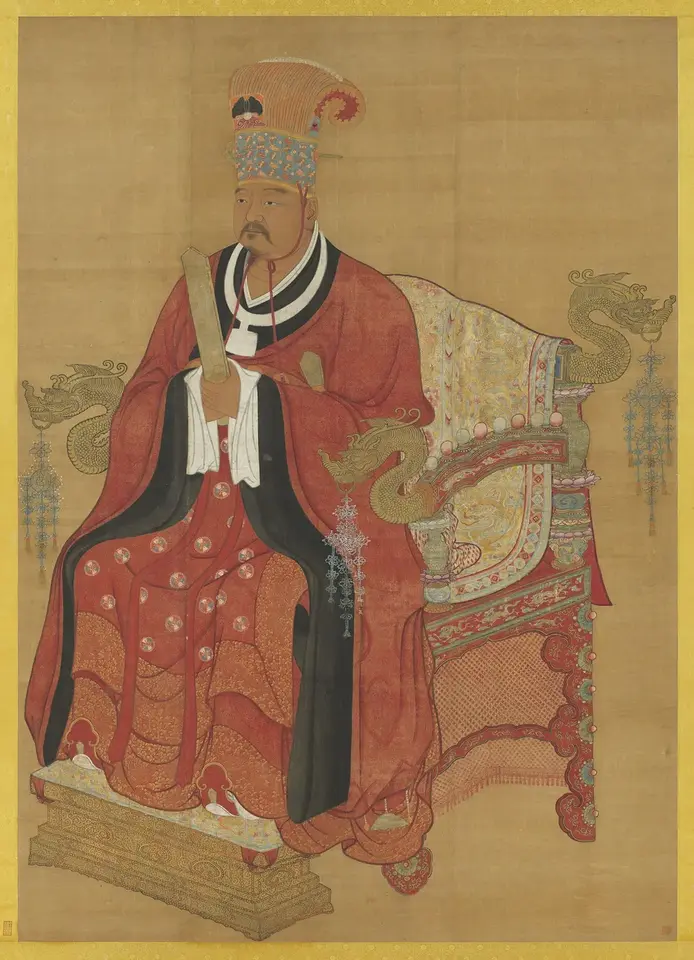
赵弘殷
Zhao Hongyin (赵弘殷, 899–956) was an accomplished general of the Five Dynasties period who served across four successive regimes (Later Tang, Later Jin, Later Han, and Later Zhou). Hailing from Zhuojun (modern Zhuozhou, Hebei) and raised in Baozhou (modern Qingyuan, Baoding), he was celebrated from youth for his extraordinary archery and equestrian skills. He entered the imperial service during the campaigns of Prince of Jin Li…
Zhao Hongyin (赵弘殷, 899–956) was an accomplished general of the Five Dynasties period who served across four successive regimes (Later Tang, Later Jin, Later Han, and Later Zhou). Hailing from Zhuojun (modern Zhuozhou, Hebei) and raised in Baozhou (modern Qingyuan, Baoding), he was celebrated from youth for his extraordinary archery and equestrian skills. He entered the imperial service during the campaigns of Prince of Jin Li Cunxu (Emperor Zhuangzong of Later Tang) and remained a senior officer in the central imperial guard forces for over three decades. Zhao Hongyin earned major battlefield distinctions across northern and central China. During the Later Han suppression of the Wang Jingchong rebellion, he was struck in the left eye by an enemy arrow at Chencang yet pulled out the shaft and charged fiercely, routing the Shu reinforcements. Under the Later Zhou dynasty, he commanded elite cavalry divisions alongside his second son Zhao Kuangyin, establishing immense prestige within the imperial army. During the southern Huainan campaign in 956, he ambushed and shattered Southern Tang armies, intervened to halt the wrongful execution of civilian merchants in Shouchun, and passed away while on the return march. When Zhao Kuangyin founded the Northern Song dynasty in 960, Zhao Hongyin was posthumously elevated as Emperor Zhaowu with the temple name Xuanzu.
Born in Zhuojun into an ancestral family of Tang officials, growing up in Baozhou.
Commanded five hundred cavalry under Wang Rong to reinforce Li Cunxu at the Yellow River; retained in the imperial guards.
Continued to command elite cavalry units through the Later Tang and Later Jin dynasties.
Struck in the eye by an arrow during combat with Shu forces at Chencang; pulled out the arrow and led a charge to victory.
Appointed Commander-in-chief of the First Armored Cavalry Division under Later Zhou founder Guo Wei.
Promoted to Right Wing Commander-in-chief and Defense Commissioner of Yuezhou; commanded guards alongside his son.
Escorted Emperor Shizong (Chai Rong) during the northern expedition against Northern Han and the Liao.
Ambushed Southern Tang troops in Huainan, successfully persuaded Chai Rong to spare innocent merchants in Shouchun.
Arrived at Chuzhou at midnight; his son Zhao Kuangyin strictly adhered to military protocol by keeping the gates shut until dawn.
Passed away from illness on the return march to Kaifeng at age 58; posthumously granted Grand Commandant and Military Governor.
Posthumously honored as Emperor Zhaowu with the temple name Xuanzu by his son Song Emperor Taizu.
Zhao Hongyin traced his descent from civil and military officials of the Tang dynasty. His great-grandfather Zhao Tiao served as a county magistrate, his grandfather Zhao Ting was a Palace Censor, and his father Zhao Jing governed Ying, Ji, and Zhuo prefectures. Following the devastation of northern China by late Tang civil wars, Zhao Hongyin relocated to Baozhou, training rigorously in horsemanship, archery, and military tactics.
Around 918, during the decisive struggle between Li Cunxu of Jin and the Later Liang dynasty along the Yellow River, Wang Rong, Prince of Zhao, dispatched a contingent of five hundred elite cavalry to reinforce the Jin army. Zhao Hongyin served as a cavalry captain in this force, distinguishing himself through aggressive reconnaissance and shock tactics. Emperor Zhuangzong was so impressed by his valor that he requested Wang Rong allow Zhao Hongyin to remain in the central imperial guards in Luoyang. Over subsequent reigns, Zhao Hongyin's dependability and tactical competence ensured his continuous service under Later Jin and Later Han.
In 948, the three western garrisons of Hezhong, Yongxing, and Fengxiang rose in simultaneous rebellion against the Later Han court. The southern state of Later Shu dispatched an army through the Qinling Mountains to relieve Wang Jingchong in Fengxiang.
Zhao Hongyin commanded cavalry units in the imperial suppression army. Near the treacherous defiles of Chencang, Shu and rebel troops ambushed the advancing Han columns. During the chaotic melee, an arrow struck Zhao Hongyin directly in his left eye. Enduring agonizing pain, Zhao Hongyin pulled the arrowhead from his flesh, raised his sword, and charged directly into the enemy formation. His extraordinary courage electrified his troopers, who surged forward to shatter the Shu force and decapitate its commander. For this heroic feat, Zhao Hongyin was promoted to Commander-in-chief of the Husheng Guard.
Following the establishment of the Later Zhou dynasty in 951, Emperor Taizu (Guo Wei) appointed Zhao Hongyin as Commander-in-chief of the First Armored Cavalry Division. In 953, he was elevated to Right Wing Commander-in-chief and concurrent Defense Commissioner of Yuezhou. By this period, his second son Zhao Kuangyin had also risen rapidly through battlefield merit to become Palace Inspector of the Imperial Bodyguards. Contemporaries celebrated father and son sharing high command over the imperial guards as an unprecedented honor.
In 956, Emperor Shizong launched a massive invasion of the Southern Tang in Huainan. Zhao Hongyin accompanied the imperial expedition. When an advance column was forced to withdraw under pressure, Southern Tang forces launched a vigorous counter-attack. Zhao Hongyin led his veteran cavalry in a flank ambush, shattering the enemy formation and capturing over a thousand prisoners.
During the siege of Shouchun, Emperor Shizong was infuriated by local bakers supplying undersized and substandard bread cakes, ordering the arrest and immediate execution of over a dozen merchants. Zhao Hongyin stepped forward and repeatedly remonstrated with the emperor, arguing that common merchants struggled amid wartime devastation and that an imperial army on a righteous campaign should never practice indiscriminate executions over trivial matters. Persuaded by his sincere pleas, Chai Rong pardoned all the bakers.
Later during the campaign, Zhao Hongyin marched to Chuzhou, which was then garrisoned by his son Zhao Kuangyin. Arriving at the city walls in the dead of night, Zhao Hongyin called for the gates to be opened. Zhao Kuangyin firmly refused from atop the wall, stating: "Though we are father and son, opening the city gates at night is an affair of state and governed by martial law." Zhao Hongyin camped outside until morning, deeply admiring his son's devotion to duty.
While returning toward Kaifeng in July 956, Zhao Hongyin fell gravely ill and passed away in his military camp at the age of fifty-eight. The Later Zhou court posthumously conferred upon him the rank of Grand Commandant and Military Governor of Wuqing Circuit. In 960, his son Zhao Kuangyin established the Song dynasty, bestowing upon him the posthumous title Emperor Zhaowu and the temple name Xuanzu, laying him to rest alongside Empress Dowager Zhaoxian in the Yongan Mausoleum at Gongxian.
Zhao Hongyin's four decades of continuous command within the central imperial guards established the vital political and military network that facilitated his family's ascent. The veterans and officers trained under his command formed the backbone of the forces that supported Zhao Kuangyin's peaceful assumption of the imperial throne in 960.
Zhao Hongyin combined ferocious personal bravery, as demonstrated at the Battle of Chencang, with an innate sense of justice and humanitarian restraint. His intervention to spare innocent merchants at Shouchun and his acceptance of strict military discipline at Chuzhou became legendary exemplars of upright martial virtue.
FIGURES ASSOCIATED WITH THIS DYNASTY