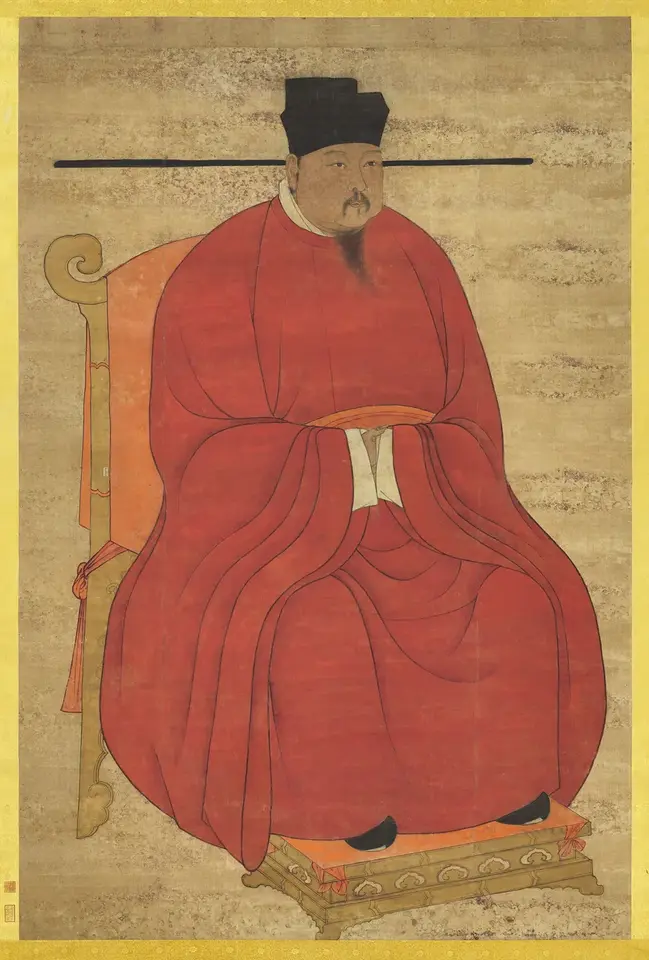
BIOGRAPHY
Chronology
- 968 (First year of the Kaibao era, Song) | Birth in the Princely Residence | Born at the Kaibao Temple residence in Kaifeng as the third son of Zhao Guangyi; showed early tactical aptitude in childhood games.
- 983 (Eighth year of the Taiping Xingguo era, Song) | Princely Investiture | Appointed Honorary Grand Guardian and Joint Manager of Affairs with the Secretariat-Chancellery, enfeoffed as Prince of Han, and renamed Zhao Yuanxiu.
- 994 (Fifth year of the Chunhua era, Song) | Governance of the Imperial Capital | Enfeoffed as Prince of Shou, renamed Zhao Yuankan, and appointed Prefect of Kaifeng, where he suppressed municipal corruption.
- 995 (First year of the Zhidao era, Song) | Investiture as Crown Prince | Officially proclaimed Crown Prince, granted the name Zhao Heng, and continued supervising capital governance with modest diligence.
- 997 (Third year of the Zhidao era, Song) | Imperial Accession | Emperor Taizong passed away; Grand Councilor Lu Duan crushed an inner palace coup, ensuring Zhao Heng's coronation as Emperor Zhenzong.
- 1000 (Third year of the Xianping era, Song) | First Front-Line Expedition | Personally led imperial troops northward to Daming Prefecture to stabilize the frontier, successfully repulsing a major Liao invasion.
- 1004 (First year of the Jingde era, Song) | The Chanyuan Treaty | Personally advanced to the northern battlements of Chanzhou during a massive Liao offensive, compelling the Liao court to conclude the Chanyuan Treaty.
- 1008 (First year of the Dazhongxiangfu era, Song) | Mount Tai Sacrifices | Engineered the auspicious descent of the Heavenly Letters under Wang Qinruo's instigation, leading the court to conduct the grand Feng and Shan sacrifices at Mount Tai.
- 1011 (Fourth year of the Dazhongxiangfu era, Song) | Sacrifices to Earth at Fenyin | Traveled to Fenyin in Hezhong Prefecture to conduct lavish sacrifices to the Earth Deity, committing immense state resources to Daoist rituals.
- 1012 (Fifth year of the Dazhongxiangfu era, Song) | Introduction of Champa Rice | Elevated Consort Liu (Liu E) to Empress; dispatched envoys to Fujian to distribute thirty thousand bushels of drought-resistant Champa rice across Jiangnan.
- 1014 (Seventh year of the Dazhongxiangfu era, Song) | Pilgrimage to Bozhou | Visited the Taiqing Palace in Bozhou to worship Laozi as the divine ancestor of the imperial house, elevating Daoist state cults to their zenith.
- 1022 (First year of the Qianxing era, Song) | Passing at Yanqing Palace | Died at Yanqing Palace at the age of fifty-five; succeeded by Crown Prince Zhao Zhen (Emperor Renzong), with Empress Dowager Liu presiding as regent.
Biography
Youth in the Princely Mansion and Early Acumen
Zhao Heng was born on December 23, 968, at the Kaibao Temple residence in Kaifeng. His father was Zhao Guangyi, then Prince of Jin and Prefect of Kaifeng, and his mother was Lady Li, posthumously honored as Empress Yuande. Originally named Zhao Dechang, he possessed an imposing physical stature and exceptional intellectual curiosity from early childhood. When engaging in games with royal siblings and peers within the imperial palaces, he consistently organized children into disciplined tactical battle formations, designating himself generalissimo and directing maneuvers with striking military composure.
His uncle, Emperor Taizu (Zhao Kuangyin), took great fondness in his nephew, often summoning him into the inner palace to reside and study alongside the imperial sons. On one memorable occasion, young Zhao Heng accompanied Emperor Taizu into the Wansui Palace and climbed directly onto the imperial throne, seating himself with complete composure. Emperor Taizu smiled, patted the child on the head, and asked whether reigning as emperor was an easy endeavor. Zhao Heng calmly replied that it depended entirely upon the mandate of Heaven. Deeply impressed by his fearlessness and poise, Emperor Taizu treated him with marked distinction.
Following his father's accession to the imperial throne as Emperor Taizong, Zhao Heng was formally enfeoffed as Prince of Han in 983, receiving high honorary titles and taking the name Zhao Yuanxiu. In 988, he was advanced to Prince of Xiang and renamed Zhao Yuankan. Possessing a scholarly and dignified demeanor, he developed an ardent passion for classical history, establishing an extensive library in his mansion and hosting prominent Confucian academics, earning broad praise among court officials as a paragon of princely virtue.
Administrative Governance of the Capital and East Palace Investiture
In Song institutional practice, serving as Prefect of Kaifeng functioned as a decisive proving ground for prospective imperial heirs. Following the mental breakdown of Taizong's eldest son Zhao Yuanzuo and the premature death of his second son Zhao Yuanxi, the imperial succession remained unsettled for years. In the autumn of 994, Emperor Taizong enfeoffed Zhao Yuankan as Prince of Shou and appointed him Prefect of Kaifeng. As the political and economic heart of the realm, Kaifeng teemed with entrenched gentry, powerful aristocrats, and crafty municipal clerks who routinely circumvented judicial statutes.
Upon assuming office, Zhao Yuankan demonstrated decisive judicial clarity. He discovered that wealthy suburban elites frequently colluded with municipal bailiffs to escape corporal punishment, bribing clerks to substitute innocent domestic slaves at the whipping post. He established rigorous collective liability for bailiffs and personally scrutinized defendants' facial features against official household registers during hearings. These measures eradicated fraudulent substitutions and restored judicial integrity to the capital.
In the autumn of 995, gravely ill and persuaded by petitions from upright ministers like Kou Zhun, Emperor Taizong formally designated the Prince of Shou as Crown Prince, conferring upon him the imperial name Zhao Heng. As heir apparent, Zhao Heng retained his prefectural duties in Kaifeng while exercising extreme filial discretion, personally attending his ailing father daily without displaying arrogance. Taizong once dispatched him to inspect military granaries and cantonments around the capital, where Zhao Heng traveled without pomp, comforted ordinary soldiers, and further cemented his imperial reputation.
Lu Duan's Decisive Intervention and Imperial Accession
On May 8, 997, Emperor Taizong passed away at the Wansui Palace. Before the emperor's passing could be formally proclaimed, a dangerous palace conspiracy materialized within the inner court. Senior palace eunuch Wang Jien, who harbored deep resentment toward the capable crown prince, conspired with Assistant Administrator of Military Affairs Li Changling, Hanlin Drafter Hu Dan, and Empress Li to bypass Zhao Heng and enthrone the mentally unstable eldest brother, Zhao Yuanzuo.
Grand Councilor Lu Duan discerned the illicit plot with characteristic strategic clarity. Arriving at the palace, Lu Duan lured Wang Jien into an archival pavilion under the guise of drafting the imperial testament, locking him inside and placing trusted sentries at the door. When Empress Li confronted Lu Duan demanding to know who should inherit the throne, Lu Duan firmly declared that the late emperor had long designated the crown prince for this very day and that no courtier had the authority to alter the imperial line.
Lu Duan immediately escorted Crown Prince Zhao Heng into the hall to oversee the funerary rites. When the court gathered at the Funing Palace to pay homage, inner attendants lowered the ceremonial silk curtain before the imperial couch. Lu Duan stood resolutely at the base of the stairs, refusing to bow, and demanded that the curtain be drawn aside. Climbing the steps, Lu Duan closely examined the sovereign's countenance, verified that the seated figure was indeed Zhao Heng, and descended the stairs to lead the civil and military ministers in shouting long live the emperor. Through Lu Duan's courage, a grave succession crisis was averted, and the twenty-nine-year-old Zhao Heng ascended the throne as Emperor Zhenzong.
The Xianping Governance and Defense Against Khitan Incursions
Assuming personal rule under the reign era Xianping (998–1003), Zhao Heng addressed the grave security vulnerabilities inherited from Taizong's disastrous northern campaigns. He demonstrated an industrious and frugal administrative ethic, holding court early each morning, reducing burdensome imposts, prosecuting corrupt magistrates, and welcoming candid advice from incorruptible ministers such as Li Hang, Bi Shian, and Wang Dan. He established specialized advisory chambers and reviewed dozens of official memorials daily, initiating the prosperous era known as the Governance of Xianping.
On the northern frontier, celebrated Liao commanders Yelu Xiuge and Xiao Talin launched repeated cavalry incursions across Hebei. Between the winter of 999 and the spring of 1000, Khitan forces penetrated deeply, encircling Suicheng and capturing Dezhou, alarming the capital. Rejecting traditional courtly seclusion, Zhao Heng mobilized imperial forces and personally marched north to establish headquarters at Daming Prefecture. His presence at the front line dramatically fortified military morale, enabling capable generals such as Yang Yanzhao to inflict severe defeats upon the invading cavalry and stabilize the border.
To counter the tactical mobility of Khitan cavalry, Zhao Heng adopted proposals from frontier commanders to develop extensive terrain water defenses. Song military labor channeled the Baigou and Yishui rivers into a contiguous network of deep canals, flooded paddies, and interconnected reservoirs stretching hundreds of li along the border, punctuated by defensive watchtowers. This hydraulic barrier, admired by Khitan scouts as a water great wall, severely restricted mounted maneuverability and provided strategic depth for future operations.
The Chanyuan Campaign and Victory at the Battlements
In the autumn of 1004, Empress Dowager Xiao and Emperor Shengzong of Liao mobilized an army of two hundred thousand seasoned cavalry in a massive southern invasion, bypassing heavily garrisoned fortresses like Dingzhou and Yingzhou to thrust directly toward Chanzhou (modern Puyang, Henan Province) on the northern bank of the Yellow River. With the imperial capital of Kaifeng lying virtually defenseless across the river, panic erupted throughout the Song court.
Convening emergency councils at the Chongzheng Palace, southern-born Assistant Administrator Wang Qinruo urged fleeing to Jinling (modern Nanjing), while Shu-born military commissioner Chen Yaosou proposed seeking refuge in Chengdu. Alone among the councilors, Grand Councilor Kou Zhun fiercely denounced these defeatist proposals, arguing that whoever suggested flight deserved execution and insisting that the emperor's personal presence on the battlefield would instantly rally the troops and deter the enemy. Supported by co-chancellor Bi Shian, Kou Zhun prevailed upon Zhao Heng to undertake a northern expedition.
In November 1004, the imperial carriage arrived at the southern city of Chanzhou. With Khitan cavalry skirmishing across the river, Zhao Heng hesitated to cross to the northern ramparts. Kou Zhun vigorously insisted that failing to cross would leave northern defenders disheartened, while Palace Commander Gao Qiong urgently implored the emperor to show himself to the troops. Gao Qiong guided the imperial carriage across the pontoon bridge directly to the gate tower of the northern city.
As the imperial dragon banners unfurled atop the battlements, Song garrison troops erupted in deafening cheers of long live the emperor, their shouts echoing across miles and revitalizing front-line morale. At that crucial juncture, Song commander Zhang Gui operated a bed-mounted siege crossbow (chuangzinu) from the ramparts, mortally striking Liao supreme military commander Xiao Talin in the forehead. Xiao Talin died that evening, shattering Khitan tactical cohesion and prompting Empress Dowager Xiao to sue for peace.
The Brotherhood Alliance and the Chanyuan Peace
Confronting the Liao court's overtures for peace and eager to conclude an exhausting military contest, Zhao Heng appointed palace official Cao Liyong as imperial plenipotentiary to negotiate with the Khitan camp. Before Cao's departure, Zhao Heng privately conceded that he would be willing to pay up to a million strings in annual subsidies to secure peace. However, waiting outside the imperial tent, Kou Zhun confronted Cao Liyong with a drawn sword, warning him that if he agreed to annual payments exceeding three hundred thousand, he would be executed upon his return.
Leveraging the operational advantage conferred by Xiao Talin's demise, Cao Liyong negotiated resolutely, finalizing the Chanyuan Treaty in January 1005. The treaty established: first, that Song and Liao would treat each other as equal brotherly states, with Emperor Zhenzong addressing Emperor Shengzong as younger brother and Empress Dowager Xiao as aunt; second, that the Baigou River would form the permanent bilateral frontier, with both parties withdrawing forces and pledging not to construct new fortifications or shelter border fugitives; and third, that Song would deliver an annual subsidy (suibi) of two hundred thousand bolts of silk and one hundred thousand ounces of silver via Xiongzhou.
The Chanyuan Treaty was an epochal watershed in East Asian diplomatic history. By committing a modest annual payment—representing less than one percent of active wartime military expenditures—the Northern Song eliminated an existential threat, ended a century of destructive warfare, and secured over a century of border peace, inaugurating thriving border trade and mutual cultural exchange.
Fabricated Heavenly Letters and Esoteric Cults
Despite its strategic success, the Chanyuan Treaty triggered a psychological crisis for Zhao Heng. Initially proud of his battlefield resolve, the emperor was undermined by Wang Qinruo, who resented Kou Zhun's ascendancy. Wang sneered that ancient historical canons deemed a peace signed before city walls as a humiliation, convincing the emperor that he had merely submitted to Khitan extortion under duress. Deeply shaken, Zhao Heng became tormented by insecurity regarding his dynastic prestige.
Exploiting the emperor's distress, Wang Qinruo proposed that only an awe-inspiring imperial performance could expunge the stain of the treaty: if northern reconquest was militarily unfeasible, the court should conduct the ancient Feng and Shan sacrifices at Mount Tai. To satisfy the classical prerequisite of divine omens, Zhao Heng colluded with Wang Qinruo, Chen Yaosou, and Du Hao to manufacture the descent of Heavenly Letters.
In late 1007, Wang Qinruo reported supernatural clouds over Mount Tai. In early 1008, Zhao Heng declared that a divine spirit had appeared in a dream, announcing that three rolls of celestial scripture had descended upon the roof of the Chengtian Gate. Zhao Heng led the court to receive the scriptures, proclaimed the Dazhongxiangfu era, and undertook a lavish imperial procession to conduct the Feng and Shan sacrifices atop Mount Tai, consuming over eight million strings from the treasury. He subsequently performed sacrifices to the Earth Deity at Fenyin in 1011 and made an imperial pilgrimage to worship Laozi at Bozhou in 1014, immersing the empire in costly mystical rituals.
Construction of the Yuqing Zhaoying Palace and Fiscal Depletion
To enshrine the Heavenly Letters and manifest the divine legitimacy of the Zhao imperial lineage, Zhao Heng ordered the construction of the monumental Yuqing Zhaoying Palace west of Kaifeng in 1008, appointing Ding Wei as director of works. Over the course of seven years, tens of thousands of conscripted laborers and specialized artisans laboured day and night.
The palace complex spanned two thousand six hundred and ten bays, featuring lavish gilded beams, jade accents, vibrant blue-and-green landscape murals, and glazed peacock tiles. To finance this architectural extravagance, the imperial treasuries built up under Taizong were rapidly depleted. Concurrently, Zhao Heng elevated Daoist deities, conferring grand imperial titles upon the Jade Emperor and venerating Zhao Xuanlang as the divine ancestor of the Song royal house.
The emperor mandated the construction of Tianqing Abbeys across every prefecture and county, obliging officials and commoners to perform regular devotions. Senior minister Wang Dan, initially opposed to these expenditures, was compromised by imperial gifts of pearls and wine and acquiesced in silence, lamenting his compliance on his deathbed. These esoteric extravagances severely undermined the empire's fiscal reserves, casting a long shadow over late Northern Song governance.
Twilight Illness and the Regency of Empress Liu
In his final years, Zhao Heng's physical health deteriorated precipitously. Suffering from recurrent strokes and mental exhaustion, he became increasingly incapable of managing administrative state affairs. In this vacuum, Empress Liu (posthumously Empress Zhangxian Mingsu) emerged as a central political authority. Originally an orphaned entertainer from Sichuan, Empress Liu possessed formidable intellect, broad historical literacy, and administrative skill, assisting the bedridden emperor in reviewing state memorials with remarkable acumen.
In 1020, with Zhao Heng gravely ill, Grand Councilor Kou Zhun conspired with palace eunuch Zhou Huaiwei to transfer executive authority to Crown Prince Zhao Zhen and remove Empress Liu and her political ally Ding Wei. However, the plot was leaked to Ding Wei, who promptly informed the empress. Empress Liu retaliated swiftly, demoting Kou Zhun to Leizhou and executing Zhou Huaiwei, cementing her joint dominance over the central government alongside Ding Wei.
Regarding succession, all of Zhao Heng's elder sons had died in infancy. In 1010, palace attendant Lady Li (posthumously Empress Zhangyi) gave birth to Prince Zhao Shoushi (later Emperor Renzong). Lacking male issue, Empress Liu adopted the child as her own with Zhao Heng's tacit approval, while Lady Li was quietly promoted and isolated in the inner quarters. This palace episode later gave rise to the enduring folk theatrical legend of Substituting a Leopard Cat for the Crown Prince.
Demise at Yanqing Palace and Eternal Rest at Yongding
In the winter of 1021, Zhao Heng promulgated his final reign era, Qianxing. On March 23, 1022, the emperor passed away at Yanqing Palace in Kaifeng at the age of fifty-five, concluding a twenty-five-year reign. His imperial testament decreed that Crown Prince Zhao Zhen ascend the throne and that Empress Dowager Liu assume supreme authority over major affairs of state, inaugurating an eleven-year maternal regency.
Court ministers bestowed upon him the temple name Emperor Zhenzong and the posthumous title Emperor Wenming Zhangsheng Yuanxiao. In October 1022, his imperial remains were interred at the Yongding Mausoleum in Gongxian (modern Gongyi, Henan Province). The expansive mausoleum complex, adorned with dignified stone spirit-way statuary, stands as a premier architectural monument of early Northern Song imperial funerary art.
Major Achievements
Deep Geopolitical Strategy and Peace Dividends of the Chanyuan Treaty
Zhao Heng's conclusion of the Chanyuan Treaty in 1004 represents a decisive turning point in Song-Liao relations and medieval East Asian international politics. Under Emperors Taizu and Taizong, the military reconquest of the Sixteen Prefectures of Yanyun was the primary objective of national defense, yet catastrophic northern campaign failures had trapped the empire in a ruinous war of attrition that consumed over eighty percent of state revenues.
By riding to the battlements of Chanzhou, Zhao Heng compelled the Liao leadership to negotiate from a position of mutual exhaustion. The Chanyuan Treaty abandoned unrealistic territorial ambitions, accepted realistic borders along the Baigou River, and established a framework of diplomatic equality as brotherly states. For the subsequent one hundred and twenty years, northern China was spared major interstate warfare, allowing battle-ravaged frontier prefectures to transform into fertile agricultural lands and delivering enormous demographic and economic dividends.
The Annual Payment Mechanism and Cross-Border Trade Circulation
Although later moralistic critics mocked the treaty's annual payments as tribute paid under duress, financial and strategic analysis reveals the mechanism as a brilliant economic masterstroke. The annual delivery of one hundred thousand ounces of silver and two hundred thousand bolts of silk amounted to approximately three hundred thousand strings of cash—less than one percent of the thirty million strings annually expended on active northern military mobilizations.
Furthermore, the treaty established official border markets (quechang) at frontier locations such as Xiongzhou, Bazhou, and Ansu. Leveraging superior Southern Chinese artisanal manufacturing—including ceramics, tea, silk fabrics, and printed books—Song merchants rapidly reabsorbed the silver and silk delivered to the Liao court, while acquiring vital strategic commodities such as warhorses, furs, and medicinal herbs. This commercial cycle fostered an economic sphere centered upon Song currency and manufactured goods, rendering the Khitan state commercially dependent upon the Song economy.
Political Motivations of Fabricated Heavenly Letters and Mount Tai Sacrifices
The theatrical descent of Heavenly Letters and subsequent imperial sacrifices during the Dazhongxiangfu era were not merely manifestations of personal vanity, but calculated maneuvers of political legitimation. Although the Chanyuan Treaty brought security, traditional Confucian universalist ideology viewed signing a treaty with non-Han nomads as a profound moral compromise, exposing Zhao Heng to covert censure from scholar-officials.
To reassert the supreme cosmic legitimacy of the Zhao imperial house, Zhao Heng embraced Wang Qinruo's advice to counter military compromise with supernatural endorsement. By choreographing celestial revelations, conducting the Feng and Shan rites at Mount Tai, and worshipping the Earth Deity at Fenyin, the emperor constructed a theological narrative demonstrating that the Song possessed divine approval. While this esoteric movement temporarily consolidated domestic political cohesion, its extravagant costs and intellectual dishonesty drew severe condemnation from subsequent historians.
Fiscal Depletion in the Construction of Yuqing Zhaoying Palace
The construction of the Yuqing Zhaoying Palace represented the most destructive fiscal catastrophe of Zhao Heng's reign. Between 1008 and 1014, the court conscripted tens of thousands of builders to erect over two thousand six hundred palatial bays, squandering state treasure on timber from Shaanxi and ornamental stones from Jiangnan.
The immense fiscal reserves accumulated during the Xianping era were exhausted by consecutive pilgrimages and construction projects, with the Mount Tai procession consuming eight million strings and the Fenyin sacrifice exceeding ten million. By the close of Zhao Heng's reign, the state treasury faced severe deficits, compelling the administration to levy emergency surcharges that undermined agrarian welfare. In 1029, a lightning strike burned the vast palace complex to ashes, viewed by contemporaries as a divine rebuke of imperial folly.
Instituting the Three Assessments for Prefectural and County Officials
In domestic governance, Zhao Heng significantly refined the civil bureaucratic evaluation system. During the Dazhongxiangfu era, he personally codified the Three Assessments for Local Magistrates: officials who demonstrated impartiality, diligence, integrity, and genuine benefit to the populace received the highest rating; those who performed duties without distinctive merit or personal reproach received the median rating; while those guilty of cowardice, indolence, or corruption were demoted to the lowest category.
Zhao Heng elevated incorruptibility and popular welfare as primary metrics of administrative promotion, strictly penalizing judicial cruelty and extortion. To prevent judicial delays and wrongful convictions, he founded the Capital Judicial Inspection Bureau in 1007 and instituted Circuit Judicial Commissioners across the provinces to conduct regular inspections of local prisons. This oversight apparatus dramatically enhanced the professionalization and integrity of the Song civil service.
Introduction and Nationwide Spread of Champa Rice
Zhao Heng made an enduring contribution to Chinese agricultural history by orchestrating the nationwide introduction and dissemination of Champa rice. During 1011 and 1012, severe droughts struck the Huai and Yangtze river valleys, causing catastrophic failures of traditional late-ripening rice crops. Learning from maritime merchants that the kingdom of Champa in modern central Vietnam cultivated a fast-maturing, drought-resistant grain, the emperor acted decisively.
In the spring of 1012, Zhao Heng dispatched envoys to Fujian to requisition thirty thousand bushels of Champa seed grain, distributing them across Jiangnan, Liangzhe, and Huainan alongside illustrated cultivation manuals. Maturing in roughly fifty days and flourishing in arid upland soils, Champa rice enabled widespread double-cropping systems. This agricultural revolution vastly expanded aggregate grain yields in southern China, laying the indispensable demographic foundation for the economic shift toward the south.
Centralizing the State Finance Commission (San-si)
Addressing the administrative confusion inherited from late Tang regional militarism, Zhao Heng systematically reorganized the central State Finance Commission, consolidating the Salt and Iron, Tax, and Census bureaus. He enhanced the independent statutory authority of the Finance Commissioner, dictating that the director report directly to the throne without routine interference from the Prime Minister or Bureau of Military Affairs.
Zhao Heng institutionalized the system of forward silk purchases and tax advance loans, providing state credit to peasant households during spring shortages in exchange for autumn textile deliveries. He also expanded the Ever-Normal Granaries and Benevolent Relief Granaries to purchase grain during bountiful harvests and distribute grain during famines, successfully stabilizing grain prices and securing military provisions.
Frontier Containment of the Tanguts and Buffer Fortresses
In managing northwestern confrontations with Tangut leaders Li Jiqian and Li Deming, Zhao Heng exercised pragmatic containment. Recognizing the northern Khitan front as the primary national defense concern, he adopted a conciliatory policy toward the Tanguts, confirming Li Jiqian as Governor of Xia Prefecture and subsequently appointing Li Deming as Prince of Xiping, granting substantial annual subsidies of tea, silk, and silver to secure regional peace.
Concurrently, Zhao Heng fortified military chokepoints along the Guanzhong approaches. In the borderlands of Weizhou (modern Pingliang, Gansu), he constructed the Four Outer Fortresses—including Yangmulong and Jingbian—to block strategic passes leading into Shaanxi, while cultivating alliances with local Tibetan chieftains such as Panluozhi to threaten the Tangut rear. This balanced strategy preserved regional stability along the western frontier throughout his reign.
Currency Stabilization and Sichuan Iron Coin Reform
Following the pacification of Sichuan in early Song, the regional economy was crippled by the mandated circulation of heavy, inferior iron coinage. With a standard string of iron cash weighing twenty-five catties, merchants were forced to transport cartloads of heavy metal to execute minor textile transactions, severely hampering trade.
Zhao Heng initiated comprehensive monetary reforms upon the recommendations of regional administrators. The court mandated the casting of lightweight iron cash, reducing the standard string weight to twelve catties while strictly curtailing overall issuance to curb inflation. This reform drastically lowered commercial transit costs, stimulated western market integration, and established the institutional environment that enabled Chengdu merchants to pioneer the world's earliest paper currency (jiaoxi) in the twilight of his reign.
Diplomatic Engagement with Goryeo and Maritime Tributary Trade
Following the conclusion of northern warfare, Zhao Heng actively promoted peaceful foreign relations with East Asian neighbors and maritime states. In 1008, King Mokjong of Goryeo dispatched envoy Guo Yuan to report escalating Khitan aggression and petition for Song military assistance. Adhering to the newly signed Chanyuan peace, Zhao Heng declined military intervention but welcomed the embassy warmly, conferring astronomical calendars, classical texts, and Buddhist scriptures to maintain deep cultural ties.
Additionally, Zhao Heng prioritized maritime commerce across the Indian Ocean and South China Sea, granting generous exemptions to merchant vessels arriving from Arabia, Srivijaya, Champa, and the Chola Kingdom at major ports like Guangzhou and Mingzhou. By enforcing strict bans on official extortion and streamlining maritime tax collection, the administration fostered a lucrative maritime Silk Road that substantially augmented treasury revenues.
Compilation of the Daoist Canon and Classical Text Preservation
Zhao Heng was a scholarly sovereign who presided over massive official collation projects across Confucian, Buddhist, and Daoist literatures. In Daoist scholarship, he commissioned Wang Qinruo and Du Hao to gather esoteric manuscripts from mountain sanctuaries nationwide, culminating in the compilation of the Great Song Celestial Palace Precious Canon in four thousand three hundred and fifty-nine volumes, representing the first imperially published Daoist canon in Chinese history.
In Confucian and Buddhist scholarship, the emperor directed the Imperial Academy to print authoritative editions of the Thirteen Classics with Commentaries and the canonical Dynastic Histories for distribution to regional academies. He also expanded the imperial translation bureau, sponsoring Indian monks in translating thousands of Sanskrit Buddhist texts. These expansive publishing initiatives spurred the maturation of woodblock printing and safeguarded foundational classical literature.
Historical Reality of Empress Liu and Succession Arrangements
The famous folk theatrical romance Substituting a Leopard Cat for the Crown Prince is rooted in the succession politics of Zhao Heng's court. Lacking surviving heirs, Zhao Heng rejoiced when palace attendant Lady Li gave birth to Prince Zhao Zhen in 1010. With the emperor's consent, Empress Liu adopted the infant prince to secure the succession, while Lady Li was granted noble rank and lived peacefully in the inner quarters, with the prince remaining unaware of his biological parentage until adulthood.
Far from the villainous portrayal of popular fiction, Empress Liu was a capable and judicious statesman. She assisted the ailing emperor with administrative diligence, protected the young Emperor Renzong during an eleven-year regency, terminated the wasteful Heavenly Letters spectacles, dismissed corrupt courtiers like Ding Wei, and preserved the stability of the Song imperial house.
Promotion of Civil Governance and Compilation of Monumental Encyclopedias
Zhao Heng deepened the civilian scholar-official character of Song society by dramatically expanding the imperial civil service examinations, conferring degrees upon more than double the number of candidates selected under his predecessor and solidifying the historic partnership between the emperor and the literati. He penned the famous Exhortation to Learning, originating the celebrated adage that within books lie houses of gold and jade-like beauties, profoundly inspiring generations of scholars.
Under imperial sponsorship, grand compilation teams completed the monumental one-thousand-volume encyclopedia Cefu Yuangui, systematically organizing historical statecraft from antiquity through the Five Dynasties. By standardizing classical texts and promoting literary education, Zhao Heng ensured that early Song governance achieved lasting cultural prestige.
Royal Patronage of Jingdezhen Porcelain and Urban Economic Prosperity
During the Jingde era (1004–1007), Zhao Heng developed an intense admiration for the exquisite white-and-green glazed porcelain manufactured at Changnan Town in Jiangnan (modern Jingdezhen, Jiangxi Province). The emperor issued an imperial decree designating the town's kilns as official purveyors to the court, requiring each piece produced for imperial use to be inscribed with the reign mark Made in the Jingde Era.
Renowned for their lustrous, jade-like clarity, these porcelains gained imperial and global acclaim, prompting contemporaries to rename the municipality Jingdezhen in honor of the imperial reign, establishing its status as China's porcelain capital. Furthermore, by relaxing urban curfews, legalizing nocturnal markets, and permitting paper contract transactions, Zhao Heng fostered a dynamic commercial environment across Kaifeng and southern metropolises, elevating Song urban culture to medieval zeniths.
Remission of Tax Arrears and Elimination of Agricultural Tool Taxes
Demonstrating benevolent concern for agrarian livelihoods upon his accession, Zhao Heng prioritized economic relief. During the Xianping era, confronting massive accumulations of uncollectible tax arrears resulting from continuous warfare and civilian displacement, the emperor dispatched imperial commissioners nationwide to review fiscal ledgers and issue comprehensive remissions of delinquent grain, textile, and corvee obligations, forgiving millions of strings in back taxes.
Moreover, responsive to memorials regarding frontier distress in Hebei, Zhao Heng abolished excise taxes on agricultural implements, subsequently extending the ban nationwide to prohibit officials from taxing farm tools. This far-sighted fiscal policy stimulated agricultural reclamation across the Yellow River basin, allowing war-torn border populations to rapidly restore cultivation and rebuild rural prosperity.
Royal Veneration of Confucian Sages and Elevation of Confucius
Zhao Heng sought to construct a harmonious ideological synthesis grounded in Confucian ethics. In 1008, while traveling toward Mount Tai, the emperor conducted an imperial pilgrimage to the ancestral temple of Confucius at Qufu, performing solemn ancestral rites and issuing a decree conferring upon Confucius the supreme posthumous title King of Perfect Culture (Zhisheng Wenxuan Wang).
Zhao Heng granted hereditary noble titles to the direct descendants of Confucius, exempted the family from corvee labor, and allocated dedicated funding to renovate the Qufu Temple and Cemetery. He elevated the ranks of Yan Hui, Zengzi, and Mencius to dukes, renovated Confucian municipal academies across every prefecture, and embedded classical moral teachings into the civil examination curriculum, cementing Confucian orthodoxy within the civil bureaucratic state.
Civil Service Examination Reforms: Blind Grading and Transcript Copying
Under Zhao Heng's direction, the Song civil service examination system underwent monumental institutional reforms to ensure meritocratic fairness. In earlier Tang and early Song practice, examiners regularly accepted private recommendations (gongjian), enabling influential grandees to manipulate candidate rankings through handwriting recognition or social networks.
To eliminate patronage and bias, Zhao Heng institutionalized the twin safeguards of blind grading (humingfa) and clerical transcript copying (tenglufa). Blind grading sealed the candidate's name, ancestry, and native place under stamped paper seals; transcript copying employed specialized scribes to produce identical red-ink copies of every essay, ensuring examiners evaluated anonymous texts devoid of distinctive calligraphy. These breakthrough innovations guaranteed equitable competition for non-aristocratic scholars, establishing the Song examination system as the preeminent meritocratic model of imperial China.
Personal Connections
- Grandfather: Zhao Hongyin: Military commissioner under the Later Zhou; posthumously honored as Emperor Xuanzu of Song.
- Father: Emperor Taizong of Song (Zhao Guangyi): Second emperor of the Northern Song Dynasty; unified China and transmitted the throne to Zhao Heng.
- Mother: Empress Yuande (Lady Li): Imperial concubine of Emperor Taizong and biological mother of Zhao Heng; posthumously elevated to Empress Dowager.
- Uncle: Emperor Taizu of Song (Zhao Kuangyin): Founding emperor of the Song Dynasty; fostered young Zhao Heng in the inner palace and praised his tactical intelligence.
- Empress: Empress Zhangxian Mingsu (Liu E): Empress of Zhao Heng; served as regent for eleven years, protected Emperor Renzong, and preserved dynastic stability.
- Empress: Empress Zhangyi (Lady Li): Consort of Zhao Heng and biological mother of Emperor Renzong; posthumously honored as Empress Dowager.
- Son: Emperor Renzong of Song (Zhao Zhen): Sixth son of Zhao Heng, originally named Zhao Shouyi; fourth emperor of the Northern Song who presided over a celebrated golden age.
- Grand Councilor: Kou Zhun: Eminent Song statesman; persuaded Zhao Heng to personally lead the front-line army at Chanzhou and secured the Chanyuan Treaty.
- Grand Councilor: Lu Duan: Song chief minister; thwarted inner palace conspiracies following Taizong's demise to enthrone Zhao Heng.
- Grand Councilor: Li Hang: Respected Prime Minister; governed with quietude and repeatedly utilized omens and floods to temper imperial vanity.
- Court Councilor: Wang Qinruo: Powerful councilor; undermined Kou Zhun and instigated the fabricated Heavenly Letters and Mount Tai sacrifices.
- Court Councilor: Ding Wei: Grand Councilor; directed the extravagant construction of the Yuqing Zhaoying Palace before his eventual political disgrace.
- Adversary Monarch: Emperor Shengzong of Liao (Yelu Longxu): Emperor of the Khitan Liao Dynasty; led the 1004 invasion before concluding the Chanyuan Treaty.
- Adversary Regent: Empress Dowager Xiao (Xiao Chuo): Paramount regent of the Liao Dynasty; directed the Chanzhou offensive and established brotherly relations with the Song.
Historical Evaluations
- Toqto'a et al. in History of Song (Annals of Zhenzong): "Emperor Zhenzong exhibited brilliant intellect from his youth, manifesting the qualities of a great ruler. Upon ascending the throne, he sought good governance with humility, employing capable ministers to establish the Xianping and Jingde reigns, where the people prospered and punishments were rare. During the Chanzhou campaign, he commanded the armies in person to repel the enemy and secure the dynastic altars—a monumental achievement! Yet after the Dazhongxiangfu era, he became obsessed with Daoist sacrifices and spurious heavenly letters, depleting the imperial treasury under the malignant influence of Wang Qinruo and Ding Wei."
- Su Shi in Collected Works of Su Dongpo: "Emperor Zhenzong inherited the foundations of Taizu and Taizong, pacifying foreign conflicts abroad while cultivating benevolence at home. For thirty years, weapons were laid to rest, punishments were suspended, and the realm attained great wealth, rivaling the golden reigns of Wen and Jing in the Western Han."
- Sima Guang in Miscellaneous Records from the Sushui River: "Emperor Zhenzong was benevolent, filial, and modest, governing through unassertive composure. Although the spectacle of heavenly letters was instigated by corrupt courtiers, the realm remained tranquil without military panics, the populace enjoyed peace, and state granaries overflowed—his accomplishments remain unforgettable."
- Wang Fuzhi in Reading the Comprehensive Mirror in Aid of Governance: "Although the Chanyuan Treaty was not an imperial triumph of the highest order, purchasing a century of peaceful life for the common folk of Hebei with three hundred thousand strings in annual payments was of immense benefit. It is regrettable that Wang Qinruo provoked him with the shame of a treaty under duress, unleashing the storm of heavenly letters and mountain sacrifices when the emperor was seduced by flatterers."
- Wen Tianxiang in Guidebook: "The Song Dynasty held the realm for three hundred years, where external perils were constant but domestic rebellion never erupted. Emperor Zhenzong's single battle at Chanzhou established a century-long alliance, sparing countless lives from slaughter—his merit to the dynastic state was profound!"
Related Entries
- Chanyuan Treaty
- Kou Zhun
- Liu E
- Emperor Renzong of Song
- Feng and Shan Sacrifices
- Champa Rice
- Yuqing Zhaoying Palace
- Jingdezhen
- Lu Duan