Birth in Jiangning
Born on the banks of the Qinhuai River in the Southern Tang capital.
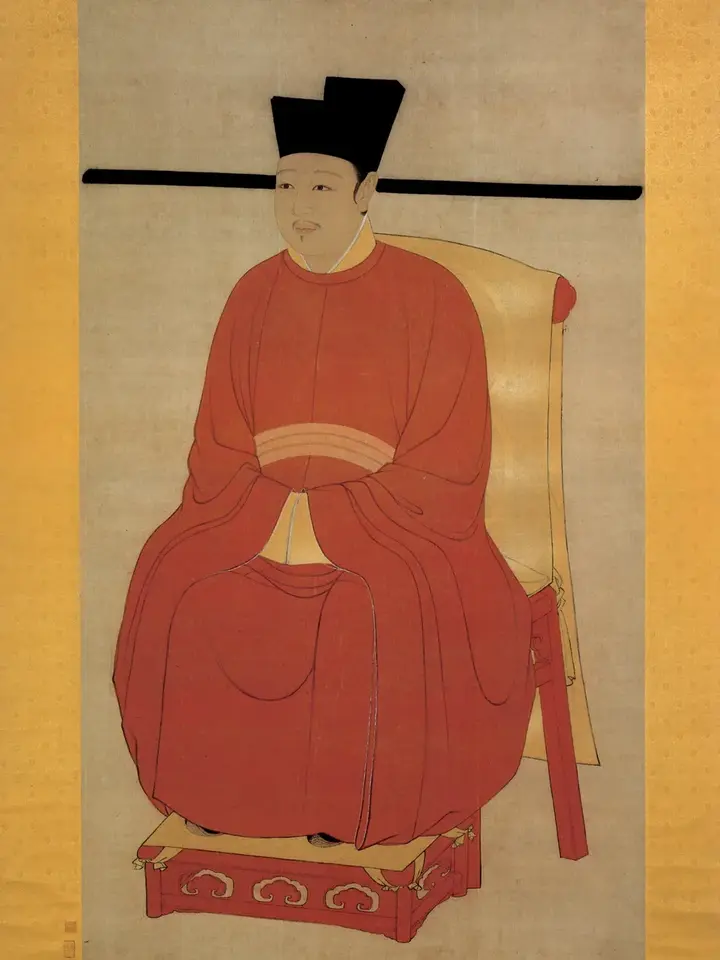
赵幹
Zhao Gan (赵幹, c. 935–980) was a native of Jiangning (modern Nanjing, Jiangsu). He was an eminent court painter of the Southern Tang during the Five Dynasties and Ten Kingdoms period. Serving in the Hanlin Painting Academy during the reign of the Last Ruler Li Yu (961–975), he earned immense fame for his evocative depictions of Jiangnan waterways, misty fishing villages, and winter river voyages. Zhao Gan possessed…
Zhao Gan (赵幹, c. 935–980) was a native of Jiangning (modern Nanjing, Jiangsu). He was an eminent court painter of the Southern Tang during the Five Dynasties and Ten Kingdoms period. Serving in the Hanlin Painting Academy during the reign of the Last Ruler Li Yu (961–975), he earned immense fame for his evocative depictions of Jiangnan waterways, misty fishing villages, and winter river voyages. Zhao Gan possessed extraordinary talent in spatial arrangement and atmospheric perspective. His surviving masterpiece, Early Snow on the River (Jiangxing Chuxue Tu), preserved in the National Palace Museum in Taipei, bears an authentic imperial calligraphy inscription by Li Yu. Characterized by crisp brushwork and empathetic depictions of struggling fishermen in freezing winds, his work occupies an exceptional place in the history of Chinese genre landscape painting.
Born on the banks of the Qinhuai River in the Southern Tang capital.
Devoted himself to landscape, tree, and architectural painting from life.
Admitted to the prestigious Hanlin Painting Academy upon Li Yu's ascension.
Painted Early Snow on the River, authenticated and inscribed by Emperor Li Yu.
Relocated north to Kaifeng following the surrender of Southern Tang to Song forces.
Passed away in Kaifeng at the age of approximately forty-six.
Zhao Gan grew up along the bustling waterfronts of Jiangning. The maze of waterways, bamboo groves, fishing skiffs, and thatched river hamlets formed the primary visual world of his youth. Unlike scholars who merely copied ancient scrolls, Zhao Gan immersed himself directly in the daily rhythms of river life.
He spent extensive periods on riverbanks observing boatmen hauling towing lines against torrential currents and fishermen braving winter gales. When Li Yu reorganized the imperial painting academy in 961, Zhao Gan's vivid observational accuracy distinguished him from competitors, earning him appointment as an academy student.
Within the academy, Zhao Gan concentrated on seasonal river landscapes. Around 968, he presented to Li Yu his masterpiece handscroll Early Snow on the River. The scroll depicted the arrival of the first winter flurry over the Yangtze, contrasting the bleak expanse of wind-whipped waves with the shivering postures of common laborers.
Li Yu was deeply moved by the composition's technical precision and emotional poignancy. In the opening silk border, the monarch personally brushed an imperial inscription in gold: "Early Snow on the River, by Southern Tang Student Zhao Gan." This imperial endorsement elevated Zhao Gan's reputation to parity with academy seniors such as Dong Yuan, Gu Hongzhong, and Zhou Wenju.
In 975, Northern Song armies extinguished Southern Tang, and the imperial collections and court artisans were escorted to Kaifeng. Zhao Gan joined the Song court academy, continuing to paint in the northern capital.
Although the early Song court favored the monumental crags of the northern Jing-Guan school, Zhao Gan's crisp linear clarity and sympathetic humanism retained a devoted following among connoisseurs. He passed away in Kaifeng around 980 at the age of forty-six.
Zhao Gan's primary historical monument is Early Snow on the River (Jiangxing Chuxue Tu), measuring 25.9 cm by 376.5 cm. The scroll employs sharp, resilient brush lines to render rushing river currents and freezing spray. Tree branches and rock faces are modeled with firm strokes, while flecks of lead white powder evoke drifting snowflakes clinging to reeds and garments, creating an incomparable realism.
Zhao Gan transformed landscape art from an exclusive sanctuary for aristocratic recluses into a living mirror of common labor. His paintings overflow with working rivercraft, bustling fish markets, and weary travelers, introducing a vital humanistic realism into Five Dynasties painting.
FIGURES ASSOCIATED WITH THIS DYNASTY