Birth in Tieling
Born into a prominent Han Military banner family in Fengtian.
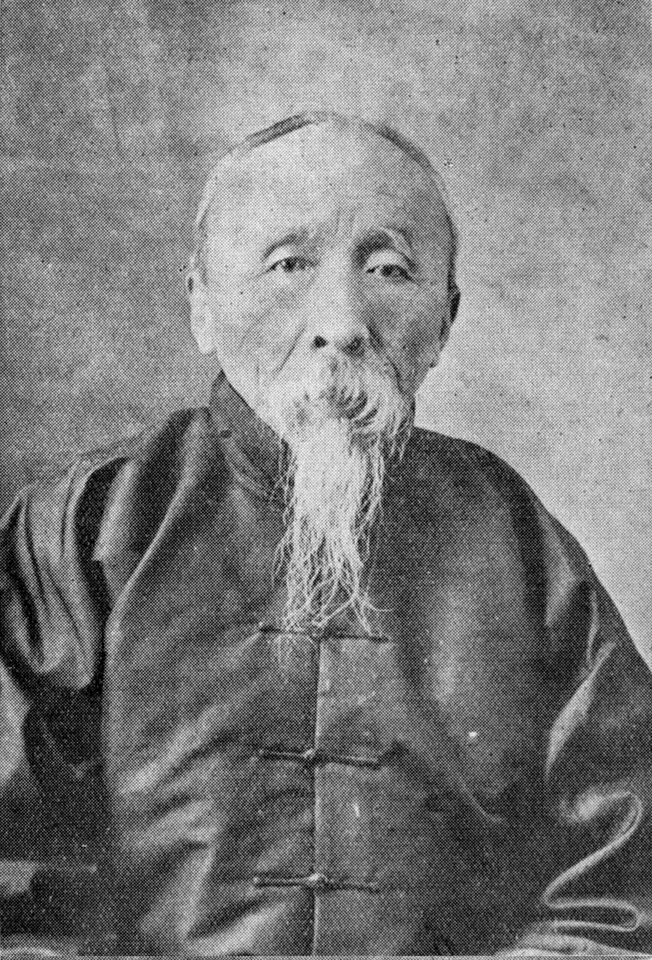
赵尔巽
Zhao Erxun (赵尔巽, July 8, 1844 – September 3, 1927), courtesy name Gongrang, pseudonyms Cishan and Wubu, was a native of Tieling, Fengtian (modern Tieling, Liaoning Province), affiliated with the Han Military Plain Blue Banner. He was a distinguished statesman, administrative reformer, and historian during the late Qing and early Republican periods, and the elder brother of General Zhao Erfeng. In 1874 (Tongzhi 13), Zhao…
Zhao Erxun (赵尔巽, July 8, 1844 – September 3, 1927), courtesy name Gongrang, pseudonyms Cishan and Wubu, was a native of Tieling, Fengtian (modern Tieling, Liaoning Province), affiliated with the Han Military Plain Blue Banner. He was a distinguished statesman, administrative reformer, and historian during the late Qing and early Republican periods, and the elder brother of General Zhao Erfeng. In 1874 (Tongzhi 13), Zhao attained the Jinshi degree and was appointed a Compiler in the Hanlin Academy. Serving early as an outspoken investigating censor, he criticized Grand Councilor Zuo Zongtang on administrative grounds. From the 1880s onwards, he served in regional administrations as Prefect of Guiyang, Judicial Commissioner of Anhui, and Financial Commissioner of Shanxi, building a formidable reputation for fiscal competence. In 1903, Zhao was appointed Governor of Hunan, where he sponsored Xiong Xiling and established the Hunan Normal Training College, launching early provincial modernization. In 1904, he was promoted to Minister of Revenue, leading efforts to rationalize national taxes, establish official mints, and regulate internal transit dues. In 1905, he was appointed Military Governor of Fengtian (Shengjing). Confronting the devastation of the Russo-Japanese War, he launched the "Northeast New Policies," reforming banner administration, disbanding obsolete militias, establishing modern universities, and expanding open commercial ports. He subsequently served as Viceroy of Sichuan and Viceroy of Huguang, before returning to Shenyang in 1911 as Viceroy of the Three Northeast Provinces. During the 1911 Revolution, Zhao maintained regional peace in Manchuria, collaborating with Zhang Zuolin to ensure a bloodless transition. Under the Republic of China, President Yuan Shikai appointed him Director of the Qing History Bureau in 1914. For thirteen years, despite political instability and scarce resources, Zhao directed scholars including Ke Shaomin and Miao Quansun to complete the monumental 536-volume Draft History of Qing (Qing Shi Gao). He passed away in Beijing in 1927 at the age of 83.
Born into a prominent Han Military banner family in Fengtian.
Passed the palace examinations as Jinshi; appointed Hanlin Bachelor and Compiler.
Impeached Grand Councilor Zuo Zongtang over constitutional procedures.
Appointed Prefect of Shiqian and later Guiyang, managing regional criminal and civil justice.
Promoted to Judicial Commissioner of Anhui, later serving in Shaanxi and Shanxi.
Spearheaded modern normal education in Hunan, rehabilitating reformer Xiong Xiling.
Elevated to Minister of Revenue, restructuring national currency and provincial treasuries.
Appointed Military Governor of Fengtian, inaugurating the comprehensive Northeast New Policies.
Served successively as Viceroy of Sichuan and Viceroy of Huguang.
Reappointed Viceroy of the Three Northeast Provinces, preserving peace during the 1911 Revolution.
Appointed Director of the Qing History Bureau by President Yuan Shikai.
Finalized the 536 volumes of the Draft History of Qing; died in Beijing at 83.
Zhao Erxun was born on July 8, 1844 (the twenty-third day of the fifth month of the twenty-fourth year of the Daoguang era), into an official family in Tieling, Liaoning. His father, Zhao Wenying, served as a magistrate in Shandong. Zhao passed the provincial examination in 1867 and achieved the Metropolitan Graduate (Jinshi) degree in 1874, entering the Hanlin Academy as a bachelor and subsequent compiler. He successively held positions as assistant compiler in the State Historiography Institute, associate examiner for Hubei, and investigating censor for Fujian and Guangdong circuits.
In July 1884, when Grand Councilor Zuo Zongtang memorialized to recommend Zeng Jize as Governor-General of Liangjiang or Min-Zhe, Zhao boldly submitted a counter-memorial impeaching Zuo for circumventing established bureaucratic review. Zhao argued that Zeng already held third-rank ministerial status and should not be patronized directly by Zuo, warning against the emergence of partisan cliques. Concurrently, he joined imperial diary officers Sheng Yu and Xi Jun in impeaching Prince Chun (Yixuan), asserting that the imperial prince should not interfere in Grand Council affairs, establishing a nationwide reputation for principled censorial rectitude.
Between 1886 and 1888, Zhao was posted to the southwestern frontier, serving successively as Prefect of Shiqian and Guiyang in Guizhou. In 1893, he was promoted to Circuit Intendant of Guidong, and in 1894 elevated to Provincial Surveillance Commissioner of Anhui.
In 1898, Zhao was transferred as Provincial Surveillance Commissioner of Shaanxi, and shortly thereafter reassigned as Provincial Administration Commissioner of Gansu and Xinjiang. After concluding the mourning period for his parents in 1902, he was recalled as Provincial Administration Commissioner of Shanxi, and in July assumed duties as Acting Governor of Shanxi, where he stabilized provincial finances and pacified post-Boxer civil unrest.
In January 1903, Zhao was appointed Governor of Hunan. Recognizing modern education as the primary imperative of the late Qing New Policies, he converted traditional academies into modern collegiate institutions. When conservative gentry led by Wang Xianqian obstructed the conversion of Yuelu Academy, Zhao relocated the newly established Higher Institute directly into the academy grounds to compel compliance. Supported by the reformist scholar Xiong Xiling, Zhao approved the creation of the Western Normal School in Changde to address acute teacher shortages, later appointing Xiong as director.
When British and Japanese syndicates sought to exploit mineral rights in Hunan, Xiong Xiling and local gentry proposed establishing a provincial mining corporation to keep mineral rights in Chinese hands. Zhao adopted the proposal, creating the Hunan Provincial Mining Bureau in June 1903 and proclaiming that foreign operations must conform to Chinese corporate regulations. This initiative successfully preserved Hunan's mineral sovereignty and served as a national model for nine other provinces. Concurrently, Zhao memorialized the throne to lift political proscriptions against Xiong Xiling, employing him to spearhead educational, fiscal, and new army reforms before being transferred in May 1904.
In 1904, Zhao was appointed Acting Minister of Revenue in Beijing. Confronting severe imperial fiscal deficits and currency confusion caused by indemnity payments and divergent provincial minting, he instituted rigorous financial auditing of provincial treasury remittances.
Zhao formulated strict regulations to standardize state minting, founding the Central Mint in Tianjin to strike uniform silver dollars and copper coinage to combat localized currency debasement. He audited the empire's customs duties, transit levies, and salt revenues, laying the institutional groundwork for modern central budgetary supervision.
In May 1905, following the devastation of the Russo-Japanese War across Manchuria, Emperor Guangxu appointed Zhao Military Governor of Fengtian (Shengjing Jiangjun). Confronting foreign colonial encroachments and economic paralysis, Zhao established the Provincial Bureau of Finance (Caizheng Ju), struck uniform silver coinage, and founded the Government Bank of the Three Northeast Provinces (Dongsanxing Yinhao), issuing paper currency that stabilized the frontier monetary market.
To strengthen frontier administration, Zhao promoted the reclamation of unused banner lands, demobilized corrupt Green Standard garrisons to form modernized defense brigades, opened commercial ports in Fengtian and Andong to international trade, and established Fengtian Provincial University. Through strict integrity and pragmatic reforms during his two-year tenure, Zhao revitalized Fengtian's treasury and strengthened northern border defenses.
In March 1907, Zhao was named Governor-General of Sichuan, where his brother Zhao Erfeng took charge of frontier military campaigns. In July 1907, when Zhang Zhidong was summoned to the Grand Council in Beijing, Zhao was transferred as Governor-General of Huguang, where he established the Hubei Institute of Law and Politics and managed regional railway planning.
In February 1909, Zhao returned to Chengdu as Governor-General of Sichuan. He established the Revenue Clearing Bureau (Jingzheng Ju) to audit provincial land taxes and salt transit duties, achieving fiscal surplus within a year. In the Liangshan region, he advanced administrative integration (gaitu guiliu) among indigenous Yi communities and established the Pacification Bureau (Pingyi Ju) to foster ethnic harmony, winning substantial local allegiance across western Sichuan.
In April 1911, the Qing court appointed Zhao Governor-General of the Three Northeast Provinces (Dongsanxing Zongdu), entrusting him with supreme civil and military authority over Fengtian, Jilin, and Heilongjiang. When the Wuchang Uprising erupted in October 1911, revolutionary currents rapidly swept through Mukden. Recognizing the peril of Japanese military intervention under the pretext of maintaining order, Zhao navigated the crisis with extraordinary composure.
Rejecting radical confrontation, Zhao founded the Fengtian Peace Preservation Association (Bao'an Hui), assuming leadership while employing local military units under Zhang Zuolin to secure urban centers, disarm mutinous factions, and safeguard foreign consulates. Through his adroit political maneuvering, Zhao maintained public security throughout Manchuria without foreign interference, ensuring a peaceful transition of power to the newly proclaimed Republic of China in 1912.
Following the abdication of the Qing Emperor, Zhao retired to Qingdao. In March 1914, President Yuan Shikai invited Zhao to Beijing to serve as Director-General of the newly established Qing History Bureau (Qingshi Guan).
For thirteen years, amidst the tumult of warlord civil wars, shifting regimes, and severe financial shortages, Zhao labored unceasingly. He mobilized over one hundred eminent scholars and former Qing officials, including Ke Shaomin, Miao Quansun, and Jin Liang, gathering imperial archives, memorials, diaries, and local gazetteers. Working through illness in his eighties, Zhao completed the collation of the monumental 536-volume Draft History of Qing (Qing Shi Gao). He passed away in Beijing on September 3, 1927, at the age of eighty-three, having secured the historical record of the Qing dynasty for posterity.
As Military Governor of Fengtian and Viceroy of the Three Northeast Provinces, Zhao restructured traditional banner administrations into modern civil prefectures, constructed educational infrastructure, opened commercial marts, and established security forces that checked Japanese and Russian imperialist territorial encroachment.
As Minister of Revenue, Zhao drafted modern minting standards, curbed illicit regional private paper currencies, and reorganized national customs and internal transit dues, advancing China's transition to modern public finance.
During his tenure as Governor of Hunan, Zhao pioneered modern teacher-training colleges, promoted industrial education, and provided crucial protection to progressive intellectuals such as Xiong Xiling, nurturing a generation of late Qing reformers.
Directing the compilation of the Draft History of Qing, Zhao preserved millions of words of Qing administrative, cultural, and military documentation from destruction during the warlord period, producing an indispensable classical historiographical monument.
FIGURES ASSOCIATED WITH THIS DYNASTY