Imperial Birth
Born in Kaifeng as the eldest surviving son of Zhao Kuangyin, courtesy name Rixin.
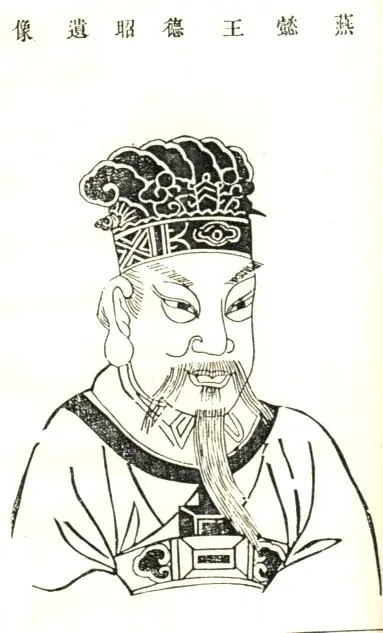
赵德昭
Zhao Dezhao (赵德昭, 951–September 26, 979), courtesy name Rixin, was an ancestral native of Zhuo Commandery (modern Zhuozhou, Hebei Province) and resident of Kaifeng, the Eastern Capital. He was an imperial prince of the early Northern Song dynasty, the second son of Emperor Taizu (Zhao Kuangyin), and born to Empress Xiaohui (née He). Because his elder brother Zhao Dexiu died in infancy, Zhao Dezhao was effectively the eldest…
Zhao Dezhao (赵德昭, 951–September 26, 979), courtesy name Rixin, was an ancestral native of Zhuo Commandery (modern Zhuozhou, Hebei Province) and resident of Kaifeng, the Eastern Capital. He was an imperial prince of the early Northern Song dynasty, the second son of Emperor Taizu (Zhao Kuangyin), and born to Empress Xiaohui (née He). Because his elder brother Zhao Dexiu died in infancy, Zhao Dezhao was effectively the eldest surviving son of Emperor Taizu. Zhao Dezhao was celebrated for his gentle benevolence, studious modesty, and scrupulous observance of Confucian rites. During his reign, Emperor Taizu strictly regulated the privileges of his imperial sons to curb the arrogance typical of Five Dynasties princes and maintain family harmony. When Zhao Dezhao established his own residence in 964, Taizu departed from the Five Dynasties custom of immediate princely investiture, appointing him solely as Defense Commissioner of Guizhou. In 973, Zhao Dezhao received promotions as Honorary Grand Tutor, Grand Councilor, Governor of Xingyuan, and Military Governor of Shannan West, yet remained unennobled as an imperial prince throughout his father's lifetime. Following Emperor Taizong's accession in 976, he was appointed Intendant of the Capital, Palace Attendant, and Military Commissioner of Yongxing Army, and was created Prince of Wugong Commandery, ranking at the head of the imperial princes of his generation. In 979, Zhao Dezhao accompanied Emperor Taizong on the expedition to eliminate Northern Han at Taiyuan, followed by the siege of Youzhou. During the catastrophic night rout at the Battle of Gaoliang River, Emperor Taizong's whereabouts were temporarily unknown, prompting frontline commanders to contemplate elevating Zhao Dezhao to preserve order, an incident that aroused Taizong's intense jealousy. Upon returning to Kaifeng, Taizong delayed conferring military honors for the Taiyuan campaign; when Zhao Dezhao respectfully petitioned on behalf of the soldiers, Taizong reacted with furious denunciation. Grievously terrified and humiliated, Dezhao returned home and took his own life with a fruit knife at the age of twenty-nine. He was posthumously elevated to Prince of Wei, Prince of Wu, Prince of Yue, and ultimately Prince of Yan (posthumous title Yi, known as Prince Yiyi of Yan). In the Southern Song dynasty, Emperors Lizong and Duzong were his direct lineal descendants.
Born in Kaifeng as the eldest surviving son of Zhao Kuangyin, courtesy name Rixin.
Established his manor; Taizu curtailed royal indulgence, appointing him only Defense Commissioner of Guizhou.
Appointed Honorary Grand Tutor, Grand Councilor, Governor of Xingyuan, and Military Governor of Shannan West.
Following Taizong's ascension, appointed Intendant of the Capital and created Prince of Wugong Commandery.
Accompanied northern campaigns; after the rout at Gaoliang River, army officers briefly proposed elevating him to the throne.
Reprimanded harshly by Taizong when advocating troops' rewards, he committed suicide at twenty-nine; Taizong mourned in regret.
Consecrated as Prince of Yan with the posthumous title Yi, enshrined in the imperial ancestral temple.
Zhao Dezhao was born in 951 during the Later Zhou dynasty. His father, Zhao Kuangyin, then served as Palace Command Inspector, and his mother was Empress Xiaohui (née He). Among Zhao Kuangyin's sons, the eldest, Zhao Dexiu, and the third, Zhao Delin, died in early childhood, making Zhao Dezhao the eldest surviving prince of the founding emperor.
In 960, the Song dynasty was established, and Zhao Kuangyin ascended the throne. Mindful of the catastrophic dynastic infighting and princely abuses that had ruined Five Dynasties regimes, Emperor Taizu exercised extreme caution regarding honors bestowed upon his sons. In 964, when the fourteen-year-old Zhao Dezhao set up his official residence outside the palace, court ministers petitioned to invest the imperial eldest son as an imperial prince. Emperor Taizu rejected the request, insisting that imperial scions must endure administrative discipline before receiving high noble rank. Consequently, Dezhao received only the commission of Defense Commissioner of Guizhou.
In 973, when Zhao Dezhao came of age, Emperor Taizu appointed him Honorary Grand Tutor and Grand Councilor, dispatching him to take charge of regional affairs as Governor of Xingyuan and Military Governor of Shannan West. Even then, he remained unennobled. In daily life, Zhao Dezhao was remarkably modest in dress and carriage, giving way on public avenues to senior councilors and ministers. He was admired throughout the capital for his filial gentleness, frugality, and gentlemanly dignity.
In the winter of 976, Emperor Taizu passed away abruptly, and his younger brother Zhao Kuangyi ascended the throne as Emperor Taizong.
To reassure the court and display fraternal benevolence toward his brother's sons, Emperor Taizong granted Zhao Dezhao high honors. In the eleventh month of 976, Taizong appointed Zhao Dezhao Grand Commandant, Palace Attendant, Intendant of the Capital, and Military Commissioner of Yongxing Army, formally creating him Prince of Wugong Commandery. In royal precedence, Zhao Dezhao ranked directly behind the emperor's brother Prince of Qi Zhao Tingmei, leading all princes of his generation.
In the spring of 979, Emperor Taizong personally led the grand expedition against Northern Han at Taiyuan, successfully extinguishing the state. Zhao Dezhao accompanied the imperial train as protector of the headquarters. Emboldened by victory, Emperor Taizong ignored the exhaustion of the troops and pushed forward into Liao territory to besiege Youzhou. In July, at the Battle of Gaoliang River outside modern Beijing, Liao cavalry commanded by Yelü Xiuge and Yelü Xiezhen executed a pincer attack that utterly crushed the Song forces. During the nocturnal rout, Emperor Taizong was wounded and fled southward in a donkey cart, losing contact with the main army for several days.
In the midst of chaos and dread, frontline generals and palace commanders held secret deliberations, concluding that the realm could not remain without a head, and contemplated crowning the mature and respected imperial eldest son, Prince of Wugong Commandery Zhao Dezhao. When Taizong reappeared, the gathering disbanded, but reports of the proposed accession planted deep seeds of suspicion and fear in the emperor's mind.
Following the return of the imperial army to Kaifeng, Emperor Taizong felt acute humiliation over the defeat at Gaoliang River. By established imperial precedent, conquering Taiyuan was an epochal accomplishment deserving lavish rewards for officers and soldiers. However, citing the disgrace of the subsequent northern retreat, Emperor Taizong delayed conferring honors and bounties for months, creating widespread discontent among the ranks.
Zhao Dezhao, conscious of the immense sacrifices borne by the soldiers at Taiyuan and alarmed by murmuring in the barracks, took the initiative on September 26, 979, to request an audience with Emperor Taizong, respectfully urging him to distribute rewards to appease the troops. Zhao Dezhao acted out of public loyalty, but Emperor Taizong, harboring dark suspicions since Gaoliang River, perceived the request as a challenge to imperial authority. In full view of the court, Taizong exploded in fury, shouting: "Wait until you become emperor yourself, then it will not be too late to reward them!"
This mortal accusation struck Zhao Dezhao like a thunderbolt. Realizing that his uncle viewed him not as a devoted nephew but as a lethal claimant to the throne, he understood that survival was impossible and that remaining alive would invite trumped-up charges and the ruin of his family. Returning to his mansion pale and speechless, he dismissed his attendants, entered a private side chamber, picked up a small fruit knife from his desk, and cut his throat, dying at the age of twenty-nine.
Hearing the tragic news, Emperor Taizong was overwhelmed with panic and remorse. Rushing to the Prince of Wugong's residence, he cradled Dezhao's lifeless body, weeping bitterly and crying: "Foolish boy, why did you go to such extremes!" To quiet public grief, Emperor Taizong posthumously invested him as Secretariat Director and Prince of Wei. During Emperor Huizong's reign, he was created Prince of Yan with the posthumous title Yi. Historically, after the dynastic transition of the Jingkang incident, Emperor Lizong and Emperor Duzong of the Southern Song were direct descendants of Zhao Dezhao, returning the imperial throne to the lineage of Prince Yiyi of Yan three centuries later.
As the eldest surviving prince of Emperor Taizu, he served diligently as defense commissioner and regional governor without requesting princely titles, earning wide praise for frugality and virtue.
Accompanying the expeditions to Taiyuan and Youzhou in 979, his prestige was such that frontline commanders contemplated elevating him to maintain imperial order during the Gaoliang River retreat.
Appealing for soldiers' rewards upon return to Kaifeng, he met Emperor Taizong's deadly reprimand and chose to slit his throat at age twenty-nine to preserve honor and clear his innocence.
Created posthumously as Prince of Yan with the posthumous name Yi, his direct descendants included Southern Song Emperors Lizong and Duzong, returning the imperial crown to his bloodline.
FIGURES ASSOCIATED WITH THIS DYNASTY