Birth in Guanghan
Born in Guanghan, Sichuan; possessed an independent disposition and loved observing flowers and insects.
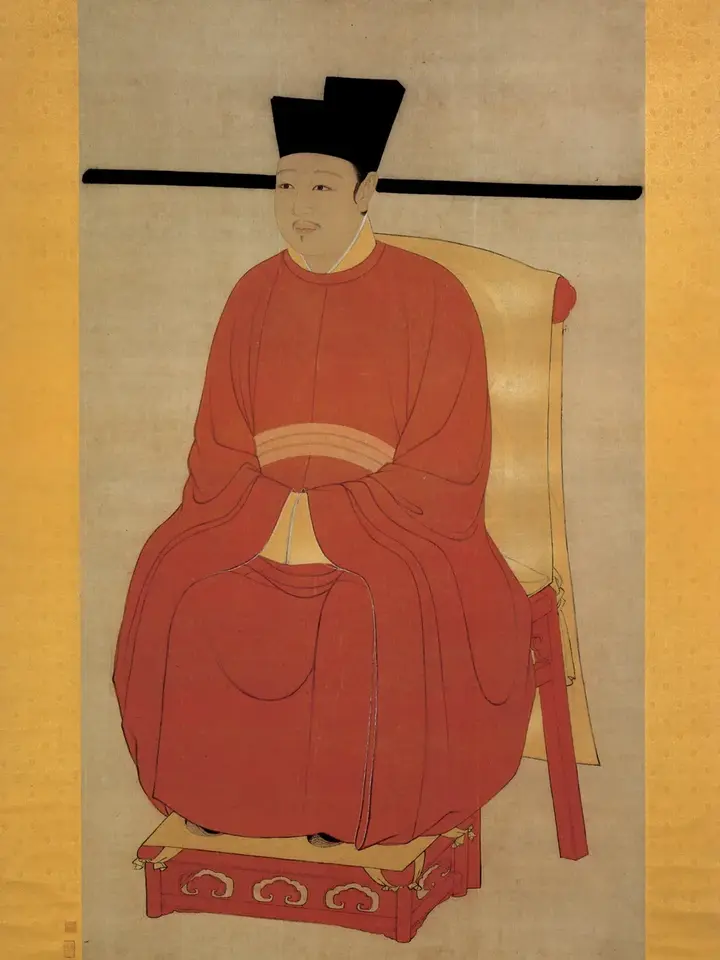
赵昌
Zhao Chang (赵昌) was a renowned Northern Song painter, celebrated across China for his mastery of flower-and-bird, insect, and broken-branch fruit sketches from life. Born in Guanghan, he studied painting from an early age under the Sichuan master Teng Changyou before delving into the "boneless technique" (mogu fa) initiated by Southern Tang master Xu Chongsi. By synthesizing fine-line detailing with direct color washes,…
Zhao Chang (赵昌) was a renowned Northern Song painter, celebrated across China for his mastery of flower-and-bird, insect, and broken-branch fruit sketches from life. Born in Guanghan, he studied painting from an early age under the Sichuan master Teng Changyou before delving into the "boneless technique" (mogu fa) initiated by Southern Tang master Xu Chongsi. By synthesizing fine-line detailing with direct color washes, Zhao Chang created a revolutionary style of sketching from life (xiesheng). Every morning, while morning dew remained fresh on the blossoms, he strolled through flowerbeds observing the delicate harmony between morning light, dew, and petals, mixing colors directly on the spot, earning him the self-styled title "Zhao Chang of Life Sketches" (Xiesheng Zhao Chang). Zhao Chang possessed an unbending, haughty character and guarded his brushwork with extreme care, refusing to paint casually for aristocratic patrons. Even when regional governors offered generous sums, he often turned them away. His paintings were noted for delicate, translucent coloring, lifelike vitality, and three-dimensional presence. The Xuanhe Painting Manual (Xuanhe Huapu) recorded 154 of his works in imperial collections, with surviving masterpieces including New Year Picture (Suichao Tu), Picture of Four Joys, Pink Blossom, and the celebrated Butterflies Sketched from Life (Xiesheng Qiandie Tu) in the Palace Museum.
Born in Guanghan, Sichuan; possessed an independent disposition and loved observing flowers and insects.
Studied under Sichuan fine-line master Teng Changyou, mastering traditional outline and coloring techniques.
Synthesized the Southern Tang boneless technique, mixing colors directly before morning blossoms.
His artistic reputation spread across the Central Plains, with imperial grandees seeking his works in vain.
Passed away in his hometown; in his later years he repurchased and burned his immature works, leaving few surviving scrolls.
Zhao Chang was born in Guanghan County, Chengdufu Circuit, during the transition between the Later Zhou and early Northern Song. Since the mid-Tang, Sichuan had flourished as an imperial center for fine arts, where the courtly fine-line flower-and-bird styles of Huang Quan and his son Huang Jucai held sway. Endowed with perceptive artistic intuition, Zhao Chang observed blooming gardens and wild birds from youth, aspiring to establish an independent artistic legacy.
As a young artist, Zhao Chang entered the studio of Teng Changyou, a distinguished Sichuan painter renowned for painting geese, ducks, hibiscus, and insects with dense, vibrant pigments and precise linework. Zhao Chang studied under Teng for years, acquiring complete mastery over fine-line outlining and modeling. Yet rather than remaining confined to traditional templates, he traveled extensively through Sichuan's rivers and monasteries, observing the seasonal transformations of flora in wind and rain.
Subsequently, Zhao Chang dedicated himself to studying the "boneless technique" (mogu fa) created by the Southern Tang painter Xu Chongsi. Rather than constructing images with dark ink outlines, the boneless technique applied mineral colors and washes directly to delineate form. Zhao Chang integrated this approach with fine-line coloring, forging a luminous new style that combined structural strength with translucent moisture. His reputation soon eclipsed that of his mentor Teng Changyou.
Zhao Chang emphasized direct sketching from nature (xiesheng), vigorously opposing mechanical studio copying. To capture the vital spirit and delicate botanical structure of flora, he cultivated extensive gardens around his studio, planting peonies, herbaceous peonies, camellias, hibiscus, peaches, and rare fruit trees.
At dawn, before the morning dew evaporated and while morning breezes stirred the foliage, Zhao Chang strolled through his flowerbeds in contemplation. He observed the curvature of petals under early sunlight, the interplay of withered and fresh leaves, and the sparkling light reflected in dewdrops. Holding his wooden palette and brushes, he mixed colors directly before the blossoms, ensuring that every brushstroke captured the vivid, natural vitality of the living plants. Contemporaries marveled at his lifelike resonance, and Zhao Chang proudly inscribed his paintings with the title "Zhao Chang of Life Sketches."
Zhao Chang was independent, haughty, and unyielding, viewing artistic integrity through a literatus's moral lens rather than treating painting as a stepping stone to official patron favor. When regional military commanders and traveling dignitaries visited with silver and silk to commission scrolls, Zhao Chang consistently kept his gates barred.
Governor Shao Mu, an ardent admirer of Zhao's painting, sent close aides and visited personally on multiple occasions, yet Zhao refused to part with a single leaf. Only when Shao Mu was completing his term, having governed with genuine compassion for commoners, did Zhao Chang finally paint a refined flower-and-bird scroll as a parting gift. This uncompromising pride made his genuine scrolls treasured like precious jade in his own lifetime.
In his final years, Zhao Chang became even more exacting with his art. Fearing that immature works scattered among collectors might compromise his artistic standard, he spent substantial sums purchasing his early scrolls across various circuits and consigning them to the flames. Consequently, authentic surviving scrolls by Zhao Chang became exceptionally rare. He passed away peacefully in his native home during the Dazhong Xiangfu era.
Zhao Chang's greatest contribution to Song art history lay in breaking the monopoly of the courtly "imperial opulence" style established by Huang Quan and his son, opening a fresh path of naturalistic flower-and-bird sketches from life.
Zhao Chang utilized the boneless technique to apply pigments directly to petals and stamens, creating translucent, multi-layered color variations. His broken-branch flowers not only delineated botanical structures of stems, sepals, and buds with flawless accuracy, but also conveyed the moist atmosphere of morning dew and gentle breezes. Northern Song connoisseur Mi Fu remarked in Hua Shi: "Zhao Chang's paintings are divine works; his sketches truly attain life, and his coloring is consummate, matching Huang Quan in technique while surpassing him in vital spirit."
Zhao Chang's art enjoyed the highest imperial esteem during the reign of Emperor Huizong. When the emperor collected masterworks across the empire, the imperial palace library cataloged 154 paintings by Zhao Chang, covering broken-branch camellias, peach blossoms, begonias, pictures of four joys, and seasonal new year presentations.
His supreme surviving masterpiece is Butterflies Sketched from Life (Xiesheng Qiandie Tu), preserved in the Palace Museum in Beijing. The scroll depicts an overgrown meadow in late spring, with butterflies fluttering above blossoming wild chrysanthemums and crawling insects. Rendered in delicate ink and luminous mineral pigments, the wings of the butterflies shimmer with powdery luminosity, exuding natural vitality and profound seasonal tranquility.
FIGURES ASSOCIATED WITH THIS DYNASTY