Birth in Quzhou
Born in Xi'an County, Quzhou; orphaned young and raised by his elder brother, studying tirelessly in poverty.
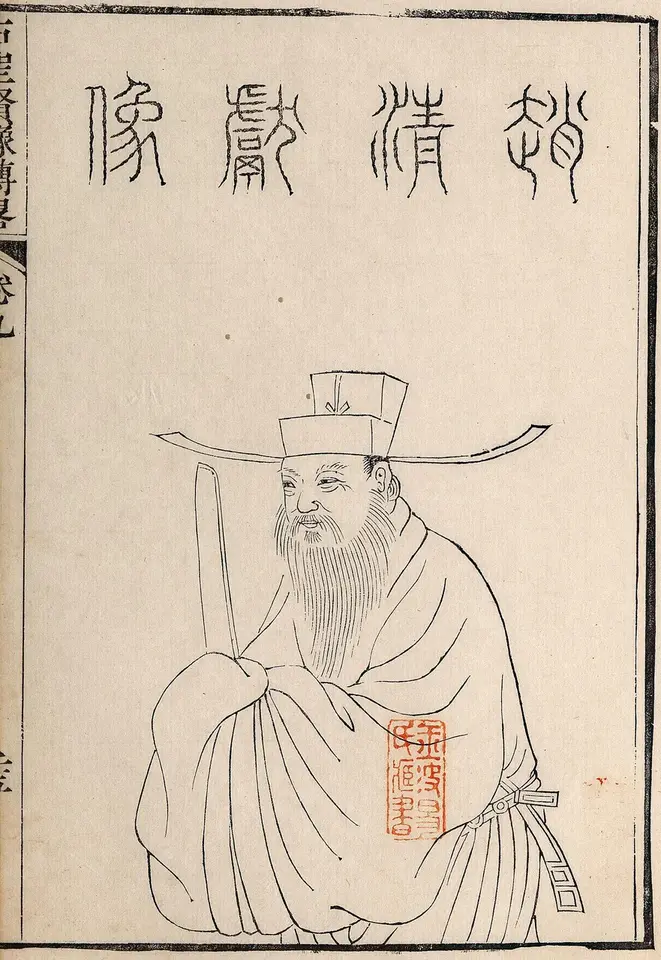
赵抃
Zhao Bian (赵抃, 1008–1084) was an eminent statesman, remonstrator, and grand councilor of the Northern Song dynasty. Born into an ancient scholar family in Quzhou, he studied diligently in poverty and passed the imperial examinations in 1034. He served successively as judicial clerk, magistrate of Chong'an and Hailing, and transport judge, establishing an exemplary reputation for rectitude and compassion. During the Zhihe era,…
Zhao Bian (赵抃, 1008–1084) was an eminent statesman, remonstrator, and grand councilor of the Northern Song dynasty. Born into an ancient scholar family in Quzhou, he studied diligently in poverty and passed the imperial examinations in 1034. He served successively as judicial clerk, magistrate of Chong'an and Hailing, and transport judge, establishing an exemplary reputation for rectitude and compassion. During the Zhihe era, he was summoned to court as Palace Censor, where he impeached corrupt grandees without fear, fearlessly taking on powerful figures such as Grand Councilor Chen Zhizhong and Bureau of Military Affairs Commissioner Wang Gongchen. His fearless impartiality inspired awe throughout Kaifeng, earning him the renowned moniker "Iron-faced Censor" (Tiemian Yushi). Zhao Bian was celebrated for broad benevolence and incorruptible simplicity, particularly in his governance of Sichuan and famine relief in Yuezhou. Dispatched repeatedly to govern Chengdu, he traveled with only a zither (qin) and a crane (he), pacifying the southwestern frontier through tranquility and simplicity. When governing Yuezhou during a historic drought, he instituted a rigorous famine relief and work-for-grain system that preserved over thirty thousand lives, which became a recognized model of disaster governance. Rising to Vice Grand Councilor, he retired as Grand Academician of the Palace of Imperial Governance, famously burning incense every night to examine his conscience before Heaven.
Born in Xi'an County, Quzhou; orphaned young and raised by his elder brother, studying tirelessly in poverty.
Passed the jinshi examination; appointed judicial clerk in Wu'an, applying laws with clarity and mercy to spare the innocent.
Appointed Palace Censor, fearlessly impeaching Grand Councilor Chen Zhizhong and corrupt court favorites.
Dispatched to govern Chengdu, traveling lightly with only a qin and a crane, governing with simplicity and rectitude.
Appointed Vice Censor-in-Chief, upholding court discipline and praised by Emperor Yingzong for balanced governance.
Appointed Vice Grand Councilor; advocated easing popular burdens and respectfully dissented from rapid reform exactions.
Governed Yuezhou during severe drought, orchestrating relief that saved over thirty thousand starving residents.
Retired with the rank of Grand Academician of the Palace of Imperial Governance and Junior Protector to the Crown Prince.
Passed away peacefully at his home in Quzhou at age seventy-seven; Emperor Shenzong conferred the posthumous name Qingxian.
In 1008, Zhao Bian was born into a scholar-farming family in Xi'an County, Quzhou, Liangzhedong Circuit. Having lost his father in early childhood, his family lived in severe poverty, and he was raised by his elder brother Zhao Zhen. Deeply mindful of his brother's sacrifices, Zhao Bian devoted himself to continuous study day and night. He mastered the Confucian classics and historical treatises, combining agile literary talent with lofty moral rectitude.
In 1034, at age twenty-seven, Zhao Bian passed the imperial examinations and commenced his official career as judicial clerk of Wu'an Military Command. In this post, he was celebrated for fair, humane judicial review. An offender had forged an official seal prior to a general imperial amnesty but used it only after the decree was issued. The presiding magistrate insisted on capital punishment for counterfeiting imperial seals.
Zhao Bian re-examined the facts and argued vigorously: "The act of forging occurred prior to the amnesty and is legally absolved; only the act of usage took place after the amnesty, which does not merit execution under our statutes." Through his persistent advocacy, the sentence was commuted, saving an innocent life. Administrative officers throughout the military district admired his legal precision and moral integrity.
Subsequently, Zhao Bian served as magistrate of Chong'an and Hailing, reducing corvee burdens, dredging canals, and resolving dozens of longstanding judicial disputes. Recognizing his incorruptibility and administrative skill, the court promoted him to transport judge of Jiangdong, where his vigilance deterred clerical embezzlement across the circuit.
In 1053, Grand Councilor Pang Ji recognized Zhao Bian's unyielding righteousness and recommended him to the court, leading to his appointment as Palace Censor (Dianzhong Shiyushi). In this remonstrative post, Zhao Bian took imperial justice as his sole standard, fearlessly impeaching abuses of power regardless of official rank or court favor.
When Grand Councilor Chen Zhizhong held power, a domestic scandal erupted involving his secondary consort beating a maidservant to death. While other censors hesitated out of fear, Zhao Bian submitted eight consecutive memorials decrying Chen's inability to govern his household and unfitness to lead the state. He also spoke out against sudden promotions bestowed upon imperial in-laws such as Zhang Yaozuo.
Furthermore, whenever Commissioner Wang Gongchen or other senior grandees exceeded their authority, Zhao Bian reported them without hesitation. Court grandees trembled upon seeing him ascend the dais, regarding him with awe. Emperor Renzong praised his stainless loyalty, and scholars and citizens across Kaifeng celebrated him as the "Iron-faced Censor."
In 1057, with the Sichuan region afflicted by bureaucratic extravagance and litigious disputes, Emperor Renzong selected Zhao Bian to serve as transport commissioner of Zizhou Circuit and subsequently prefect of Chengdu.
Officials dispatched to Shu typically traveled with long trains of carriages and retinues. Zhao Bian departed for Sichuan with only a few aging attendants and a single horse, his entire baggage consisting of a solitary zither (qin) and a caged crane (he). When local officials and citizens witnessed his arrival, they were deeply impressed by his ascetic simplicity.
Upon arrival, Zhao Bian moved decisively against the entrenched custom of lavish welcoming banquets and reciprocal gifts of regional wine. He declined all banquets in his honor and submitted memorials detailing how official extravagance burdened commoners. He highlighted three great benefits of banning wine gifts: saving public funds, ending official superficiality, and sparing common couriers exhausting road transport. Through his personal example, the social atmosphere of Sichuan transformed dramatically.
In governing Sichuan, Zhao Bian emphasized local conditions and streamlined administrative simplicity. He heard civil suits without delay, rendering judgments immediately on the bench without backlog. He curbed corrupt clerks from extorting farming households, enabling commoners to live in peace and winning universal praise for his "governance of harmony."
In 1064, Zhao Bian returned to Kaifeng as Vice Censor-in-Chief (Yushi Zhongcheng), overseeing imperial surveillance. He enforced strict discipline among palace officials and upheld dynasty statutes. Emperor Yingzong lauded his record in Chengdu as "the true embodiment of harmonious governance."
In 1069, Emperor Shenzong appointed Wang Anshi to initiate the New Policies (Xining Bianfa). Recognizing Zhao Bian's profound moral standing, Emperor Shenzong appointed him Vice Grand Councilor (Canzhi Zhengshi). While sharing Shenzong's goal of strengthening the realm, Zhao Bian harbored serious reservations regarding practical implementation, particularly the Green Sprouts and labor-service exactions that risked clerk extortion.
In imperial audiences, he gently but firmly argued that reforms must align with popular goodwill and avoid relentless tax collection. Emperor Shenzong deeply respected his seasoned counsel, but due to policy differences with Wang Anshi, Zhao Bian voluntarily requested transfer to prefectural posts in Hangzhou and Qingzhou. In Qingzhou, facing severe drought in Shandong, he personally inspected county conditions, persuaded wealthy households to sell grain at fair rates, and rescued tens of thousands.
In 1075, Liangzhedong Circuit suffered a catastrophic drought, with Yuezhou (present-day Shaoxing) hit especially hard by famine and disease. Emperor Shenzong dispatched Zhao Bian to take charge of Yuezhou and direct famine relief operations.
Upon arrival, Zhao Bian instituted a comprehensive, rigorous relief system. He ordered county registers compiled to distribute grain rations according to poverty tiers, encouraged donations from wealthy gentry, distributed imperial granary reserves at fair prices, and organized work-for-grain projects repairing canals and roads. Over months of disaster, not a single refugee died of neglect, preserving over thirty thousand lives.
In 1079, feeling advanced age, the seventy-one-year-old statesman repeatedly petitioned to retire. Emperor Shenzong granted his request, allowing him to retire with the ranks of Junior Protector to the Crown Prince and Grand Academician of the Palace of Imperial Governance. Returning to Donggang in Quzhou, he lived simply in cotton garments, dedicating himself to local charity.
In August 1084, sensing his final moments, Zhao Bian sat upright, bid farewell to his kinsmen, and passed away at age seventy-seven. Emperor Shenzong mourned deeply, suspending court audiences and conferring the posthumous name Qingxian.
During his service as Palace Censor, Zhao Bian demonstrated the highest moral integrity of imperial remonstrators. In confronting imperial kin and entrenched chancellors, he held true to the principle of performing duty without fearing the mighty.
In the case of Grand Councilor Chen Zhizhong, his eight successive petitions argued that if a premier could not maintain basic family morality, he could not guide the empire. His fearless action checked nepotism and revitalized the supervisory system of the Renzong era, establishing his reputation as the "Iron-faced Censor."
Serving forty years in high office, Zhao Bian gave the vast majority of his stipends and imperial gifts to impoverished kinsmen and orphans, refusing private land accumulation or concubines.
His four administrative tours in Sichuan, accompanied solely by a qin and a crane, became an iconic symbol of clean governance in Chinese culture. Upon taking office, he abolished customary banquets and wine gifts, stating to his subordinates: "Whatever I do by day, I burn incense at night and recount it to Heaven; whatever I dare not tell Heaven, I resolve never to do!" This inner moral vigilance established an enduring standard for administrative rectitude.
Zhao Bian's disaster relief measures in Yuezhou not only saved thirty thousand lives but also marked a milestone in Chinese famine relief policy. Literary master Zeng Gong composed the famous Record of Lord Zhao's Famine Relief in Yuezhou to document his methods for future administrators.
Zhao Bian's relief model rested on four pillars: accurate household classification to prevent embezzlement; stabilization of grain prices through coordination of public and private supplies; implementation of work-for-grain projects employing refugees on flood-control dykes and postal roads; and the establishment of medical clinics to prevent post-famine epidemics. This comprehensive disaster system became a canonical blueprint in imperial statecraft.
During his tenure in Chengdu and Zizhou, Zhao Bian carried out thorough reforms against official dining and reciprocal wine gifts. Sichuan had long been known for literary sophistication alongside administrative luxury, with new governors hosting lavish public banquets.
Recognizing that reform must begin at the top, Zhao Bian strictly prohibited public gifts across his circuit. He conducted undercover inspections through villages and tea houses to ensure officials did not harass commoners. Within a year, local officials adopted frugality, litigation diminished drastically, and civic customs improved throughout Sichuan.
Zhao Bian possessed a warm, humble disposition, never showing anger or arrogance. Beyond Confucian self-restraint, he was deeply versed in Buddhist philosophy as a disciple of Chan Master Fayan of the Yunmen school.
From his forties onward, he studied Chan meditation at Nanshan Temple in Quzhou, viewing worldly glory as transient clouds. Every evening he burned incense and bowed before Heaven, examining his daily deeds. This rigorous moral discipline shielded him from factional bitterness throughout turbulent political eras.
Zhao Bian was exceptionally frugal with himself and generous toward others. Mindful of his brother's early sacrifices, he treated his nephews as his own sons, nurturing them into accomplished scholars.
In Quzhou, he established a charitable estate to support impoverished clan members, provided wedding dowries for over twenty impoverished orphan girls, and funded burials for destitute neighbors. In retirement, local villagers brought their disputes to Donggang rather than official courts, and Zhao Bian's gentle counsel invariably reconciled contending parties.
Outside his official responsibilities, Zhao Bian found solace in scenic landscapes. He traveled across famed mountains including Mount Lu, Mount Emei, Mount Qingcheng, Mount Yandang, and Mount Tiantai, leaving commemorative inscriptions at each site.
Zhao Bian was also a master calligrapher whose brushwork possessed powerful skeletal strength and classical composure, drawing upon Yan Zhenqing and Liu Gongquan. Huang Tingjian praised his calligraphy as "dignified and lawful, mirroring his unbending posture at court." His surviving stone cliff inscriptions across Jiangnan and Sichuan remain cherished by epigraphers.
FIGURES ASSOCIATED WITH THIS DYNASTY