Birth in Qinghe Lineage
Born into an established northern gentry family; relocated south to Jiankang, displaying early poetic genius.
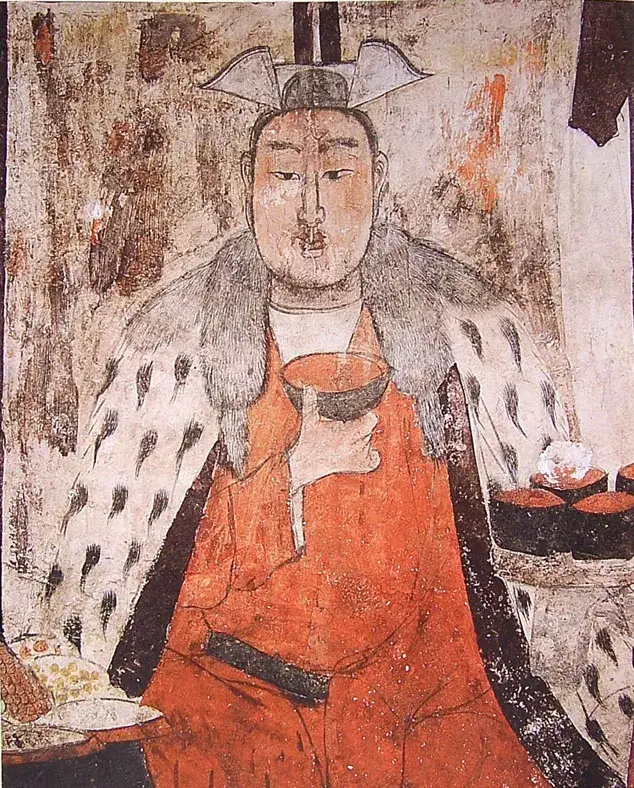
张正见
Zhang Zhengjian (张正见; d. c. 582), courtesy name Jianze, was a native of Dongwucheng County, Qinghe Commandery, Jizhou (present-day Wucheng County, Dezhou, Shandong Province). He was an illustrious poet, literary master, and court official of the southern Chen dynasty during the Northern and Southern Dynasties period, rising to the posts of Supernumerary Cavalier Attendant Gentleman and Gentleman of the Section of State…
Zhang Zhengjian (张正见; d. c. 582), courtesy name Jianze, was a native of Dongwucheng County, Qinghe Commandery, Jizhou (present-day Wucheng County, Dezhou, Shandong Province). He was an illustrious poet, literary master, and court official of the southern Chen dynasty during the Northern and Southern Dynasties period, rising to the posts of Supernumerary Cavalier Attendant Gentleman and Gentleman of the Section of State Expenditure of the Masters of Writing. He was celebrated as one of the most distinguished masters of five-character poetry of the Chen era, occupying an essential position in the evolution from Six Dynasties palace-style verse to Tang regulated poetry. Hailing from the prestigious Qinghe Zhang clan, he was the grandson of Zhang Gaizhi, Cavalier Attendant-in-Ordinary in Northern Wei, and son of Zhang Xiuli, Administrator of Huaifang under the Liang dynasty. Exhibiting prodigal talent in childhood, he composed an imperial ode at age thirteen that captivated Crown Prince Xiao Gang (Emperor Jianwen of Liang). In 547, he achieved the highest rank in the imperial examinations, entering service as Regular Attendant of the Kingdom of Shaoling, subsequently serving as Magistrate of Pengze. Amid the catastrophic Hou Jing Rebellion and the fall of Jiangling, he withdrew to Mount Lu to live in seclusion, dedicating himself to poetic composition. Following the founding of the Chen dynasty in 557, Emperor Wu summoned him to court, where he served successively as Acting Administrative Assistant of the Section of Ink to the Prince of Poyang, Chief Clerk to the Prince of Hengyang, and Supernumerary Cavalier Attendant Gentleman concurrent with Gentleman of the Section of State Expenditure. Renowned across the realm for his poetic brilliance, particularly in five-character verse, over one hundred and forty of his poems survive today—the largest surviving poetic corpus of any Chen dynasty poet. He passed away during the Taijian era at the age of forty-nine.
Born into an established northern gentry family; relocated south to Jiankang, displaying early poetic genius.
At age thirteen, presented a poetic eulogy to Crown Prince Xiao Gang, earning lavish praise.
Achieved first rank in the imperial policy examinations; appointed Regular Attendant of the Kingdom of Shaoling.
Appointed Magistrate of Pengze; resigned amid the Hou Jing Rebellion to live as a hermit on Mount Lu.
Recruited by Chen founder Emperor Wu; served as Administrative Assistant to Prince of Poyang and Chief Clerk to Prince of Hengyang.
Promoted to Supernumerary Cavalier Attendant Gentleman concurrent with Gentleman of the Section of State Expenditure.
Passed away in office during the late Taijian era at forty-nine, deeply mourned by the literary community.
Zhang Zhengjian was born into the prominent Qinghe Zhang lineage of Dongwucheng. His grandfather, Zhang Gaizhi, served Northern Wei as Cavalier Attendant-in-Ordinary and Administrator of Bohai and Changle commanderies. His father, Zhang Xiuli, migrated south during the Liang dynasty, rising to Cavalier Gentleman and Administrator of Huaifang. Growing up in the cultural center of Jiankang, Zhang Zhengjian demonstrated acute literary sensitivity, reading broadly in histories and mastering metrics and phonology from childhood.
During the Datong era of the Liang dynasty, Crown Prince Xiao Gang (posthumously Emperor Jianwen) gathered talented writers to his palace academy. At age thirteen, Zhang Zhengjian composed a magnificent imperial panegyric and presented it to the Crown Prince. Xiao Gang was amazed by the boy's stylistic maturity and profound imagery, praising him as a prodigy and inviting him to join court literary banquets.
In 547, the imperial court held the civil service policy examinations. Competing against established scholars, Zhang Zhengjian produced an essay that analyzed statecraft and classical philosophy with lucid logic and elegant prose, capturing the highest score. The court rewarded him with an initial appointment as Regular Attendant of the Kingdom of Shaoling under Prince Xiao Lun.
Shortly after Zhang Zhengjian entered public life, the catastrophic Hou Jing Rebellion broke out. Rebel forces swept across the southern provinces, besieging the imperial palace and leaving Jiankang in ashes. Surviving the turmoil, Zhang Zhengjian was appointed Magistrate of Pengze along the middle Yangtze.
During his tenure at Pengze, civil war intensified between rival princes, culminating in the destruction of Emperor Yuan's court at Jiangling by Western Wei armies. Sickened by factional bloodshed and widespread starvation, Zhang Zhengjian abandoned his magisterial office, retreating with his family into the secluded valleys of Mount Lu.
During his years of seclusion on Mount Lu, Zhang Zhengjian turned his back on official society, finding solace among mountain waterfalls and bamboo forests. Wandering among the peaks of Wulao and Xianglu, he immersed himself in Buddhist scriptures and classical verse. This hermitage transformed his poetry, stripping away the artificial frivolity of palace-style verse and infusing his work with the rustic simplicity and spiritual depth of Tao Yuanming.
In 557, Emperor Wu of Chen, Chen Baxian, founded the Chen dynasty. Seeking to restore administrative institutions and conciliate southern literati, the new emperor issued decrees recruiting surviving men of letters. Recognizing Zhang Zhengjian's renown, Emperor Wu summoned him to the capital. Grateful for the emperor's restoration of order, Zhang Zhengjian returned to public service in Jiankang.
He served initially as Acting Administrative Assistant of the Section of Ink to the Prince of Poyang, subsequently advancing to Chief Clerk to the Prince of Hengyang. In these princely households, which were vibrant centers of artistic patronage, Zhang Zhengjian coordinated administrative correspondence while functioning as the undisputed arbiter of capital literary gatherings. During the Tianjia era, Emperor Wen promoted him to Supernumerary Cavalier Attendant Gentleman concurrent with Gentleman of the Section of State Expenditure. In this sensitive fiscal office overseeing national revenue and treasury accounts, Zhang Zhengjian managed accounts with meticulous integrity.
Within the Chen literary world, his poetic fame reached its zenith, with contemporaries acclaiming that "his five-character poetry was exceptionally accomplished and circulated universally throughout the realm." Court ceremonies and private banquets were considered incomplete without his verses.
During the Taijian era under Emperor Xuan, the southern realm enjoyed relative peace, and Zhang Zhengjian continued his duties in the Secretariat. However, decades of intense administrative labor and relentless literary production compromised his health. He passed away in his Jiankang residence during the Taijian era at the age of forty-nine.
His death was mourned by Emperor Xuan and the court literati. Ming dynasty bibliophiles later compiled his surviving corpus into the Collection of Cavalier Zhang. With over one hundred and forty poems extant today, Zhang Zhengjian remains the most prolific surviving poet of the Chen dynasty, whose formal innovations in regulated metrics directly inspired the Four Paragons of the Early Tang—Wang Bo, Yang Jiong, Lu Zhaolin, and Luo Binwang.
Among Chen dynasty poets, Zhang Zhengjian occupies a paramount position by virtue of the quantity and quality of his surviving works. While the poetry of most Six Dynasties writers was largely lost during the civil wars accompanying the Sui conquest, Zhang Zhengjian's verse was so widely cherished that it was preserved across imperial anthologies including New Songs from a Jade Terrace, Finest Blossoms from the Literary Garden, Collection of Music Bureau Poetry, and Collection of Literature Arranged by Categories.
With over one hundred and forty poems surviving, Zhang Zhengjian stands as the foremost poetic representative of the Chen dynasty. From landscape verses like Boating with Qian Xuanzhi and Touring the Dragon Head City to seasonal lyricism like Evening Cicadas on Wintry Trees, his works display formal polish and emotional balance. His poetry provides a priceless documentary mirror of the intellectual transformation of southern intellectuals from wartime displacement to dynastic service.
Zhang Zhengjian's most lasting contribution to Chinese poetic history was his role in formalizing five-character regulated verse. Following Shen Yue's formulation of the Yongming style under Southern Qi, poets pursued tonal harmony and parallel structure; however, under Emperor Jianwen of Liang, this aesthetic degenerated into shallow sensory indulgence.
Trained in court elegance but tempered by years of mountain seclusion and national ruin, Zhang Zhengjian infused palace verse with the rustic clarity of Tao Yuanming and Xie Lingyun. Formally, he enforced strict tonal balance and precise parallelism between couplets, achieving fluid tonal alternation that anticipated High Tang metrics. Song dynasty critics observed that his couplets already possessed the structural bone and acoustic balance of Tang eight-line regulated verse, making him the direct precursor of early Tang masters Shen Quanqi and Song Zhiwen.
In addition to lyrical poetry, Zhang Zhengjian made contributions to the revival of Music Bureau (yuefu) verse. While late Six Dynasties imitations of Han and Wei folk ballads often deteriorated into hollow stylistic exercises, Zhang Zhengjian revitalized the genre.
Possessing musical expertise, he collected ancient titles, composing cycles on themes such as The Moon over the Border Mountain, Song of White Hair, and Crossing the Frontier Pass. In these compositions, he retained the mournful grandeur of Han-Wei military ballads while refining their imagery and meter through southern tonal techniques. His Music Bureau poems, anthologized extensively by Guo Maoqian, represent a bridge between early imperial ballads and Tang frontier poetry.
FIGURES ASSOCIATED WITH THIS DYNASTY