Birth in Ezhou
Born into a scholarly family beside Lake Liangzi in E County, Hubei; studied Tang and Song prose, admiring Zeng Gong's writings.
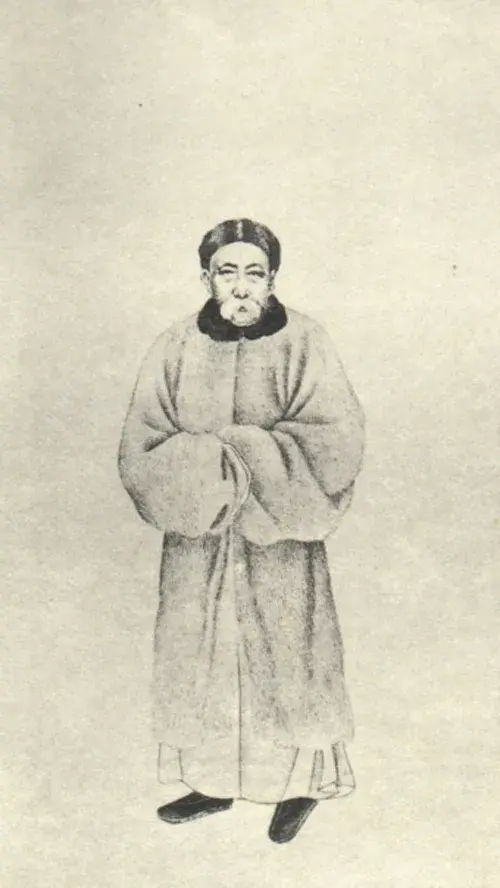
张裕钊
Zhang Yuzhao (1823–1894), courtesy name Lianqing and art name Lianting, was a native of E County (modern Ezhou), Hubei Province. He was an eminent calligrapher, master of classical prose, educational leader, and prominent figure in the late Qing resurgence of the Tongcheng School, celebrated as one of the Four Scholars of the Zeng Guofan School. Earning his provincial juren degree in 1846, he qualified as a secretary in the…
Zhang Yuzhao (1823–1894), courtesy name Lianqing and art name Lianting, was a native of E County (modern Ezhou), Hubei Province. He was an eminent calligrapher, master of classical prose, educational leader, and prominent figure in the late Qing resurgence of the Tongcheng School, celebrated as one of the Four Scholars of the Zeng Guofan School. Earning his provincial juren degree in 1846, he qualified as a secretary in the Grand Secretariat in 1850. The chief examiner, Zeng Guofan, marveling at the archaic vigor of his policy essays and their resemblance to Northern Song master Zeng Gong, recruited him as an intimate disciple alongside Li Shuchang, Xue Fucheng, and Wu Rulun. During the Taiping Rebellion, Zhang accompanied Zeng across Hunan, Hubei, Anhui, and Jiangxi, directing headquarters secretarial operations for over a decade. Indifferent to bureaucratic advancement, Zhang abandoned public office to dedicate over twenty years to classical academy education and philological research. He directed prestigious academies including Fengchi Academy in Jiangning, Lianchi Academy in Baoding, Jianghan Academy in Wuchang, and Lumen Academy in Xiangyang, mentoring prominent students such as the 1894 first-ranked scholar Zhang Jian and essayist Fan Dangshi. In calligraphy, Zhang was a towering giant of the late Qing stele movement (beixue), creating the celebrated Zhang style (also known as the Nangong style) characterized by outer roundness, inner squareness, dynamic diagonal balance, and monumental gravity. Kang Youwei acclaimed him in Guang Yizhou Shuangji as the premier master of standard script in the entire Qing dynasty. His Japanese disciple Miyajima Eishi introduced the style to Japan, establishing the Shanlin Calligraphy School, making Zhang an enduring model of East Asian cross-cultural transmission. He passed away in Xi'an in 1894.
Born into a scholarly family beside Lake Liangzi in E County, Hubei; studied Tang and Song prose, admiring Zeng Gong's writings.
Passed the county examination to become an official licentiate at age sixteen, recognized for refined prose.
Passed the Hubei provincial examination as juren, earning high praise from provincial educational authorities.
Passed the examination for Grand Secretariat secretaries under chief examiner Zeng Guofan, who recruited him as a formal disciple.
Resigned his official post in disgust over bureaucratic corruption, returning south to lecture at Shaoting Academy in Wuchang.
Recruited by Zeng Guofan to head secretarial drafting for Xiang Army headquarters, serving for over a decade.
Retired from military secretariats to direct Fengchi Academy in Jiangning, focusing on stele calligraphy and classical prose.
Assumed directorship of Lianchi Academy in Baoding, revitalizing northern scholarly traditions and accepting Japanese disciple Miyajima Eishi.
Returned to Hubei to direct Jianghan Academy and Lumen Academy, gathering hundreds of disciples as his fame spread nationwide.
Passed away in Xi'an at the residence of his son at age seventy-two; disciples conferred the private posthumous title Wenduan.
Zhang Yuzhao was born in 1823 into a scholar-gentry lineage residing in Zhangjiawan, Longtang Village, Donggou Town, beside Lake Liangzi in E County, Wuchang Prefecture, Hubei Province. For generations, his ancestors practiced agriculture while maintaining classical learning. Endowed with precocious intellectual curiosity, Zhang immersed himself from childhood in pre-Qin and Han philosophical texts, as well as the prose of the Eight Great Masters of the Tang and Song, studying Han Yu, Liu Zongyuan, Ouyang Xiu, and Su Shi, while paying singular devotion to Northern Song master Zeng Gong's Nanfeng Xiansheng Ji.
In 1838, at age sixteen, Zhang passed the county examination as an official licentiate. In 1846, he traveled to Wuchang to sit for the Bingwu Hubei provincial examination, attaining the juren degree. His intense classical learning in his youth established the foundation for his archaic prose and his later innovations in calligraphy.
In 1850, Zhang traveled to Beijing to take the Gengxu metropolitan examinations. Missing the final list, he sat for the Ministry of Rites examination for Grand Secretariat secretaries, presided over by Vice Minister of Rites Zeng Guofan. Examining Zhang's policy papers, Zeng was struck by their austere, disciplined structure and classical resonance, remarking that they captured the spirit of Song master Zeng Gong. Ranking him among the highest candidates, Zeng appointed Zhang as secretary in the Grand Secretariat and accepted him as an intimate disciple, grouping him alongside Li Shuchang, Xue Fucheng, and Wu Rulun as the celebrated Four Scholars of the Zeng School.
Zhang served in the capital for only two years. Disillusioned by administrative stagnation and official arrogance, he resigned to return south, accepting a lectureship at Shaoting Academy in Wuchang. In 1854, when Zeng Guofan organized the Xiang Army in Hubei, he dispatched envoys to invite Zhang to his military headquarters. Over the subsequent decade of civil war along the Yangzi River, Zhang accompanied Zeng, drafting memorials, military proclamations, and confidential correspondence. While colleagues such as Li Hongzhang and Peng Yulin won fame and governorships, Zhang remained focused exclusively on literature and scholarship, refusing official rank. Following the pacification of the rebellion, he permanently renounced bureaucratic office to dedicate himself to education, literature, and art.
Beginning in 1871, Zhang embarked on a distinguished twenty-year career directing traditional academies. He was invited to direct Fengchi Academy in Jiangning, Lianchi Academy in Baoding, Jianghan Academy in Wuchang, and Lumen Academy in Xiangyang, becoming one of China's most respected educational leaders.
In his academies, Zhang dismantled the narrow focus on civil service examination memorization, championing the integration of moral virtue, classical rhetoric, and practical statecraft. At Lianchi and Jianghan academies, hundreds of aspiring scholars traveled thousands of li to study under his direction, producing prominent leaders such as 1894 palace exam champion Zhang Jian, poet Fan Dangshi, and scholars Yao Xuechen and Zhu Mingpan. In 1887, Japanese scholar Miyajima Eishi crossed the sea to study under Zhang in Baoding, remaining as his devoted disciple for eight years in a landmark chapter of Sino-Japanese cultural exchange.
In 1892, approaching age seventy and weakened by physical exhaustion, Zhang relocated to Xi'an to live with his sons Zhang Houhang and Zhang Houhui. In retirement, Zhang practiced calligraphy and studied classical canons daily, bringing his stele calligraphy to its ultimate aesthetic perfection.
On February 19, 1894, Zhang passed away peacefully at his residence in Xi'an at the age of seventy-two. Intellectuals across the empire mourned his passing, and disciples traveling from afar conferred upon him the private posthumous title Wenduan. His calligraphic rubbings and literary works were engraved and circulated across China and Japan, exerting a lasting influence on modern East Asian art.
Zhang Yuzhao's most enduring artistic legacy was founding the renowned Zhang style (or Nangong style), synthesizing northern steles and southern manuscript traditions to represent the highest peak of late Qing stele calligraphy.
Beginning in the mid-Qing, Ruan Yuan and Bao Shichen championed northern steles over model-book calligraphy, but early practitioners often produced stiff, coarse brushwork. Drawing upon ancient epigraphic monuments, Zhang mastered Northern Wei inscriptions, including the Zhang Menglong Stele, the Epitaph of Zhang Heinü, and the Jing Shijun Stele, alongside the Eastern Han Liyi Stele, while absorbing the brushwork of Wang Xizhi, Ouyang Xun, and Chu Suiliang. He formulated the core aesthetic doctrine of outer roundness, inner squareness, dynamic diagonal balance, and condensed skeletal vigor. Applying centered brushstrokes that curled like bent hairpins, his ink was deep and lustrous, combining monumentality with graceful fluid motion.
In Guang Yizhou Shuangji, Kang Youwei lavished praise upon Zhang, proclaiming that his calligraphy achieved the subtle, lofty realm of Sikong Tu's poetic aesthetics, standing as the foremost master of standard script in the entire Qing dynasty. Modern classical scholar Zhang Taiyan celebrated his rubbings as priceless treasures of unsurpassed gravity. Modern artistic masters Wu Changshuo and Qi Baishi were both profoundly influenced by Zhang's calligraphic principles.
In literature, Zhang was a core leader in the late Qing revitalization of the Tongcheng School, recognized alongside Li Shuchang, Xue Fucheng, and Wu Rulun as one of the Four Scholars of the Zeng School.
Zeng Guofan revitalized Tongcheng prose by combining Han evidential research, Song neo-Confucianism, rhetorical artistry, and practical statecraft. Among Zeng's disciples, Zhang was celebrated for the purest classical prose. Inheriting Zeng Gong's clarity and structural restraint, Zhang's essays were tightly constructed and emotionally profound. His historical treatises, such as On the Zuo Zhuan and Guoyu and On Reading Mencius, offered penetrating structural analyses, while his funerary biographies and prefaces, such as Biography of My Deceased Father and Inscription for Fengchi Academy, balanced dignified grief with elegant diction. By infusing classical prose with the expansive breath of Six Dynasties rhapsodies, Zhang's Lianting Wenji and Lianting Shiji became late Qing classical masterworks.
Zhang devoted decades to educational leadership, standing as one of the preeminent academy educators on the eve of China's modern school transformation.
Both Lianchi Academy and Jianghan Academy served as the premier intellectual centers of northern China and the middle Yangzi valley, enjoying the patronage of regional viceroys. Zhang reformed academy charters, forbidding students from chasing shallow bureaucratic honors and establishing the four principles of resolve, diligent study, moral conduct, and ethical clarity, personally annotating student papers late into the night. His guidance nurtured exceptional talents: 1894 zhuangyuan graduate and modern industrial pioneer Zhang Jian absorbed Zhang's statecraft ethos, while eminent Tongguang poets and scholars such as Fan Dangshi, Yao Xuechen, and Zhu Mingpan carried forward his legacy across late Qing and early Republican society.
Zhang's calligraphy transcended national boundaries, sparking a major aesthetic transformation in modern Japan, where he was venerated as a transnational master.
In 1887, Japanese Sinologist Miyajima Eishi visited Baoding, became captivated by Zhang's calligraphy, and enrolled as his disciple, studying under him for eight years. Zhang generously imparted his secret brushwork techniques of centered tip rotation and the harmony of square and circular strokes. Following Zhang's death, Miyajima returned to Tokyo and founded the celebrated Shanlin Academy (Zenrin Shoin) to promote Zhang's calligraphy and traditional Chinese classics. Miyajima trained prominent modern Japanese masters such as Inukai Tsuyoshi and Nishikawa Yasushi, establishing the Shanlin Calligraphy School as a distinct tradition in Japan that has endured for over a century, making Zhang a rare Chinese master who founded an overseas calligraphic school.
FIGURES ASSOCIATED WITH THIS DYNASTY