Birth in Beijing
Born into a prominent scholar-official lineage in Beijing, son of Grand Secretary Zhang Ying.
张廷玉
Zhang Tingyu (October 29, 1672 – April 30, 1755), courtesy name Hengchen and art name Yanzhai, was a native of Tongcheng County, Anqing Prefecture, Anhui Province (modern Tongcheng City, Anhui Province). The second son of Grand Secretary Zhang Ying, he was a distinguished statesman, institutional architect, and elder statesman spanning the Kangxi, Yongzheng, and Qianlong reigns. Over a career spanning more than fifty years,…
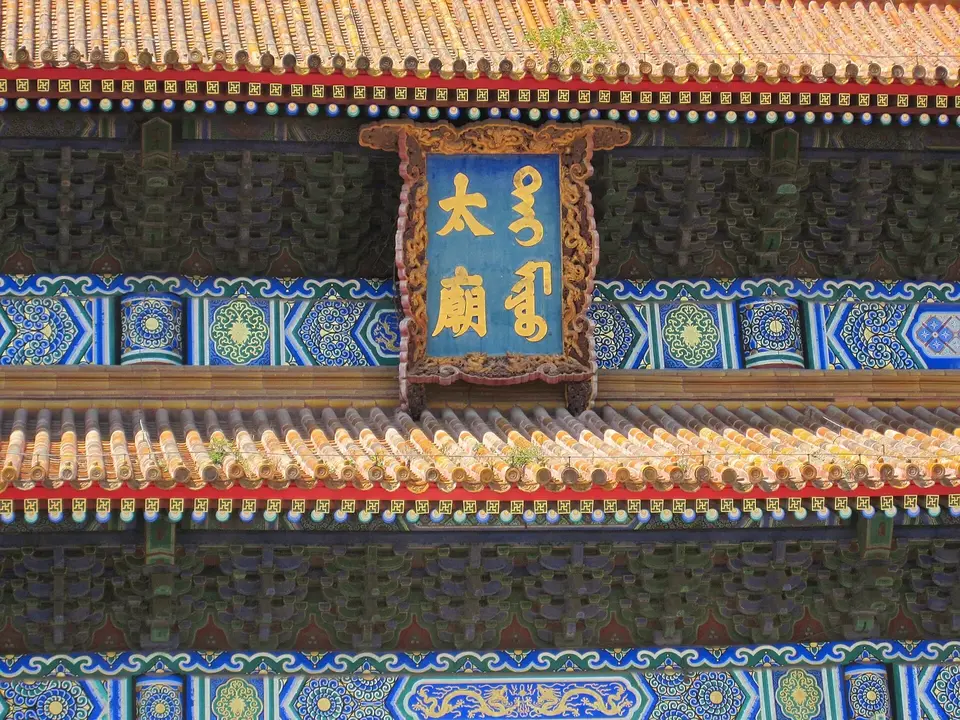
Zhang Tingyu (October 29, 1672 – April 30, 1755), courtesy name Hengchen and art name Yanzhai, was a native of Tongcheng County, Anqing Prefecture, Anhui Province (modern Tongcheng City, Anhui Province). The second son of Grand Secretary Zhang Ying, he was a distinguished statesman, institutional architect, and elder statesman spanning the Kangxi, Yongzheng, and Qianlong reigns. Over a career spanning more than fifty years, he served as Grand Secretary of the Baohe Pavilion, Chief Minister of the Grand Council (Junji Chu), and Minister of Personnel, achieving historical renown as the only Han subject—and the only civil official—to be granted enshrinement in the Qing Imperial Ancestral Temple (Taimiao). Attaining the Jinshi degree in 1700, Zhang was selected as a bachelor in the Hanlin Academy, appointed compiler, and summoned to serve in the Southern Study (Nan Shufang), accompanying the Kangxi Emperor on eleven imperial tours across the northern frontier. In the late Kangxi era, he served as Vice Minister of Justice and Vice Minister of Personnel, gaining acclaim as the "Tiger-Taming Vice Minister" for eliminating corrupt clerical rings. Upon ascending the throne, the Yongzheng Emperor entrusted Zhang with the highest executive duties, appointing him Minister of Rites, Minister of Revenue, and Grand Secretary of the Wenyuan Pavilion, culminating in his elevation to Grand Secretary of the Baohe Pavilion in 1728. When the Grand Council was founded in 1729 to direct military campaigns against the Dzungar Mongols, Zhang Tingyu designed its administrative protocols, institutionalized the confidential palace memorial system (zouzhe), and drafted imperial edicts day and night with unmatched precision. During the accession of the Qianlong Emperor, Zhang Tingyu served as regent alongside Prince Zhuang, Prince Guo, and Grand Secretary Ortai, receiving the hereditary title of Third-class Earl. He presided over the compilation of monumental state works, including the History of Ming, the Collected Statutes of the Great Qing, and the Veritable Records of the Kangxi Emperor. In his later years, entangled in factional rivalries between Manchu and Han courtiers and facing imperial suspicion over his repeated petitions for retirement and formal confirmations of his ancestral temple enshrinement, he was stripped of his earldom and royal gifts. He passed away in his hometown of Tongcheng in 1755 at the age of eighty-four. Recognizing his half-century of unblemished service and honoring Yongzheng's testamentary decree, the Qianlong Emperor ordered his enshrinement in the Imperial Ancestral Temple, conferring the posthumous title Wenhe.
Born into a prominent scholar-official lineage in Beijing, son of Grand Secretary Zhang Ying.
Passed the metropolitan and palace examinations; appointed bachelor in the Hanlin Academy.
Summoned to serve in the Southern Study, drafting imperial edicts and accompanying northern tours.
Appointed Vice Minister of Justice; dispatched to Shandong to resolve the Wang Meigong uprising without bloodshed.
Transferred to Ministry of Personnel; purged entrenched clerk rings, earning public acclaim for clean governance.
Elevated by the Yongzheng Emperor to Minister of Rites and Minister of Revenue; directed imperial secretariats.
Appointed Grand Secretary of the Baohe Pavilion concurrently Minister of Personnel, reaching the apex of civil bureaucracy.
Collaborated with Prince Yi to establish the Grand Council, formulating confidential memorial and imperial courier protocols.
Appointed regent on Yongzheng's deathbed, receiving a testamentary decree granting enshrinement in the Imperial Ancestral Temple.
Appointed Chief Minister of State Affairs; created Third-class Earl with the honorific title Qinxuan.
Petitioned to retire and requested imperial confirmation of temple enshrinement, incurring Qianlong's sharp displeasure.
Repeated retirement requests following the death of Prince Yonghuang led to loss of his earldom and enshrinement status.
Died in Tongcheng at age eighty-four; Qianlong fulfilled Yongzheng's decree, restoring his enshrinement in the Imperial Ancestral Temple.
Zhang Tingyu was born on October 29, 1672, during the eleventh year of the Kangxi era, in Beijing. He belonged to the distinguished Zhang lineage of Tongcheng, Anhui. His father, Zhang Ying, served as Grand Secretary of the Wenli Pavilion and Minister of Rites, renowned for profound classical erudition and ethical composure. Immersed in the rigorous intellectual traditions of the Tongcheng School from childhood, Zhang Tingyu mastered the Confucian classics, imperial historical records, and classical composition. In 1697, when he was twenty-six, he prepared to sit for the metropolitan examination, but voluntarily withdrew when his father was appointed chief examiner, adhering strictly to civil examination avoidance conventions.
In 1700, at twenty-nine, Zhang Tingyu passed the metropolitan and palace examinations, entering the Hanlin Academy as a bachelor. After completing his three-year probation, he was appointed compiler, participating in the compilation of the Military Strategies for the Pacification of the North. In the fourth month of 1704, the Kangxi Emperor granted him an audience at the Changchun Garden, inquiring after his retired father's health and testing his extemporaneous poetic skills. Zhang composed two regulated seven-character verses with elegant precision, drawing imperial praise. Kangxi immediately ordered him into the Southern Study, granting him fourth-rank robes and imperial court beads.
During his tenure in the Southern Study, Zhang exhibited consummate prudence, arriving at dawn and departing after dusk year-round. He accompanied Kangxi on eleven expeditions beyond the Great Wall, spending summers at the Chengde Mountain Resort and autumns at the Mulan hunting grounds, handling correspondence and imperial dictation across inner and outer Mongolian borderlands. From 1712 onward, he served as reader in the Hanlin Academy, Chancellor of the Imperial Academy, and Vice Minister of Rites. In 1720, he was named Vice Minister of Justice, successfully resolving the Shandong salt merchant unrest led by Wang Meigong through equitable adjudication. Transferred to Vice Minister of Personnel in 1721, he eradicated bribery rings led by notorious senior clerk Zhang, earning widespread acclaim as the "Tiger-Taming Vice Minister."
In the eleventh month of 1722, the Kangxi Emperor passed away, and his fourth son Yinzhen ascended the throne as the Yongzheng Emperor. In the volatile aftermath of succession disputes, Yongzheng required a ministerial counselor combining absolute loyalty with mastery of civil jurisprudence. Esteeming Zhang Tingyu as the son of his former tutor Zhang Ying and praising his dignified demeanor and clarity of speech, Yongzheng entrusted him with drafting the proclamations, sacrifices, and ritual ordinances of the new reign.
Amidst intensive state affairs, the emperor issued dozens of decrees daily, nearly all drafted by Zhang Tingyu. During critical emergencies, Yongzheng summoned him into the private chambers, dictating general instructions while Zhang knelt on the floor or drafted behind imperial screens, producing flawless documents that captured the sovereign's intent. When logistical preparations for campaigns against the Dzungars mounted, hundreds of military dispatches converged daily. Zhang reviewed dossiers in his moving sedan chair and labored through the night, never committing an administrative error. Yongzheng remarked: "What you accomplish in a single day, others cannot achieve in ten!" Promoted to Minister of Rites and Minister of Revenue, he became Grand Secretary of the Baohe Pavilion in 1728, reaching the summit of the civil administration.
In 1729, with campaigns against Galdan Tseren expanding across northwest frontiers, Yongzheng determined that the outer Grand Secretariat was susceptible to intelligence leaks. He established a temporary military finance office inside the Longzong Gate, subsequently institutionalized as the Grand Council (Junji Chu), appointing Prince Yi, Zhang Tingyu, and Jiang Tingxi as inaugural ministers. Zhang drafted the functional regulations of the Grand Council, establishing the rule that routine administrative affairs were processed via outer memorials (tiben) through the Grand Secretariat, whereas urgent state affairs were submitted via sealed palace memorials (zouzhe) through the Grand Council. Grand Councilors were summoned daily into the Yangxin Hall to transcribe imperial decisions, seal confidential orders, and dispatch couriers. Zhang established strict courier registries and document tracking protocols, shifting national governance into the hands of the Grand Council.
In broader governance, Zhang Tingyu contributed decisively to social and legal stabilization. Since the early Qing, hundreds of thousands of migrant squatters had settled in mountainous borders across Jiangnan, cultivating paper-mulberry, maize, and indigo. Because these populations lacked household registrations, provincial gentry frequently denounced them as bandits, advocating military campaigns to expel them.
In the first month of 1724, Zhang submitted a comprehensive memorial advising against military suppression. He proposed appointing capable magistrates to mountain districts, implementing the mutual responsibility system (baojia) based on five-household alliances, registering squatters for modest land taxes, and permitting educated and martial youths among them to sit for regional civil examinations. Yongzheng approved the measures, circulating them to Jiangxi and Zhejiang, peacefully integrating hundreds of thousands of frontier inhabitants into the tax register.
In judicial administration, Zhang exhibited consistent equity. In 1732, when Shandong officials petitioned to strip the degrees of nearly fifteen hundred scholars who had fallen behind on grain taxes due to regional crop failures, fellow ministers supported punitive demotions. Zhang knelt before the throne, pleading that hardship from natural calamities differed from willful defiance and begging for imperial clemency. Moved by his petition, Yongzheng granted a three-year tax extension, saving one thousand four hundred and ninety-seven scholars from losing their civil status.
In penal reform, Zhang submitted memorials against indiscriminate detentions in the Ministry of Justice, ending the practice of locking up witnesses alongside felons and ordering suspects categorized into principal, accessory, and accomplice. He also abolished the arbitrary truncation of statutory clauses by clerkly rings, mandating joint oversight by the Censorate and Court of Revision. In frontier diplomacy in 1734, when princely factions urged offensive campaigns against the Dzungars, Zhang drafted joint petitions with senior statesmen counseling diplomatic demarcations to conserve national revenue, saving tens of millions of silver taels.
In the eighth month of 1735, the Yongzheng Emperor passed away. On his deathbed, he appointed Zhang Tingyu, Prince Zhuang, and Grand Secretary Ortai as regents for his successor Hongli (the Qianlong Emperor). Most significantly, Yongzheng's testamentary edict bestowed unprecedented posthumous grace: "Grand Secretary Zhang Tingyu possesses pure virtue and impartial loyalty... in future times he shall be granted enshrinement in the Imperial Ancestral Temple!" Upon ascending the throne, Qianlong created Zhang a Third-class Earl with the honorific title Qinxuan, entrusting him with compiling the History of Ming and the Collected Statutes of the Great Qing.
In 1738, when Qianlong proposed enacting ancient rituals in the Imperial Academy, Zhang remonstrated that archaic rites could not be imposed on contemporary society. In 1743, when courtiers petitioned to abandon eight-legged essays in the civil examinations or institute ancient land-equalization schemes, Zhang opposed abrupt experimentation, advocating institutional stability.
However, factional polarization emerged between Manchu courtiers led by Ortai and Han scholar-bureaucrats aligned with Zhang Tingyu. Seeking to curtail factionalism, Qianlong viewed the senior minister with growing caution. When Ortai died in 1745, Qianlong appointed Manchu aristocrat Necin as Chief Councilor, ordering Necin to head Grand Secretariat rosters. Feeling vulnerable, seventy-six-year-old Zhang repeatedly submitted requests for retirement from 1748 onward. Qianlong refused, declaring that an official destined for the Imperial Ancestral Temple should dedicate his remaining days to the state.
In the winter of 1749, seventy-eight-year-old Zhang Tingyu again begged for retirement, which Qianlong granted. During his farewell audience, anxious that future monarchs might overturn Yongzheng's testamentary decree granting him ancestral temple enshrinement, Zhang removed his official cap and prostrated himself, asking Qianlong to issue an imperial patent confirming his posthumous enshrinement. Displeased by his lack of trust, Qianlong nevertheless issued an imperial decree and composed an imperial poem reassuring him of the succession decree.
The following morning, Zhang failed to express gratitude in person, sending his second son Zhang Ruocheng to present his memorial. Annoyed, Qianlong dispatched the Grand Council to demand an explanation. Grand Councilor Wang Youdun, Zhang's former disciple, privately alerted him that night, prompting Zhang to arrive at court before dawn to thank the emperor. Realizing that confidential court discussions had been leaked, Qianlong stripped Zhang of his earldom and rescinded his posthumous temple enshrinement.
In the spring of 1750, following the death of imperial first-born Prince Yonghuang, Zhang submitted another untimely petition to depart for Tongcheng. Qianlong convened the court, presenting the roster of ancestral temple ministers and demanding that Zhang examine whether his conduct matched their virtues. Stripped of all imperial gifts, Zhang departed Beijing. In the seventh month, when his relative Zhu Quan was prosecuted for concealing his mother's death, Qianlong confiscated twenty thousand taels of silver from Zhang's ancestral estate.
Enduring deep public humiliation, the elder statesman lived in quiet seclusion beneath Longmian Mountain in Tongcheng. On April 30, 1755, Zhang Tingyu passed away at age eighty-four. Upon receiving the news, the Qianlong Emperor acknowledged that his severity had been excessive, declaring that he could not violate his father's testamentary decree. Qianlong restored Zhang's enshrinement in the Imperial Ancestral Temple, granted imperial funeral funds, and conferred the posthumous title Wenhe.
Zhang Tingyu's foremost contribution to Chinese administrative history was his creation of the operational framework of the Grand Council (Junji Chu). During its inception in 1729, he formulated the rules governing secretarial staffing, daily imperial audiences, and courier dispatches.
Under his guidance, the Grand Council operated under the doctrines of simplicity, speed, and absolute secrecy, bypassing the cumbersome Grand Secretariat and concentrating executive authority directly in the hands of the monarch. This institutional innovation remained the nerve center of the Qing Empire until the fall of the dynasty.
Zhang Tingyu played a central role in standardizing the confidential palace memorial system (zouzhe). By replacing public outer memorials (tiben) with sealed inner memorials submitted directly to the emperor's hands, he eliminated communication intermediaries.
He authored strict regulations requiring officials to return imperial vermilion-rescripted memorials to Beijing for permanent archival preservation. This system gave the throne an unmediated view of provincial governance, enhancing imperial control over distant provinces.
Zhang Tingyu presided over the most important official historiographical projects of the High Qing. As chief compiler of the History of Ming (comprising 332 volumes), he enforced strict standards of factual verification and concise classical diction, producing what modern historians consider the finest dynastic history since the Tang dynasty.
Under his direction, the Treatise on Bibliography of the History of Ming cataloged 4,642 Ming works across 105,974 volumes, preserving an invaluable record of late imperial scholarship. He also supervised the compilation of the Veritable Records of Emperor Shengzu, the Veritable Records of Emperor Shizong, and the Collected Statutes of the Great Qing.
Zhang exhibited exceptional social foresight in managing migrant squatters in the southern highlands. Rejecting military sweeps that threatened widespread rebellion, he promoted institutional integration through baojia mutual guarantee pacts, regularized land taxation, and educational eligibility.
His policies pacified volatile mountainous regions across Zhejiang, Jiangxi, and Fujian without bloodshed, integrating hundreds of thousands of marginal subjects into the agrarian economy.
In judicial governance, Zhang drafted structural reforms to correct penal arbitrariness. His memorials against indiscriminate imprisonment instituted classifications dividing suspects into principal offenders, accessories, and unindicted witnesses, ending prolonged pre-trial detention.
He also checked the practice of judicial clerks who selectively quoted legal statutes to manufacture convictions, mandating that the Censorate and Court of Revision review questionable verdicts, improving judicial fairness during the mid-Qing era.
Zhang Tingyu maintained exemplary household rectitude based on the modest traditions of Tongcheng. In 1733, when the Yongzheng Emperor selected his eldest son Zhang Ruo'ai as third place (Tanhua) in the palace examinations, Zhang repeatedly petitioned the throne to yield the honor to impoverished scholars, prompting Yongzheng to adjust the ranking to fourth place.
When his son accepted a prized landscape painting from a subordinate magistrate, Zhang severely rebuked him, demanding its immediate return. His adherence to probity was celebrated as an enduring model of literati humility.
Beyond his statecraft, Zhang was a prolific poet and prose stylist associated with the early Tongcheng School. Author of the Poetry Collection of Chenghuai Garden and Collected Works of Chenghuai Garden, he composed thousands of verses exploring duty, nature, and self-restraint.
His cycle Twenty Miscellaneous Poems harmonized Confucian public morality with Daoist serenity, reflecting his inner reflections as a prime minister navigating the treacherous waters of imperial politics.
Zhang's half-century of dedication earned him the unique distinction of testamentary enshrinement in the Imperial Ancestral Temple. Throughout the Qing dynasty, among twenty-six princes and generals so honored, Zhang Tingyu was the sole Han subject and the sole civil official to achieve this distinction, marking the highest honor attained by a Han literatus under Manchu rule.
FIGURES ASSOCIATED WITH THIS DYNASTY