Birth in Yuhang
Born on January 12 in Cangqian Town, Yuhang County, Zhejiang; educated early by his maternal grandfather Zhu Youqian, absorbing deep anti-Qing loyalist sentiments.
章太炎
Zhang Binglin (章炳麟, 1869–1936), widely known by his pseudonym Zhang Taiyan (章太炎), was an illustrious democratic revolutionary propagandist, profound thinker, master of national learning (guoxue), and preeminent authority of Qianjia evidential philology in modern Chinese history. In his youth, he studied for eight years at the Gujing Jingshe academy in Hangzhou under the Qing master Yu Yue, acquiring an extraordinarily…
Zhang Binglin (章炳麟, 1869–1936), widely known by his pseudonym Zhang Taiyan (章太炎), was an illustrious democratic revolutionary propagandist, profound thinker, master of national learning (guoxue), and preeminent authority of Qianjia evidential philology in modern Chinese history. In his youth, he studied for eight years at the Gujing Jingshe academy in Hangzhou under the Qing master Yu Yue, acquiring an extraordinarily rigorous grounding in classical exegesis, historical phonology, and pre-Qin philosophy. Following China's humiliating defeat in the First Sino-Japanese War of 1894–1895, he departed the classical academy to participate in the political reform movement, serving as an editor for influential reformist periodicals such as Shiwu Bao and Jingshi Bao, before fleeing to Taiwan upon the failure of the Hundred Days' Reform. Following the Boxer Uprising and the Boxer Protocol of 1901, which exposed the complete bankruptcy and servility of the Qing court, Zhang Taiyan publicly severed his imperial queue in Shanghai, raising an uncompromising banner of anti-Manchu revolution. In 1903, he published his celebrated manifesto A Rebuttal of Kang Youwei's Writings on Revolution (Bo Kang Youwei Lun Geming Shu) in the Subao newspaper, denouncing the Guangxu Emperor as a petty clown and prefacing Zou Rong's radical tract The Revolutionary Army. This incited the internationally sensational Subao Case, leading to his three-year imprisonment in the Shanghai International Settlement. After his release in 1906, he traveled to Japan, joined the Tongmenghui (Chinese Revolutionary Alliance), and assumed the editorship of its official organ Minbao. He authored incisive polemics dismantling monarchist constitutional illusions, championed the revolutionary agenda of overthrowing the autocracy, and established himself as the most formidable ideological voice leading up to the 1911 Revolution. Following the founding of the Republic of China, Zhang served as Privy Counselor to Provisional President Sun Yat-sen and Frontier Reclamation Commissioner for the Three Eastern Provinces. Following Song Jiaoren's assassination and Yuan Shikai's autocratic usurpation, Zhang courageously confronted Yuan in Beijing, enduring nearly three years of house arrest at Longquan Temple without yielding. During the Constitutional Protection Movement, he served as Secretary General of the Military Government in Guangzhou under Sun Yat-sen. In his mature years, he secluded himself in Suzhou to teach classical canons and organize the Guoxue Association, nurturing a generation of eminent modern cultural leaders including Lu Xun, Zhou Zuoren, Qian Xuantong, and Huang Kan. Facing Japanese imperialist aggression in the 1930s, he mobilized public opinion for unyielding national resistance, epitomizing the uncompromising moral integrity of modern Chinese intellectuals.
Born on January 12 in Cangqian Town, Yuhang County, Zhejiang; educated early by his maternal grandfather Zhu Youqian, absorbing deep anti-Qing loyalist sentiments.
Enrolled at Gujing Jingshe in Hangzhou to study classical phonology, philology, and Han commentaries under Yu Yue for eight years.
Moved to Shanghai to serve as editor of Shiwu Bao, publishing reformist essays and co-founding Jingshi Bao and Shixue Bao.
Escaped to Taiwan after the collapse of the Hundred Days' Reform, serving as lead writer for Taiwan Daily News, subsequently traveling to Japan.
Publicly cut off his queue at the Chinese Parliament in Zhangyuan, Shanghai, publishing Jie Bianfa to declare a complete rupture with the Qing dynasty.
Published A Rebuttal of Kang Youwei's Writings on Revolution and prefaced Zou Rong's The Revolutionary Army; arrested and imprisoned in Shanghai for three years.
Released from prison and arrived in Tokyo; joined Tongmenghui, directed Minbao, advocated national essence and revolution, and taught Chinese classical learning.
Appointed Privy Counselor to the Provisional Government in Nanjing; later named Frontier Reclamation Commissioner for the Three Eastern Provinces.
Traveled to Beijing to rebuke Yuan Shikai following the assassination of Song Jiaoren; detained under house arrest at Longquan Temple for nearly three years.
Accompanied Sun Yat-sen to Guangzhou to launch the Constitutional Protection Movement, serving as Secretary General of the Military Government.
Published Proposal for Federal Autonomy with a Nominal Central Government, advocating provincial autonomy before national federation.
Journeyed north after the Mukden Incident to urge Zhang Xueliang to resist invasion; issued public declarations demanding national mobilization against Japan.
Warned northern authorities not to suppress patriotic student protesters and dispatched envoys to comfort student delegates in Suzhou.
Died of illness in Suzhou on June 14 at age sixty-seven; honored with a state funeral decree from the national government.
Zhang Binglin was born on January 12, 1869 (the thirtieth day of the eleventh month in the seventh year of the Tongzhi reign) in Cangqian Town, Yuhang County, Hangzhou Prefecture, Zhejiang Province, into an established family of scholars and physicians. Both his grandfather Zhang Jian and his father Zhang Jun were well versed in the Confucian classics, history, and traditional medicine. Zhang was physically frail from early childhood and suffered chronic epileptic afflictions, but displayed formidable intellectual gifts, mastering classical literature with an extraordinary photographic memory.
During his childhood, Zhang studied under his maternal grandfather Zhu Youqian (courtesy name Zuoqing). When Zhang was eleven, while reading the trial of Zeng Jing and Lu Liuliang in Jiang Liangqi's Donghua Lu, his grandfather warned him solemnly that the distinction between Chinese and barbarian was as fundamental as the bond between sovereign and minister. When young Zhang inquired whether ancient scholars had made similar assertions, Zhu explained the political treatises of Gu Yanwu and Wang Fuzhi, emphasizing Wang's conviction that dynastic falls were trivial compared to the fall of the Southern Song, which destroyed traditional dress, ritual, and culture.
The boy responded with startling precocity that the Ming fall to the Manchus was far worse than falling to Li Zicheng. His grandfather cautioned him against expressing such views openly, but conceded that even if Li Zicheng had founded a dynasty, his descendants might not have proved unvirtuous. This childhood dialogue planted a lasting anti-Manchu conviction in Zhang's mind, establishing the psychological roots of his future revolutionary career.
In 1890, at age twenty-one, Zhang entered the prestigious Gujing Jingshe academy in Hangzhou to pursue advanced studies under the foremost Qing philologist Yu Yue. Yu Yue carried on the evidential methodologies of Gu Yanwu, Dai Zhen, Wang Niansun, and Wang Yinzhi, excelling in textual collation, syntactic analysis, and semantic verification through his masterworks such as Qunjing Pingyi. Zhang studied diligently at the academy for eight continuous years, examining Han commentaries, the Shuowen Jiezi, and pre-Qin philosophical texts, acquiring a rigorous foundation in classical philology and evidential research.
In 1894, the First Sino-Japanese War ended in China's crushing defeat, forcing the Qing government to sign the Treaty of Shimonoseki. This profound national humiliation deeply shook Zhang in his study. He resolved to abandon ivory-tower isolation to participate in national salvation, promptly remitting sixteen silver dollars to join Kang Youwei's reformist Qiangxuehui (Society for National Strengthening).
At the end of 1896, Zhang parted from his mentor Yu Yue and relocated to Shanghai to join the editorial staff of Shiwu Bao, working alongside Liang Qichao and Wang Kangnian. Zhang championed an editorial philosophy of embracing diverse philosophical schools and utilizing historical precedents to illuminate contemporary reforms. He contributed major essays, including On Asia Serving Mutually as Lips and Teeth and On the Immense Benefit of Learned Societies to the Yellow Race, arguing that China must assimilate Western institutional knowledge, establish scholarly societies to enlighten the populace, and discard outmoded precedents to achieve self-reliance.
Subsequently, Zhang assisted in compiling Jingshi Bao, Shixue Bao, and Yishu Gonghui Bao, widely diffusing institutional reform concepts. In the spring of 1898, he submitted a memorial to Viceroy Li Hongzhang urging systemic administrative modernization. He then traveled to Wuchang to assist Viceroy Zhang Zhidong in organizing Zhengxue Bao. However, Zhang Zhidong's bureaucratic conservatism clashed sharply with Zhang Taiyan's radical reformist vision, leading to their swift separation.
In the autumn of 1898, Empress Dowager Cixi launched the Wuxu Coup, crushing the Hundred Days' Reform and executing the Six Gentlemen of the 1898 Reform, including Tan Sitong. Facing imminent arrest by imperial authorities, Zhang fled to Taiwan with the assistance of friends, becoming the chief editorial writer for Taiwan Daily News. Experiencing the sorrow of colonial cession firsthand, he composed poignant verses assailing Qing dynastic tyranny.
In the summer of 1899, Zhang departed Taiwan for Japan, inspecting political and educational systems in Tokyo and Kyoto while renewing contacts with exiled reformers such as Liang Qichao. Upon returning to Shanghai, he revised his political and philosophical treatises and published the first edition of Qiu Shu in Suzhou, with Liang Qichao inscribing the title page.
In 1900, the Boxer Uprising consumed northern China, prompting the Eight-Nation Alliance invasion and capture of Beijing. Cixi fled westward with Emperor Guangxu, ordering the suppression of the Boxers to placate foreign powers. This imperial abjection obliterated Zhang's lingering hopes for monarchical reform. In July 1900, Tang Caichang and associates convened the Chinese Parliament at Zhangyuan in Shanghai, advocating a compromise strategy of anti-Manchu reform combined with restoring Guangxu.
Zhang arose in the assembly, fiercely denouncing loyalty to the emperor as a slave mentality. He produced scissors and severed his queue before the entire audience, declaring an irrevocable split with the monarchists. Immediately afterward, he penned his manifesto Jie Bianfa, repudiating his former reformist essays and declaring that unless the Manchu ruling house was completely driven out, national sovereignty could never be recovered and China would inevitably descend into colonial subjection under Western empires.
In 1901, Zhang published Zheng Chouman Lun in Guomin Bao in Tokyo, systematically demolishing Liang Qichao's constitutional monarchism and demonstrating that constitutionalism under an alien imperial clan was an illusion. In early 1902, pursued by Qing warrants, Zhang fled once more to Japan. In Yokohama and Tokyo, he formally met Sun Yat-sen. The two held extended nocturnal discussions on post-revolutionary administrative systems, land taxation, and the selection of a national capital, concepts later preserved in his revised essays Xiangzhai and Dingbanji. In June 1902, he returned to Shanghai, translated Kishimoto Nobuta's Sociology, and formulated his ambition to compile a comprehensive history of China to invigorate the citizenry.
In the spring of 1903, Zhang began teaching at the Patriotic School (Aiguo Xueshe) in Shanghai. When Kang Youwei published open letters opposing revolution and urging Guangxu's restoration, Zhang reacted with incandescent fury, publishing his celebrated manifesto A Rebuttal of Kang Youwei's Writings on Revolution in Subao. He dismantled Kang's false premise of racial equality between Manchus and Hans, branded Guangxu a petty clown who could not tell beans from wheat, and praised revolution as a wholesome medicine possessing both purgative and tonic virtues.
Shortly thereafter, Zou Rong published his incendiary tract The Revolutionary Army, for which Zhang provided an enthusiastic preface. Their impassioned manifestos galvanized the nation, prompting the Qing government to collude with the Shanghai Municipal Police to close Subao and arrest Zhang and Zou. During the Mixed Court trial, Zhang stood fearless, eloquently castigating Qing tyranny. He was sentenced to three years' imprisonment in Tilanqiao Prison, while Zou Rong tragically perished behind bars due to brutal conditions.
On June 29, 1906, Zhang completed his prison sentence. The Tongmenghui dispatched representatives to Shanghai to escort him directly to Japan. In Tokyo, thousands of overseas students and revolutionaries staged an enthusiastic welcome rally. Zhang formally joined the Tongmenghui and was appointed chief editor of its official organ, Minbao, becoming the leading ideological theorist of the republican cause.
In his address to the Tokyo student assembly, Zhang formulated two foundational maxims: first, utilizing religious philosophy (Yogacara Buddhist epistemology) to inspire faith and elevate civic morality; second, drawing upon national essence (guocui—language, institutional history, and heroic memory) to awaken national consciousness and stimulate patriotic devotion. He harshly rebuked the defeatist self-deprecation of radical Westernizers, insisting that an understanding of China's historical heritage was indispensable for generating genuine patriotic resistance.
While directing Minbao, Zhang composed celebrated manifestos, including A Declaration of War Against the Manchus, Congratulatory Address on the First Anniversary of Minbao, The Morality of Revolution, and Paiman Pingyi. He systematically expounded the four principles of the Tongmenghui program—expelling the Manchus, recovering China, establishing a republic, and equalizing land rights—while directing devastating intellectual critiques against Liang Qichao's Xinmin Congbao, effectively dismantling constitutional monarchist ideology.
In 1908, Zhang published Pro and Con of Representative Democracy (Daiyi Ranfou Lun), analyzing how Western parliamentary representation originated in medieval feudal privileges. He observed that because China had eliminated hereditary feudal nobility since the Wei and Jin periods, transplanting Western parliamentary mechanisms would empower corrupt local elites and commercial monopolists rather than genuine democracy. He argued that constitutional models must align with native socio-historical conditions.
Simultaneously, Zhang opened seminars on national learning at his Tokyo residence in Okubo. Dressed in simple cotton gowns, he lectured on the Shuowen Jiezi, the Zhuangzi, the Chuci, and pre-Qin philosophy, drawing exceptional young intellectuals including Lu Xun (Zhou Shuren), Zhou Zuoren, Qian Xuantong, Huang Kan, Wang Dong, Xu Shoushang, Zhu Xizu, and Shen Jianshi. In this period, he produced landmark evidential masterpieces including Wenshi, Xin Fangyan, Guogu Lunheng, and Qiwulun Shi. In 1910, Zhang and Tao Chengzhang reorganized the Guangfuhui (Restoration Society), with Zhang serving as president to coordinate revolutionary insurrections in southeastern China.
In October 1911, the Wuchang Uprising erupted, triggering provincial declarations of independence that swiftly brought down the Qing dynasty. In November, Zhang returned to Shanghai from Japan. Amid celebratory euphoria, Zhang advocated the slogan "when the revolutionary army rises, the revolutionary party dissolves," urging that anti-monarchical victory be channeled into institutional and legal stabilization rather than partisan factional warfare. Demonstrating broad democratic magnanimity, he sent a public letter to Manchu students in Japan, guaranteeing that Manchus would enjoy equal civil, economic, and electoral rights in the new republic.
On New Year's Day 1912, Sun Yat-sen was inaugurated Provisional President in Nanjing, appointing Zhang as Privy Counselor to the presidential office. In the debate over the capital, Zhang advocated Beijing to maintain territorial integrity. When north-south peace negotiations brought Yuan Shikai to the provisional presidency, Zhang accepted the honorary title of High Advisor. In early 1913, Yuan appointed Zhang Frontier Reclamation Commissioner for the Three Eastern Provinces. Zhang traveled to Changchun, formulating comprehensive developmental proposals including establishing a three-province bank, reforming coinage, exploiting gold mines, and dredging the Songhua and Liao rivers.
However, the assassination of Song Jiaoren in March 1913 in Shanghai fully exposed Yuan Shikai's despotic ambitions. Grief-stricken, Zhang composed a memorial couplet for Song, resigned his commission, and returned to Shanghai. In August 1913, following the collapse of the Second Revolution, Zhang disregarded personal peril and traveled alone to Beijing to confront Yuan directly. Residing in Qianliang Hutong, he scornfully rejected all imperial titles and financial bribes.
In January 1914, Zhang fastened the Grand Medal conferred by Yuan to his fan as a pendant, marched directly into the presidential palace, and loudly denounced Yuan Shikai as a traitor to the republic. An enraged Yuan ordered Zhang immediately detained under house arrest at Longquan Temple. During nearly three years of confinement, guarded closely by military police, Zhang remained defiant, staging hunger strikes and writing the characters "Yuan Bandit" across his chamber walls. In this isolation, he compiled the first series of Zhangshi Congshu, demonstrating extraordinary moral courage.
In June 1916, Yuan Shikai died disgraced after his monarchical restoration collapsed, allowing Zhang to regain freedom and return to Shanghai. In 1917, warlord Duan Qirui dissolved parliament and abrogated the Provisional Constitution, followed by Zhang Xun's monarchist restoration. Confronting this institutional crisis, Zhang cooperated with Sun Yat-sen and Navy Minister Cheng Biguang to launch the Constitutional Protection Movement.
In September 1917, the Extraordinary Parliament in Guangzhou established the Military Government, electing Sun Yat-sen Grand Marshal and appointing Zhang Secretary General. Zhang drafted the historic Inaugural Declaration of the Grand Marshal, pledging unyielding determination to eradicate the destroyers of the republic. To overcome warlord obstruction, Zhang journeyed to Kunming to persuade Yunnan warlord Tang Jiyao to advance eastward, though Tang evaded commitment.
Following the May Fourth Movement, dismayed by perpetual warlord warfare and national fragmentation, Zhang grew skeptical of centralized state power. In November 1920, he published Proposal for Federal Autonomy with a Nominal Central Government (Liansheng Zizhi Xuzhi Zhengfu Yi) in Yishi Bao, proposing that the central government be rendered nominal while provinces exercised autonomous self-government before uniting in a federal system. This collided with Sun Yat-sen's strategy of armed unification through a revolutionary vanguard party, leading to their political divergence. When the Nationalist Party reorganized under its three cardinal policies in 1924, Zhang adopted a conservative posture, issued a manifesto to organize the 1911 Revolutionary Comrades Club, and withdrew from active politics, referring to himself as a leftover subject of the Republic of China (Zhonghua Minguo Yimin).
Following the Northern Expedition, Zhang settled in his residence on Jinfan Road in Suzhou, dedicating his final years to classical scholarship. He founded the Suzhou Guoxue Association, edited the journal Zhiyan, and delivered extensive public lectures on classical canons, history, and philology, attracting scholars from across China.
Yet when national survival was threatened, his patriotic resolve burned as brightly as ever. After the Mukden Incident of September 1931 and the loss of Manchuria, the sixty-three-year-old scholar traveled north in 1932 despite failing health to urge Deputy Commander-in-Chief Zhang Xueliang to resist invasion. He joined Catholic elder Ma Xiangbo in issuing public manifestos demanding total national mobilization to eradicate the puppet state of Manchukuo and recover lost territories.
In December 1935, when northern authorities suppressed the December 9th student movement, Zhang sent an urgent telegram to Song Zheyuan, insisting that student protests sprang from genuine patriotism and warning against armed suppression. When student delegations traveled south through Suzhou, Zhang dispatched representatives to the railway station to comfort them and instructed the local magistrate to provide hot meals. Even on his deathbed, his letters expressed profound concern for the northern front and national survival.
On June 14, 1936 (the twenty-fifth day of the fourth month in the twenty-fifth year of the Republic of China), Zhang Binglin passed away peacefully at his Suzhou residence from nasopharyngeal illness and heart failure at age sixty-seven. The national government decreed a state funeral in his honor.
In the revolutionary ideological struggles preceding 1911, Minbao under Zhang Taiyan served as an invincible intellectual weapon. Following his assumption of the editorship in 1906, Zhang deployed his immense classical learning and archaic rhetorical power to wage sustained polemical warfare against Liang Qichao's Xinmin Congbao.
Liang and the monarchists argued that Qing preparations for constitutionalism could avert civil bloodshed. In major treatises such as Pro and Con of Representative Democracy and Paiman Pingyi, Zhang unmasked the Manchu court's constitutional promises as a calculated deceit designed to concentrate despotic power in the imperial clan. He demonstrated that parliamentary institutions could not succeed without grassroots civil autonomy and would merely legitimize corrupt collusion between gentry elites and bureaucrats. He established that armed revolution was the only viable path to establish a democratic republic and prevent imperialist partition. This theoretical victory persuaded tens of thousands of Chinese intellectuals and students abroad to abandon monarchist illusions and join the Tongmenghui.
Furthermore, Zhang articulated standards of political ethics in The Morality of Revolution (Geming zhi Daode). Asserting that excellence in public duty required excellence in private morality, he called upon revolutionaries to cultivate four cardinal virtues: sense of shame, gravity, uncompromising integrity, and strict fidelity. This ethical doctrine provided a profound moral foundation for modern Chinese revolutionary movements.
Zhang Taiyan's political philosophy underwent profound intellectual evolution. Following the 1898 reforms, he initially conceived reformist alternatives such as treating the Manchu emperor as a guest ruler while establishing descendants of Confucius as nominal heads of state. However, the Eight-Nation Alliance invasion shattered these illusions, driving him to revolutionary action.
During his exile in Tokyo, Zhang associated closely with Japanese early socialists such as Katayama Sen. Observing modern industrial civilization, he recognized that capitalist industrialization generated severe social inequities, imperialist violence, and spiritual degradation. In seminal works such as Jufen Jinhualun (On Dual Evolution) and Wuwulun (On Five Negations), he challenged social Darwinist optimism, demonstrating that material progress often went hand in hand with the expansion of moral evil and psychological suffering. This incisive critique established Zhang as one of the earliest non-Western thinkers to formulate a systematic critique of modern capitalist civilization from an indigenous philosophical standpoint.
Regarding political institutions, Zhang insisted that democratic mechanisms could not simply be imported from abroad without native civic foundations. He argued that institutional design must respect China's distinct historical traditions and social realities, striving to pioneer an autonomous path toward modern national strength.
Zhang Taiyan was the synthesizer of Qing evidential scholarship and the founding father of modern Chinese historical linguistics and phonology. Grounding his inquiries in paleography and exegesis, he authored foundational texts including Wenshi, Xin Fangyan, Guogu Lunheng, and Qiwulun Shi.
His linguistic masterpiece, Wenshi (The Origin of Writing), was China's first systematic treatise on Chinese etymology. Analyzing phonetic mutation rules across ancient rhymes, Zhang traced the morphological and semantic derivation of thousands of Chinese character roots, transcending the visual focus of the Shuowen Jiezi to establish a rigorous method of mutual verification between sound and meaning. In Xin Fangyan (New Dialects), he extended Yang Xiong's Western Han methodology, investigating modern vernaculars to demonstrate that regional dialects preserved archaic phonetic and lexical structures from antiquity.
Moreover, during late Qing debates over language reform, Zhang opposed radical proposals to abandon Chinese characters in favor of Esperanto. Selecting simplified strokes from ancient seal scripts, he invented a set of thirty-six phonetic symbols. In the early Republic, this system was promoted by his disciples Qian Xuantong, Xu Shoushang, and Lu Xun, leading to the official adoption of the National Phonetic Alphabet (Zhuyin Fuhao), which laid the historical cornerstone for modern Chinese phonetic transcription, pronunciation standardization, and mass literacy.
Published in Tokyo in 1910, Zhang's three-volume collection Guogu Lunheng (Discussions on National Heritage) represented the apex of his intellectual modernization, integrating pre-Qin thought with Western scientific and philosophical methodology.
Zhang summarized his philosophical journey as "proceeding from the mundane to the absolute, and ultimately returning from the absolute to the mundane." In Qiwulun Shi (Interpretation of the Discourse on the Equality of Things), he synthesized Zhuangzi's relativistic philosophy of spiritual liberation with the profound epistemology of Yogacara Buddhism, deconstructing dogmatic conceptual attachments to formulate a unified metaphysical framework. In works such as Ding Kong (Critique of Confucius) and Rushu Xinlun (New Discourse on Confucianism), he rejected orthodox Confucian scholasticism, elevating Xunzi, Laozi, and Zhuangzi while stripping away centuries of theological dogma.
In literary theory, Zhang attacked the stilted pedantry of the Tongcheng school, insisting that literature must pursue concrete reality rather than superficial rhetorical ornament. His philosophical insights were later transmitted through Hu Shi's lectures and Outline of the History of Chinese Philosophy at Peking University, profoundly shaping the modern discipline of Chinese philosophy.
During his confinement at Longquan Temple from 1914 to 1916 under Yuan Shikai, Zhang maintained an indomitable spirit while engaging in deep philosophical reflections. When Yuan provided lavish allowances to domesticate him, Zhang treated the attendants with haughty disdain, demanding ceremonial daily bows to satirize the regime's hollow pretenses. When Yuan attempted to force him to draft a petition urging him to take the imperial throne, Zhang drafted an incendiary letter denouncing Yuan as a traitor, declaring that death under Yuan's tyranny would be far more honorable than dying at the hands of Qing officials.
During this period, Zhang wrote to the Buddhist master Zongyang describing a series of recurring dreams. He dreamed that Ming grand secretary Wang Ao, alongside Xiahou Xuan and Mei Yaochen, invited him to serve as an international magistrate adjudicating cases across five continents, with Zhang and Wang presiding over East Asia. When Zhang inquired who established the torture devices of the underworld, his fellow judges explained that underworld law reflected civilized statutes and that tortures were merely subjective manifestations of sinners' karmic delusions. Zhang pledged in his dream to eliminate abuses committed by prison wardens. This remarkable dream reflected his deep meditation on Yogacara philosophy, legal justice, and human redemption under extreme confinement.
Throughout his exile in Tokyo, Zhang adhered to his motto of advancing national recovery without neglecting classical instruction. At his residence in Okubo, he conducted legendary seminars that shaped China's 20th-century intellectual elite.
Among his students, Lu Xun and Zhou Zuoren acquired their rigorous training in classical philology and pre-Qin thought, which directly informed the profound historical consciousness and austere stylistic power of their modern literary creations. Huang Kan inherited Zhang's mantle in phonology and exegesis, becoming a titan of modern Chinese philology, with the two revered collectively as the Zhang-Huang School. Qian Xuantong emerged as a radical champion of the New Culture Movement and language reform. Zhu Xizu, Shen Jianshi, Xu Shoushang, and Wu Chengshi subsequently directed faculties of humanities across Peking University, Tsinghua University, and Beijing Normal University. Through these disciples, Zhang ensured that evidential rigor survived the cultural convulsions of the Republican era to enrich modern academic disciplines.
During the May Fourth era, Zhang engaged in a celebrated linguistic debate with Peking University professor Liu Bannong regarding the vernacular movement and the nature of the national language. When Liu asserted that Beijing speech represented standard Chinese since the Ming and Qing dynasties, Zhang countered that contemporary Beijing phonology was heavily influenced by Manchu pronunciation and that many of its phonetic values diverged from ancient Chinese sounds.
To demonstrate phonological shifts, Zhang recited Wen Tianxiang's Song of Righteousness using Ming central plains pronunciation, showing that its rhyme schemes differed markedly from modern Beijing speech. He then recited ancient Han poems, tracing the historical evolution of Chinese rhyme categories through the Tang and Song dynasties, and pointed out that Korean and Japanese still preserved archaic Han and Tang pronunciations. Zhang emphasized that linguistic modernization must be informed by scientific historical phonology rather than superficial regional preferences, demonstrating an astonishing depth of linguistic erudition.
Zhang displayed a memorable teaching style throughout his life. A lifelong chain-smoker, he lectured holding chalk in one hand and a cigarette in the other, occasionally writing on the blackboard with the cigarette tip when absorbed in thought, amusing his students. When lecturing at Beijing universities, distinguished professors such as Wu Chengshi accompanied him to write notes on the board or pour tea. Because Zhang spoke with a strong Zhejiang accent, his disciple Liu Bannong frequently served as translator for northern students, embodying classical teacher-student devotion.
In the ferment of new cultural ideas, Zhang maintained an open dialogue with younger intellectuals. When Hu Shi published his Outline of the History of Chinese Philosophy, he presented a copy to Zhang for criticism. While Zhang held that all philosophical schools originated in ancient royal offices (Wangguan), Hu argued they arose independently among commoners. Despite their differences, Zhang addressed Hu amicably in letters, fostering a vibrant intellectual atmosphere that facilitated the transition from classical scholarship to modern academic inquiry.
Zhang was also an early pioneer in reforming marriage customs. In the early Republic, he published a matrimonial advertisement in Beijing's Shuntian Shibao, boldly stipulating progressive criteria: mutual equality, literary cultivation, and the explicit freedom for a widow to remarry after her husband's death, directly challenging feudal social norms.
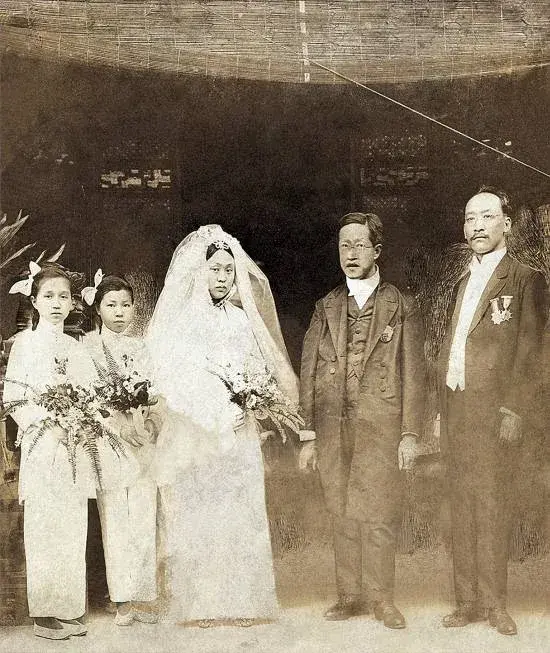
In June 1913, introduced by Minister of Education Cai Yuanpei, forty-four-year-old Zhang married thirty-two-year-old scholar and feminist Tang Guoli at Hardoon Garden in Shanghai. Sun Yat-sen, Huang Xing, and Chen Qimei attended the ceremony, with Cai Yuanpei officiating. Throughout decades of political turmoil, Tang remained a pillar of moral support, steadfastly managing the household while Zhang was confined by Yuan Shikai and pursued by warlord factions. Their enduring union stood as an inspiring model of mutual respect and intellectual partnership during China's turbulent modern transformation.
Beyond his classical and historical achievements, Zhang attained extraordinary mastery in traditional Chinese medicine, famously declaring in his mature years that his medicine surpassed his classical learning and historical scholarship. He systematically studied Zhang Zhongjing's Treatise on Cold Damage and Miscellaneous Diseases (Shanghan Zabing Lun) and classical pharmacology, authoring significant medical treatises including On Cholera (Huoluan Lun) and New Discourse on Sudden Illnesses (Cu Bing Xin Lun, later published as Zhang Taiyan Yilun).
Zhang applied rigorous evidential philology to verify ancient pharmacopeial terms, medicinal dosages, and pathological terminology. By combining empirical classical textual research with practical clinical therapeutics, he made pioneering contributions to the modern historical systematization of traditional Chinese medicine.
During his final years, Zhang maintained unbending moral integrity against imperialist encroachment. Following the Nationalist warrant for his arrest in 1927, two veteran Tongmenghui members visited his residence, urging him to travel to Japan to head an anti-Chiang government-in-exile. Tang Guoli intervened forcefully, warning Zhang that becoming a puppet of foreign interests would destroy his lifelong integrity. Heeding her counsel, Zhang flatly rejected the intrigue.
During the North China Crisis, Zhang deployed his immense moral authority to shield student activists from persecution. He publicly memorialized provincial commanders to protect demonstrating youth and dispatched resources to shelter traveling students in Suzhou. In his final hours, Zhang demonstrated that his lifelong devotion to national liberation and scholarly truth remained indivisible, leaving an indelible monument of intellectual courage for modern China.
FIGURES ASSOCIATED WITH THIS DYNASTY