Enlistment at Junzhou
Responded to Li Tingzhi's call for volunteers, chosen as Regimental Commander by three thousand watermen.
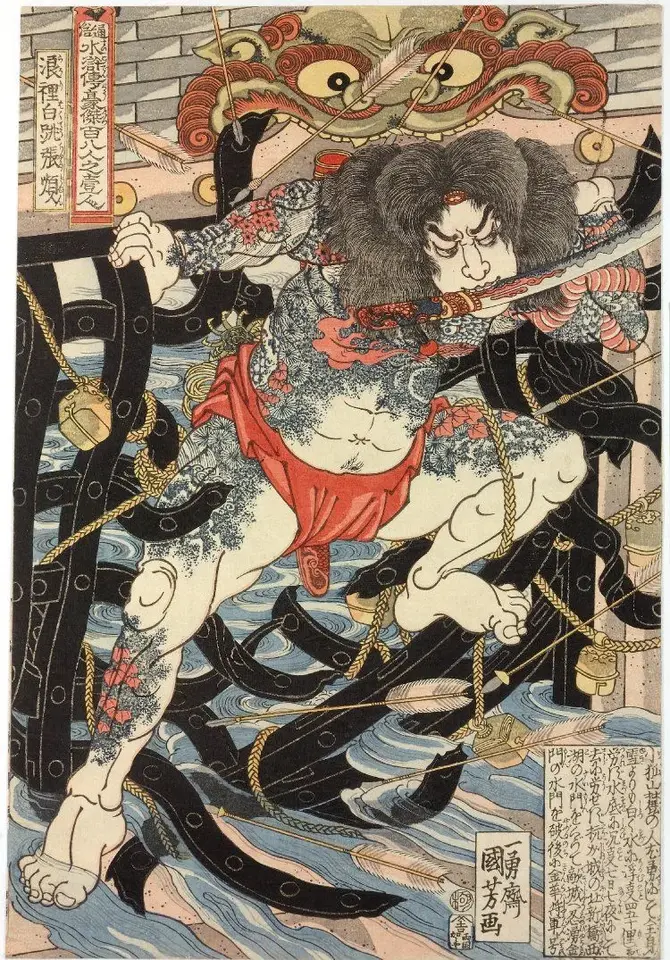
张顺
Zhang Shun (张顺, ?–1272), widely known among the troops by the moniker Ai Zhang, was a celebrated anti-Mongol hero and valiant naval commander of the late Southern Song dynasty from Junzhou (modern Danjiangkou, Hubei). Born into a humble peasant household, he was renowned for his extraordinary strength, aquatic agility, and resolute character. In 1272, after Mongol forces under Aju and Liu Zheng had besieged Xiangyang and…
Zhang Shun (张顺, ?–1272), widely known among the troops by the moniker Ai Zhang, was a celebrated anti-Mongol hero and valiant naval commander of the late Southern Song dynasty from Junzhou (modern Danjiangkou, Hubei). Born into a humble peasant household, he was renowned for his extraordinary strength, aquatic agility, and resolute character. In 1272, after Mongol forces under Aju and Liu Zheng had besieged Xiangyang and Fancheng for five continuous years, cutting off all supplies and barring the Han River with chains and palisades, Jinghu Military Commissioner Li Tingzhi recruited three thousand daring civilian watermen in Junzhou. Zhang Shun and Zhang Gui were elected as Regimental Commanders, swearing an oath to sacrifice their lives for the relief of the city. Late on the night of the twenty-fourth day of the fifth month, the two commanders led a fleet of one hundred light warboats down the Han River, braving gale winds and surging waters. While covering the rearguard at Mohong Rapids, Zhang Shun fought with desperate valor, personally hacking through river barricades before being struck by four spears and six arrows, falling into the river and dying a martyr. Several days later, his armored body floated upstream to the Xiangyang water gate, clutching his bow with an imposing countenance, inspiring awe throughout the city. Xiangyang commander Lü Wenhuan buried him with high honors on Mount Xian, later burying Zhang Gui beside him and erecting a dual shrine for seasonal worship.
Responded to Li Tingzhi's call for volunteers, chosen as Regimental Commander by three thousand watermen.
Oversaw the construction of one hundred connected light craft laden with salt and cloth.
Admonished his men on the eve of battle that the mission meant certain death, inspiring unyielding resolve.
Led the flotilla down the Han River, hacking through timber palisades and iron chains at Mohong Rapids.
Sustained four spear wounds and six arrow wounds while holding the rear, falling into the Han River at age forty.
His body floated upstream to the Xiangyang water gate, buried with high honors and posthumously granted military rank.
Zhang Shun was born into an ordinary farming and fishing family along the riverbanks of Junzhou, living through the most brutal phase of the Mongol-Song wars. Although not tall of stature, he possessed immense physical strength, unyielding courage, and an encyclopedic knowledge of the treacherous rapids of the Han River, capable of steering skiffs through turbulent white water without assistance. In local civilian water garrisons, his fairness and tactical quickness won deep respect, and his peers affectionately addressed him as Ai Zhang.
During the Xianchun era, the Mongol Empire concentrated its military resources on subduing the strategic bastion of Xiangyang. Adopting the strategy of defected general Liu Zheng, Mongol forces constructed ring forts at Lumen and Baihe, while erecting extensive floating pontoon barriers and driving iron-tipped stakes into the riverbed, severing all contact between the fortress and the outside world.
By 1272, Xiangyang had been isolated for five years. With arrows and iron shot depleted and clothing worn to rags, the defense faced imminent collapse. Stationed in Junzhou, Jinghu Military Commissioner Li Tingzhi offered handsome bounties to enlist intrepid civilian fighters. Zhang Shun and Zhang Gui answered the call, and their reputation for bravery led the three thousand recruits to choose them unanimously as Regimental Commanders.
Upon taking command, Zhang Shun worked with Zhang Gui to prepare the expedition in Junzhou. Knowing that conventional warships were too bulky to navigate the obstacle-laden shallows of the Han River, Zhang Shun directed the construction of one hundred light, fast rowing craft.
To safeguard the cargo, he devised an interlocking formation: three boats were lashed together side by side, with the central vessel laden with salt, cloth, oil, and weapons, while the outer vessels were manned by crack fighters equipped with fire lances, firepots, burning coals, crossbows, and boarding axes.
In the fifth month, Zhang Shun assembled his three thousand men for a pre-battle oath. Drawing his saber, he declared: Xiangyang is the gateway of Great Song; our journey plunges into the dragon's lair, with no expectation of survival. If any among you does not go with a willing heart, depart now, lest you compromise the mission! Moved by his heroic spirit, every man shouted his readiness to follow the Two Zhangs to the death.
Late on the night of the twenty-fourth day of the fifth month, a raging storm swept down the Han River, causing the waters to rise several feet. Recognizing their moment, Zhang Shun and Zhang Gui ordered the flotilla to weigh anchor, hoisting red lanterns on their masts to guide the formation through the darkness.
Reaching Mohong Rapids, the fleet was confronted by hundreds of Mongol warships. While Zhang Gui led the advance boats forward, Zhang Shun positioned his craft across the current to hold off pursuing enemy vessels.
Confronting heavy iron chains and sharpened underwater stakes, Zhang Shun commanded his men to unleash firepots against the enemy flagship while directing divers to hack through the iron barriers with heavy axes. In the vicious melee, Zhang Shun fought hand-to-hand on the deck, slaying several boarding enemies before sustaining four spear thrusts and six arrow wounds. Clinging to the steering oar with dying strength, he shouted orders to keep the supply vessels moving forward. Thanks to his desperate rearguard defense, Zhang Gui's main fleet broke through the lines and reached Xiangyang at dawn. Exhausted of blood, Zhang Shun slipped into the turbulent waters of the Han River.
When the fleet arrived at Xiangyang, a roll call revealed that Zhang Shun had fallen, plunging the defenders into profound sorrow. Several days later, garrison patrols were stunned to see an armored body floating upstream against the powerful current, drifting slowly toward the northern water gate.
Pulling the corpse from the water, they discovered it was Zhang Shun. Though pierced by ten fatal wounds, his eyes remained wide and fierce, and his hands still gripped his bow, looking as formidable as in life. Weeping openly, the garrison soldiers fell to their knees in veneration, convinced that his righteous spirit had transcended death.
Lü Wenhuan oversaw an elaborate funeral, burying the hero on Mount Xian overlooking the river. The court posthumously awarded him the rank of Grand Master for Martial Merits and Training Commissioner of Guizhou. When Zhang Gui was later killed at Longweizhou, Lü Wenhuan recovered his body and buried the two heroes side by side, erecting a dual shrine that received regular sacrifices from generations of local citizens.
Confronted with an impassable river blockade, Zhang Shun pioneered the three-boat linked formation, which combined offensive fire capabilities with secure transport capacity in shallow waters, providing an indispensable tactical solution for the relief of Xiangyang.
During the breakthrough at Mohong Rapids, Zhang Shun took upon himself the suicidal duty of holding the rear. Absorbing ten fatal wounds to ensure the safe passage of the supply flotilla, his heroic death and the legendary floating of his body upstream became an enduring symbol of unyielding Chinese resistance against invasion.
FIGURES ASSOCIATED WITH THIS DYNASTY