Entering Public Service
Overcame humble lineage through martial intellect and integrity, recruited as Attendant Officer of Yi Province.
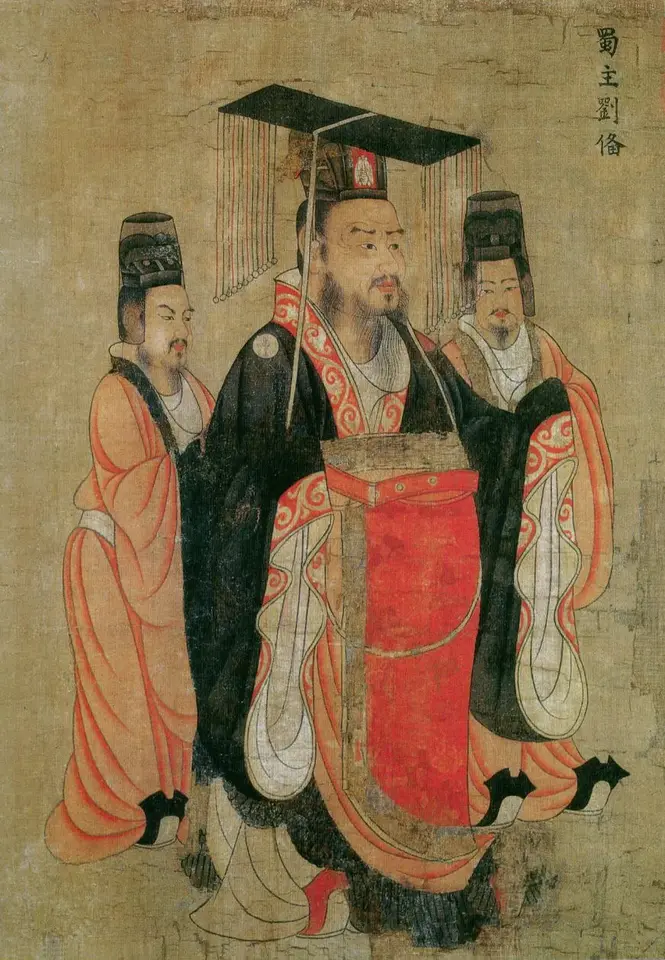
?–213 CE
张任
Zhang Ren (张任, ?–213 CE) was a native of Shu Commandery in Yi Province (present-day Chengdu, Sichuan). He was a distinguished military commander and renowned loyalist martyr serving under Liu Zhang, Governor of Yi Province, during the late Eastern Han dynasty, holding the office of Attendant Officer of Yi Province. Originating from a modest, non-aristocratic family, Zhang Ren was celebrated from his youth for valor, strategic…
Zhang Ren (张任, ?–213 CE) was a native of Shu Commandery in Yi Province (present-day Chengdu, Sichuan). He was a distinguished military commander and renowned loyalist martyr serving under Liu Zhang, Governor of Yi Province, during the late Eastern Han dynasty, holding the office of Attendant Officer of Yi Province. Originating from a modest, non-aristocratic family, Zhang Ren was celebrated from his youth for valor, strategic intellect, and unbending moral integrity, which earned him a summons to serve as an attendant officer in the provincial administration of Yi Province. In late 212 CE, Liu Bei turned against Liu Zhang, launching a southern campaign from Jiameng Pass and capturing Fu City in Guanghan Commandery. In early 213 CE, Liu Zhang dispatched Zhang Ren alongside Liu Gui, Ling Bao, Deng Xian, and Wu Yi to resist the invasion at Fu County. Following their defeat, Zhang Ren retreated to defend the mountain barrier of Mianzhu. When reinforcement commander Li Yan surrendered Mianzhu to Liu Bei and Wu Yi defected, the regional defense collapsed. Remaining faithful to his lord, Zhang Ren escorted Liu Zhang's eldest son Liu Xun in a fighting retreat into Luocheng to mount a desperate defense. Besieged by Liu Bei's armies, Zhang Ren led shock troops in a sally to engage the enemy at Yan Bridge (later celebrated as Jinyan Bridge), where he was overwhelmed and captured after fierce combat. Admiring his bravery and integrity, Liu Bei sought to enlist him with offers of high office; Zhang Ren sternly refused, declaring: "A loyal subject will never serve two masters!" He accepted execution with sublime composure, leaving Liu Bei deeply sorrowed. Historian Chang Qu praised him as an enduring paragon of fidelity to his original sovereign.
Overcame humble lineage through martial intellect and integrity, recruited as Attendant Officer of Yi Province.
Warned of peril when Liu Zhang invited Liu Bei into Shu to counter Zhang Lu, maintaining defensive vigilance.
Dispatched by Liu Zhang to intercept Liu Bei along the Fu River after Liu Bei captured Fu City.
Retreated to Mianzhu after setbacks at Fu; refused defection when Li Yan and Wu Yi surrendered, retreating to Luocheng.
Led shock troops into battle at Yan Bridge outside Luocheng, captured after fierce combat, and executed after refusing to yield.
Zhang Ren was born into a modest gentry family without hereditary rank in Shu Commandery, Yi Province. In the socially stratified society of late Eastern Han Sichuan, where aristocratic clans monopolized civil office, men from humble origins faced immense barriers to official recognition. However, Zhang Ren distinguished himself from early youth through exceptional courage, resolute determination, and an uncompromising sense of moral duty, earning broad esteem among local scholars.
During the Xingping and early Jian'an eras, Liu Zhang succeeded his father Liu Yan as Governor of Yi Province. Seeking capable men across the commanderies to reinforce his administration, provincial authorities discovered Zhang Ren's combined military competence and spotless character. He was summoned to serve as Attendant Officer of Yi Province, an important post overseeing administrative and military investigations. In office, Zhang Ren displayed incisive judgment, strict impartiality, and steadfast diligence, winning the trust of Liu Zhang and the provincial court.
In 211 CE, reports arrived that Cao Cao intended to campaign against the Guanzhong warlords and Zhang Lu in Hanzhong, creating severe anxiety in Chengdu. Influenced by advisers Zhang Song and Fa Zheng, Liu Zhang resolved to invite his kinsman Liu Bei from Jing Province into Shu to neutralize Zhang Lu. Loyal officers like Zhang Ren, Huang Quan, and Wang Lei recognized Liu Bei's towering ambition and foresaw that welcoming him was tantamount to inviting a tiger into the household; nevertheless, the timid Liu Zhang dismissed their warnings and welcomed Liu Bei with lavish supplies. Stationed at Jiameng Pass, Liu Bei consolidated popular support and surveyed the strategic gateways of Shu.
In December of 212 CE, relations between the two warlords fractured completely. Liu Bei lured the garrison commanders Yang Huai and Gao Pei to his camp, executed them, absorbed their frontier troops, and marched south at high speed, capturing Fu City in Guanghan Commandery. Confronting this existential crisis, Liu Zhang mobilized the provincial army, ordering Zhang Ren, Liu Gui, Ling Bao, Deng Xian, and Wu Yi to lead tens of thousands of elite soldiers to block the advance along the Fu River.
A fierce engagement erupted at Fu County. Veteran commanders under Liu Bei, including Huang Zhong and Wei Yan, spearheaded aggressive frontal assaults. Lacking centralized tactical coordination, the provincial formations were broken in detail. Zhang Ren organized stubborn rear-guard actions, fighting while retreating to reform defensive lines at the mountain bastion of Mianzhu. To stabilize the front, Liu Zhang sent Army Supervisor Li Yan to take supreme command at Mianzhu. However, Li Yan promptly surrendered with his entire force to Liu Bei, and Middle Gentleman of the Household Wu Yi defected as well. The northern approaches to Chengdu were breached, plunging the state of Liu Zhang into extreme jeopardy.
Amid the widespread collapse and betrayal at Mianzhu, Zhang Ren stood immovable in his loyalty to Liu Zhang. While other commanders hastened to capitulate to the conqueror, Zhang Ren gathered his battered divisions and joined Liu Gui in escorting Liu Zhang's eldest son, Liu Xun, through the enemy lines into the fortified walls of Luocheng (present-day Guanghan, Sichuan).
Liu Bei advanced rapidly, encircling Luocheng with dense siege lines and mounting ceaseless assaults by day and night. The garrison soon faced dwindling provisions and ammunition. Discerning that passive defense would inevitably lead to destruction, Zhang Ren resolved to launch an aggressive counterattack. In the summer of 213 CE, Zhang Ren assembled the surviving shock troops of the garrison, donned his armor, and charged out of the city gates toward Yan Bridge (later known as Jinyan Bridge) across the river. A ferocious clash ensued along the narrow embankments. Zhang Ren fought with desperate gallantry, personally cutting down several enemy soldiers, but was eventually surrounded, overwhelmed by superior numbers, and captured alive after exhausting his strength.
The Han soldiers bound Zhang Ren and brought him before Liu Bei's headquarters. Long aware of Zhang Ren's towering reputation for tactical skill and unyielding honor, Liu Bei received him warmly, ordered his bonds removed, and spoke to him in person: "You are a magnificent hero of Sichuan; now that Liu Zhang has lost control, if you surrender to me, I will entrust you with high rank and share honors with you." Zhang Ren glared fiercely at the conqueror and shouted with righteous indignation: "A loyal minister will never serve two masters!" His voice echoed like thunder, infused with sublime dignity. Seeing that Zhang Ren's resolve was as unyielding as iron and that he could never be swayed by promises of wealth or power, Liu Bei sorrowfully ordered his execution. Zhang Ren faced death with serene courage. Following his execution, Liu Bei sighed deeply, lamenting the tragic loss of so faithful a statesman.
Following Zhang Ren's martyrdom, local inhabitants buried his remains northwest of Luocheng. In 296 CE (the sixth year of Yuankang during the Western Jin dynasty), the gentry and common people of Shu erected a commemorative tomb and shrine at his burial site, where generations honored his memory as a timeless incarnation of Chinese loyalty and chivalry.
Originating from a non-patrician family, Zhang Ren distinguished himself through martial dedication and spotless integrity in an era dominated by high aristocracy.
Appointed Attendant Officer of Yi Province, he applied administrative acumen and courage, ascending to the forefront of provincial military leadership.
When Liu Bei launched his sudden invasion in 212 CE, Zhang Ren marched to the Fu River to stem the onslaught of seasoned veteran armies.
Operating under chaotic operational conditions, he preserved his command through stubborn rear-guard fighting, maintaining a cohesive defense back to Mianzhu.
When superior commander Li Yan and colleague Wu Yi capitulated, Zhang Ren rejected treason with supreme moral clarity.
He escorted Liu Zhang's heir Liu Xun through hostile cordons into Luocheng, organizing a desperate siege defense that held out for months against overwhelming odds.
Leading a daring amphibious sortie at Yan Bridge outside Luocheng, he fought to exhaustion against vast hosts and was captured in battle.
Confronting Liu Bei's entreaties of wealth and glory, he boldly proclaimed that he would never serve two masters, sanctifying his life to become an immortal symbol of Confucian rectitude.
FIGURES ASSOCIATED WITH THIS DYNASTY