Birth and Upbringing
Born in Anding as the second son of Zhang Gui; gentle, bookish, and unconcerned with wealth and honors.
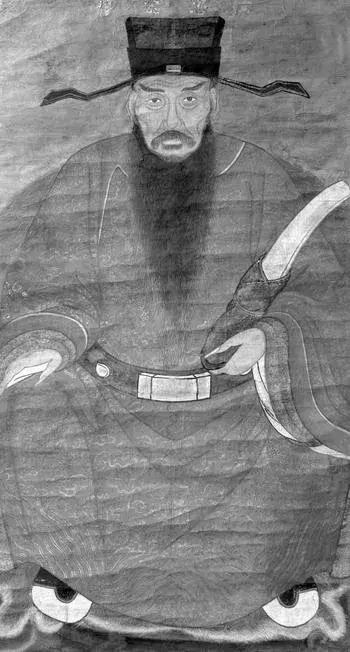
张茂
Zhang Mao (277–325), courtesy name Chengxun, was a native of Wushi County, Anding Commandery (present-day Pingliang, Gansu Province). He was the fourth ruler of the Former Liang regime during the Sixteen Kingdoms period. He was the second son of Western Jin Regional Inspector Zhang Gui and the younger brother of King Zhao (Zhang Shi). Characterized by a serene and tranquil demeanor, Zhang Mao was deeply devoted to classical…
Zhang Mao (277–325), courtesy name Chengxun, was a native of Wushi County, Anding Commandery (present-day Pingliang, Gansu Province). He was the fourth ruler of the Former Liang regime during the Sixteen Kingdoms period. He was the second son of Western Jin Regional Inspector Zhang Gui and the younger brother of King Zhao (Zhang Shi). Characterized by a serene and tranquil demeanor, Zhang Mao was deeply devoted to classical learning and detached from worldly prestige, repeatedly declining court appointments in his early years. In the third year of the Taixing era (320), Zhang Shi was assassinated by mutinous subordinates led by Yan Sha. Because Zhang Shi's son Zhang Jun was still a minor, civil and military officials acclaimed Zhang Mao to take charge of the realm. Declining the exalted title of Grand Defender, he assumed the offices of Holder of the Talisman, General Pacifying the West, and Governor of Liang Province. He acted decisively to execute hundreds of rebels, enticed and eliminated the overbearing magnate Jia Mo to restore legal order throughout the west, and dispatched troops south to conquer Nan'an and establish Qinzhou, successfully countering the incursions of Liu Yao of Former Zhao. In the first year of the Taining era (323), when Liu Yao launched a massive offensive against Longxi, Zhang Mao prudently recognized the strategic reality and nominally accepted vassal status as King of Liang to preserve his people. In the third year of the Taining era (325), on his deathbed, he exhorted his nephew Zhang Jun to uphold the duty of a loyal vassal to the Jin court and requested to be buried in simple white hemp robes without court dress. He passed away at the age of forty-eight after reigning for five years, receiving the posthumous title King Cheng.
Born in Anding as the second son of Zhang Gui; gentle, bookish, and unconcerned with wealth and honors.
Sima Bao, Prince of Nanyang, recruited him as Attendant Officer; recommended as Cavalier Attendant, which he consistently declined.
Summoned as Palace Attendant by Emperor Min, but declined due to his father's advanced age; later appointed General Pacifying the West.
Acclaimed Governor of Liang Province after Zhang Shi's murder; suppressed Yan Sha's rebellion and executed local oligarch Jia Mo.
Dispatched Han Pu to conquer Nan'an Commandery and establish Qinzhou; began construction of Lingjun Terrace, pausing after remonstrance.
Repelled Former Zhao's vanguard; nominally submitted to Liu Yao as King of Liang when faced with overwhelming force to protect the realm.
Died of illness in Guzang; instructed Zhang Jun to remain loyal to the Jin court and requested burial in plain garments.
Zhang Mao hailed from the prominent Zhang lineage of Anding, claiming eighteenth-generation descent from Zhang Er, King of Changshan in the early Western Han dynasty. His father, Zhang Gui, was appointed Regional Inspector of Liang Province toward the end of the Western Jin dynasty, laying the foundations for the regional state in Hexi. From youth, Zhang Mao exhibited a refined and dispassionate temperament. He was fond of classical literature, immersed himself in scholarly study, and showed virtually no ambition for bureaucratic power or material wealth.
In the first year of the Jianxing era (313), Sima Bao, Prince of Nanyang, who was based in Chang'an, recognized Zhang Mao's scholarly prestige and summoned him to serve as Attendant Officer in the Retinue, later recommending him as Cavalier Attendant and General of the Central Army. Detached from official status, Zhang Mao firmly declined these prominent appointments. In the second year of the Jianxing era (314), Emperor Min of Jin issued an edict summoning Zhang Mao to Chang'an as Palace Attendant. Believing that his father Zhang Gui was aged and suffering from chronic paralysis, requiring daily filial devotion, Zhang Mao adamantly refused to depart. The court commended his filial conduct and soon appointed him General Pacifying the West and Regional Inspector of Qinzhou. In May of that year, Zhang Gui passed away, and Zhang Mao's elder brother Zhang Shi succeeded as Duke of Xiping and Regional Inspector of Liang Province. Throughout this period, Zhang Mao dutifully assisted his brother in regional administration.
In the third year of the Taixing era (320), Former Liang was plunged into an existential political crisis. Magistrate Yan Sha of Xining colluded with conspirator Zhao Mao and launched a palace coup in Guzang, assassinating Zhang Shi. The assassination shocked Hexi, throwing the capital into turmoil. Left Marshal Yin Yuan and senior officials convened an emergency council. Recognizing that Zhang Shi's heir, Zhang Jun, was only thirteen years old and incapable of handling impending foreign aggression and internal unrest, the assembly unanimously nominated Zhang Mao as Grand Area Commander, Grand Defender, and Governor of Liang Province.
Zhang Mao responded with humility: "Our ancestral temple has suffered misfortune, and my elder brother died by betrayal. With modest talent and shallow virtue, how could I dare assume exalted rank?" He resolutely declined the supreme titles of Grand Area Commander and Grand Defender, agreeing only to accept the positions of Holder of the Talisman, General Pacifying the West, and Governor of Liang Province to stabilize the administration. Once in charge, he demonstrated remarkable political decisiveness. He mobilized loyal forces, arrested and executed Yan Sha along with hundreds of conspirators, and declared a general amnesty across Liang Province to soothe public anxiety. Simultaneously, he formally appointed his nephew Zhang Jun as General Pacifying the Army, Administrator of Wuwei, and created him Duke of Xiping, unambiguously establishing Zhang Jun as his eventual successor.
At that time, local aristocratic lineages possessed formidable private armies and political influence. Jia Mo, a brother-in-law of the late Zhang Shi, wielded overriding authority across the western region and behaved with blatant arrogance. A popular ballad circulated widely: "Touch your head and plot for Liang Province." Zhang Mao astutely perceived that Jia Mo harbored treacherous intentions. He devised a stratagem, invited Jia Mo to a banquet, and summarily executed him. Following Jia Mo's death, powerful regional clans were thoroughly intimidated and curtailed their lawless conduct. Zhang Mao's administrative authority and legal edicts subsequently prevailed without resistance throughout Hexi.
In the fourth year of the Taixing era (321), Zhang Mao resolved to expand into eastern Long to create a defensive buffer. He dispatched General Han Pu to capture Longxi and Nan'an, establishing Qinzhou with headquarters at Nan'an and appointing officials to stabilize the borderland. However, this eastward expansion provoked a sharp response from Former Zhao, the dominant military power in Guanzhong. In the fifth year of the Taixing era (322), Liu Yao, Emperor of Former Zhao, dispatched his general Liu Xian to besiege Han Pu at Jicheng, while Huyan Shi attacked Ningqiang Defender Yin Jian at Sangbi. Local leaders Zhai Kai and Shi Cong in Lintao expelled imperial magistrates and surrendered their walled cities to Former Zhao, causing immense alarm across Hexi.
Faced with this perilous situation, Attendant Officer Ma Ji urged Zhang Mao to lead the main army in person to boost morale. Chief Clerk Fan Yi objected vehemently, claiming that Guanzhong was too powerful to fight and demanding Ma Ji's execution to pacify the populace. Zhang Mao decisively endorsed Ma Ji's counsel, advancing the army to Shitou Fortress, and appointed Attendant Officer Chen Zhen as Protector of the Army Pacifying the Barbarians with 1,800 cavalry and infantry to relieve Han Pu. Chen Zhen skillfully rallied the local Di and Qiang tribes, launched a surprise assault that shattered the Former Zhao forces, and successfully recaptured Nan'an.
In the first year of the Taining era (323), Liu Yao personally mobilized the elite main army of Former Zhao, crossed Mount Long, and laid siege to Nan'an, deporting over two thousand aristocratic households of Qinzhou to Chang'an. With overwhelming numbers lined up along the Yellow River, Former Liang faced supreme peril. Zhang Mao assessed the strategic balance and realized that an isolated province could not survive a pitched war against Former Zhao's full force. To preserve his state and spare the lives of his people, he chose a flexible diplomatic course, offering nominal submission as a tributary vassal to Former Zhao. Burdened by long-distance logistical constraints, Liu Yao accepted the terms, invested Zhang Mao as King of Liang with the Nine Bestowals of Honor, and withdrew his army. Former Liang thus safely weathered the storm.
On June 22, 325 (the fourteenth day of the fifth month in the third year of the Taining era), Zhang Mao succumbed to illness in Guzang. In his final hours, he took his nephew Zhang Jun's hand and wept, admonishing him: "Our ancestors were renowned for filial piety and fraternal love. Since the founding of the Han dynasty, our house has faithfully upheld loyalty and obedience. Although the realm is now convulsed in chaos and the son of heaven has fled east of the Yangtze, you must scrupulously preserve the conduct of a loyal subject and never depart from our ancestral duty. Cast into an age of turmoil, I relied upon the virtues of our forebears to administer this province, aiming above not to betray the Jin court and below to shield the populace. Yet my office was not conferred by an imperial decree, but resulted from regional acclamation. Where is the glory in that? When I expire, lay me in my coffin with a simple white hemp cap, and do not dress me in court robes, so that my true aspirations and loyalty may be known." Zhang Mao died at the age of forty-eight after five years of rule. Former Zhao posthumously conferred upon him the title Grand Chancellor and King Chenglie, while the Former Liang court granted him the posthumous title King Cheng. Having no biological sons, he was succeeded by Zhang Jun.
Since the Wei and Jin dynasties, prominent aristocratic clans in Liang Province possessed extensive landed estates, armed retainers, and fortified settlements, frequently overriding local magistrates and undermining governmental authority. During Zhang Shi's administration, his brother-in-law Jia Mo capitalized on his imperial in-law status to exert overbearing influence across the western frontiers, behaving with impunity and eroding official decrees.
Upon assuming leadership, Zhang Mao understood that if judicial authority did not originate from a unified administration, internal disintegration would inevitably invite external conquest. Acting upon ominous regional prophetic ballads, he decisively lured Jia Mo to court and executed him in strict accordance with administrative discipline. This dramatic move sent shockwaves through the elite clans of Liang Province, compelling previously lawless magnates to curb their excesses and submit to bureaucratic control. Through this vigorous restoration of law and order, Zhang Mao consolidated governmental authority, establishing solid domestic stability for defending against hostile northern states.
Situated in the remote northwestern corridor, Former Liang was subject to direct strategic pressure from powers occupying Guanzhong. Zhang Mao recognized that purely passive defense within the Hexi Corridor would leave the state vulnerable to sudden invasion. By dispatching Han Pu south to seize Nan'an and Longxi and establishing the administrative apparatus of Qinzhou, he constructed a vital geopolitical buffer protecting Hexi.
When Former Zhao's Liu Yao mounted ferocious counterattacks, Zhang Mao exhibited outstanding operational judgment and strategic restraint. He adopted practical proposals from staff officers Ma Ji and Chen Zhen, deployed defensive forces at Shitou Fortress, and leveraged regional tribal dynamics to defeat Liu Xian and Huyan Shi. Later, when confronted by Liu Yao's direct royal expedition, Zhang Mao chose pragmatic diplomacy over futile sacrifice, temporarily accepting vassal investiture to induce Former Zhao's withdrawal. This strategy thwarted Former Zhao's ambition to absorb the northwest while preserving hundreds of thousands of civilians from devastating warfare.
In the fourth year of the Taixing era (321), Zhang Mao oversaw the construction of Lingjun Terrace at Guzang, featuring a circumference of more than eighty parapets and a foundation nine fathoms high. During construction, a man from Wuling named Yan Zeng knocked on the city gates at night, proclaiming that the late governor Zhang Gui had appeared in a dream to reprimand Zhang Mao for exhausting the people with lavish architecture. Although Guzang Magistrate Xin Yan urged that Yan Zeng be executed for seditious sorcery, Zhang Mao candidly acknowledged: "I have indeed toiled the people. Yan Zeng spoke in the name of my late father, so how can this be deemed witchcraft?"Treasury Officer Ma Fang then submitted an earnest remonstrance, arguing that while regional turmoil remained unresolved, a ruler ought to embody frugality and moral restraint rather than erect grand towers. Profoundly moved, Zhang Mao admitted his error, exclaiming "This is my fault!" and immediately halted construction.
In the autumn of 323, prompted by defense imperatives and border volatility, Zhang Mao resumed fortification work on Guzang's walls and Lingjun Terrace. When Attendant Wu Shao submitted another remonstrance against exhausting the populace, Zhang Mao patient explained the necessity of securing defensive strongholds in times of grave military peril, noting that principles suited for peaceful eras could not be rigidly applied to times of existential danger. Throughout his tenure, Zhang Mao never punished outspoken officials, demonstrating intellectual honesty, administrative forbearance, and open-minded statesmanship.
FIGURES ASSOCIATED WITH THIS DYNASTY