Birth in Haiyan
Born into a scholarly family in Haiyan, mastering Confucian classics and Daoist metaphysics from youth.
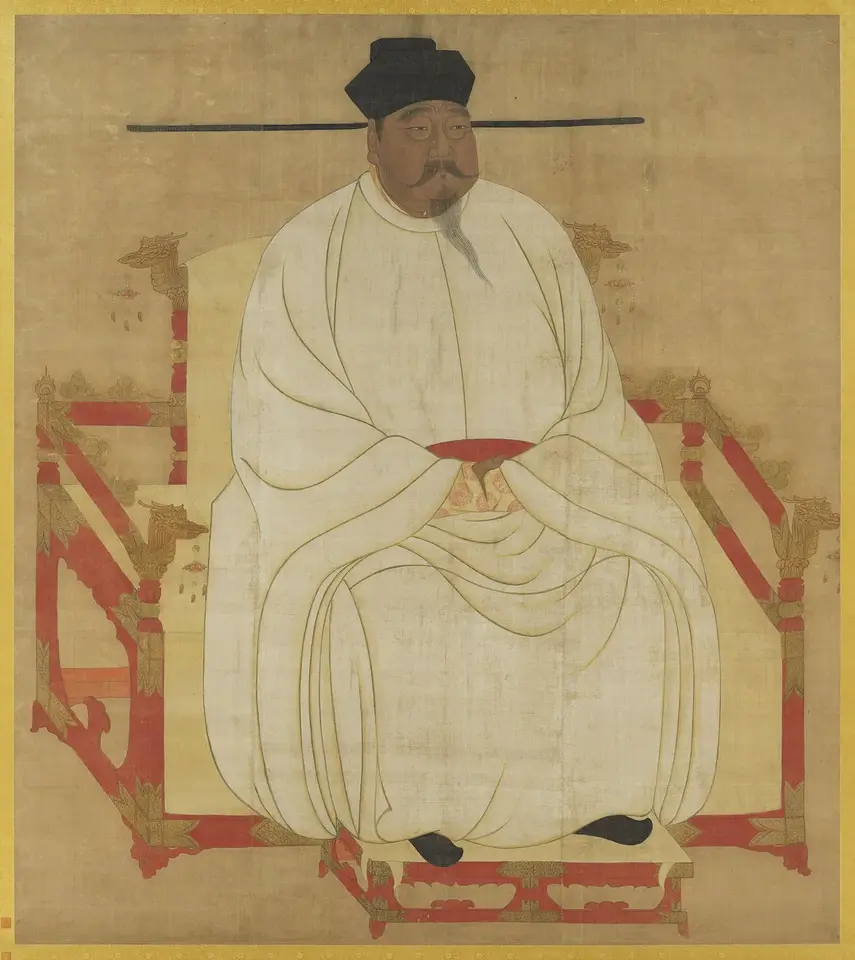
张君房
Zhang Junfang (c. 967–c. 1043), courtesy name Boyu, was a native of Haiyan County in Yuezhou (modern Zhejiang). He was a preeminent Daoist philosopher, bibliophile, archivist, and natural scientist of the early Northern Song dynasty. Passing the imperial examination during the Jingde era of Emperor Zhenzong, Zhang served as Magistrate of Linquan. When Emperor Zhenzong launched the empire-wide collection of Daoist scriptures,…
Zhang Junfang (c. 967–c. 1043), courtesy name Boyu, was a native of Haiyan County in Yuezhou (modern Zhejiang). He was a preeminent Daoist philosopher, bibliophile, archivist, and natural scientist of the early Northern Song dynasty. Passing the imperial examination during the Jingde era of Emperor Zhenzong, Zhang served as Magistrate of Linquan. When Emperor Zhenzong launched the empire-wide collection of Daoist scriptures, Grand Councilor Wang Qinruo vigorously recommended Zhang to oversee the compilation. Over several years in the imperial lodge, Zhang catalogued tens of thousands of scattered scrolls into the imperial canon Da Song Tian Gong Bao Zang (Precious Canon of the Celestial Palace of the Great Song) in 4,565 volumes. Recognizing that this vast imperial canon was too bulky for practical study, Zhang selected its core theological, meditative, alchemical, and ritual texts, independently compiling the 122-volume anthology Seven Lots from the Cloudy Bookcase (Yunji Qiqian). Celebrated across East Asian history as the "Little Daoist Canon," it preserved irreplaceable medieval Daoist literature. In his retirement, Zhang conducted empirical marine research along Hangzhou Bay, authoring Chao Shuo (Theory of the Tides).
Born into a scholarly family in Haiyan, mastering Confucian classics and Daoist metaphysics from youth.
Attained the jinshi degree in Kaifeng, receiving initial appointment as Magistrate of Linquan County.
Recommended by Grand Councilor Wang Qinruo to direct the compilation of the imperial Daoist canon in Kaifeng.
Finalized the 4,565-volume Da Song Tian Gong Bao Zang, earning high praise from Emperor Zhenzong.
Began condensing the canon's essential scriptures into the 122-volume anthology Yunji Qiqian.
Served as Vice Prefect of Fuzhou in Jiangxi, promoting local education and exploring Daoist sacred grottos.
Conducted empirical field measurements of the Qiantang River bore, authoring Chao Shuo.
Passed away in his hometown of Haiyan at age seventy-seven, leaving an immortal bibliographic legacy.
Zhang Junfang was born in the coastal township of Haiyan in northern Zhejiang. From boyhood, he demonstrated profound intellectual breadth, mastering not only Confucian statecraft but also the ancient metaphysics of Laozi, Zhuangzi, and Yin-Yang cosmology.
During the Jingde reign of Emperor Zhenzong, Zhang passed the imperial examinations and was assigned as Magistrate of Linquan County in Yingzhou. In Linquan, Zhang reformed tax burdens, improved judicial investigations, and eliminated corrupt fees. During his leisure hours, he collected and annotated ancient Daoist scrolls, acquiring exceptional expertise in Daoist theology and internal alchemy.
During the Dazhong Xiangfu era, Emperor Zhenzong developed a fervent interest in Daoism and celestial omens, issuing an imperial decree commanding provincial authorities to search for ancient Daoist scrolls across the empire. A dedicated historiographical bureau was established in Kaifeng under Grand Councilor Wang Qinruo. Recognizing Zhang's unrivaled mastery of esoteric literature, Wang recommended him to lead editorial collation.
Summoned to Kaifeng, Zhang was appointed Assistant in the Institute of History. Thousands of scrolls gathered from mountain temples and private collectors lay in utter disarray. Applying meticulous philological methods, Zhang authenticated texts, excised spurious fabrications, and standardized rubrics. In 1016, he completed the monumental Da Song Tian Gong Bao Zang (Precious Canon of the Celestial Palace of the Great Song) in 4,565 volumes arranged across 760 cases. Emperor Zhenzong personally reviewed the compilation, rewarding Zhang with precious gifts.
Having completed the imperial canon, Zhang recognized a severe dilemma: the Tian Gong Bao Zang was so gargantuan that even high court ministers could never read or consult it in its entirety, leaving core teachings vulnerable to future destruction.
Working independently, Zhang structured an innovative thematic framework based on the traditional "Three Caverns and Four Supplements." From over four thousand volumes, he extracted the essential passages on Daoist ontology, cosmology, internal alchemy, talismans, medicinal pharmacology, and celestial genealogies, creating the 122-volume anthology Yunji Qiqian (Seven Lots from the Cloudy Bookcase). During the Tiansheng era, Zhang presented the finished manuscript to Emperor Renzong, who praised its clarity.
Zhang subsequently served as Vice Prefect of Fuzhou and Vice Director in the Ministry of Justice. In local administration, he was celebrated for benevolence and moral instruction.
In his final years in Haiyan, Zhang observed the spectacular tidal bore of Hangzhou Bay. Drawing upon empirical measurements of lunar cycles and water movement, he authored Chao Shuo (Theory of the Tides), scientifically expounding lunar gravitational influence on ocean waters. He passed away in 1043 at age seventy-seven.
Zhang Junfang's preeminent contribution to world cultural heritage was Yunji Qiqian. The title evokes the "cloudy bookcase" holding divine scriptures and the "seven lots" denoting the Three Caverns and Four Supplements of Daoist classification.
Because later Jin and Mongol invasions burned the Song imperial printing blocks, numerous pre-Song Daoist scrolls were wiped out forever in their original editions. Yunji Qiqian became the primary vessel preserving these ancient texts. When Ming dynasty scholars compiled the definitive Zhengtong Daozang, they adopted Yunji Qiqian as the premier compass for the entire collection. Qing imperial bibliographers of the Siku Quanshu designated it as the foremost masterpiece of the Daoist section, and it remains universally revered as the "Little Daoist Canon."
Within Daoist theological philosophy, Zhang provided a sophisticated institutional explanation of the ancient "Three Corpses" (Sanshi) doctrine. He posited that the Three Corpses residing in human bodies functioned as celestial surveillance agents reporting human misdeeds to the underworld on Gengshen days. Zhang advocated deep meditative vigilance (Shou Gengshen), reinterpreting ritual taboos into systematic moral self-cultivation that anticipated Song internal alchemy (neidan).
FIGURES ASSOCIATED WITH THIS DYNASTY