Military Enlistment
Enlisted at Diaoyucheng in Hezhou, rising rapidly through the ranks to Central Army Regimental Commander.
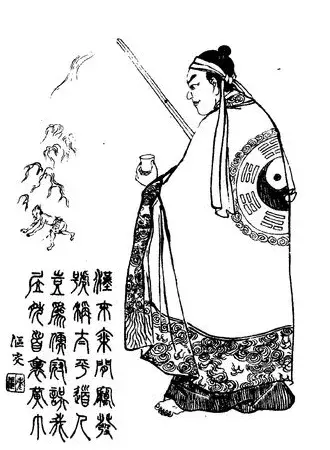
张珏
Zhang Jue (张珏, ?–1280), courtesy name Junyu, was a celebrated anti-Mongol supreme commander and national hero during the final decades of the Southern Song dynasty, revered by the soldiers and populace of the southwest as the Valiant Tiger of Sichuan. Rising from the common ranks in Longxi, he was noted for his imposing physical stature, resourceful strategic mind, and tactical audacity. Enlisting at Diaoyucheng in his…
Zhang Jue (张珏, ?–1280), courtesy name Junyu, was a celebrated anti-Mongol supreme commander and national hero during the final decades of the Southern Song dynasty, revered by the soldiers and populace of the southwest as the Valiant Tiger of Sichuan. Rising from the common ranks in Longxi, he was noted for his imposing physical stature, resourceful strategic mind, and tactical audacity. Enlisting at Diaoyucheng in his youth under veteran commanders Yu Jie and Wang Jian, he served as Central Army Regimental Commander and vice commander during the epic nine-month defense of 1259, inflicting fatal wounds upon the Mongol Great Khan Mongke. Appointed Prefect of Hezhou and Xingyuan Regimental Commander in 1263, Zhang created an integrated mountain-river fortress network, instituted military agricultural colonies, and enforced iron discipline, repulsing numerous Mongol offensives. Following the capitulation of the central court in Lin'an in 1276, Zhang assumed supreme authority as Sichuan Pacification Commissioner and Prefect of Chongqing, sustaining the resistance across eastern Sichuan by executing a lightning raid on Qingju, retaking Luzhou, and recovering Fuzhou. Besieged in Chongqing in 1278 until food was exhausted, Zhang fought hand-to-hand in city streets after traitorous officers opened the gates. Captured after attempting suicide in the Yangtze, he was being escorted to Dadu in 1280 when he hanged himself in the privy of a postal station in Anxi (Xi'an), dying as an unyielding martyr for the fallen Song dynasty.
Enlisted at Diaoyucheng in Hezhou, rising rapidly through the ranks to Central Army Regimental Commander.
Assisted chief commander Wang Jian through nine months of siege, mortally wounding Mongke Khan.
Appointed Prefect of Hezhou and Xingyuan Regimental Commander, restoring agriculture and military preparedness.
Dispatched fifty axe-wielding shock troops in a night assault to recapture the critical mountain forts of Daliangping.
Anchored naval fleets at Kuanlongxi to build a floating river citadel, repelling Sayyid Ajjal's amphibious forces.
Feigned movement at Jiaqukou while crossing Pingyang Rapids to burn Mongol shipyards, checking enemy river fortifications.
Appointed Vice Pacification Commissioner and Prefect of Chongqing, guiding the defense from Hezhou amidst encirclement.
Dispatched commando units to raid the Mongol command post at Qingju, subsequently recapturing Luzhou and Fuzhou.
Smashed in desperate combat at Fushangba, betrayed by subordinate Zhao An who opened city gates, captured after attempting suicide.
Hanged himself inside a postal station in Anxi while being escorted under armed guard to Dadu, dying a martyr.
Zhang Jue was born into an ordinary soldier's family in Fengzhou, Longxi. From his youth, he possessed a tall and powerful frame, exceptional martial daring, and a sharp tactical intellect, displaying a natural talent for military logistics and command. In 1258, the Mongol Great Khan Mongke led a massive invasion of Sichuan. Mongol cavalry breached Jiping Pass, where Changningshan commander Wang Zuo and his son fought to the death.
Advancing into the interior, Mongol forces accepted the surrender of Yang Dayuan at Langzhou while judicial officer Zhao Guang died a martyr; at Pengzhou, commander Zhang Dayue surrendered while transport official Shi Zeshan died for the dynasty. With Shunqing and Guang'an falling in rapid succession, the entire Sichuan defense line faced total collapse. Witnessing the devastation, the eighteen-year-old Zhang Jue rushed to the newly constructed fortress of Diaoyucheng at Hezhou to enlist as a common soldier.
In the ranks, Zhang displayed remarkable ferocity, spearheading charges amidst swarms of arrows and stones. Beyond physical courage, he possessed a sophisticated understanding of defensive engineering and tactical deployments, earning rapid promotions to Central Army Regimental Commander. Respected by officers and troops alike, he was affectionately known throughout the regional army as the Valiant Tiger of Sichuan.
In 1259, the pivotal siege of Hezhou began. Mongke Khan led a hundred thousand elite troops equipped with advanced siege engines to surround Diaoyucheng. Serving as primary vice commander, Zhang Jue closely coordinated with chief commander Wang Jian to mount an unyielding defense over nine grueling months. In the climax of the siege, Zhang personally directed defensive catapult batteries and volley fire from the ramparts, mortally wounding Mongke Khan and forcing the Mongol army into a general retreat, saving the Southern Song from immediate collapse.
In 1260, Wang Jian was summoned to Lin'an, and Ma Qian was appointed to command Hezhou. In 1263, Ma Qian's son was captured by Mongol patrols while escorting provisions to Huxiangshan; under enemy pressure, the son wrote letters urging his father to surrender, causing Ma Qian to waver. The Song court intervened decisively, relieving Ma Qian and promoting Zhang Jue to Prefect of Hezhou, Xingyuan Regimental Commander, and Lizhou East Circuit Pacification Commissioner.
Because Xingyuan had already been overrun by Mongol forces, its military and pacification headquarters were relocated directly into Diaoyucheng. Assuming command, Zhang organized refugee relief, restored agricultural production, refurbished armories, and instituted rigorous training. He enforced strict discipline with total impartiality: any soldier who performed heroic deeds on the battlefield, even if previously convicted of crimes, received substantial promotions and rewards; conversely, even intimate relatives were severely punished for breaking military law. Under his leadership, the granaries and armories of Diaoyucheng flourished, providing an impregnable foundation for resistance in eastern Sichuan.
Following Kublai Khan's accession to the Mongol throne, imperial armies adopted a strategy of creeping encirclement in Sichuan. Mongol forces built fortress bases at Daliangping and Huxiangshan, cutting the grain roads connecting Hezhou to Quzhou and Liangshan, forcing Song supply convoys to fight pitched battles to deliver rations.
In the winter of 1266, Zhang resolved to eliminate this threat. He dispatched trusted officers Shi Zhao and Wang Li with fifty dare-to-die volunteers. Armed with heavy axes, the commandos scaled the icy cliffs under cover of a blizzard, hacked open the western gates, and annihilated the garrison, recapturing both mountain strongholds in a single stroke.
In the summer of 1267, Mongol chancellor Sayyid Ajjal Shams al-Din led tens of thousands of troops past Chongqing to strike Hezhou. Anticipating the enemy route, Zhang anchored hundreds of heavy war vessels across the stream at Kuanlongxi, constructing an interlocking floating citadel across the water that shattered the Mongol amphibious assault. Meanwhile, Zhang established military farming units where soldiers farmed while keeping weapons at hand, ensuring abundant provisions for both military and civilian needs.
In 1272, Zhang fortified Yisheng Mountain across the river from Diaoyucheng, creating a mutually supporting defensive pair. In early 1273, Mongol commander Xiaci advanced against Diaoyucheng, attempting to fortify the river mouths at Mazongshan and Hdingshan. Rejecting defensive passivity, Zhang staged a diversionary force at Jiaqukou while secretly ferrying elite infantry across the Pingyang Rapids by night. Striking the Mongol rear camp at Wujingping by surprise, his troops torched enemy supply bases and shipyards across seventy li, killing Mongol commander Zhou Hu and completely frustrating the enemy encirclement plan.
In 1275, as Mongol forces crossed the lower Yangtze, the Song court appointed Zhang Sichuan Vice Pacification Commissioner and Prefect of Chongqing, elevating him to Senior Guardian. That summer, Southern Song commander Zan Wanshou defected with Jiading, causing Luzhou, Xuzhou, and surrounding prefectures to fall. Mongol forces encircled Chongqing, spanning pontoon bridges across the Yangtze and Jialing rivers to block relief. Remaining stationed at Hezhou, Zhang repeatedly infiltrated elite couriers through the lines to coordinate defensive measures with Chongqing's garrison.
In early 1276, to shatter the siege of Chongqing, Zhang dispatched brave general Zhao An on a lightning raid against Qingju, the headquarters of the Mongol Southern Expedition Marshal, capturing Mongol pacification commissioner Liu Cai and councilor Ma Song. In the second month, Zhang sent a naval fleet downriver that broke through the pontoon bridge blockades to reinforce Chongqing with elite troops and grain.
Although the court in Lin'an surrendered that spring, loyalists established a resistance government in Fuzhou. Resolved to fight on, Zhang sent Zhao An and Wang Shichang to recapture Luzhou in June, publicly executing the defected officer Mei Yingqing. In December, Chongqing Prefect Zhao Dingying escorted Zhang into Chongqing to assume supreme command as Sichuan Pacification Commissioner, whereupon Zhang sent troops to recapture Fuzhou. He then coordinated with Kuizhou and Zhongzhou forces to storm eighteen mountain stockades along the Daning river, severing the Mongol corridor into Sichuan from the Yangtze gorges.
Determined to break southwestern resistance, the Yuan court assembled vast land and naval armies. From late 1277 to early 1278, Fuzhou and Luzhou fell after their provisions were totally exhausted, with Luzhou defenders reduced to cannibalism and commander Wang Shichang hanging himself in martyrdom. Tens of thousands of Mongol troops converged on Chongqing, encamping at Fotuguan, Zhucunping, and along the Yangtze.
In the second month of 1278, food inside Chongqing ran out. Refusing all surrender demands, Zhang led his remaining troops out of the Xunfeng Gate, engaging marshal Yesüder in a ferocious pitched battle at Fushangba. In the heat of combat, Mongol ambushers attacked from the rear, breaking the Song line and forcing Zhang back into the city.
That night, subordinate commander Zhao An, seeing no hope of victory, conspired with Han Zhongxian to break open the Zhenxi Gate and admit the Mongol army.
Zhang fought hand-to-hand in the streets until his bodyguards were overwhelmed. Retiring to his headquarters, he demanded poison to end his life, but his retainers hid the vial. He placed his family into a small skiff on the Yangtze to escape toward Fuzhou, but overcome by fury, he took an axe and smashed the hull to sink the boat; the boatman snatched the axe and hurled it into the river. When Zhang leapt to drown himself in the rapids, his wife and children held him back weeping. The next morning, Mongol cavalry under Temür overtook the boat at Fuzhou and captured him.
The Yuan court ordered the Valiant Tiger of Sichuan to be escorted under heavy guard to Dadu. In 1280, while passing through the postal station at Anxi (modern Xi'an), Zhang Jue seized an unguarded moment in the privy to hang himself with his garments, dying an unyielding martyr for the fallen Song dynasty.
Zhang Jue's pivotal role in the defense of Diaoyucheng in 1259 altered world history. As Central Army Regimental Commander and primary vice commander to Wang Jian, he held the rocky fortress against the main forces of the Mongol Empire for nine months. His tactical direction of the defensive catapults and archers inflicted fatal wounds on Mongke Khan, compelling Mongol armies to withdraw worldwide and reshaping the geopolitical trajectory of Eurasia.
During his decade governing Hezhou, Zhang demonstrated extraordinary mastery of mountain warfare. He fortified satellite citadels at Daliangping, Huxiangshan, and Yisheng Mountain, linking them with waterborne signal lines and defensive fleets. By instituting military agricultural colonies, he transformed Hezhou into a self-sufficient fortress that remained unconquered for twenty years.
Even after the capitulation of the central court in Lin'an, Zhang stood as a towering pillar of defiance in Chongqing. He orchestrated the lightning raid on Qingju, severed enemy pontoon blockades, and recovered Luzhou and Fuzhou. His unyielding three-year resistance sustained the loyalist cause in the southwest against overwhelming odds.
FIGURES ASSOCIATED WITH THIS DYNASTY