Birth in Yin County
Born into an official family in Ningbo, exhibiting early martial spirit and profound interest in strategy.
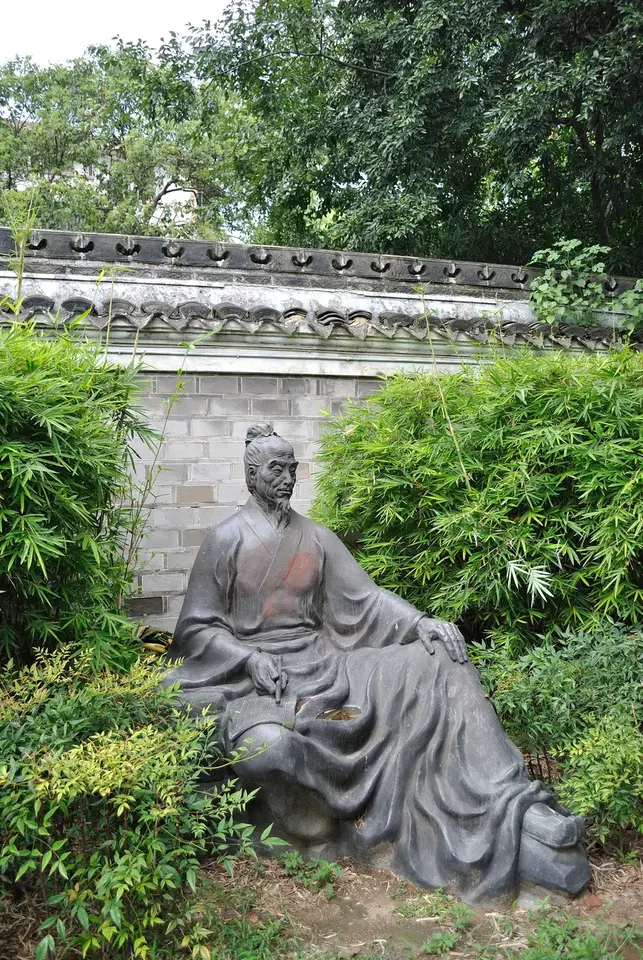
张煌言
Zhang Huangyan (July 8, 1620 – October 25, 1664), courtesy name Xuanzhu and art name Cangshui, was a native of Yin County, Ningbo Prefecture, Zhejiang Province (modern Haishu District, Ningbo City). He was an illustrious Southern Ming military commander, patriotic statesman, poet, and national hero, revered in Chinese history alongside Yue Fei and Yu Qian as one of the "Three Heroes of West Lake." Born into a prominent…
Zhang Huangyan (July 8, 1620 – October 25, 1664), courtesy name Xuanzhu and art name Cangshui, was a native of Yin County, Ningbo Prefecture, Zhejiang Province (modern Haishu District, Ningbo City). He was an illustrious Southern Ming military commander, patriotic statesman, poet, and national hero, revered in Chinese history alongside Yue Fei and Yu Qian as one of the "Three Heroes of West Lake." Born into a prominent scholar-official lineage in Ningbo, Zhang Huangyan excelled in both classical scholarship and martial archery, earning the Juren provincial degree in 1642 during the late Chongzhen reign. Following the fall of Nanjing and Hangzhou to invading Qing forces, the twenty-five-year-old scholar renounced civilian pursuits, taking up arms alongside Qian Sule at the Ningbo City God Temple. He escorted Prince of Lu (Zhu Yihai) to Shaoxing to serve as Prince Regent, receiving appointment as Hanlin Senior Compiler. For over a decade, Zhang campaigned along the rugged coasts of Zhejiang and Fujian alongside admiral Zhang Mingzhen, defending deep-water naval bases on the Zhoushan archipelago and launching three major naval expeditions up the Yangtze River. In 1659, Zhang Huangyan joined forces with Koxinga (Zheng Chenggong) in a massive northward offensive, severing the Qing iron chain booms at Guazhou, capturing Zhenjiang and Wuhu, and liberating four prefectures, three subprefectures, and twenty-four counties across Anhui and the lower Yangtze. Following Zheng Chenggong's defeat before the walls of Nanjing, Zhang Huangyan was isolated deep within the interior. Burning his river transports, he trekked over two thousand li through enemy-occupied mountains in disguise to return to eastern Zhejiang, where he organized maritime military colonies on Nantian Island to sustain resistance. The Yongli Emperor promoted him to Minister of War and Grand Secretary of the Dongge Pavilion. Following the execution of the Yongli Emperor in Yunnan, the sudden death of Koxinga on Taiwan, and the passing of Prince of Lu, all organized Southern Ming regimes collapsed. In 1664, recognizing the impossibility of military restoration, Zhang disbanded his remaining soldiers and retired to a secluded hermitage on Xuanao Island. Betrayed by a turncoat, he was captured and taken to Hangzhou. Unyielding before Qing interrogators, he was martyred with serene dignity at Bijiaofang in Hangzhou at the age of forty-five, buried beneath the northern slopes of Nanping Hill near West Lake. An accomplished scholar-general, he composed over five hundred patriotic poems during his nineteen-year struggle, preserved in the Collected Works of Zhang Cangshui.
Born into an official family in Ningbo, exhibiting early martial spirit and profound interest in strategy.
Passed the provincial civil service examination (Juren), striking the archery target three times in succession.
Following the fall of Nanjing, launched a loyalist uprising in Ningbo and escorted Prince of Lu to assume regency.
Defended Zhoushan against Qing amphibious encirclements; evacuated Prince of Lu to maritime bases.
Succeeded Zhang Mingzhen in command of the Prince Regent's armed forces, forging a military alliance with Koxinga.
Promoted to Right Vice Minister of War by the Yongli Emperor; launched joint coastal operations toward Zhejiang.
Commanded the northern offensive, capturing Guazhou, Wuhu, and twenty-four counties across Anhui.
Following an arduous two-thousand-li overland escape, promoted to Minister of War and Grand Secretary.
With all Southern Ming monarchs dead, disbanded his soldiers and retired to Xuanao Island as a hermit.
Betrayed and arrested, martyred serenely at Bijiaofang in Hangzhou; interred beneath Nanping Hill at age forty-five.
Zhang Huangyan was born on July 8, 1620, during the forty-eighth year of the Wanli era, into an established scholar-official lineage in Yin County, Ningbo Prefecture, Zhejiang. His father, Zhang Guizhang, served as judge in the Shanxi Salt Distribution Commission and secretary in the Ministry of Justice. Losing his mother in childhood, Zhang Huangyan was educated directly by his father, demonstrating keen intellectual acuity and moral integrity. Beyond Confucian historiography, he immersed himself in classical treatises on military tactics and defense geography, frequently debating national affairs with peers. At sixteen, he participated in the county examinations, hitting the archery target with three consecutive arrows. In 1642, at twenty-two, he achieved the Juren degree in the provincial examinations, earning distinction across Zhejiang for combining literary erudition with martial prowess.
In the fifth month of 1645, Qing banner armies swept across Jiangnan, seizing Nanjing, capturing the Hongguang Emperor, and overrunning Yangzhou, Jiading, and Hangzhou. When the Qing court issued the haircutting and queue decree and officials in Ningbo prepared to surrender, twenty-five-year-old Zhang Huangyan took decisive action. Partnering with Ministry of Justice secretary Qian Sule, he mobilized a grand public gathering at the Ningbo City God Temple, executing collaborationist emissaries and rallying thousands of loyalists to take up arms.
To establish constitutional authority, Zhang traveled personally to Tiantai County to invite Prince of Lu (Zhu Yihai) to Shaoxing to serve as Prince Regent (Jianguo). The Prince Regent appointed Zhang Senior Compiler in the Hanlin Academy. In the fifth month of 1646, Qing field commander Bolo broke through the Qiantang River defenses, capturing Shaoxing, Hangzhou, and Jinhua. As Prince of Lu evacuated seaward under the escort of naval officer Zhang Mingzhen, Zhang Huangyan returned to his hometown under peril, bidding farewell to his aging father, stepmother, wife, and children, and joined the fleet at sea, commencing a nineteen-year military campaign across coastal waters.
After Prince of Lu evacuated to maritime outposts, Zhang Huangyan and Marquess of Dingxi Zhang Mingzhen reorganized scattered loyalist detachments across coastal Zhejiang and Fujian. The Prince Regent promoted Zhang Huangyan to Right Censor-in-Chief. In 1647, when Qing general Wu Shengzhao attempted an anti-Qing uprising in Suzhou, Zhang Huangyan served as army supervisor, leading a relief flotilla from Zhoushan. However, a ferocious storm off Chongming Island sank several vessels, resulting in the capture and execution of numerous officers. Zhang Huangyan drifted in the sea for seven days before slipping past enemy patrols, gathering cavalry to break out of Huangyan, and re-establishing his base on the mainland.
Facing continuous Qing sweeps, Zhang Huangyan established an agricultural garrison at Pinggang Stockade in Shangyu, enforcing strict military discipline. While contemporary bandit outposts frequently plundered villages, Zhang's detachments maintained exemplary order, winning the support of local gentry. In 1651, Qing viceroy Chen Jin converged vast forces upon Zhoushan. While Zhang Huangyan and Zhang Mingzhen escorted Prince of Lu to divert enemy attention off Wusong, garrison forces in Zhoushan fought to the death, with over ten thousand citizens and soldiers perishing. Following the fall of Zhoushan, Zhang escorted the Prince Regent to Xiamen, uniting with Koxinga to maintain resistance.
To reverse passive reliance on offshore islands, between 1653 and 1655 Zhang Huangyan and Zhang Mingzhen commanded hundreds of warships in three major penetrations of the Yangtze River estuary, known as the "Three Incursions of the Yangtze." In the autumn of 1653, their armada reached Chongming Island, subjecting the fortified town to an eight-month siege while Qing defenders cowered within the walls. Adapting to conditions, Zhang organized land reclamation across the river sandbars, establishing agricultural dikes that yielded abundant grain to provision the naval forces.
In the spring of 1655, Zhang Huangyan and Zhang Mingzhen sailed deep into the Yangtze heartland, their warships advancing to Yanziji on the northern approaches to Nanjing, alarming imperial garrisons throughout Jiangnan. Lacking follow-up land forces, Zhang prudently withdrew to coastal waters, subsequently collaborating with Zheng Chenggong's commanders to recapture the Zhoushan fortress. At the close of that year, veteran commander Zhang Mingzhen died suddenly in camp, bequeathing command of his armed forces to Zhang Huangyan. Acknowledged by all ranks, Zhang Huangyan assumed the leadership of the Prince Regent's military forces, standing alongside Zheng Chenggong as the primary anti-Qing leader in the southeast.
In 1658 (twelfth year of the Yongli era), the Yongli Emperor dispatched imperial envoys across the southern seas to bestow the title Prince of Yanping upon Zheng Chenggong and appoint Zhang Huangyan Right Vice Minister of War. To relieve Qing military pressure on the loyalist forces in Yunnan and Guizhou, Zhang and Zheng mobilized their entire naval and land strength for a grand northward campaign. In the fifth month of 1659, a fleet of over one thousand vessels entered the mouth of the Yangtze. Qing Viceroy Lang Tingzuo had installed massive iron chain booms (termed "Rolling River Dragons") between Jinshan and Jiaoshan off Guazhou, reinforced by heavy Western artillery batteries along both shorelines.
Undaunted by the defenses, Zhang Huangyan spearheaded an assault with skilled sailors aboard light craft, severing the heavy iron chains under crossfire and enabling Zheng Chenggong's naval armada to bombard and capture the Guazhou fortresses. Following this breakthrough, Zhang urged an immediate march to capture Zhenjiang and dispatch a forward fleet upstream to sever Qing communication lines between Jiangnan and Huguang. Zheng Chenggong approved the plan and appointed Zhang to lead the western advance.
Commanding several thousand troops aboard dozens of river craft, Zhang pushed west. In the sixth month, he liberated Yizheng and Liuhe, receiving joyous welcomes from regional populations. After conducting a naval demonstration outside Guanyin Gate at Nanjing, Zhang thrust into the Anhui heartland, capturing the strategic river port of Wuhu on the seventh day of the seventh month. Establishing headquarters in the Minglun Hall, he enforced rigorous civic order and promulgated his inspiring Manifesto Against the Manchu Qing, calling upon the Han population to throw off foreign dominion.
Regional populations responded enthusiastically. Within one month, four prefectures (Taiping, Ningguo, Chizhou, Huizhou), three subprefectures, and twenty-four counties defected to the loyalist banner, liberating nearly thirty fortified cities. Scholars and local elders wept with joy upon seeing Ming official robes for the first time in fifteen years, severely shaking Qing control across central China.
However, the brilliant successes in Anhui were undone by strategic blunders before Nanjing. Zheng Chenggong became overconfident during his two-month siege of Nanjing, allowing Qing garrison commander Liang Huafeng to execute a devastating nocturnal cavalry sortie that routed the besieging armada. Zheng's defeated forces retreated toward coastal waters, stranding Zhang Huangyan deep in the Anhui interior. Surrounded by approaching enemy armies from Jiangxi and Huguang, Viceroy Lang Tingzuo severed Zhang's river escape routes while sending letters offering noble titles in exchange for surrender.
Zhang Huangyan fiercely rejected the overtures, burning the surrender missives. Seeking an escape corridor toward Poyang Lake, his remaining ships engaged pursuing Qing fleets near Tongling, suffering crippling losses. Arriving at Wuwei, Zhang ordered his troops to burn their remaining vessels and proceed on foot through mountainous terrain. Near Dongxiling in the mountains of Yingshan and Huoshan, Qing cavalry caught up, scattering his men. Suffering from recurrent malarial fevers, Zhang disguised himself as a commoner, trekking over rugged peaks with the assistance of patriotic villagers. Trekking more than two thousand li across enemy territory through Qimen, Jiande, and Tiantai, he miraculously reached the Zhejiang coast.
Reassembling his surviving soldiers, Zhang settled at Changting and Nantian Island in Xiangshan, constructing coastal seawalls and reclaiming tidal wetlands to sustain his forces. Impressed by his survival, Zheng Chenggong supplied arms and recruits, while the Yongli Emperor promoted Zhang to Minister of War and Grand Secretary of the Dongge Pavilion. In the southwest, as Qing armies advanced, Zhang sought to coordinate operations with the "Thirteen Armies of Kuidong," former peasant insurgents under Hao Yongzhong and Liu Tichun holding out in the mountains of western Hubei, urging them to strike Huguang to relieve Yunnan. However, the Kuidong forces were too depleted to launch major offensive operations. In response to Zhang's endurance, the Qing court implemented the draconian "Coastal Evacuation Edict," forcefully depopulating the maritime belt by thirty to fifty li and torching crops to starve the resistance. Zhang led his men to clear rocky island soil on Nantian, defying starvation and maintaining resistance.
By 1662, catastrophic developments extinguished the remaining anti-Qing resistance across the empire. The Yongli Emperor was executed by Wu Sangui in Kunming, terminating the last sovereign line; Koxinga passed away shortly after capturing Taiwan; and Prince of Lu died of illness on Kinmen Island. Although Zhang had maintained unswerving loyalty, he found himself the sole remaining high official upholding the Ming dynasty across the empire.
Qing Viceroy Zhao Tingchen repeatedly dispatched former Ming officials bearing gold and patents of high nobility to solicit Zhang's surrender. Zhang composed eloquent letters of refusal, remarking that had he valued personal survival, he would have surrendered twenty years earlier. In the sixth month of 1664, recognizing that the dynastic fate was sealed, Zhang took steps to prevent further slaughter of coastal civilians and his loyal troops. On Xuanao Island, he formally disbanded his remaining regiments, distributing his meager funds among the men and retiring to a thatched hermitage with his faithful young page Yang Guanyu and officer Luo Zimu, styling himself an "Ocean Fisherman."
However, former subordinates who had defected to the Qing tracked his retreat and guided banner warships to Xuanao Island on the night of July 17. Surrounded by enemy troops, forty-five-year-old Zhang Huangyan sat calmly upon his mat and allowed himself to be bound without resistance. Transported to Hangzhou, he refused to bow before Qing dignitaries, scorning all promises of office and drafting unyielding farewell verses.
On October 25, 1664 (seventh day of the ninth month), Zhang was escorted to the Bijiaofang execution grounds in Hangzhou. Tens of thousands of weeping citizens packed the thoroughfares. Gaving up at the verdant slopes of Wu Hill, Zhang sighed: "What magnificent rivers and mountains, alas that they are submerged in barbarian slaughter!" When executioners ordered him to kneel, he fiercely refused, remaining seated upon the scaffold to receive the blade. His young page Yang Guanyu was executed alongside him. Local scholar Wan Sida and the Buddhist monk Chaozhi recovered his remains, and his nephew Zhu Xiangyu retrieved his severed head, interring him beneath the northern slopes of Nanping Hill near West Lake, fulfilling his poetic wish to lie beside Yue Fei and Yu Qian.
From his initial uprising in Ningbo at age twenty-five to his serene martyrdom in Hangzhou at forty-five, Zhang Huangyan stood at the absolute vanguard of resistance against foreign invasion and autocratic conquest. When countless high officials surrendered and adopted Manchu dress in exchange for personal wealth and rank, Zhang, an unranked civil scholar, endured maritime tempests, chronic starvation, physical illness, and the slaughter of his kin while preserving his moral integrity.
Throughout the collapse of the imperial altars, he held high the banners of Prince of Lu and the Yongli Emperor across Zhejiang, Fujian, Jiangsu, and Anhui, acting as the moral pillar of the Southern Ming cause in the southeast. Qing historian Quan Zuwang observed that his unyielding devotion remained unwavering for nineteen years, creating an enduring moral monument in Chinese history.
Zhang Huangyan exhibited exceptional strategic vision and amphibious operational command. Recognizing the Qing cavalry's superiority on open plains, he capitalized on the maritime terrain of the Zhoushan archipelago, shifting the strategic frontline into the lower Yangtze River corridor.
Between 1653 and 1655, Zhang and Zhang Mingzhen launched three coordinated expeditions up the Yangtze, severing the Grand Canal grain supply route to Beijing. In 1659, in concert with Koxinga, he coordinated a joint campaign of over one hundred thousand troops, executing a historic amphibious assault from the open sea into deep inland waterways. By breaching the heavy iron chains at Guazhou under heavy artillery fire, Zhang demonstrated extraordinary tactical courage.
Zhang Huangyan's liberation of Wuhu and the southern Anhui interior in July 1659 stands as one of the most remarkable tactical triumphs of the Southern Ming struggle. Operating with only a few thousand men, his strategic prestige and administrative virtue enabled him to liberate Yizheng, Liuhe, and Wuhu, prompting four prefectures (Taiping, Ningguo, Chizhou, Huizhou) and twenty-four counties to surrender.
Throughout his advance, Zhang enforced exemplary discipline, paid homage at Confucian temples, and examined local magistracies, restoring the dignity of legitimate Chinese governance and awakening the patriotic consciousness of populations that had endured fifteen years of foreign occupation. This advance shattered the myth of Qing invulnerability and left an enduring memory in Jiangnan letters.
During the early Kangxi reign, the Qing court enacted the devastating Coastal Evacuation Edict, forcing millions of coastal inhabitants inland and turning coastal zones into desolate wastelands to deprive Ming loyalists of provisions. Faced with complete logistical isolation, Zhang displayed extraordinary resilience and civil administrative skill.
Leading his soldiers to the barren rocky shores of Nantian and Changting, Zhang built seawalls to ward off ocean swells, reclaiming thousands of mu of arable soil from coastal marshes. He established military agricultural colonies that fed his garrisons while providing sanctuary for displaced refugees. Deprived of inland support for years, his island colonies sustained armed resistance through communal agricultural fortitude, marking a poignant chapter in Chinese maritime settlement.
Beyond his martial exploits, Zhang Huangyan was an accomplished poet whose works constitute an invaluable poetic record of late Ming resistance. His extant literary corpus encompasses over five hundred poems and twenty song lyrics, compiled in the Collected Works of Zhang Cangshui and Fragile Herbs.
Composed amidst the smoke of battle and the hardships of exile, verses such as Entering Wulin, Expressing My Feelings, and Farewell Poem synthesize the tragic pathos of Qu Yuan with the moral majesty of Wen Tianxiang, earning recognition among modern literary historians as the "poetic history of the Southern Ming." His writings provide unmatched firsthand documentation for the historical study of seventeenth-century maritime resistance.
Zhang Huangyan's heroic sacrifice earned universal reverence from generations of Chinese scholars, with even Qing emperors acknowledging his exemplary devotion. In 1776, the Qianlong Emperor conferred upon him the posthumous title Zhonglie (Loyal and Resolute), enshrining him in imperial temples of patriotic martyrs.
Zhang's tomb rests beneath the northern slopes of Nanping Hill near West Lake, standing in solemn harmony with the Yue Fei Temple at Qixia Ridge and the Yu Qian Mausoleum at Santai Hill. Together, they are venerated as the "Three Heroes of West Lake." Late Qing reformer Kang Youwei lauded them as eternal guardians of national virtue. Zhang Huangyan remains the ultimate embodiment of literati heroism, whose integrity endures across the ages.
FIGURES ASSOCIATED WITH THIS DYNASTY