Biographical Narrative
Classical Scholar and Frontier Ambition
Zhang Huan's ancestors originated in Yuanquan, Dunhuang, where his father Zhang Dun had served as Administrator of Hanyang Commandery. Reared amidst classical textual studies and frontier martial traditions, Zhang showed remarkable ambition from an early age, frequently telling his companions that a true man living in this world ought to establish extraordinary merit on the frontiers to protect the realm. He journeyed to the Sanfu region in Guanzhong to study under Grand Commandant Zhu Chong, delving deeply into the Ouyang Commentary to the Book of Documents. Recognizing that contemporary Han classical commentaries were encumbered by excessive verbosity—with Mou's commentary alone spanning nearly half a million characters—Zhang demonstrated astute intellectual insight by condensing the repetitive treatises down to ninety thousand concise characters.
Later, General-in-Chief Liang Ji, hearing of Zhang's scholarly reputation, recruited him into his chancellery. Zhang utilized this opportunity to submit his condensed commentary to Emperor Huan. Impressed by its clarity and rigor, the emperor ordered the work deposited in the Dongguan imperial library as an authoritative text. Soon afterward, Zhang resigned due to illness. When the court administered competitive examinations for the virtuous and upright, Zhang achieved first place across the entire empire and was promoted to Gentleman Consultant.
Victory in Anding and Returning Gold
In 155 CE, with northwestern borders under severe pressure, Zhang was appointed Commandant of Dependent States in Anding, garrisoned at Sanshui. Shortly after his arrival, Southern Xiongnu chieftains Taiqi and Qoqu Bude assembled over seven thousand cavalry in revolt, besieging the Southern Xiongnu Chanyu at Meiji, while Eastern Qiang tribes rebelled in coordination, advancing toward Zhang's camp. At that moment, Zhang's garrison numbered barely two hundred men. Overcome with panic, his officers knocked their heads on the ground, begging him to shut the camp gates and await reinforcements. Zhang resolutely refused, leading his small force out to occupy the Great Wall strategic passes.
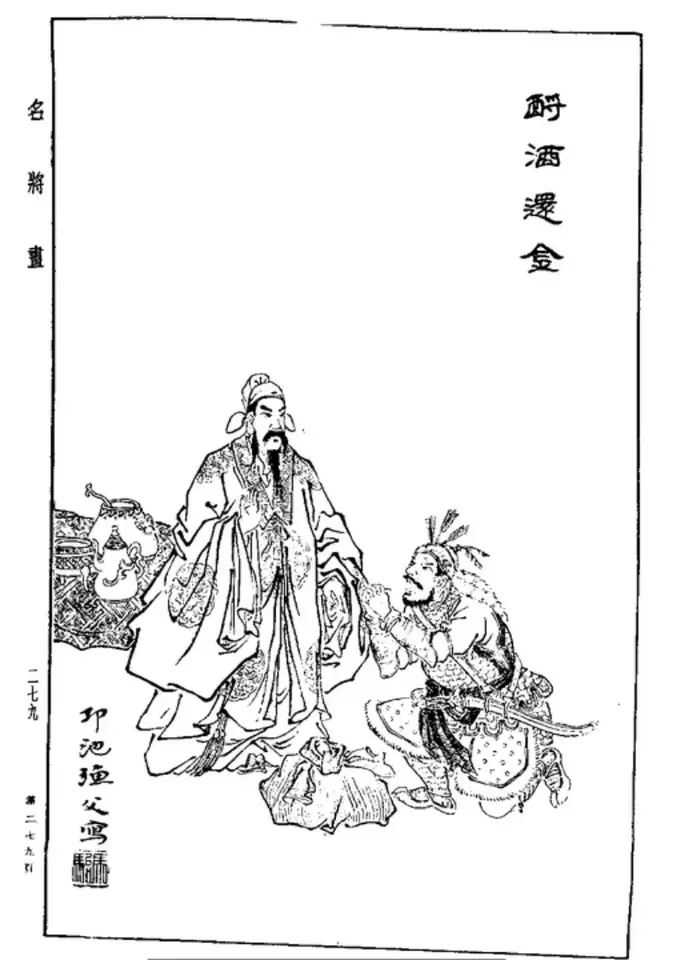
Upon securing the pass, Zhang collected dispersed soldiers while dispatching his daring officer Wang Wei into the Eastern Qiang camp to expose the futility of rebellion. Persuaded by Wang's appeals, Eastern Qiang leaders surrendered to the Han. The Han forces swiftly seized Qiuci, severing communication between the Xiongnu and Qiang. Surrendered Qiang warriors joined Zhang in counterattacking the Southern Xiongnu rebels, securing consecutive victories until Qoqu Bude surrendered in terror. In gratitude, the Eastern Qiang chieftains presented twenty fine horses, and the Xianling Qiang offered eight golden dining vessels. Zhang assembled his officers and tribal leaders, poured wine onto the ground, and swore: "Though horses be plentiful as sheep, none shall enter my pens; though gold be abundant as grain, none shall enter my bosom." He returned every gift on the spot, earning the profound veneration of all frontier tribes.
Lecturing under Siege and Frontier Calm
In 158 CE, Zhang was appointed General Protecting the Xiongnu, stationed at the Southern Chanyu's court in Meiji. That year, Xiutuge Xiongnu clans allied with Wuhuan and Xianbei cavalry to ravage nine frontier commanderies, burning the fortress gates of the General Who Crosses the Liao at Manbai. The invaders encamped at Chigang, directly facing Zhang's camp with watchfires in full view, throwing the Han troops into panic. In the face of mortal danger, Zhang sat calmly within his command tent, summoning his disciples and reciting classical Confucian scriptures at full voice. Reassured by their general's unruffled composure, the soldiers regained their morale.
Zhang then executed a brilliant strategic plan: he peacefully conciliated the Wuhuan tribes, while launching a surprise night cavalry raid against the Xiutuge rebels, killing their chieftain and accepting the surrender of the remainder. He then led the Southern Chanyu's forces to ambush and rout the invading Xianbei cavalry, securing peace along the northern frontier. In 159 CE, when Emperor Huan purged Liang Ji's faction, over three hundred former subordinates were imprisoned. Because Zhang had once served in Liang's office, he was dismissed and barred from office. While capital acquaintances shunned him, Middle Gentleman Huangfu Gui submitted seven courageous memorials to the throne praising his loyalty and military genius, ultimately securing his release.
Governance in Wuwei and Border Pacification
In 163 CE, Zhang was reinstated as Administrator of Wuwei. Deep-seated local superstition in Wuwei dictated that infants born in the second or fifth lunar months, or in the same month as their parents, were ominous portents and should be drowned. Zhang investigated the practice, educated the populace on parental humaneness, and instituted severe legal penalties against infanticide, completely extirpating the barbaric custom. Furthermore, he equalized labor levies and lightened taxes, prompting the grateful people of Wuwei to erect living shrines in his honor.
Recognizing his outstanding frontier administration, the court promoted Zhang to General Who Crosses the Liao, stationed at Manbai. Over several years, his vigilance pacified Youzhou and Bingzhou, enabling unimpeded merchant travel. In 166 CE, Zhang was summoned to Luoyang as Grand Minister of Agriculture. Learning of his departure, the Xianbei allied with Southern Xiongnu and Wuhuan forces to invade the nine commanderies, while instigating the Qiang to attack Zhangye and Jiuquan. Alarmed, the court reappointed Zhang General Protecting the Xiongnu, directing military operations across You, Bing, and Liang provinces. Hearing of Zhang's arrival, two hundred thousand Xiongnu and Wuhuan nomads surrendered en masse. Zhang executed the ringleaders and generously conciliated the rest, causing the Xianbei to retreat. In 167 CE, when Eastern Qiang raided the Sanfu region, Zhang dispatched Yin Duan and Dong Zhuo to crush them, taking ten thousand captives. In recognition of his merit, the throne permitted his family to relocate to Huayin in Hongnong.
The Ninth Month Coup and Moral Resistance
In 168 CE, Emperor Ling ascended the throne as a minor, with Empress Dowager Dou serving as regent and Grand Tutor Chen Fan alongside General-in-Chief Dou Wu directing the government. In the ninth month, their plot to eliminate corrupt eunuchs was leaked. Chief Eunuch Cao Jie forged imperial decrees, seized the child emperor and empress dowager, and summoned the newly returned Zhang Huan, falsely claiming that Dou Wu had rebelled. Ignorant of the court intrigue, Zhang led the northern army to surround Dou Wu, who was forced to commit suicide, while Chen Fan was murdered.
Following the coup, the eunuchs awarded Zhang high ministerial posts and ennobled him as a marquis. Learning that he had been duped into destroying the empire's loyal pillars, Zhang was seized with profound anguish and adamantly refused the marquisate. In 169 CE, when severe windstorms and hailstorms struck the capital, Zhang seized the omen to submit an impassioned memorial, asserting that celestial disasters stemmed from the unavenged murders of Dou Wu and Chen Fan, pleading for their exoneration, the release of imprisoned partisans, and proper filial honors for the confined empress dowager. Although Emperor Ling was moved, Cao Jie blocked the petition and transferred Zhang to Minister of Ceremonies. Later, when Zhang joined colleagues in nominating Li Ying and Wang Chang for the Three Excellencies, the eunuchs retaliated with heavy salary fines. When eunuch henchman Wang Yu demanded a recommendation, Zhang refused, prompting Wang to frame him for factionalism, leading to his dismissal.
Final Years and Scholarly Legacy
Earlier during his military career, Zhang had disagreed sharply with fellow commander Duan Jiong over Qiang pacification policies. When Duan later rose to power as Metropolitan Commandant, he plotted to banish Zhang back to Dunhuang to arrange his murder. Sensing the danger, Zhang addressed a moving letter to Duan, invoking classical loyalty and genuine sentiment. Deeply touched, Duan abandoned his vendetta. Retired in Huayin, Zhang shut his doors, teaching over a thousand disciples and completing his thirty-volume Critical Inquiries on the Documents, alongside twenty-four essays and memorials. When subordinate commander Dong Zhuo attempted to ingratiate himself by having his brother present a hundred bolts of fine silk, Zhang despised Dong's cruelty and firmly rejected the gift.
In 181 CE, Zhang passed away at home at age seventy-eight. On his deathbed, he instructed his sons to conduct an austere funeral without luxurious fabrics, coffins without iron nails, and an unadorned grave following natural human propriety. Frontier communities in Wuwei and Anding wept bitterly and maintained sacrifices at his shrines for generations. His eldest son Zhang Zhi became immortalized as the Sage of Cursive Script, and his second son Zhang Chang achieved equal renown as the Second Sage of Calligraphy.