Birth into Lineage
Born in Fanshui, displaying courage, intellect, and mastery of military classics.
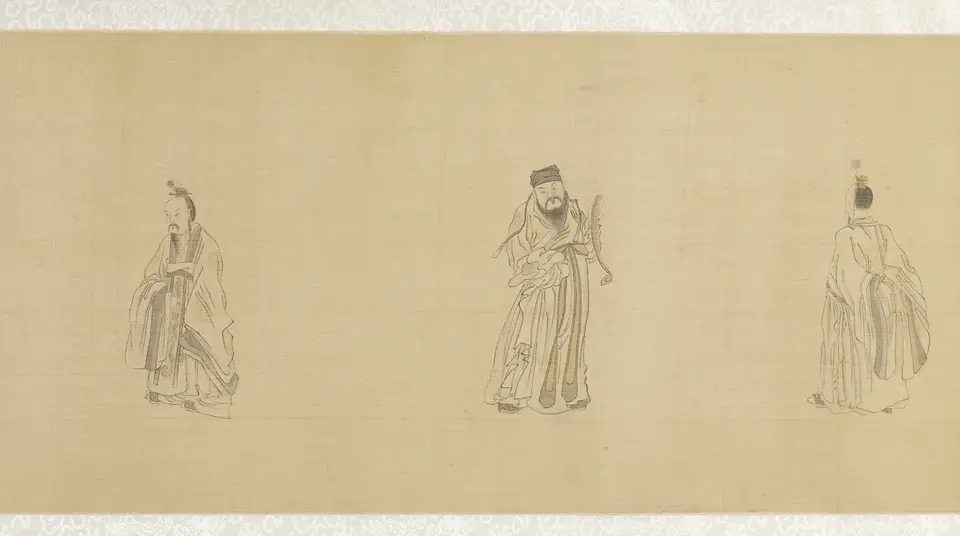
张公谨
Zhang Gongjin (张公谨, 594–632), courtesy name Hongshen (弘慎), was a native of Fanshui in Weizhou (modern Nanle County, Henan Province). He was a prominent founding general of the Tang Dynasty and one of the Twenty-Four Meritorious Officials of Lingyan Pavilion. He was the son of Zhang Shiru, Governor of Shenzhou. During the late Sui collapse, Zhang Gongjin initially served under the warlord Wang Shichong as Chief Clerk…
Zhang Gongjin (张公谨, 594–632), courtesy name Hongshen (弘慎), was a native of Fanshui in Weizhou (modern Nanle County, Henan Province). He was a prominent founding general of the Tang Dynasty and one of the Twenty-Four Meritorious Officials of Lingyan Pavilion. He was the son of Zhang Shiru, Governor of Shenzhou. During the late Sui collapse, Zhang Gongjin initially served under the warlord Wang Shichong as Chief Clerk of Weizhou. In 618, perceiving Wang Shichong's suspicious and tyrannical nature, Zhang Gongjin cooperated with Prefect Cui Shu to surrender the prefecture to the Tang court, being ennobled as Duke of Dingyuan Commandery. Following his submission, he was warmly recommended to Qin Prince Li Shimin by Li Jing and Xu Shiji. Appointed to the prince's mobile headquarters, Zhang Gongjin participated in campaigns against rebel forces in Hebei and Henan, earning Li Shimin's deep trust. In 626, when the succession struggle between Li Shimin and Crown Prince Li Jiancheng reached a critical juncture, Li Shimin hesitated to act and prepared to consult divination shells; Zhang Gongjin seized the tortoise shell, cast it to the floor, and urged decisive action. During the Xuanwu Gate Incident, when the Crown Prince's forces counterattacked in heavy numbers, Zhang Gongjin used his formidable strength to shut the heavy palace gate single-handedly, holding back enemy vanguards. In 629, during the northern expedition against the Eastern Turkic Khaganate, he served as deputy commander under Li Jing, presenting six strategic reasons for victory that led to the capture of Illig Qaghan. He passed away in office as Area Commander of Xiangzhou in 632 at the age of thirty-nine and was posthumously ennobled as Duke of Zou with the posthumous title Xiang.
Born in Fanshui, displaying courage, intellect, and mastery of military classics.
Surrendered Weizhou alongside Cui Shu to Tang, ennobled as Duke of Dingyuan Commandery.
Recommended by Li Jing and Xu Shiji, joining Li Shimin's staff in Hebei campaigns.
Shattered divination shells, sealed the Xuanwu Gate against rebel forces, appointed guard general.
Presented six strategic arguments to crush the Eastern Turkic Khaganate; served as deputy commander.
Participated in crushing the Turkic army in the Yin Mountains, ennobled as Duke of Zou.
Passed away in office as Area Commander of Xiangzhou at thirty-nine; Taizong mourned deeply.
Commemorated in Lingyan Pavilion, ranking eighteenth among the founding heroes.
Zhang Gongjin was born into an established family of officials, displaying a steady character combined with martial vigor from his youth. During the chaotic disintegration of the Sui Dynasty, Wang Shichong occupied Luoyang and appointed Zhang Gongjin Chief Clerk of Weizhou. Observing Wang Shichong's narrow-minded disposition and harsh treatment of subordinates, Zhang Gongjin concluded that his regime could not endure. In 618, he persuaded Prefect Cui Shu to surrender the strategic city to Tang founder Li Yuan. Pleased by this defection, the Tang court confirmed him as administrative officer and bestowed the title Duke of Dingyuan Commandery.
Shortly thereafter, while general Li Jing and Xu Shiji were conducting pacification operations in Henan, both recognized Zhang Gongjin's broad strategic vision and jointly recommended him to Qin Prince Li Shimin. Li Shimin immediately recruited him into his personal military staff. Over the subsequent campaigns to suppress the rebellions of Liu Heita and Xu Yuanlang in Hebei, Zhang Gongjin accompanied Li Shimin across extensive theaters of war, contributing astute tactical plans that repeatedly anticipated battlefield developments.
By the end of the Wude era, the rivalry between Crown Prince Li Jiancheng, Prince of Qi Li Yuanji, and Li Shimin had escalated into an acute crisis. The Crown Prince used his position to win over inner palace attendants and gradually stripped Li Shimin of his principal commanders, planning an assassination during an army send-off at Kunming Pond. Facing imminent destruction, advisors Zhangsun Wuji and Fang Xuanling urged Li Shimin to strike preemptively. Reluctant to initiate fraternal strife, Li Shimin hesitated and called for divination shells to forecast the outcome.
Entering the chamber at that critical instant, Zhang Gongjin stepped forward, snatched the divination tortoise shell from the attendants, and dashed it to the ground, admonishing: "Divination is used to resolve doubt. When one's survival is at stake and action is imperative, what doubt can there be? If the divination indicates ill fortune, can Your Highness simply cease to act?" Galvanized by this resolve, Li Shimin determined to carry out the preemptive strike.
On the morning of July 2, 626, the Xuanwu Gate Incident occurred. After Li Shimin shot Li Jiancheng, rebel generals Feng Li and Xue Wanche led several thousand furious palace troops to assault the Xuanwu Gate. In this desperate encounter, Zhang Gongjin leveraged his extraordinary physical strength to push shut the colossal wooden gates against the besiegers, severing the enemy vanguard from reinforcements and shielding the prince's inner followers until the assault collapsed. Following Li Shimin's accession as Emperor Taizong, Zhang Gongjin was promoted to General of the Left Wu Guard.
Following his accession, Emperor Taizong confronted frequent incursions by the Eastern Turkic Khaganate under Illig Qaghan. In 629, the court debated a massive northern campaign. Zhang Gongjin submitted his renowned six-point memorial outlining the decisive vulnerabilities of the nomads: first, Illig Qaghan was tyrannical and alienated his best warriors; second, subordinate tribes such as the Xueyantuo and Tuli had rebelled; third, Tuli Qaghan had secretly sued for Tang alliance; fourth, extreme blizzards had devastated their herds and exhausted their food; fifth, relentless military mobilization had sparked public fury; and sixth, Tang troops were disciplined and united in purpose.
Pleased by his clarity, Emperor Taizong appointed Zhang Gongjin Area Commander of Daizhou and Deputy Commander of the Dingxiang Route under Commander-in-Chief Li Jing. During the night assault on Dingxiang and the subsequent decisive confrontation in the Yin Mountains, Zhang Gongjin advanced with the main infantry columns, helping encircle and capture Illig Qaghan. For his distinguished contributions to the northern conquest, he was ennobled as the Duke of Zou.
In 632, Zhang Gongjin was reassigned as Area Commander of Xiangzhou. In his civil administration, he curbed powerful local lineages, alleviated legal burdens, and promoted water-control infrastructure. However, years of arduous campaigning had worn down his health, and he passed away in his government residence that same year at the age of thirty-nine. When the news reached Chang'an, Emperor Taizong wept bitterly outside the palace gates. When court ritualists cautioned that astrological taboos forbade the sovereign from weeping on that specific day, Taizong rebuked them: "Gongjin and I shared the duty of ruler and minister, along with the love of close kin; why speak of taboos?" In 643, Emperor Taizong commissioned court painter Yan Liben to depict twenty-four founding ministers in Lingyan Pavilion, with Zhang Gongjin honored in the eighteenth position.
FIGURES ASSOCIATED WITH THIS DYNASTY