Birth in Shanyin
Born on the twenty-fifth day of the eighth month into an illustrious scholarly lineage; great-grandfather was imperial valedictorian Zhang Yuanbian.
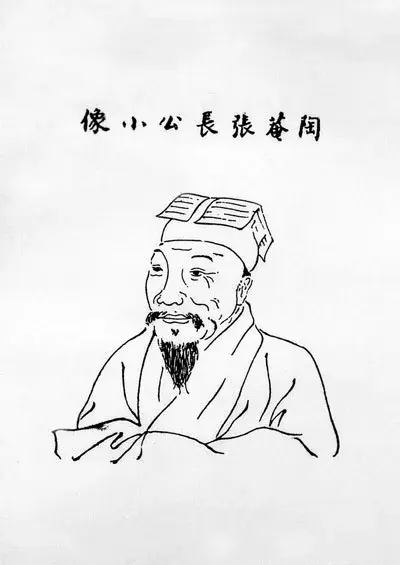
张岱
Zhang Dai (张岱, 1597–1689), courtesy names Zongzi and Shigong, art names Tao'an and Die'an Jushi (Hermit of Butterfly Hut), was a native of Shanyin in Shaoxing Prefecture (modern-day Yuecheng District, Shaoxing, Zhejiang Province). He was an eminent man of letters, historian, essayist, connoisseur, and theatrical aesthetician of the late Ming and early Qing transition, universally celebrated as the supreme master and…
Zhang Dai (张岱, 1597–1689), courtesy names Zongzi and Shigong, art names Tao'an and Die'an Jushi (Hermit of Butterfly Hut), was a native of Shanyin in Shaoxing Prefecture (modern-day Yuecheng District, Shaoxing, Zhejiang Province). He was an eminent man of letters, historian, essayist, connoisseur, and theatrical aesthetician of the late Ming and early Qing transition, universally celebrated as the supreme master and culmination of late Ming familiar essays (xiaopinwen). Born into an aristocratic family with three successive generations of metropolitan examination laureates—his great-grandfather Zhang Yuanbian having been the imperial palace examination valedictorian (zhuangyuan) in 1571—Zhang inherited immense wealth and a private library of tens of thousands of volumes. Endowed with precocious brilliance, he spent his first four decades immersed in refined literati connoisseurship, including lute performance, landscape architecture, theatrical troupes, and tea appreciation, famously describing his youth as that of an aristocratic dandy enthralled by earthly splendor. During the Chongzhen era, observing that official records of the Ming dynasty were riddled with factual omissions and partisan bias, Zhang resolved to compile an independent dynastic history, dedicating decades of meticulous research to his monumental biographical chronicle, the Book of the Stone Casket (Shi Gui Shu). Following the fall of Beijing in 1644 and the Qing conquest of Jiangnan, his luxurious existence evaporated. He served as Drafting Secretary to Southern Ming regent Prince of Lu Zhu Yihai in Shaoxing, counseling armed resistance. When Shaoxing fell, Zhang refused to serve the Qing conquerors, fleeing into the rugged mountains of Shengxian, Shanxi, and Xiangli, where he cut off his topknot and became an impoverished hermit. In extreme poverty, frequently facing outright starvation, Zhang channeled his grief into literature. He completed the sixty-three-volume Continuation of the Book of the Stone Casket covering Southern Ming resistance, while penning immortal essay collections including Dream Reminiscences of Tao'an (Tao'an Mengyi), Searching for West Lake in Dreams (Xihu Mengxun), and the encyclopedic compendium The Night Boat (Ye Hang Chuan). Viewing earthly vanity through the lens of memory, his crystalline prose captured the lost civilization of the Ming dynasty with peerless aesthetic grace.
Born on the twenty-fifth day of the eighth month into an illustrious scholarly lineage; great-grandfather was imperial valedictorian Zhang Yuanbian.
Traveled to Hangzhou with his grandfather; at age nine, matched couplets effortlessly with literary giant Chen Jiru, who hailed him as a young friend.
Studied ancient lute music under masters Wang Lü'e and Wang Benwu, proposing the aesthetic ideal of "returning to natural simplicity through mastery."
Traveled through Suzhou and Hangzhou, founding a cockfighting society and befriending masters Chen Hongshou, Qi Biaojia, and Wang Siren.
Distressed by the lack of an authentic dynastic record, commenced compiling the Book of the Stone Casket, gathering rare historical documents.
Sailed alone to the Mid-Lake Pavilion during a heavy blizzard, writing the immortal classical essay Watching the Snow from the Lake Pavilion.
Following the fall of Nanjing, joined the court of the Prince of Lu in Shaoxing as Drafting Secretary to supervise military planning.
When Shaoxing fell, retreated into the mountains of Shanxi, Shengxian, and Xiangli, cutting his hair and refusing to serve the Qing dynasty.
Penned his masterpiece Dream Reminiscences of Tao'an in a mountain hut, transforming memory into an immortal memorial for the lost Ming.
After fifty years of relentless research, finalized the Book of the Stone Casket and its sixty-three-volume sequel on the Southern Ming.
Died peacefully at Kuaiyuan Cottage outside Shaoxing at age ninety-three, leaving his famous self-composed epitaph.
Zhang Dai was born into an eminent gentry household in Shanyin County, Shaoxing Prefecture, Zhejiang. The Zhang lineage was renowned across Jiangnan for academic honors and civic prominence. His great-grandfather, Zhang Yuanbian, was the imperial palace examination valedictorian of 1571 and a prominent neo-Confucian philosopher; his grandfather, Zhang Rulin, was a Wanli-era jinshi who served as Vice Administration Commissioner of Jiangxi, collecting tens of thousands of rare classical books; his father, Zhang Yaofang, was a cultured gentleman renowned for his mastery of music, drama, and garden design. Born into such affluence, Zhang was immersed in classical scholarship, music, and antiquarian connoisseurship from childhood.
Suffering from a chronic chest ailment as an infant, Zhang was taken to the estate of his maternal grandfather, Tao Dashun, former governor in Guangdong and Guangxi. Tao collected several baskets of precious bezoar medicine, which Zhang consumed daily until the age of sixteen, finally curing his affliction. Endowed with a photographic memory and keen wit, Zhang demonstrated extraordinary linguistic agility. In 1602, at age six, while playing at the residence of his maternal uncle Tao Chongdao, his uncle pointed to a mural of celestial peaches and posed a verse line: "The celestial peaches within the painting cannot be plucked." Young Zhang replied instantly: "The blossom from the brush tip was dreamt into reality." Astonished by his talent, his relatives hailed him as a reincarnated Jiang Yan.
A few days later, while viewing lantern displays at the home of his grand-uncle Zhu Jingxun, a guest pointed to a courtyard lotus basin and offered: "Lotus leaves resemble broad plates yet fail to retain water." Zhang responded immediately: "Pomegranate blossoms burn like flames yet yield no smoke." In 1605, nine-year-old Zhang accompanied his grandfather to Hangzhou, meeting literary patriarch Chen Jiru. Learning of the boy's talent, Chen challenged him: "Li Bai rides a whale, fishing for the night moon by the Caishi River." Zhang matched without hesitation: "Lord Chen straddles a deer, soliciting autumn gifts across Qiantang County." Delighted by his boldness, Chen burst into laughter, declaring nine-year-old Zhang his "little friend," an encounter that made Zhang famous throughout Jiangnan.
In 1612, sixteen-year-old Zhang felt deeply disillusioned by the rigid constraints of civil examination prose, climbing Mount Guiji to pray for guidance at the Southern Shrine. The following spring, visiting the celebrated Orchid Pavilion, he was disappointed by its decayed condition compared with ancient paintings. In an epistle to friend Bao Yanjie, he challenged Su Shi's classical aesthetic doctrine that "poetry contains painting, and painting contains poetry," asserting boldly: "If one paints merely to depict a poetic line, the painting cannot be exquisite; if one writes poetry merely to craft painterly imagery, the verse will never be sublime."
During this period, Zhang formed intimate friendships with young literati Lu Qu'an and Zhou Maogu. In the summer of 1614, while walking past the dilapidated Banzhu Nunnery in Shanyin, he discovered an abandoned well choked with weeds. Testing the crystalline water, he found it sweet and uniquely suited for brewing tea. On the stone well curb, he discovered the ancient characters "Xi Quan" (Purification Spring) engraved in calligraphy resembling Wang Xizhi's hand. This discovery sparked his lifelong dedication to tea connoisseurship.
In musical studies, Zhang began learning the seven-stringed guqin in 1616 under master Wang Lü'e, mastering complex pieces including Dialogue between Fisherman and Woodcutter and Liezi Riding the Wind. Two years later, he studied under national virtuoso Wang Benwu, learning over twenty major classical suites within six months. In an essay to friend He Zixiang, Zhang formulated his famous performance philosophy of "returning to natural simplicity through complete technical mastery," arguing that true artistry requires transcending mechanical skill to express effortless naturalness. In 1620, his mother, Lady Tao, passed away; shortly afterward, his father fell critically ill, saved only by herbalist Wu Zhuting's prescription. Deeply moved, Zhang began collecting verified folk prescriptions, compiling his medical work Pocket Formulations of Tao'an over three decades.
During the Tianqi and early Chongzhen eras, Zhang lived the idyllic life of a wealthy late Ming intellectual aristocrat. In his Self-Composed Epitaph, he penned an unsparing and vivid self-portrait: "In my youth I was an aristocratic dandy enthralled by luxury. I loved fine dwellings, fair maidens, handsome youths, elegant garments, gourmet cuisine, spirited steeds, festive lanterns, fireworks, theatrical troupes, instrumental concerts, rare antiques, flowers, and birds; moreover, I was obsessed with tea connoisseurship and insatiable in bibliophilia, laboring half a lifetime only to find all turned to a dream."
In 1622, Zhang founded a cockfighting society beneath Wolong Mountain in Shanyin, engaging in competitive matches with relatives and friends. However, upon reading in an unofficial history that Emperor Xuanzong of Tang had neglected statecraft due to cockfighting, Zhang felt deep remorse, immediately disbanding the club. In 1623, admiring the rebellious verse of fellow townsman Xu Wei, Zhang collected scattered manuscripts to publish Uncollected Works of Xu Wenchang. Revered elder Wang Siren counseled him to prioritize quality over volume, editing the collection and contributing a laudatory preface.
In 1624, Zhang resided for seven months with Chen Hongshou and other literati at the Goulou Hermitage beside West Lake. Discovering a stone effigy of Yanglian Zhenjia—a Tibetan monk who had desecrated Song imperial tombs—Zhang took up an iron hammer and smashed the head to pieces, casting it into a ravine in moral indignation.
In tea connoisseurship, Zhang became the foremost authority in eastern China. Utilizing water from the Purification Spring, he refined roasting methods, blending local Rishu green tea with jasmine blossoms to create the famed "Lanxue Tea" (Orchid Snow Tea). This creation captivated Jiangnan markets, reviving the ancient reputation of regional teas. Wandering across West Lake, staging impromptu plays at Jinshan Temple at midnight, or boiling tea alone amid winter blizzards, Zhang embodied the height of late Ming literati romanticism.
Late Ming urban society witnessed an unprecedented flourishing of theatrical arts, with private household troupes serving as a paramount badge of cultural sophistication. Passionately devoted to musical metrics, Zhang collected Yuan and Ming opera scripts and maintained his own household acting troupe. Alongside Chen Hongshou, Qi Biaojia, and Wang Siren, he refined theatrical performances. In the autumn of 1629, sailing past Zhenjiang at midnight, Zhang ascended Jinshan Temple with his actors, illuminating the sanctuary with torches and staging the Water Margin opera Li Kui Bears the Thorn amid thunderous gongs and drums, astonishing sleeping monks who mistook them for celestial beings.
During the Chongzhen era, Zhang's troupe was celebrated for its disciplined ensemble, sumptuous costumes, and precise lyrical diction. During seasonal festivals in Shaoxing and Hangzhou, his troupe performed celebrated opera scenes such as Story of the Startled Swan, mesmerizing thousands of spectators.
In landscape design, Zhang created the celebrated Kuaiyuan (Pleasure Garden) in 1634 beside Xiangjia Pond outside Shaoxing. Diverting canal waters to form ponds, he raised artificial rockeries, built verandas, and planted hundreds of wutong trees, bamboo groves, and winter plums, creating the famed "Twelve Views of Kuaiyuan". Within Kuaiyuan, Zhang wrote, cataloged rare inkstones, and authored Ancient Lore of Kuaiyuan in twelve volumes, transforming the garden into a sanctuary for southern intellectuals.
Despite his artistic brilliance, Zhang repeatedly stumbled in the civil service examinations. Sitting for the provincial examinations in 1634 and 1636, he was rejected by examiners who favored rigid eight-legged orthodoxies. Disgusted by the mechanical pedantry of the examination hall, Zhang made the resolute decision to abandon the civil service path entirely, dedicating his life to historical scholarship.
Zhang observed that official dynastic compilations were distorted by eunuch factions and court censorship, while private histories were marred by hearsay. In 1628, at age thirty-one, Zhang established an ambitious goal: to compile an independent, authentic biographical history of the Ming dynasty across its three centuries of existence, naming the project Book of the Stone Casket (Shi Gui Shu) after Sima Qian's archival storehouse.
Zhang expended massive personal funds to purchase imperial administrative records, daily court diaries, imperial edicts, and private memoirs. He established an archive in Kuaiyuan, employing calligraphers to transcribe rare documents in libraries across Nanjing, Hangzhou, and Suzhou. Scholars including Qi Biaojia and Wang Siren loaned him rare family manuscripts. Working year after year, Zhang sought to uphold the unvarnished historiographical integrity of ancient chroniclers.
In the third month of 1644, Beijing fell to peasant insurgents, and the Chongzhen Emperor committed suicide. The following year, Qing armies swept south, capturing Nanjing. The imposition of the hair-cutting edict ignited widespread rebellion across Zhejiang.
In the sixth month of 1645, Ming imperial prince Zhu Yihai, Prince of Lu, established a loyalist administration in Shaoxing. Driven by patriotic duty, Zhang emerged from Kuaiyuan to join the southern court. Revered for his literary standing and institutional expertise, Zhang was named Drafting Secretary in the prince's administration, participating in secret military councils.
Zhang served with devotion, advising the prince to discipline regional armies, alleviate civilian burdens, audit grain stores, and coordinate water defenses along the Qiantang River. However, the Southern Ming court was crippled by factional infighting, while military commanders such as Fang Guo'an were corrupt and rebellious. Disillusioned by administrative paralysis, Zhang realized that defeat was unavoidable.
In the sixth month of 1646, Qing armies forced the crossing of the Qiantang River. Fang Guo'an surrendered without a fight, Shaoxing fell, and the Prince of Lu fled out to sea. Qing troops occupied the prefectures, hunting down Ming loyalists and sacking private estates.
Refusing to submit or shave his head, Zhang took his family and fled into the rugged mountains of Shengxian, Shanxi, and Xiangli. The immense wealth accumulated by his family over three generations, along with his beloved Kuaiyuan garden and tens of thousands of rare books, was looted and burned to ash.
In the remote village of Xiangli, Zhang occupied a dilapidated earthen hut, cut off his topknot, and adopted the life of a Buddhist recluse styled "Die'an". His family lacked clothing and survived on wild herbs and boiled pine needles. In the preface to Dream Reminiscences of Tao'an, Zhang lamented: "The grain jars were frequently empty, and no fire could be lit. Only then did I realize that past opulence was truly as tasteless as wax; today's destitution revealed the working of ancient karma." Reduced to gathering firewood in rags, Zhang nonetheless steadfastly rejected gifts and official summonses from Qing provincial governors, preserving his unyielding integrity.
Surrounded by misery in his mountain retreat, historical writing remained Zhang's sole spiritual refuge. Convinced that the brilliant civilization of the Ming dynasty was being obliterated by conquest, he resolved to record its cultural essence for posterity.
Working under the flickering light of an oil lamp during winter nights, Zhang drew upon his memory to compose Dream Reminiscences of Tao'an around 1655. In this collection, he recorded scenic landscapes, teahouses, opera troupes, urban artisans, seasonal festivals, and deceased companions. Beneath his sparkling prose lay deep sorrow over dynastic ruin, achieving an ethereal synthesis of memory and history.
Concurrently, Zhang dedicated himself to completing the Book of the Stone Casket. Defying the mortal peril of Qing literary inquisitions, he ventured into mountain hermitages to interview surviving Ming officers, scholars, and soldiers. Expanding upon his original two-hundred-and-twenty-volume manuscript, he authored the sixty-three-volume Continuation of the Book of the Stone Casket, chronicling the heroic resistance of the Hongguang, Longwu, Prince of Lu, and Yongli regimes, providing an indispensable eyewitness history of the Southern Ming.
In his final years, Zhang returned to the ruins of Kuaiyuan outside Shaoxing. Erecting a thatched cottage amid the rubble, he adopted the sobriquet "Die'an Jushi", living as an impoverished elder. During this final phase, he compiled the monumental twenty-volume cultural encyclopedia The Night Boat (Ye Hang Chuan), alongside collections such as Searching for West Lake in Dreams, Ancient Lore of Kuaiyuan, and Langhuan Literary Collection.
In 1679, the Qing court inaugurated the special Boxue Hongci imperial examinations and launched the official compilation of the History of Ming. Qing provincial governors repeatedly visited Zhang's cottage with gifts, entreating the venerable master to travel to Beijing to direct the historical bureau. The octogenarian scholar adamantly refused, declaring himself an old invalid of a fallen dynasty who wished only to join his deceased sovereign in the grave.
Anticipating his demise, Zhang composed his celebrated Self-Composed Epitaph, viewing his turbulent life with humor and detachment: "Did my ambitions come to naught? Did wealth and honor prove a dream? What did I owe in life? Where shall I return in death?" In 1689, this monumental literary figure passed away peacefully in his Kuaiyuan cottage at the age of ninety-three, leaving a legacy of personal integrity and literary brilliance that concluded the late Ming cultural era.
Zhang Dai occupies a monumental position in the history of classical Chinese prose, recognized as the peerless summit and ultimate master of late Ming familiar essays (xiaopinwen).
Prior to the late sixteenth century, classical prose was constrained by rigid archaism imitating Qin, Han, and High Tang models. Although the Gong'an and Jingling schools advocated expressing innate sensibility, their compositions frequently drifted into flippant brevity or obscure eccentricity. Zhang synthesized the finest qualities of classical masters, integrating the philosophical equanimity of Su Shi, the wild brilliance of Xu Wei, and the unvarnished vitality of late Ming vernacular prose to forge an incomparable literary voice.
His masterpieces, Dream Reminiscences of Tao'an in eight volumes and Searching for West Lake in Dreams in five volumes, represent twin summits of Chinese essayistic art. Celebrated essays such as Watching the Snow from the Lake Pavilion, Liu Jingting the Storyteller, Night Opera at Jinshan, and The Fifteenth of the Seventh Month at West Lake feature crystalline prose that evokes landscapes with exquisite minimalism. His descriptions of the snowy lake—where sky, cloud, mountain, and water merge into pure white, punctuated only by the faint streak of the causeway and the speck of his boat—achieved a standard of aesthetic perfection compared by modern scholars to the finest Song dynasty monochrome paintings.
Beyond his literary renown, Zhang was a profound historian endowed with the fearless conscience of ancient annalists. His two-hundred-and-twenty-volume Book of the Stone Casket and its sixty-three-volume sequel, compiled over half a century of solitary labor, represent the most comprehensive and reliable private history of the Ming dynasty.
Refusing to accept the political distortions and censorship of the official Qing compilation bureaus, Zhang embraced the responsibility of preserving authentic historical memory. In the Book of the Stone Casket, he expanded traditional historiographical categories, creating specialized biographical treatises for upright officials, recluses, righteous knights, literati, artisans, and performers, presenting a multidimensional portrait of Ming civilization.
In the Continuation of the Book of the Stone Casket, compiled under threat of execution, he preserved an unvarnished record of the armed resistance mounted by Southern Ming regimes against Qing forces. His accounts were based on rigorous cross-examination of surviving veterans and eyewitness diaries, praised by modern thinker Liang Qichao as surpassing the official History of Ming in historical veracity.
Zhang was an encyclopedic scholar whose intellectual curiosity embraced all branches of traditional knowledge. His twenty-volume compendium, The Night Boat (Ye Hang Chuan), stands as one of the most celebrated and accessible cultural encyclopedias in Chinese history.
Divided into twenty major categories—spanning astronomy, geography, historical figures, lineage, anatomy, costume, utensils, weaponry, commerce, flora and fauna, literature, and history—the text gathered thousands of classical anecdotes, scientific observations, and institutional explanations. The title was derived from the convivial atmosphere of Jiangnan overnight passenger boats, where travelers of diverse backgrounds swapped stories and tested each other's erudition.
In his witty preface, Zhang recounted the humorous contest between an illiterate monk and a pompous examination graduate, illustrating the importance of broad cultural literacy. Characterized by lucid prose and vast citation, The Night Boat eliminated pedantic scholasticism to popularize classical knowledge, serving as an invaluable source for the study of late Ming material culture, social customs, and intellectual life.
In material culture and lifestyle aesthetics, Zhang formulated influential standards that refined the performing arts and the culture of tea appreciation.
In tea connoisseurship, Zhang studied ancient treatises by Lu Yu and Cai Xiang, conducting experimental research on roasting temperatures, brewing methods, and water chemistry. By refining pan-firing techniques and blending local Rishu leaves with fresh jasmine, he invented the renowned "Lanxue Tea". His legendary encounter with Nanjing tea master Min Wenshui, where Zhang accurately deduced the mountain origins of the water and identified subtle well-water mixtures purely by palate, became an enduring legend of Chinese gastronomic connoisseurship.
In theatrical performance, Zhang adapted opera scripts and trained household acting troupes according to aesthetic principles of emotional authenticity, vocal precision, and unvarnished naturalism. Rejecting vulgar stage ostentation, he championed psychological nuance and dignified movement, exercising lasting influence on the golden age of Jiangnan Kunqu opera.
Zhang Dai's greatest cultural contribution lay in his spiritual defiance against historical erasure, preserving the soul of late Ming civilization through the medium of literary memory.
Following the Manchu conquest, many intellectuals capitulated to imperial patronage. Zhang chose mountain poverty and hunger over submission, preserving his Ming identity. Refusing to allow the memory of his civilization to be extinguished, he deployed his brush to immortalize the scenic landscapes, elegant pastimes, festivals, and human warmth of the Ming era.
By transforming personal memory into a timeless literary monument, Zhang elevated historical remembrance above political annihilation. His late masterpiece, Self-Composed Epitaph, synthesized Buddhist detachment with Confucian fidelity, leaving a luminous beacon of cultural resilience that continues to illuminate Chinese cultural consciousness across centuries.
FIGURES ASSOCIATED WITH THIS DYNASTY