Birth in Zhending
Born into a Semu lineage of Persian descent in Zhending; demonstrated remarkable aptitude for classical scholarship.
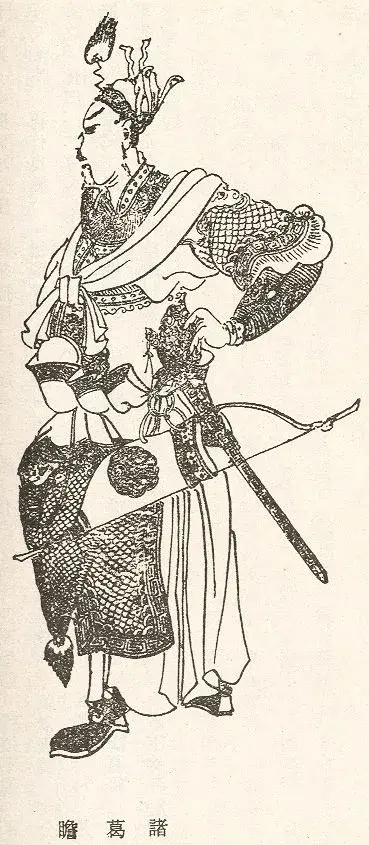
瞻思
Zhan Si (瞻思, 1278–1351), courtesy name Dezhi and art name Tongchun, was a descendant of immigrants from Dashi (modern Iran) and an outstanding statesman, Confucian classical scholar, and hydraulic engineer during the Yuan dynasty. His grandfather Luqun relocated eastward with Mongol armies, eventually settling in Zhending (modern Zhengding, Hebei). Showing precocious intellect from youth, Zhan Si could recite over a thousand…
Zhan Si (瞻思, 1278–1351), courtesy name Dezhi and art name Tongchun, was a descendant of immigrants from Dashi (modern Iran) and an outstanding statesman, Confucian classical scholar, and hydraulic engineer during the Yuan dynasty. His grandfather Luqun relocated eastward with Mongol armies, eventually settling in Zhending (modern Zhengding, Hebei). Showing precocious intellect from youth, Zhan Si could recite over a thousand characters from Confucian classics daily by age nine. In his youth, he studied under Wang Silian, a premier disciple of Yuan Haowen, thoroughly mastering classical Neo-Confucian thought and exemplifying the deep cultural integration of Semu literati into Chinese civilization. Zhan Si served successively as Compiler of the Hanlin Academy, Investigating Censor of the Shaanxi Regional Censorate, Assistant Commissioner of the West and East Zhejiang Surveillance Offices, and Surveillance Vice Commissioner of Jiangdong. Throughout his administrative career, he was celebrated for his incorruptibility and rigorous enforcement of justice. While serving in Shaanxi, he submitted the renowned Ten-Point Memorial on State Affairs, advocating administrative reforms, the restoration of civil service examinations, and legal uniformity. In Zhejiang, he purged corrupt officials, reclaimed tax-evading temple dependents, and reversed numerous wrongful capital verdicts, earning praise from Attendant Censor Zhao Chengqing as a blessing for the realm. In scientific and academic domains, Zhan Si was broadly accomplished in astronomy, mathematics, geography, and hydraulic engineering. He compiled the seminal hydraulic treatise Comprehensive Discussion of River Defense (Hefang Tongyi), revising and expanding Song and Jin manuals. He pioneered mathematical quantification and applied algebraic methods (tianyuanshu) to river levee calculations, exerting an enduring influence on Yellow River flood control. Passing away in 1351, he was posthumously enfeoffed as Marquis of Hengshan with the title Wenxiao.
Born into a Semu lineage of Persian descent in Zhending; demonstrated remarkable aptitude for classical scholarship.
Studied under the eminent Neo-Confucian scholar Wang Silian, mastering Confucian statecraft and historical texts.
When Emperor Renzong restored the imperial examinations, companions urged him to compete, but he chose scholarly seclusion.
Summoned as a venerable recluse to Shangdu; disgusted by the overbearing regent Daulat Shah, he declined official post on the pretext of filial obligations.
Appointed Hanlin Compiler; presented his treatise Mind Method of Emperors (Diwang Xinfa) to Emperor Wenzong and was appointed to help compile Compendium of Statecraft (Jingshi Dadian).
Commissioned as Investigating Censor of the Shaanxi Regional Censorate; submitted the Ten-Point Memorial and established the Shaoxi Pacification Commission for displaced refugees.
Advanced through surveillance posts in Zhejiang to become Surveillance Vice Commissioner of Jiangdong, rectifying local governance and clearing judicial backlogs.
Passed away peacefully at his home in Zhending at age seventy-four; posthumously awarded the rank of Minister of Rites and the posthumous name Wenxiao.
Zhan Si traced his paternal ancestry to Dashi (the medieval Persian world). His grandfather Luqun migrated eastward in the train of the Mongol armies and served under Ogodei Khan as Commissioner of the Salt and Commercial Tax Monopoly for Zhending and Jinan, eventually making Zhending (modern Zhengding, Hebei) the ancestral seat. Zhan Si's father, Wozhi, harbored deep respect for Confucian learning, refusing official appointments to live as a private scholar.
Endowed with exceptional memory, Zhan Si was able to recite thousands of words of classical scriptures each day by the age of nine. Reaching adulthood, he journeyed to Huolu to study under Wang Silian, Chief Academician of the Hanlin Academy and the foremost disciple of Jin-Yuan literary master Yuan Haowen. Under Wang's direction, Zhan Si gained thorough command over Neo-Confucian philosophy. In 1314, when Emperor Renzong reinstated the imperial civil examination system, contemporaries urged Zhan Si to sit for the tests, but he declined with a smile, preferring to immerse himself in classical inquiry and scientific research.
Zhan Si's reputation for erudition and integrity spread across northern China, prompting Attendant Censor Guo Sizhen, Chief Academician Liu Geng, and Vice Chancellor Wang Shixi to recommend him to court. In 1326, the court summoned him as an eminent recluse to the summer capital Shangdu, where Emperor Yesun Temur granted him an imperial audience at Longhutai. At that juncture, the Semu regent Daulat Shah wielded despotic power, with many opportunistic scholars currying his favor. Zhan Si refused all contact with Daulat Shah's clique and repeatedly declined appointments, returning home under the pretext of attending to his aged grandfather.
In 1330, Emperor Wenzong summoned Zhan Si as Hanlin Compiler and received him at the Kuizhang Pavilion. Zhan Si presented his original treatise Mind Method of Emperors, detailing moral self-cultivation and statecraft, which pleased the emperor. Zhan Si was subsequently appointed to assist in compiling the grand state compendium Compendium of Statecraft (Jingshi Dadian). However, observing that many participating scholars compromised historical truth to flatter court favorites, Zhan Si resigned on account of his mother's frail health. In 1333, he was appointed Professor in the National Academy, but due to his mother's death, he strictly observed the three-year mourning period and did not assume office.
In 1336, Zhan Si was appointed Investigating Censor of the Shaanxi Regional Censorate. Serving with unbending integrity, he submitted his celebrated confidential Ten-Point Memorial to the throne. The document detailed essential administrative reforms: honoring dynastic founder precedents, centralizing authority, disciplining the imperial nobility, treating elder statesmen with respect, exercising restraint in granting offices, opening channels for remonstrance, resuming civil examinations, trimming unnecessary palace guards, unifying penal statutes, and easing draconian prohibitions. Attendant Censor Zhao Chengqing read the memorial and praised it as a blessing for the entire realm.
While touring Shaanxi, Zhan Si addressed the issue of destitute refugees who had gathered in the old Song territory of Shaoxi (in modern Sichuan) to illicitly boil salt for survival. When local commanders advocated violent repression, Zhan Si intervened, persuading the central court to create the Shaoxi Pacification Commission to register and settle the settlers peacefully. When a kinsman serving in the Shaanxi provincial administration violated the law through corrupt embezzlement, Zhan Si investigated the case impartially, forcing the offending relative to flee under cover of night. Even after the imperial court issued a general pardon for the kinsman, Zhan Si insistently punished the corrupt retainers who had facilitated the misconduct.
Zhan Si subsequently served as Assistant Surveillance Commissioner in West and East Zhejiang, before being promoted to Surveillance Vice Commissioner of Jiangdong. Touring circuits in southern China, he prosecuted corrupt grandees, including salt transport commissioners, maritime fleet commanders, and officials of the Commission for Buddhist Affairs, restoring bureaucratic discipline across the region. Discovering that wealthy Buddhist monasteries in Western Zhejiang shielded over 2,700 able-bodied commoners from state taxation and labor corvée under the guise of religious novices, Zhan Si successfully memorialized the throne to order their immediate return to secular household registries, which was subsequently codified into imperial law.
Throughout his tenures in regional surveillance offices, Zhan Si regarded redressing miscarriages of justice as his highest moral obligation. He scrutinized legal dockets with sharp analytical skill, overturning numerous erroneous capital sentences while ensuring that genuinely guilty parties were held accountable. In the controversial murder case of the commoner woman Song E in Xianning, when colleagues sought to commute the verdict out of superstitious notions of karmic benevolence, Zhan Si proved that she was a willing co-conspirator, persuading the Ministry of Justice to uphold legal rectitude.
In 1350, the court summoned him to serve as Vice Director of the Palace Library to advise on Yellow River conservancy, but Zhan Si declined due to advanced age and failing health. He passed away at his home in Zhending in 1351 at age seventy-four. In honor of his distinguished service and moral integrity, the court posthumously bestowed upon him the rank of Minister of Rites, enfeoffed him as Marquis of Hengshan, and granted the posthumous title Wenxiao.
Throughout his tenures as investigating censor and surveillance vice commissioner, Zhan Si exhibited exceptional political courage and structural insight. His Ten-Point Memorial addressed the administrative decay of the mid-Yuan dynasty, urging the reinstatement of merit-based examinations, the containment of aristocratic abuses, and judicial impartiality. During the political ascendancy of the dictator Bayan, Zhan Si fearlessly submitted critiques of bureaucratic overreach.
In southeastern circuits, he checked the economic privileges of religious institutions, rectified the maritime transport and state salt monopolies, and suppressed predatory local magnates. Renowned for his judicial acumen, he cleared dozens of wrongful capital convictions, earning widespread acclaim among the populace of Jiangnan as a benevolent and incorruptible magistrate.
Zhan Si occupies a prominent place in the history of Chinese science and technology due to his groundbreaking hydraulic work Comprehensive Discussion of River Defense (Hefang Tongyi). Taking earlier hydrological manuals by Song scholar Shen Li and Jin Directorate of Waterways officials as a baseline, Zhan Si conducted extensive field surveys and integrated advanced mathematical techniques to synthesize an empirical system for Yellow River management.
He introduced rigorous quantification into water conservancy, utilizing algebraic polynomial calculations (tianyuanshu) to compute earthwork volumes, levee gradient loads, and materials storage for seasonal flood abatement. His work transformed traditional flood defense from an intuitive art into a disciplined engineering science. During the Ming dynasty, renowned river conservancy commissioners like Pan Jixun drew heavily from Zhan Si's technical theorems, honoring the volume as an indispensable manual of river defense.
As a member of a Sinicized Persian lineage, Zhan Si attained deep mastery in classical philosophy, history, geography, mathematics, and astronomy. He authored Doubts on the Four Books (Sishu Queyi), Inquiries into the Five Classics (Wujing Siwen), and Chart of the Waxing and Waning of Odd, Even, Yin, and Yang, articulating the practical statecraft dimensions of Neo-Confucianism.
In geography and historical documentation, Zhan Si authored Gazetteer of Zhending Customs, Continuation of the Dongyang Annals, Illustrated Classic of Western Countries, Biographies of Extraordinary Men of the Western Regions, Annals of Jin Emperor Aizong, Biographies of Worthies of the Zhengda Era, and a thirty-volume literary collection. Through his accounts of Central and Western Asian geography, he facilitated mutual understanding between East Asia and the Islamic world, standing as a pivotal cultural bridge in the multi-ethnic Yuan empire.
FIGURES ASSOCIATED WITH THIS DYNASTY