First Oath of Anda
Exchanged sheep knucklebones with Temüjin on the frozen Onon River, swearing their initial oath of brotherhood.
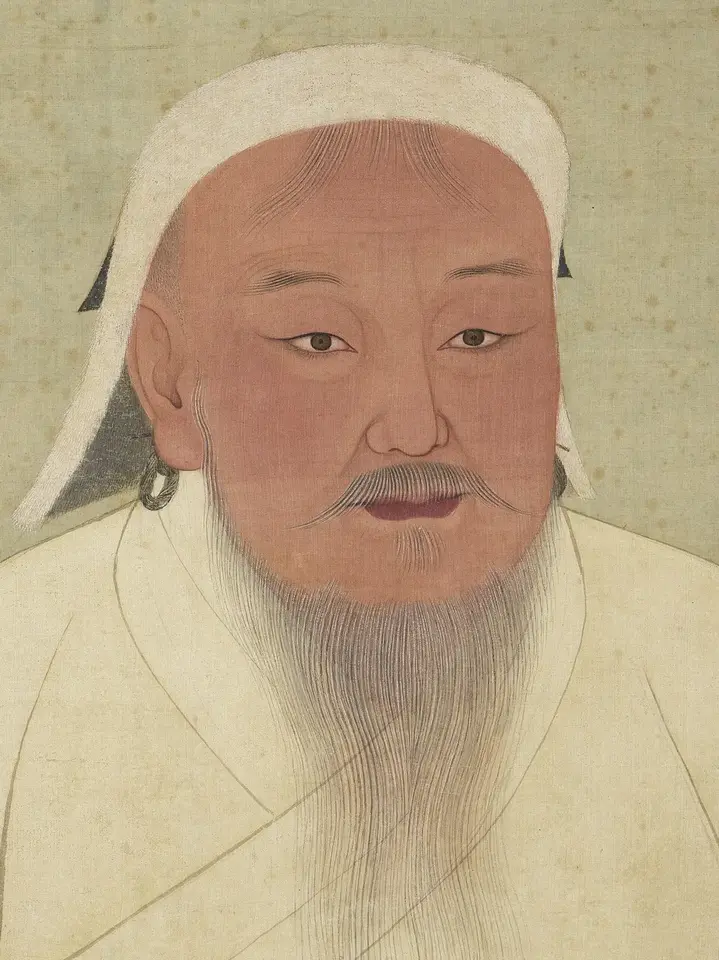
札木合
Jamuqa (札木合, ?–1205), a descendant of the legendary Mongol ancestor Bodonchar, was the charismatic chieftain of the Jadaran (Jajirad) tribe among the Nirun Mongols, pasturing along the banks of the Onon River. Renowned for his martial prowess, eloquence, and tactical mastery, Jamuqa was a formidable steppe leader and the blood brother (anda) and principal rival of Temüjin (later Genghis Khan). In their youth, Jamuqa and…
Jamuqa (札木合, ?–1205), a descendant of the legendary Mongol ancestor Bodonchar, was the charismatic chieftain of the Jadaran (Jajirad) tribe among the Nirun Mongols, pasturing along the banks of the Onon River. Renowned for his martial prowess, eloquence, and tactical mastery, Jamuqa was a formidable steppe leader and the blood brother (anda) and principal rival of Temüjin (later Genghis Khan). In their youth, Jamuqa and Temüjin swore the sacred oath of anda on three separate occasions, forging a deep fraternal alliance. In 1184, when the Merkit tribe raided Burkhan Khaldun and abducted Temüjin's bride Börte, Jamuqa mobilized the entire Jadaran cavalry and forged a coalition with Toghrul (Ong Khan) of the Keraites, executing a brilliant long-range flanking raid across the Selenga River that crushed the Merkits, liberated Börte, and restored the dispersed Khamag Mongol clans. The two leaders camped together at the Khorkhonagh Valley for a year and a half. However, structural tensions between Jamuqa's traditional clan-aristocratic principles and Temüjin's meritocratic governance led to an ideological and political rupture. Following the death of Jamuqa's brother Taichar during a horse raid, Jamuqa rallied thirteen allied tribes totaling thirty thousand horsemen to defeat Temüjin at Dalan Balzhut (the Battle of the Thirteen Wings) in 1190. However, Jamuqa's brutal execution of seventy Chinos prisoners by boiling them alive alienated potential allies, prompting influential nomadic clans to defect to Temüjin. In 1201, eleven hostile steppe tribes convened at the Ergune River to elect Jamuqa as "Gurkhan" (Universal Khan). In the climactic Battle of Köiten, Temüjin and Ong Khan decisively crushed Jamuqa's coalition. After shifting alliances between Ong Khan and Tayang Khan of the Naimans, Jamuqa became a fugitive following the 1204 Battle of Chakirmaut. In 1205, betrayed by five retainers, he was brought before Temüjin. When Genghis Khan offered reconciliation, Jamuqa asserted that "there cannot be two suns in the sky" and requested an honorable "death without shedding blood." Genghis Khan granted his final wish, executing him by breaking his spine and burying him with princely honors.
Exchanged sheep knucklebones with Temüjin on the frozen Onon River, swearing their initial oath of brotherhood.
Commanded a coalition alongside Toghrul to crush the Merkit tribe, rescuing Börte and restoring Temüjin's following.
Disagreed over seasonal pasture routes at the Khorkhonagh Valley, precipitating a permanent political division.
Marshaled thirty thousand allied cavalry to defeat Temüjin at Dalan Balzhut; boiled seventy Chinos captives alive.
Elected Gurkhan by an eleven-tribe confederation at the Ergune River; defeated by Temüjin at the Battle of Köiten.
Sowed discord between Ong Khan's son Senggum and Temüjin; fled to the Naimans following the destruction of the Keraites.
Served as military counselor to Tayang Khan; abandoned the field as Temüjin crushed the Naimans, fleeing into the Tangnu wilderness.
Betrayed by five servants; declined Temüjin's pardon and was granted an honorable bloodless death, interred on a high ridge.
Jamuqa belonged to the prestigious Jadaran clan of the Nirun Mongols, claiming descent from Bodonchar Munkhag, the mythical progenitor of the Borjigin and Jadaran lineages. Endowed with imposing physical stature, fiery eloquence, and an instinctive grasp of cavalry maneuvers, Jamuqa commanded immense respect among the younger steppe aristocracy along the Onon and Kherlen river basins.
During early adolescence, Jamuqa and Temüjin formed an intimate bond. Playing upon the frozen ice of the Onon River, the two youths exchanged sheep knucklebones (shagai) and copper-tipped arrows, swearing the sacred steppe oath of anda three times, pledging mutual fidelity unto death.
In 1184, Temüjin faced complete ruin when the Three Merkits launched a devastating punitive raid on Mount Burkhan Khaldun, capturing his young bride Börte. Bereft of soldiers, Temüjin dispatched his brother Qasar to appeal to Jamuqa. Honoring their oath, Jamuqa mobilized the entire Jadaran cavalry and dispatched envoys to enlist the support of his elder ally, Toghrul (Ong Khan) of the Keraites.
Assuming tactical command, Jamuqa orchestrated a synchronized night-time crossing of the Selenga River, completely surprising the Merkit camps at Buura Steppe. The coalition smashed the Merkit forces, rescued Börte, and gathered Temüjin's scattered kinsmen. Following this triumph, the two andas united their flocks, camping in the Khorkhonagh Valley for eighteen months, sharing the same tent, saddle blanket, and provisions in complete brotherhood.
However, the steppe could not accommodate two ambitious masters. As Temüjin's followers multiplied, ideological fault lines emerged. Jamuqa was deeply committed to the traditional nomadic aristocratic hierarchy, believing hereditary clan nobility held an inherent right to govern. In contrast, Temüjin began dismantling clan privileges, promoting warriors and herders based on personal loyalty and martial merit.
In the spring of 1189, during their seasonal migration through the Khorkhonagh Valley, Jamuqa issued an enigmatic warning: "If we pitch our tents close to the mountain, the horse herders obtain tents; if we pitch near the river, the lamb herders obtain nourishment." Advised by his mother Hoelun and wife Börte that Jamuqa intended to subordinate him, Temüjin quietly detached his wagons and marched through the night. Shortly thereafter, independent tribal chieftains including Bo'orchu, Jelme, and Qubilai elected Temüjin as Khan of the Khamag Mongols.
The rift erupted into open warfare in 1190. Jamuqa's younger brother, Taichar, led a raid against Temüjin's horse herds and was shot dead by Temüjin's herdsman Jochi Darmala. Seizing upon this pretext, an enraged Jamuqa assembled an alliance of thirteen tribes—including the Taichi'ud and Dorben—comprising thirty thousand warriors, advancing across the Dalan Balzhut plains.
Temüjin deployed his forces into thirteen defensive wings (küriyen). In the fierce engagement of the Battle of the Thirteen Wings, Jamuqa outflanked Temüjin's lines, driving him into the defensive gorges of Mount Jerene. Yet Jamuqa squandered his tactical victory: to terrify his opponents, he ordered seventy young captives of the Chinos clan boiled alive in caldrons, tying their chieftain's head to his horse's tail. This act of barbarism disgusted the nomadic chieftains. Rather than submitting, prominent clan leaders including Jurchedei of the Uru'ud and Quyildar of the Mangghud led thousands of warriors to defect to Temüjin, transforming Jamuqa's military victory into a political catastrophe.
Over the next decade, as Temüjin and Ong Khan forged a dominant coalition, Jamuqa became the figurehead for all conservative tribal factions opposing Temüjin's centralization.
In 1201, chieftains of eleven confederated tribes—including the Tartars, Merkits, Taichi'ud, and Naimans—assembled along the Ergune River. Sacrificing a stallion to solemnize their alliance, they elected Jamuqa as supreme ruler, conferring upon him the ancient nomadic imperial title "Gurkhan" (Universal Khan).
Informed of the coalition, Temüjin and Ong Khan moved to intercept the rebels at the plains of Köiten. During the battle, Buyruq Khan of the Naimans attempted to summon supernatural blizzards using shamanic stones (jada). However, sudden gale winds reversed direction, driving the freezing sleet directly into Jamuqa's coalition. Temüjin launched a devastating counter-offensive, shattering the rebel lines.
Following the defeat, Jamuqa's coalition dissolved. Jamuqa submitted to Ong Khan, seeking shelter within the Keraite court. Yet he immediately worked to undermine Temüjin, playing upon the jealousy of Ong Khan's heir, Senggum. He orchestrated the ambush at Qalaqaljid Sands in 1203, nearly destroying Temüjin. But when Temüjin rebounded from Baljuna Covenant to crush the Keraites in a surprise night attack at Mount Jeje'er, Jamuqa fled westward to join Tayang Khan of the Naimans in the Altai Mountains.
In 1204, Temüjin crossed the Khangai Mountains to launch his campaign against the Naimans. Tayang Khan, a hesitant and inexperienced ruler, appointed Jamuqa as his chief military advisor.
On the eve of the Battle of Chakirmaut (Mount Nakhu), Tayang Khan and Jamuqa climbed the ridges to observe the approaching Mongol columns. Gazing upon Temüjin's disciplined ranks, Jamuqa was demoralized by his former anda's martial precision. In graphic terms, he warned Tayang Khan of the terrifying ferocity of Temüjin's "Four Dogs of War" (Jebe, Jelme, Subutai, and Qubilai), prompting Tayang Khan to withdraw his forces to the rocky peaks in panic.
Recognizing that the Naimans were doomed, Jamuqa abandoned the battlefield without engaging in combat. Temüjin encircled Mount Nakhu, annihilating the Naiman forces and mortally wounding Tayang Khan.
Bereft of allies, Jamuqa became an impoverished wanderer. Accompanied by only five remaining retainers, he fled into the dense alpine forests of Mount Tenggis, surviving on wild game. In the winter of 1205, realizing their cause was hopeless, his five servants overwhelmed Jamuqa in his sleep, bound him with leather cords, and dragged him to Temüjin's imperial tent at the Onon River.
Upon having the bound Jamuqa brought before him, Temüjin's first act was to condemn treachery: "How can men who have laid violent hands upon their lawful master be permitted to live?" In Jamuqa's presence, Temüjin ordered the immediate execution of the five treacherous servants.
Temüjin then recalled their youth along the Onon River and their joint victory over the Merkits. Stepping forward, he ordered Jamuqa unbound, saying: "Though we parted ways, it was due to the instigations of others. Now that all tribes have been unified, if you return to my side, you shall be the hub of my cart and the companion of my soul. Let us share the empire together!"
Confronting his former anda, Jamuqa stood upright and declined the offer with tragic nobility: "My brother, when we were young, we ate together from the same bowl. But my heart was filled with jealousy, seeking always to outshine you. Now Tengri has favored you, granting you the empire. There cannot be two suns in the heavens, nor two masters upon the earth! The steppe can hold only one Great Khan, and that khan is you. If I were to live, my ambition would bite like a flea upon your coat; if I remained at court, disaffected men would rally to me, plunging the steppe into renewed bloodshed. I have no face left to live in this world. Grant me death!"
Jamuqa made a singular final request: "If you still remember our ancient brotherhood, grant me a death without the shedding of blood. Let my bones return unbroken to the sacred earth of Tengri. When I am dead, my soul shall ascend the high ridges and become an eagle, forever watching over your seed and protecting your empire!"
Temüjin wept bitterly, recognizing that Jamuqa's aristocratic pride would never permit him to live as a vassal. In accordance with ancient nomadic royal customs for high-born nobility, Temüjin commanded that Jamuqa be wrapped in heavy felt and that his spine be broken without shedding a single drop of blood. Following his death, Genghis Khan buried Jamuqa with full royal honors atop a sun-facing mountain ridge along the Onon River, personally leading his commanders in libations of mourning. The tragic removal of his greatest rival cleared the path for the proclamation of the Mongol Empire in 1206.
Jamuqa's most crucial intervention occurred in 1184, when he mobilized the Jadaran and Keraite coalition to crush the Merkits and rescue Temüjin's pregnant wife, Börte.
When Temüjin was destitute following the Merkit raid on Mount Burkhan Khaldun, Jamuqa provided the essential tactical leadership, cavalry forces, and logistical coordination needed to carry out a long-range raid across the Selenga River.
His victory salvaged Temüjin's political standing and secured the recovery of Börte, who subsequently gave birth to Jochi. Without Jamuqa's unhesitating assistance, Temüjin's following would have dissolved in 1184, and the historical foundation of the Mongol Empire would never have emerged.
Jamuqa's victory over Temüjin at Dalan Balzhut in 1190 demonstrated his tactical brilliance in large-scale nomadic cavalry warfare.
Commanding thirty thousand allied horsemen organized into thirteen tactical units, Jamuqa maneuvered through mountainous terrain, executing double-envelopment cavalry charges that cut through Temüjin's lines and compelled him to withdraw into defensive defiles.
The battle remains a classic example of pre-imperial steppe cavalry doctrine, demonstrating Jamuqa's battlefield mastery, even though his subsequent execution of prisoners undermined his political position.
In 1201, Jamuqa's election as "Gurkhan" by eleven confederated tribes solidified his status as the supreme representative of the traditional nomadic aristocracy against Temüjin's centralizing reforms.
Jamuqa possessed the personal prestige and diplomatic capability to overcome long-standing blood feuds among the Tartars, Merkits, and Taichi'ud, uniting them into a formidable military confederacy.
He represented the final defense of ancestral nomadic aristocratic autonomy against Temüjin's meritocratic decimal hierarchy (the Mingghan system). The defeat of Jamuqa's coalition at Köiten ended the era of tribal aristocratic fragmentation, paving the way for the unified imperial state.
Jamuqa's final testament to Genghis Khan stands as an extraordinary historical document of nomadic political theory and personal chivalry.
Recognizing that enduring steppe peace required unified autocratic rule ("there cannot be two suns in the heavens"), Jamuqa willingly chose death over fractional strife. His demand for a bloodless death preserved his royal dignity while spiritually dedicating his soul to the protection of Genghis Khan's line.
His death resolved decades of inter-clan vendettas, providing ethical legitimacy to Genghis Khan's imperial accession and inspiring the epic narratives of The Secret History of the Mongols.
FIGURES ASSOCIATED WITH THIS DYNASTY