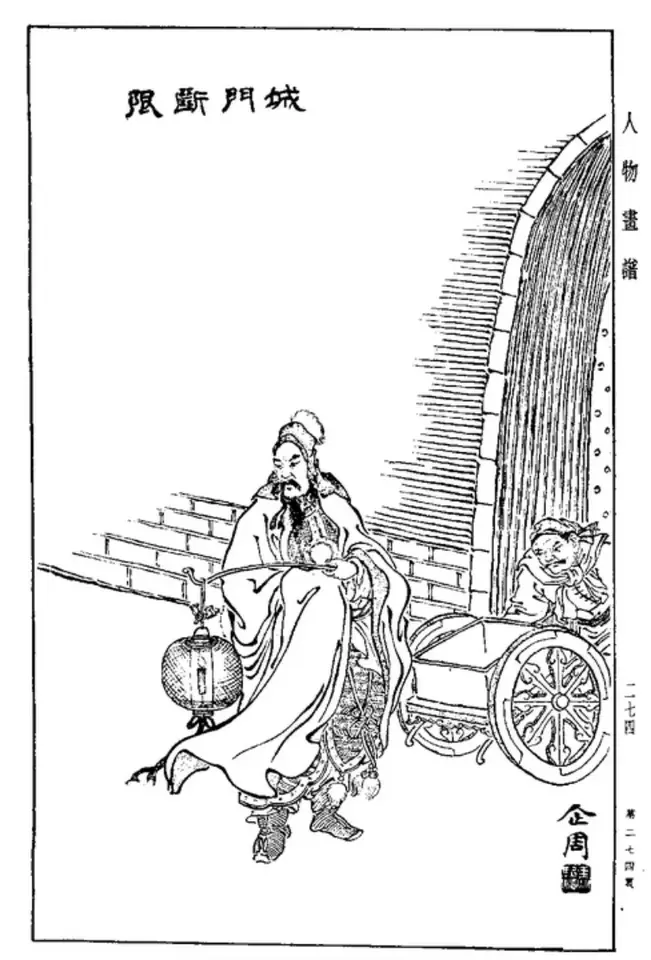
Biography
Early Service and Valiant Fighting in Hebei
Zang Gong was a native of Jia County in Yingchuan Commandery. In his youth, he served in minor local administrative positions, including pavilion chief (tingzhang) and circuit patrolman (youjiao). In the chaotic closing years of the Xin dynasty, as various rebel branches arose, Zang Gong enlisted in the Lower Yangtze Army, quickly earning renown for his steady temperament and battlefield valor. In 23 CE, the Lower Yangtze Army joined forces with the Chongling insurgent army led by Liu Yan and Liu Xiu, crushing the main Xin imperial army at the Battle of Kunyang. During these joint operations, Zang Gong became acquainted with Liu Xiu, who noted with high approval that Zang Gong was exceptionally hardworking, spoke little, and was widely acclaimed by fellow officers for his frontline daring. Liu Xiu recruited him into his personal retinue as an administrative clerk.
In the winter of 23 CE, Liu Xiu received imperial credentials to pacify the northern territories across the Yellow River, and Zang Gong followed him faithfully. When the Handan diviner Wang Lang proclaimed himself emperor, Zang Gong accompanied Liu Xiu in operations between Xindu and Handan, repeatedly donning heavy armor to lead frontline assaults. Following the fall of Handan and the execution of Wang Lang, Liu Xiu rewarded his merit by appointing him a military commandant (xiaowei).
In June of 25 CE, Liu Xiu ascended the throne as Emperor Guangwu, founding the Eastern Han dynasty. The following year, the emperor enfeoffed meritorious commanders, creating Zang Gong Marquis of Cheng'an with estates in Yingchuan. Zang Gong commanded shock troops to suppress the Wuxiao peasant insurgency across Hebei, laying ambushes and striking the rebel main forces at Jiyang, Zhending, and Zhongshan. He completely destroyed the insurgent fortresses and accepted the surrender of over 50,000 fighters, bringing lasting stability to Hebei.
The Siege of Liqiu and Pacification of the Han River
In 27 CE, rebel warlord Qin Feng proclaimed himself King of Chu and Liang, occupying Xiangyang and Liqiu to challenge imperial authority. Emperor Guangwu personally led reinforcements to aid Cen Peng against Deng Feng's rebellion in Nanyang, subduing Deng Feng.
Following the emperor's return to Luoyang, Zang Gong joined Cen Peng, Fu Jun, and other commanders to besiege Qin Feng at Liqiu. Relying on formidable ramparts and vast food reserves, Qin Feng defended stubbornly. Zang Gong led his troops to construct extensive encircling ditches and ramparts, conducting day-and-night assaults while repelling numerous enemy relief armies over nearly an entire year until the citadel exhausted all supplies.
In late 28 CE, Emperor Guangwu visited Liqiu to inspect operations, dispatching Cen Peng south against Tian Rong and leaving General Who Establishes Righteousness Zhu You in supreme command of Zang Gong and the remaining besiegers. In 29 CE, exhausted and devoid of hope, Qin Feng surrendered and was escorted to Luoyang for execution. The regional warlord Yan Cen fled Nanyang into Ba-Shu to seek refuge under Gongsun Shu. Zang Gong and Zhu You subsequently cleared rebel detachments from Yin, Zuan, and Zhuyang, storming Daixiang, Zhongwu, and Zhuli, establishing unshakeable Han military dominance across the Han River basin. Emperor Guangwu dispatched envoys with imperial tallies to commission Zang Gong General of Assisting Authority (fuwei jiangjun). In 31 CE, his fief was transferred to Marquis of Qisi.
Amphibious Invasion of Shu and Tactical Triumph at Shen River
In 35 CE, Emperor Guangwu launched the grand conquest of Ba-Shu against Gongsun Shu, mobilizing over 60,000 soldiers and oarsmen and 5,000 warhorses from Jingzhou under Cen Peng. Zang Gong accompanied the main offensive directly into Sichuan. Cen Peng left Liu Long to garrison Nanjun and advanced west alongside Zang Gong and Liu Xin.
Zang Gong led an independent column out of Chuiqeshan to penetrate the Jingmen barrier and advance upon Jiangzhou. Finding Jiangzhou heavily provisioned and difficult to breach rapidly, Cen Peng detached a containment force and advanced upon Pingqu, while Zang Gong led 50,000 surrendered troops up the Fu River to take Pingqu. Yan Cen deployed massive forces to barricade the Shen River, preventing the Han army from advancing westward toward Chengdu. Cen Peng ordered Zang Gong north to tie down Yan Cen while executing a grand flanking maneuver.
Zang Gong confronted Yan Cen across the Shen River. At that juncture, the Han army suffered severe ration shortages, the surrendered troops grew restless, and regional gentry withheld supplies while watching the outcome. When an imperial courier delivering 700 cavalry remounts to Cen Peng passed through, Zang Gong decisively took the initiative to requisition the horses. At dawn, Zang Gong ordered thousands of banners raised along the mountain peaks and war drums beaten loudly to feign the arrival of a massive imperial host. Han forces attacked simultaneously by water and land, flanking the river with cavalry and infantry. Panic swept through the Shu ranks, resulting in more than 10,000 enemy troops being slain or drowned. Yan Cen fled on horseback toward Chengdu, while Zang Gong captured the entire rebel baggage train and accepted the surrender of over 100,000 local troops.
Encirclement of Chengdu and Pacification of Ba-Shu
Attempting to reverse his desperate predicament, Gongsun Shu sent assassins into the Han camp who killed Cen Peng, the commander-in-chief. Shocked by the loss, Emperor Guangwu appointed Grand Minister of War Wu Han to succeed Cen Peng and lead the imperial main forces to the gates of Chengdu.
Meanwhile, Zang Gong's detached column advanced with sweeping momentum, capturing four heavily fortified county towns including Mianzhu and slaying Gongsun Shu's rebel general Gongsun Huai. Along his line of advance, Zang Gong captured five sets of imperial command tallies and over 1,800 official seals belonging to the Shu regime, thrusting his vanguard directly before the northern gate (Xianyang Gate) of Chengdu. Zang Gong entrenched an impenetrable fortified camp north of the city, perfectly coordinating with Wu Han's grand army entrenched to the south and placing Gongsun Shu under total encirclement.
The Han armies subsequently unleashed a comprehensive final assault on Chengdu. Gongsun Shu personally led elite shock troops out of the city against Wu Han while ordering Yan Cen to engage Zang Gong. Facing the onslaught without fear, Zang Gong commanded his troops to fight with desperate valor, cutting down thousands of defenders. Gongsun Shu sustained mortal wounds during the intense fighting in the southern sector and succumbed that night. The following dawn, seeing that further resistance was hopeless, Yan Cen opened the city gates and surrendered Chengdu, bringing the total pacification of Ba-Shu.
Bestowal of Honors and Modest Retirement
In 37 CE, Emperor Guangwu held a grand state banquet in Luoyang to welcome the victorious commanders, distributing bounties, appraising merits, and elevating Zang Gong's fief to Marquis of Zou.
With the empire largely pacified and unified, Emperor Guangwu sought to set aside weapons and cultivate civilian governance, gradually curtailing the active military commands and troop allotments of the founding generals while preserving their lofty marquisates and ceremonial honors. Zang Gong fully understood the delicate art of serving the sovereign. He voluntarily relinquished military authority, and in 39 CE was summoned to the capital to reside at his private mansion as an honored marquis, living in quiet seclusion and scrupulously refraining from interference in court politics.
Quelling the Yuanwu Rebellion and Urging Campaign Against the Xiongnu
In 42 CE, the Shu garrison commander Shi Xin rebelled in Chengdu, styling himself Grand Minister of War. Emperor Guangwu recalled Zang Gong to active duty, directing him to accompany Grand Minister of War Wu Han into Sichuan. Mobilizing troops from three commanderies in Ba-Shu, the imperial army breached Chengdu in just over a hundred days, capturing and executing Shi Xin to eradicate the insurrection.
In 43 CE, the rebel shamans Shan Chen and Fu Zhen incited a revolt and seized the walled city of Yuanwu. Emperor Guangwu commissioned Zang Gong to lead several thousand elite troops from the Northern Army imperial guards and the Liyang encampment to besiege the city. Well stocked with provisions, the defenders held out against relentless Han storming attempts for several months, inflicting heavy casualties. Prince of Donghai Liu Zhuang (the future Emperor Ming) submitted a memorial suggesting that over-tight encirclement forced the rebels to fight to the death; relaxing the siege line would entice them to break out and disperse. The emperor ordered Zang Gong to implement the plan. Zang Gong opened an escape corridor, whereupon the defenders lost the will to hold the walls and fled in disarray. Zang Gong attacked in the confusion, slaying Shan Chen and Fu Zhen, and was promoted to Colonel of the City Gates (chengmen xiaowei). He was subsequently dispatched south to Jiangling, swiftly subduing the Wuxi Man tribes.
In 51 CE, the northern Xiongnu suffered severe droughts and locust plagues, erupting into a violent internal succession conflict. Zang Gong joined Marquis of Yangxu Ma Wu in submitting a joint memorial passionately requesting an expedition of tens of thousands of troops across the northern borders to eliminate the Xiongnu threat permanently. Emperor Guangwu declined, prioritizing civilian recovery and domestic tranquility. Zang Gong passed away in 58 CE (the 1st Year of the Yongping Era), and Emperor Ming bestowed the posthumous title Marquis Min (Min hou). In 60 CE, when portraits of founding heroes were painted in the Yuntai Pavilion, Zang Gong was ranked 14th among the Twenty-Eight Generals of Yuntai.
Steadfast Loyalty and Virtue of a Renowned Commander
Ever since joining Liu Xiu during the initial campaigns, Zang Gong was revered among fellow commanders for his unvarnished sincerity, diligence, and upright fidelity. On the field of battle, he routinely spearheaded assaults into the enemy lines; at the imperial court during the distribution of rewards, he consistently yielded honors and avoided factional rivalry, never displaying arrogance or vainglory. Both Emperor Guangwu and Emperor Ming praised him as an exemplary elder statesman and an enduring paragon among founding heroes.