Royal Steppe Birth
Born into the house of Jochi as the son of Prince Toghrilcha and grandson of Mengu-Timur Khan.
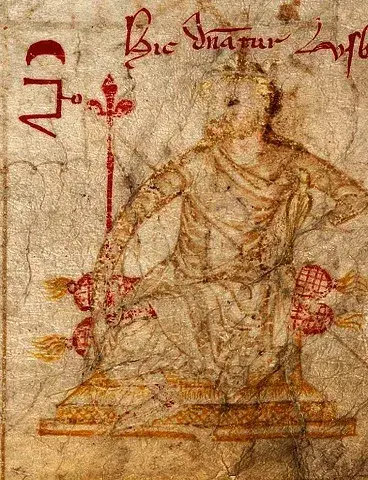
月即别汗
Ozbeg Khan (月即别汗, ?–1341), formally Sultan Ghiyath al-Din Mohammed Ozbeg, was an imperial prince of the Mongol Empire and the ninth Khan of the Golden Horde (Ulus of Jochi), reigning from 1313 until 1341. He was a grandson of Mengu-Timur Khan and a nephew of Toqta Khan. Ascending the throne in 1313 after crushing an aristocratic coup orchestrated by traditionalist Shamanist nobles, Ozbeg ruled for twenty-eight years, guiding…
Ozbeg Khan (月即别汗, ?–1341), formally Sultan Ghiyath al-Din Mohammed Ozbeg, was an imperial prince of the Mongol Empire and the ninth Khan of the Golden Horde (Ulus of Jochi), reigning from 1313 until 1341. He was a grandson of Mengu-Timur Khan and a nephew of Toqta Khan. Ascending the throne in 1313 after crushing an aristocratic coup orchestrated by traditionalist Shamanist nobles, Ozbeg ruled for twenty-eight years, guiding the Golden Horde to the zenith of its territorial extent, military might, and economic prosperity, an era universally celebrated as the realm's golden age. In cultural and religious spheres, Ozbeg established Islam as the official state religion of the Golden Horde, suppressing ancient Shamanist practices and constructing a new capital at Sarai al-Jadid (New Sarai) on the lower Volga. The city became a bustling Silk Road metropolis attracting Muslim jurists, theologians, and merchants from Cairo, Damascus, and Tabriz. In his administration of the Rus principalities, Ozbeg exercised masterful geopolitical divide-and-rule statecraft: when the Principality of Tver launched an anti-Mongol rebellion in 1327, Ozbeg deployed a punitive cavalry host of fifty thousand troops alongside Ivan I of Moscow to devastate Tver. In 1328, he invested Ivan I (Ivan Kalita) with the title of Grand Prince of Vladimir and granted Moscow the monopoly on collecting and delivering imperial tribute across all Russian lands. This historic concession laid the economic and territorial foundation for the rise of the Tsardom of Russia. Ozbeg passed away in Sarai in 1341; his fame among nomadic subjects led them to be termed "Ozbegs," providing the historical origin for the modern Uzbek ethnicity.
Born into the house of Jochi as the son of Prince Toghrilcha and grandson of Mengu-Timur Khan.
Vanquished a Shamanist court conspiracy following Toqta's death, acclaimed as ninth Khan at Sarai.
Formally decreed Islam as the official state religion of the Golden Horde, adopting Islamic jurisprudence.
Led imperial cavalry across the Caucasus into Azerbaijan, clashing with Abu Sa'id of the Ilkhanate at Mianeh.
Wed an imperial princess to Sultan al-Nasir Muhammad of Cairo, cementing a Trans-Mediterranean coalition.
Crushed the anti-Mongol rebellion in Tver, dispatching fifty thousand horsemen to sack the rebellious city.
Invested Ivan I with the Grand Princely patent and the exclusive franchise to collect imperial tribute across Rus.
Passed away after a twenty-eight-year reign; succeeded by his son Jani Beg amidst imperial prosperity.
Ozbeg was born in the Pontic-Caspian steppe during the late thirteenth century. His father Toghrilcha was an influential prince, and his grandfather Mengu-Timur had established the de facto sovereign autonomy of the Ulus of Jochi. Exposed early to Khwarazmian Islamic scholars, Ozbeg embraced Islam while mastering nomadic equestrian warfare.
In early 1313, Khan Toqta died without leaving an undisputed adult heir. Traditionalist Mongol aristocrats and shamans backed Toqta's son, plotting to assassinate Ozbeg to prevent the spread of Islam in the court.
Forewarned by his mother and the veteran general Qutlugh-Temur, Ozbeg struck first. Leading his loyal bodyguard into the palace compound, he executed the conspiring princes and shamans. At the general kurultai convened on the Volga, the nomadic nobility recognized his legitimacy and acclaimed him as supreme khan.
Upon assuming power, Ozbeg executed a revolutionary transformation of the Golden Horde by proclaiming Islam the sole official state religion.
Prior to his accession, the Golden Horde's elite had practiced steppe Shamanism while tolerating Christianity, Buddhism, and Islam. Ozbeg established the supremacy of the sharia, constructing Friday mosques and madrasas across the Volga basin and Crimea. He imported scholars, scribes, and legal jurists from the Mamluk Sultanate and Central Asia, restructuring the administrative machinery along Islamic models. While he preserved tax exemptions for the Russian Orthodox Church to maintain political compliance among northern forest populations, nomadic Kipchak and Mongol clans within the steppe core underwent comprehensive Islamization.
Simultaneously, Ozbeg developed Sarai al-Jadid (New Sarai) on the Akhtuba distributary of the lower Volga. The capital expanded into an immense transcontinental trading emporium. The Moroccan explorer Ibn Battuta visited the metropolis during Ozbeg's reign, writing: "Sarai is among the most magnificent cities, with broad avenues, crowded markets, and thirteen congregational mosques. Its merchants conduct commerce spanning from Egypt to China, and its wealth is beyond measure."
In his management of the Rus principalities, Ozbeg pursued an astute policy of fragmentation, preventing any single Russian prince from consolidating autonomous power.
During the 1320s, a fierce rivalry pitted Prince Mikhail of Tver against Prince Ivan I of Moscow for the coveted patent (yarlyk) of Grand Prince of Vladimir. In the summer of 1327, citizens of Tver launched an insurrection against the Mongol tax commissioner Chol-Khan (Ozbeg's paternal cousin), burning him alive in his palace alongside his retinue.
Ozbeg responded with crushing force. Sizing up the political moment, Prince Ivan I of Moscow journeyed directly to Sarai to offer complete submission and volunteer his forces as the vanguard of a punitive expedition.
Ozbeg placed fifty thousand Mongol-Tatar cavalry under Ivan's direction. The joint army invaded Tver, burning towns, slaughtering insurgents, and forcing Prince Aleksandr of Tver to flee into Lithuanian territory. In 1328, to reward Ivan's obedience, Ozbeg bestowed upon him the title of Grand Prince of Vladimir and granted Moscow the sole authority to collect all imperial taxes and tributes across the Russian principalities. Armed with this fiscal monopoly, Moscow amassed unprecedented wealth and steadily expanded its hegemony over rival cities, setting in motion the historical unification of Russia.
In foreign affairs, Ozbeg was an active expansionist. Contesting control over Azerbaijan and its trans-Caucasian trade routes, he invaded the Ilkhanate repeatedly, fighting pitched battles against Abu Sa'id at Mianeh. In the west, he projected power into the Balkans, compelling the Byzantine Empire and the Second Bulgarian Empire to pay tribute. Emperor Andronikos III Palaiologos sought peace by marrying his daughter Bayalun to Ozbeg.
Furthermore, Ozbeg deepened his military and commercial alliance with Sultan al-Nasir Muhammad of the Mamluk Sultanate in Egypt. The two monarchs exchanged diplomatic embassies, and Ozbeg sent the Borjigin princess Tulunbay to Cairo as an imperial bride.
In 1341, Ozbeg Khan passed away in his palace at Sarai after a reign of twenty-eight years.
His rule is universally acknowledged as the golden age of the Golden Horde. He brought internal stability, commercial wealth, and religious coherence to the steppe. The nomadic populations under his command came to be known to contemporary chroniclers as "Ozbegs" (Uzbeks), giving their name to the modern Central Asian nation of Uzbekistan.
Overcame a traditionalist Shamanist conspiracy upon Toqta's death, establishing himself as undisputed ruler of the Golden Horde.
Enacted the comprehensive conversion of the Golden Horde to Islam, aligning steppe governance with Islamic jurisprudence and civilization.
Expanded Sarai al-Jadid into an international metropolis, fostering Silk Road trade connecting China, Central Asia, and the Mediterranean.
Crushed the anti-Mongol uprising in Tver in 1327 and granted Ivan I of Moscow the monopoly on collecting Rus tribute, initiating Moscow's historical rise.
Created an era of military strength and cultural unity that inspired the ethnonym of the modern Uzbek people.
FIGURES ASSOCIATED WITH THIS DYNASTY