Birth in Gong'an
Born on the seventeenth day of the second lunar month into a prominent scholar-gentry family in Gong'an, Huguang, diligent and serious from youth.
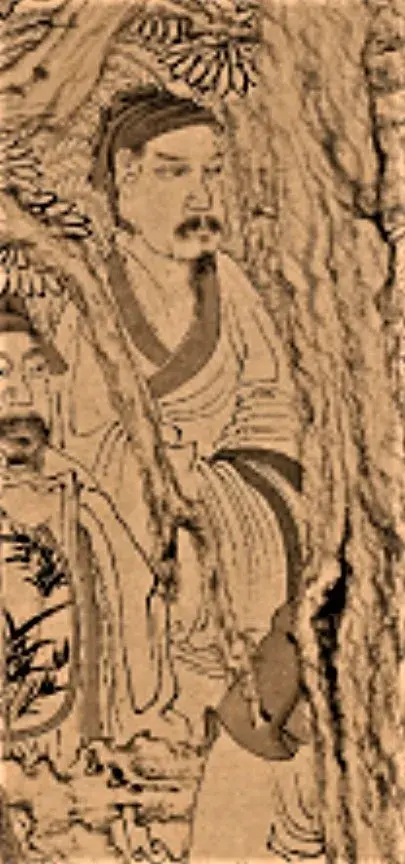
袁宗道
Yuan Zongdao (March 23, 1560 – December 13, 1600), courtesy name Boxiu and art name Master of Baisuizhai, was a native of Gong'an County, Jingzhou Prefecture, Huguang (present-day Gong'an County, Hubei Province). A prominent high official, writer, and scholar during the Wanli reign of the Ming dynasty, he was the founding initiator and actual architect of the celebrated late Ming literary reform movement known as the Gongan…
Yuan Zongdao (March 23, 1560 – December 13, 1600), courtesy name Boxiu and art name Master of Baisuizhai, was a native of Gong'an County, Jingzhou Prefecture, Huguang (present-day Gong'an County, Hubei Province). A prominent high official, writer, and scholar during the Wanli reign of the Ming dynasty, he was the founding initiator and actual architect of the celebrated late Ming literary reform movement known as the Gongan School, acclaimed alongside his younger brothers Yuan Hongdao and Yuan Zhongdao as the "Three Yuans of Gongan." Quiet and scholarly from youth, he ranked second (Bangyan) in the palace examination of 1586, entering the Hanlin Academy as a junior compiler. Throughout fifteen years of imperial service, Yuan served as Hanlin senior compiler, left transmission preceptor of the Left Chunfang, reader-in-waiting, and Right Mentor of the Hanlin Academy concurrently daily lecturer to the crown prince. Renowned for his pure integrity and dedication to Confucian statecraft, he diligently guided Imperial Eldest Son Zhu Changluo (later Emperor Taichang) during the bitter succession crises, winning deep respect at court. In literary theory, confronting the archaic imitations championed by the Former and Latter Seven Masters, Yuan took the lead in Beijing by declaring that literature must return to natural spontaneity. Revering the natural and unforced styles of Bai Juyi and Su Shi, he named his study "Baisuizhai." He guided his younger brothers to establish the Gongan School, laying the theoretical foundation for "expressing innate sensibility freely without being bound by rigid conventions," and authored the twenty-two-volume Baisuizhai Ji.
Born on the seventeenth day of the second lunar month into a prominent scholar-gentry family in Gong'an, Huguang, diligent and serious from youth.
Established the Puqi Literary Society on the banks of the Yangtze with his brothers Hongdao and Zhongdao, displaying extraordinary literary talent.
Ranked second (Bangyan) in the bingxu palace examination and was appointed Hanlin Junior Compiler, winning literary acclaim in Beijing.
Promoted to Hanlin Senior Compiler and appointed Daily Lecturer to the Crown Prince, expounding the Zizhi Tongjian and classics to Zhu Changluo.
Appointed co-examiner for the Shuntian provincial examinations, recruiting talented scholars from impoverished backgrounds while barring nepotism.
Elevated to Left Transmission Preceptor of the Left Chunfang concurrently Hanlin Reader-in-Waiting, directing academic training in the Hanlin Academy.
Promoted to Right Mentor of the Hanlin Academy, continuing lectures to the crown prince, shielding the heir apparent with upright counsel.
Passed away from illness in his Beijing residence on the ninth day of the eleventh lunar month at forty-one; the crown prince mourned deeply and the court granted sacrificial burial.
Yuan Zongdao was born on March 23, 1560 (the seventeenth day of the second lunar month in the thirty-ninth year of the Jiajing reign) in Gong'an County, Jingzhou Prefecture, Huguang. His father Yuan Shiyu was an erudite local scholar who held his sons to rigorous academic standards. As the eldest of three brothers, Yuan possessed a reserved, disciplined, and steadfast temperament. Endowed with a photographic memory, he mastered the Four Books and Five Classics before adolescence, reading broadly in Sima Qian's Shiji, Ban Gu's Hanshu, and the essays of Ouyang Xiu and Su Shi.
In the early Wanli era, Yuan studied in his family school in Gong'an, remaining modest despite his precocious brilliance. He observed that civil service eight-legged essays had degenerated into rigid formulas, while literary circles were dominated by the Former Seven Masters (led by Li Mengyang and He Jingming) and the Latter Seven Masters (led by Li Panlong and Wang Shizhen), who blindly copied archaic Qin, Han, and High Tang prose. In collaboration with his brothers Hongdao and Zhongdao, Yuan resolved to reform contemporary literature. In 1585 (the thirteenth year of the Wanli reign), Yuan passed the Huguang provincial examinations as a provincial graduate (juren).
In 1586 (the fourteenth year of the Wanli reign), the twenty-seven-year-old Yuan traveled to Beijing for the bingxu metropolitan examination, passing with high distinction. In the subsequent palace examination, when questioned by Emperor Wanli on revering Heaven, calming the populace, and self-cultivation for statecraft, Yuan responded with profound classical erudition and practical reform proposals. Deeply impressed, the examiners and Emperor Wanli placed him second overall as Bangyan (runner-up), appointing him Hanlin Junior Compiler.
Within the prestigious Hanlin Academy, Yuan immersed himself in the imperial palace library. Rejecting the shallow rhetorical embellishments common among court scholars, he established his study "Baisuizhai," explicitly modeling his prose on Tang poet Bai Juyi and Song master Su Shi, striving for clarity, natural simplicity, and unpretentious authenticity. At the time, his second brother Hongdao also attained the jinshi degree while his third brother Zhongdao exhibited brilliant talent. The three brothers gathered in Beijing to debate literature, winning great esteem among court ministers who praised them as the "Three Yuans of Gongan."
During the mid-Wanli reign, the Ming court was gripped by the protracted crisis known as the "Dispute over the Dynastic Root" (Zheng Guoben). Emperor Wanli favored Noble Consort Zheng and sought to bypass his eldest son in favor of his third son Zhu Changxun, while court ministers steadfastly insisted on Confucian primogeniture in supporting Imperial Eldest Son Zhu Changluo (later Emperor Taichang). Scores of upright officials were demoted or dismissed, casting a dark cloud over the capital.
Around 1592 (the twentieth year of the Wanli reign), Yuan was promoted to Hanlin Senior Compiler and appointed Daily Lecturer to the Crown Prince. Finding the eldest prince isolated and insecure in Jingyang Palace, Yuan discharged his instructional duties with warm devotion and strict dignity. In his lectures, he translated classical canons into clear colloquial language, using historical rises and falls to nurture the prince's filial piety and benevolent governance. Refusing to flatter inner-court eunuchs, Yuan stood firm on orthodox principle, providing a reassuring bulwark that allowed the prince to survive dangerous youthful years safely, earning the deep trust and affection of Zhu Changluo.
In 1597 (the twenty-fifth year of the Wanli reign), Yuan served as co-examiner for the Shuntian provincial examinations. At the time, civil examinations in the capital region were plagued by bribery and formulaic essays copied from obsolete templates. Yuan strictly evaluated examination papers, rejecting formulaic imitations in favor of profound reasoning and lucid prose, recruiting numerous talented but impoverished scholars into state service.
In 1598 (the twenty-sixth year of the Wanli reign), Yuan was promoted to Left Transmission Preceptor of the Left Chunfang concurrently Hanlin Reader-in-Waiting. The following year (1599), he was elevated to Right Mentor of the Hanlin Academy. Responsible for training younger Hanlin compilers and editors, he cautioned junior scholars against superficial rhetoric, emphasizing that scholarship must engage historical transformations and benefit the state. Respected for his literary brilliance and moral uprightness, he was universally revered across literati circles as a grand master of court prose.
Years of ceaseless toil in imperial lecturing and administrative duties, coupled with deep anxiety over dynastic stability and succession disputes, steadily undermined Yuan's health. Yet he never neglected his responsibilities, meticulously preparing lecture drafts late into the night before every imperial audience.
On December 13, 1600 (the ninth day of the eleventh lunar month in the twenty-eighth year of the Wanli reign), Yuan fell gravely ill and passed away in his Beijing residence at the age of forty-one. News of his death plunged the Hanlin Academy and scholars nationwide into profound sorrow. In the eastern palace, Crown Prince Zhu Changluo wept bitterly, and Emperor Wanli issued an imperial decree granting full sacrificial funeral honors. After his passing, his brothers Hongdao and Zhongdao collated his manuscripts into the twenty-two-volume Baisuizhai Ji, ensuring that his noble administrative character and progressive literary ideas would be preserved for posterity.
Yuan Zongdao was the initial catalyst and founding leader of the Gongan School in the history of Chinese literary criticism and prose. In the mid-to-late Ming dynasty, the literary scene was dominated by the Latter Seven Masters led by Li Panlong and Wang Shizhen, who enforced the rigid dogma that prose must imitate Qin-Han antiquity and poetry must copy High Tang models. Writers scrambled to paste together archaic phrases, filling the literary arena with lifeless imitations.
Yuan was the first to challenge this entrenched orthodoxy. In essays such as Lun Wen (On Literature), he asserted that the value of writing lies in expressing an author's genuine nature and thoughts, rather than in the slavish imitation of external diction. He criticized the archaists as plagiarists feeding on ancient husks like actors in antique costumes, demonstrating that Bai Juyi's poetry and Su Shi's expansive prose moved readers precisely because they expressed genuine inner feelings responding to real circumstances. Yuan named his study "Baisuizhai" to honor Bai Juyi and Su Shi, advocating accessible, fluent, and naturally refreshing prose. Inspired and encouraged by Yuan, his brother Hongdao developed this into the "Xingling" doctrine, initiating the Gongan School that revitalized late Ming literature.
During the volatile succession conflicts of the Wanli era, Yuan played an essential historical role as core daily lecturer to Crown Prince Zhu Changluo. Emperor Wanli withdrew from court audiences for decades, delaying the formal installation of the crown prince under the influence of his favored consort. Living in neglect and penury within Jingyang Palace, the prince was kept under constant surveillance by inner-court eunuchs.
Serving as lecturer, Yuan never wavered or bowed to court favoritism. He not only imparted statecraft and classical wisdom in the lecture hall, but also provided paternal warmth and moral encouragement to the beleaguered prince. Facing surveillance by hostile palace eunuchs, Yuan invoked the sacred moral principles of the Spring and Autumn Annals, maintaining an unbending posture and arguing firmly in the Hanlin Academy against any move to undermine the rightful heir. His loyalty and moral courage not only shaped the character of the future Emperor Taichang, but also preserved the legitimate succession of the Ming dynasty.
Although the foremost figure among elite Hanlin scholars, Yuan rejected the vacuous philosophical debates and superficial rhetoric typical of court literati. Throughout his literary and historical writings, he was guided by a profound commitment to practical statecraft (jingshi).
While overseeing Hanlin academic evaluations and crown prince lectures, Yuan advocated integrating classical studies with historical analysis. He argued that if scholars failed to understand taxation systems, frontier defense, and water conservancy, their reading was mere bookworm trivia useless to the world. Practicing what he preached, he studied historical administrative compendia like Wenxian Tongkao and the Ming legal code. His own essays, stele inscriptions, and policy memorials addressed practical topics such as commoners' hardships, administrative reforms, and transit tax abuses. Concise, incisive, and grounded in reality, his writing washed away the empty formulas of court prose, infusing late Ming literature with practical vigor.
In the literary legacy of the "Three Yuans of Gongan," eldest brother Yuan Zongdao was not only an intellectual mentor, but also the steadfast protector who nurtured his younger brothers' artistic gifts. Both Yuan Hongdao and Yuan Zhongdao were naturally spirited, proud, and rebellious in youth, frequently drawing reprimands from elders for scorning conventional examination studies.
As the eldest brother and an imperial runner-up in the Hanlin Academy, Yuan sheltered and encouraged his brothers with broad-minded benevolence. In Beijing, he shielded Hongdao from political intrigues, funded Zhongdao's travels across the realm, and joined his brothers in establishing literary societies. Whenever Hongdao completed a new piece, he presented it first to his eldest brother; Zhongdao revered him as both a strict teacher and a loving father. Yuan's gentle moral authority and deep scholarship provided the essential fertile soil from which the literary miracle of the Three Yuans blossomed.
FIGURES ASSOCIATED WITH THIS DYNASTY