Born in Siming
Born into a scholarly gentry family in Yin County, demonstrating gravity, tranquility, and intellectual focus from childhood.
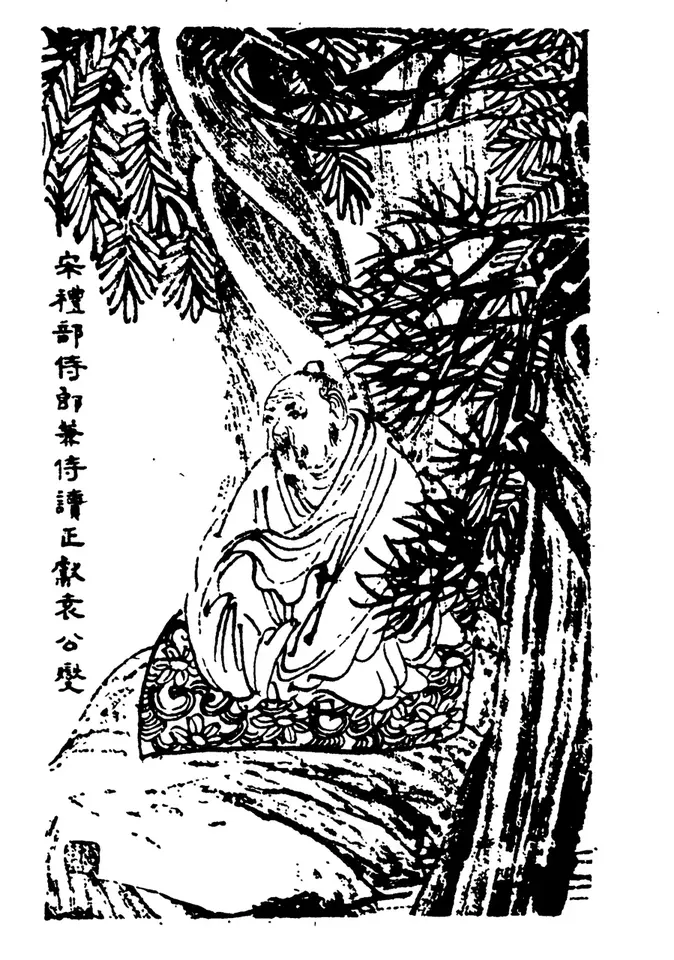
袁燮
Yuan Xie (袁燮, 1144–1224), courtesy name Heshu, literary name Xiezhai, respectfully addressed by scholars as Master Xiezhai, was a native of Yin County, Qingyuan Prefecture (modern Ningbo, Zhejiang). He was an outstanding thinker, philosopher, educator, and statesman of the middle-to-late Southern Song dynasty, and a foundational leader of the "Four Masters of Siming" (Yang Jian, Yuan Xie, Shu Lin, and Shen Huan) within the…
Yuan Xie (袁燮, 1144–1224), courtesy name Heshu, literary name Xiezhai, respectfully addressed by scholars as Master Xiezhai, was a native of Yin County, Qingyuan Prefecture (modern Ningbo, Zhejiang). He was an outstanding thinker, philosopher, educator, and statesman of the middle-to-late Southern Song dynasty, and a foundational leader of the "Four Masters of Siming" (Yang Jian, Yuan Xie, Shu Lin, and Shen Huan) within the School of the Mind (Xinxue). In his youth, he studied at the Imperial University (Taixue), delved deeply into the Six Classics, and became a foremost disciple of Lu Jiuyuan (Lu Xiangshan), mastering the core doctrine of discovering the original mind and practicing self-reflection. In 1181, Yuan Xie passed the imperial examinations as a jinshi and began his career as county sheriff of Jiangyin. When western Zhejiang was struck by a severe famine, he innovated the "Bao-Map Famine Relief Method," meticulously mapping the fields, watercourses, roads, and household distributions for every ten-household bao, enabling precise grain distribution and judicial resolution. His system was celebrated as the "foremost famine relief administration of the Song dynasty." Upon Emperor Ningzong's accession, Yuan Xie was summoned as Taixue Director of Studies. When powerful minister Han Tuozhou orchestrated the purge of upright officials Zhao Ruyu and Zhu Xi, Yuan Xie bravely submitted memorials condemning the faction, for which he was dismissed and blacklisted during the "Qingyuan Partisan Prohibition." Following Han Tuozhou's downfall during the Jiading era, Yuan Xie was recalled to court, serving successively as Director of the Imperial Clan Registry, Compiler in the Bureau of Military Affairs, Vice Director of Personnel, Taichang Vice Director, Prefect of Jiangzhou, Tea and Salt Famine Relief Commissioner of Jiangxi concurrently Prefect of Longxing, Director of the Ministry of Justice, Director of the Ministry of Personnel, Taixue Director of Studies, Chancellor of the Imperial University (Guozi Jijiu), and ultimately Vice Minister of Rites concurrently Imperial Lecturer. At court, he remonstrated fearlessly, extolling Peng Guinian's integrity, cautioning against Shi Miyuan's autocratic power, and urging the emperor to welcome candid criticism. While heading the Imperial University, he guided students to cultivate self-reflection, loyalty, and sincerity, revitalizing the moral ethos of southeastern scholars. Retiring in his late years to Yin County, he lectured for decades at Xiezhai Academy, leaving voluminous writings. He passed away at the age of eighty-one, posthumously honored as Grand Preceptor, Duke of Rong, and canonized as Zhengxian. His son Yuan Fu became a top-ranking zhuangyuan and prominent minister, establishing an enduring family legacy in Song Confucian history.
Born into a scholarly gentry family in Yin County, demonstrating gravity, tranquility, and intellectual focus from childhood.
Entered Taixue in Lin'an, befriended Shen Huan, Shu Lin, and Yang Jian, and became a devoted disciple of Lu Jiuyuan.
Passed the imperial examinations and became county sheriff of Jiangyin, creating the acclaimed Bao-Map Famine Relief Method.
Summoned to court by Emperor Ningzong; submitted memorials denouncing Han Tuozhou and defending Zhao Ruyu and Zhu Xi, leading to his dismissal.
Blacklisted as a partisan of "false learning"; retired to Yin County to study the Classics and founded Xiezhai Academy.
Following Han Tuozhou's execution, the court cleared his name and appointed him Director of the Imperial Clan Registry and Compiler.
Served as Jiangxi Relief Commissioner and Prefect of Longxing, rectifying administrative abuses and overturning thousands of unjust verdicts.
Appointed Chancellor of the Imperial University (Guozi Jijiu); enforced strict academic standards and cultivated ethical character among scholars.
Promoted to Vice Minister of Rites; confronted powerful minister Shi Miyuan and repeatedly submitted retirement requests due to political discord.
Passed away at his residence in Yin County at age eighty-one; posthumously honored as Grand Preceptor and canonized as Zhengxian.
Yuan Xie was born in 1144 in Yin County, Qingyuan Prefecture, into a prominent lineage of scholar-officials. From early childhood, he exhibited remarkable composure and serene focus. When his wet nurse placed a basin of water before him, he could observe it quietly for an entire day without unruly play, and he awoke each morning alert and clear-minded. As he grew, he immersed himself in Confucian classics. Reading the Biographies of Partisans in the Book of the Later Han, he was profoundly moved by the heroic integrity of ancient scholars like Li Ying and Chen Fan, pledging to live a life dedicated to moral principle and sagely learning.
During the Qiandao era, Yuan Xie gained admission to the Imperial University (Taixue) in Lin'an. At that time, Lu Jiuling, elder brother of Lu Jiuyuan, served as a university official, while Yuan Xie's fellow townsmen Shen Huan, Shu Lin, and Yang Jian were also studying there. The four bonded closely, engaging in daily discussions on moral philosophy. When Lu Jiuyuan arrived in Lin'an advocating the doctrine that "the universe is my mind, and my mind is the universe" and emphasizing the "realization of the original mind," Yuan Xie experienced profound enlightenment and formally became his disciple alongside Yang Jian. Yuan Xie grasped the essence of Lu's philosophy, often observing: "The human mind and Heaven and Earth share a single root; only through diligent contemplation can one comprehend it, and only through vigilant reverence can one unite with universal virtue." He earned high praise from Lu Jiuyuan, becoming one of his four foremost disciples.
In 1181, Yuan Xie passed the imperial examinations as a jinshi and was appointed county sheriff of Jiangyin in Changzhou. Soon after his arrival, western Zhejiang suffered catastrophic droughts and famine, leaving crops parched and refugees filling the roads. Luo Dian, Salt and Tea Commissioner for Eastern and Western Zhejiang, was tasked with directing regional famine relief. Recognizing Yuan Xie's exceptional practical capability and compassion, Luo Dian delegated the entire famine relief administration of Jiangyin to him.
Yuan Xie went directly to rural villages to inspect conditions. Realizing that conventional relief failed because records were chaotic, allowing wealthy lineages and clerks to embezzle rations, he devised the groundbreaking "Bao-Map Famine Relief Method." He ordered that for every ten-household bao, a detailed map be drawn, recording mountains, watercourses, field boundaries, and roads, alongside complete household registries listing names, ages, economic status, and occupations.
Yuan Xie then synthesized these into district maps, township maps, and a unified county map. With this spatial registry on his desk, the allocation of relief grain became completely transparent. The needy were reliably sustained without omission, while false claims by powerful families were eliminated. When mobilizing labor, settling boundary disputes, or apprehending bandits, officials could resolve matters instantly upon consulting the maps. Under his administration, hundreds of thousands survived without turmoil. The imperial court issued commendations, Commissioner Luo Dian ordered the method adopted across the circuit, and subsequent historians revered it as the "foremost famine relief administration of the Song dynasty." Upon completing his tenure, he served in maritime defense administration before returning home for parent mourning.
In the autumn of 1194, Emperor Guangzong abdicated and Emperor Ningzong took the throne. The court sought upright scholars, and Yuan Xie was summoned as Taixue Director of Studies. At that time, imperial kinsman Zhao Ruyu served as Right Grand Councilor, working diligently to reform governance by appointing Zhu Xi as Lecturer and gathering celebrated scholars like Peng Guinian and Zhou Bida. However, Han Tuozhou, a palace commander related to the imperial family who claimed credit for Ningzong's enthronement, grew deeply resentful after being denied a top ministerial portfolio. He allied with inner court eunuchs to sow discord between the monarch and ministers, plotting Zhao Ruyu's downfall.
Observing the brewing crisis, Peng Guinian memorialized the throne exposing Han Tuozhou's treachery, only to be dismissed. In 1195, Han Tuozhou forged imperial edicts dismissing Zhao Ruyu and expelling Zhu Xi. Six brave Taixue students, including Yang Hongzhong and Xu Fan, knelt at the palace gates to plead for Zhao Ruyu. Enraged, Han Tuozhou ordered the censorate to arrest them. As Director of Studies, Yuan Xie stepped forward without hesitation, submitting a courageous memorial defending Zhao Ruyu as a loyal pillar of state and Zhu Xi as an intellectual master, while openly exposing Han Tuozhou's factional treason.
Yuan Xie's outspoken defense infuriated Han Tuozhou. The faction dismissed Yuan Xie from office and expelled him from the capital. In 1196, Han Tuozhou unleashed the notorious "Qingyuan Partisan Prohibition," designating Daoxue as "false learning" and proscribing fifty-nine upright statesmen and scholars, including Yuan Xie. Stripped of all official standing, Yuan Xie remained unperturbed. Returning to Yin County, he built the Xiezhai retreat, where he devoted himself to studying the Classic of Poetry, Classic of Documents, and Book of Changes, while opening his doors to students. Aspiring scholars from across southeastern China braved official bans to study at Xiezhai, establishing it as a spiritual citadel for righteous Confucian learning.
In 1208, following Han Tuozhou's execution after the disastrous Kaixi Northern Expedition, the court cleared the victims of the Qingyuan purge. Emperor Ningzong summoned upright veterans, appointing Yuan Xie Director of the Imperial Clan Registry, Compiler in the Bureau of Military Affairs, and Vice Director of Personnel.
Though over sixty, Yuan Xie maintained his unbending integrity. Powerful minister Shi Miyuan, who had orchestrated Han Tuozhou's death, was consolidating autocratic power. Yuan Xie spoke candidly during audience with Emperor Ningzong: "At Your Majesty's accession, you entrusted the worthy chancellor Zhao Ruyu, and righteous scholars flocked to court. Yet usurpers lurked in the shadows. Peng Guinian foresaw their villainy and denounced them, yet was punished and exiled, allowing treacherous ministers to entrench themselves and imperil the state! Later, Your Majesty sighed with regret: 'Had he lived, I would have employed him grandly!' This proves you recognized his loyalty. Today, upright men are not lacking. If Your Majesty cherishes this sentiment and welcomes outspoken counsel, even though one Peng Guinian is gone, if many follow, how can the realm fail to be well-governed?"
He further rebuked Ningzong's political passivity: "I previously urged Your Majesty to inquire diligently, and you replied: 'Inquiry brings clarity.' My colleagues rejoiced at these words. Yet observing Your Majesty for a hundred days, you remain silent and withdrawn in the inner palace, declining to deliberate statecraft with ministers. If inquiry brings clarity, then failing to inquire breeds darkness! Clarity illuminates all like the sun, while darkness leaves one blind to right and wrong!" His piercing counsel shook the monarch and won deep admiration across the court.
In 1211, Yuan Xie served as Prefect of Jiangzhou, soon transferring to Tea and Salt Famine Relief Commissioner of Jiangxi concurrently Prefect of Longxing (modern Nanchang). Jiangxi was economically vital, but misgovernance had left granaries depleted and legal backlogs severe.
Yuan Xie exhibited exceptional executive competence. He audited granaries, punished corrupt clerks, and implemented market price stabilization, curbing soaring rice prices in Nanchang. Simultaneously, he prioritized judicial fairness, personally reviewing accumulated criminal cases and detained prisoners in Longxing. Re-examining all questionable records, he overturned convictions obtained under torture or falsified evidence. Within months, he reversed thousands of unjust verdicts and freed wrongfully imprisoned commoners, clearing the jails. He also restored local academies and funded Confucian lectures, revitalizing local morale, which led the populace to erect steles commemorating his governance.
In 1216, Emperor Ningzong promoted Yuan Xie to Director in the Ministry of Justice, Director in the Ministry of Personnel, Vice Director of Studies, and ultimately Chancellor of the Imperial University (Guozi Jijiu) concurrently Director of the Imperial Library.
The Imperial University housed thousands of scholars, but had degenerated into a superficial training ground where students sought patronage and memorized pedantic commentary for careerist ends. As Chancellor, Yuan Xie reformed the curriculum, refusing to discuss examination mnemonics and urging students to focus on "self-reflection, loyalty, and sincerity as the root of moral cultivation."
He warned students: "Scholars must prioritize realizing their original mind and practicing moral integrity. If learning does not culminate in genuine action, chasing worldly favor through polished prose makes one a disgrace to the sage." Practicing what he preached, he lived simply in plain robes and followed strict decorum. Confronted with his towering moral authority, thousands of scholars felt deeply humbled, abandoning frivolous sycophancy and restoring the noble tradition of scholars taking responsibility for the realm.
In 1220, Yuan Xie became Imperial Lecturer and Vice Minister of Rites. Facing northern turmoil with the decline of Jin and the rise of the Mongols, minister Shi Miyuan advocated capitulation while monopolizing state appointments.
As Vice Minister of Rites, Yuan Xie defended constitutional propriety, clashing repeatedly with Shi Miyuan. He adamantly refused to endorse appointments that violated imperial statutes, and during his lectures, he cited historical precedents to advocate self-strengthening and territorial recovery rather than cowardly compromise. Recognizing that Shi Miyuan's dominance could not be overturned single-handedly, Yuan Xie submitted dozens of retirement memorials.
Emperor Ningzong granted his retirement, and in 1221, Yuan Xie returned to his Xiezhai residence in Yin County. In his final years, he achieved profound philosophical serenity, exploring the Book of Changes and Classic of Poetry with students and synthesizing Siming Xinxue doctrines. He emphasized that the School of the Mind must avoid Chan-like nihilism and dry pedantry, anchoring itself in daily moral duties. Scholars flocked to Xiezhai from across China. His sons Yuan Su and Yuan Fu both attained jinshi degrees, with Yuan Fu taking top honors as zhuangyuan in 1205 and rising to Minister of War and Minister of Personnel, perpetuating the family's renowned integrity.
In February 1224, Yuan Xie passed away peacefully at age eighty-one. The court mourned his death, conferring upon him the titles of Junior Protector, Grand Preceptor, and Duke of Rong, canonizing him as Zhengxian. Scholars throughout China honored him as Master Zhengxian. In the Records of Song and Yuan Confucians, scholars Huang Zongxi and Quan Zuwang dedicated a special chapter to his teachings, extolling his grounded and balanced philosophical legacy.
Yuan Xie's creation of the "Bao-Map Famine Relief Method" during his tenure in Jiangyin marked an epochal innovation in traditional disaster administration and local governance.
Famine relief under the Song was frequently paralyzed by fraudulent records and clerical collusion. Yuan Xie's spatial framework linked geographic mapping with household registries, creating an integrated administrative grid spanning bao, du, township, and county. This enabled transparent grain distribution, eliminated embezzlement, and streamlined judicial and labor administration. Celebrated as the "foremost famine relief administration of the Song," it served as an enduring prototype for subsequent Ming and Qing famine management systems.
During the darkest days of the Qingyuan Partisan Prohibition, Yuan Xie stood as a fearless pillar defending orthodox Confucian morality and scholarly integrity.
When Han Tuozhou proscribed Daoxue, prompting many officials to conform or remain silent, Yuan Xie memorialized the throne from his junior post, defending Zhao Ruyu and Zhu Xi while condemning the treacherous usurpation of power. Enduring over a decade of blacklisting and exile, he maintained an unbending spirit, teaching and writing in rural retreat, thereby preserving the moral lineage of Song scholar-officials for posterity.
Yuan Xie's leadership as Chancellor of the Imperial University revitalized Southern Song academic culture.
Combating the utilitarian careerism pervading the examination halls, he introduced Lu Jiuyuan's philosophy of discovering the original mind into state education, guiding students toward self-reflection and social conscience. His personal austerity and moral rectitude transformed the student body, breaking habits of sycophancy and restoring the university's historic mission as a conscience of the state.
Yuan Xie stands as an essential bridge in the evolution of Song-Ming Neo-Confucianism. As a direct disciple of Lu Jiuyuan and one of the "Four Masters of Siming," he established the Siming School of the Mind alongside Yang Jian, Shu Lin, and Shen Huan.
Through masterworks including Xiezhai Ji and Xiezhai Lectures on the Classic of Poetry, he refined the doctrine that "the mind is identical with principle," while steering clear of subjective mysticism. He emphasized diligent introspection, moral reverence, and daily ethical duty, providing a rigorous and balanced foundation that directly anticipated Wang Yangming's later synthesis.
FIGURES ASSOCIATED WITH THIS DYNASTY