Birth in Qiantang
Born on March 25 in Qiantang County, Hangzhou Prefecture, Zhejiang; educated at home with extraordinary precocity, entering private school at age six.
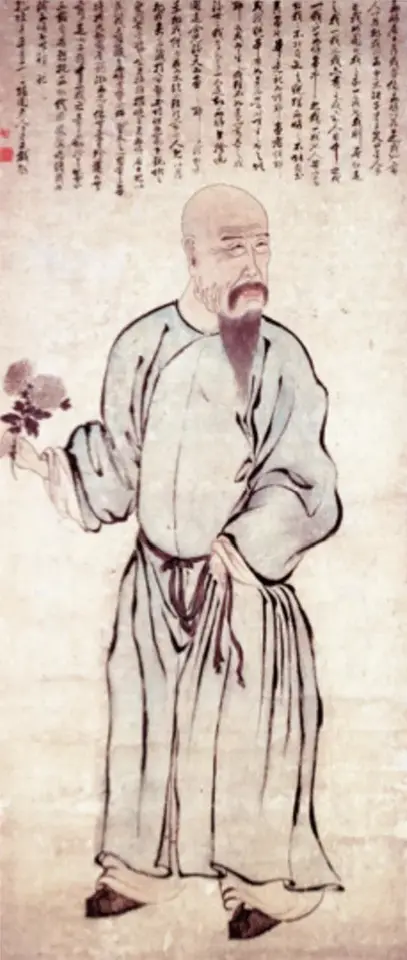
袁枚
Yuan Mei (袁枚, 1716–1798), courtesy name Zicai, pseudonym Jianzhai and later Master of Suiyuan, was a towering literary giant, poet, prose stylist, parallel prose master, landscape architect, and the supreme synthesizer of classical Chinese gastronomic theory during the Qianlong era of the Qing dynasty. Alongside Zhao Yi and Jiang Shiquan, he was celebrated as one of the Three Great Masters of the Qianlong Era (also known as…
Yuan Mei (袁枚, 1716–1798), courtesy name Zicai, pseudonym Jianzhai and later Master of Suiyuan, was a towering literary giant, poet, prose stylist, parallel prose master, landscape architect, and the supreme synthesizer of classical Chinese gastronomic theory during the Qianlong era of the Qing dynasty. Alongside Zhao Yi and Jiang Shiquan, he was celebrated as one of the Three Great Masters of the Qianlong Era (also known as the Three Great Masters of Jiangyou), and alongside Zhao Yi and Zhang Wentao, he stood as one of the Three Masters of the Evidential School of Native Sensibility (Xingling), dominating the Chinese literary landscape for nearly half a century. Displaying precocious literary genius, Yuan Mei passed the metropolitan examinations and obtained the degree of jinshi in 1739 at the youthful age of twenty-four, being selected as a Bachelor in the Hanlin Academy. Because his Manchu language translation examination did not attain top standing during the triennial review, he was assigned to provincial administration in Jiangnan, serving successively as magistrate of Lishui, Jiangpu, Shuyang, and Jiangning counties. As a local official, he conducted himself with remarkable administrative competence, clearing judicial backlogs, dispensing disaster relief, and punishing corrupt underlings, which earned him deep popular affection. In 1748, when Grand Secretary and Viceroy Yin-ji-shan recommended him for promotion to Magistrate of Gaoyou Subprefecture, the Board of Civil Appointments rejected the promotion over minor procedural matters and arrears in grain transport levies. Weary of bureaucratic sycophancy, the thirty-three-year-old magistrate resigned from officialdom on grounds of ill health. Following his retirement, Yuan purchased the derelict estate of former textile commissioner Suihede on the northern slope of Xiaocang Mountain in Jiangning, rechristening it Suiyuan (Garden of Following Nature). There he created an open garden without perimeter walls, welcoming universal public visitation throughout the seasons. Residing at Suiyuan for nearly fifty years, Yuan dedicated himself entirely to independent literary creation, championing the doctrine of Native Sensibility (Xingling), which insisted that poetry must express authentic emotional vitality while rejecting rigid archaism and dry pedantic evidentialism. Defying traditional gender taboos, he accepted talented women as poetic disciples, authoring enduring classics including Xiaocangshanfang Wenji, Suiyuan Shihua, Suiyuan Shidan, Zi Bu Yu, and Xu Shipin, exemplifying the quest for personal autonomy and lifestyle aesthetics in late imperial China.
Born on March 25 in Qiantang County, Hangzhou Prefecture, Zhejiang; educated at home with extraordinary precocity, entering private school at age six.
Passed child examinations exceptionally at age twelve, gaining county student status and broad renown across Hangzhou.
Traveled to Guilin to visit his uncle Yuan Hong; recommended by Governor Jin Hong for the special imperial examination, though not selected.
Passed the Zhejiang provincial examination at age twenty-three, achieving widespread literary renown.
Passed the metropolitan examination and obtained jinshi degree at twenty-four; selected into Hanlin Academy, highly esteemed by Grand Secretary Yin-ji-shan.
Dispatched as magistrate after Manchu language tests; served consecutively in Lishui, Jiangpu, and Shuyang counties with notable administrative distinction.
Appointed magistrate of Jiangning County at thirty; resolved thousands of backlogged lawsuits and earned deep public gratitude.
Resigned from officialdom following the rejection of his promotion to Gaoyou; purchased Suihede's abandoned estate to build Suiyuan.
Formally relocated his mother and family into Suiyuan, renouncing bureaucratic life to devote himself entirely to writing.
Concluded mourning for his mother at sixty-three; his poetic fame reached its zenith, with copies of his works sought even by Ryukyu Kingdom envoys.
Undertook extensive journeys after age sixty-seven, exploring Huangshan, Lushan, Tiantai, Yandang, and Wuyishan.
Published Suiyuan Shihua, advocating the doctrine of native sensibility and openly taking female disciples.
Published Suiyuan Shidan, systematically synthesizing classical Chinese culinary aesthetics and culinary rules.
Died peacefully at Suiyuan on January 3 at age eighty-one; interred in the tomb on the southern ridge of Xiaocang Mountain.
Yuan Mei was born on March 25, 1716 (the second day of the third lunar month of the fifty-fifth year of the Kangxi reign) into a modest scholarly family in Qiantang County, Hangzhou Prefecture, Zhejiang Province (present-day Shangcheng District, Hangzhou City). His grandfather Yuan Qi (courtesy name Danfu) failed civil examinations repeatedly and spent his life working as a legal private secretary (muyou) across different provinces. Danfu was gifted in poetry and practiced cursive calligraphy, leaving behind a poetry volume that young Yuan copied and recited, providing his initial poetic enlightenment. In his later years, Danfu suffered from an agonizing ulcer on his waist for three years before succumbing to illness.
Yuan's grandmother, Lady Chai, cared for him diligently until her death when Yuan was in his early twenties. Throughout his childhood and until he traveled abroad, Yuan slept by her side, receiving tender devotion. His father, Yuan Bin, also earned his livelihood as an itinerant legal secretary, traveling through Hubei, Fujian, Guangdong, and Yunnan. Well versed in the legal philosophy of Shen Buhai and Han Feizi, Yuan Bin occasionally instructed young Yuan in legal reasoning, fostering his keen analytical acumen. Yuan Bin died in Nanjing in 1752.
Yuan's mother, Lady Zhang, was the second daughter of the respected Hangzhou scholar Shi Lu, marrying into the Yuan family at age twenty. Temperate, gentle, and deeply educated, she educated Yuan with patience and never subjected him to harsh beatings. She lived to the advanced age of ninety-four, passing away when Yuan was sixty-three. Yuan's paternal aunt was widowed at thirty-one and returned to her maternal home, devoting herself to books and assisting in raising Yuan as her own son, exercising a profound influence on his early literary tastes.
Yuan was the only son among his siblings, with two elder sisters and two younger sisters. His eldest sister married Wang Yukun of Hangzhou and was skilled in poetry; his second sister married Lu Kangzhong, who died early of pulmonary tuberculosis, after which she returned home with two sons and passed away in Nanjing in 1754. His third sister, Yuan Ji (courtesy name Suwen), was a gifted poet who suffered an unfortunate arranged marriage, prompting Yuan to write the celebrated elegiac piece Ji Mei Wen after her untimely death. His fourth sister, Yuan Zhu, was also an accomplished poet who resided at Suiyuan in her later years. This rich familial literary environment nurtured Yuan's precocious talent.
Displaying extraordinary literary aptitude, Yuan entered formal schooling at six, memorizing texts at first sight, and could read the Zuo Zhuan and Records of the Grand Historian by age nine. In 1727, at age twelve, he passed the preliminary child examinations exceptionally, becoming a county student (xiucai). He subsequently enrolled in the renowned Wansong Academy in Hangzhou, composing essays on Emperor Gaozu of Han and Guo Ju that received warm praise from Academy Director Yang Shengwu, who encouraged his dedicated pursuit of classical letters.
During his youth, Yuan's family experienced extreme financial hardship, as his father's secretary earnings were insufficient to support the household. In 1736, at age twenty-one, Yuan traveled thousands of miles to Guilin, Guangxi, to seek shelter with his uncle Yuan Hong, who served as a legal secretary under the provincial governor. Having lived in Guangxi for over thirty years, Yuan Hong received his nephew warmly. During his stay, Guangxi Governor Jin Hong admired Yuan's extraordinary literary agility and formally recommended him for the prestigious Erudite Literatus (Boxue Hongci) imperial examination in Beijing.
Yuan traveled to Beijing with high ambitions to participate in the special examination of 1736. However, the examination board adhered strictly to rigid bureaucratic meters and conservative classical exegesis. Yuan's bold, inventive style and unrestrained brilliance diverged from the examiners' conservative standards, resulting in his elimination. This failure did not diminish his enthusiasm. Returning to Zhejiang, he secluded himself to study pre-Qin, Han, and Wei literature alongside Tang and Song masterworks, steadily refining his prose. In 1740, Yuan Hong died in Guilin; remembering his uncle's benevolence, Yuan journeyed to Guilin in 1744 to escort his remains back to Hangzhou for burial.
In 1738, at age twenty-three, Yuan passed the Zhejiang provincial examination, earning wide renown. In 1739, at age twenty-four, he traveled to Beijing and passed the metropolitan examination, placing twenty-fourth in the palace examination to earn his jinshi degree. In the court review, the Qianlong Emperor selected him into the Hanlin Academy as a Bachelor (shujishi). Grand Secretary Yin-ji-shan, who was then serving in the central government and overseeing academy affairs, recognized Yuan's exceptional talent, admitting him into his intellectual circle and establishing an enduring patronage.
During his three years in the Hanlin Academy, Yuan had access to the imperial library, refining his literary craftsmanship. However, in the 1742 graduation examination, the court tested Hanlin scholars on Manchu translation. Valuing freedom and impatient with rote memorization of Manchu orthography, Yuan attained only mediocre scores. According to Qing administrative regulations, scholars who failed to secure Hanlin compilerships were assigned to provincial offices. Consequently, Yuan was dispatched to Jiangnan as a local magistrate.
Between 1742 and 1745, Yuan served successively as magistrate of Lishui, Jiangpu, and Shuyang counties in Jiangsu. In each jurisdiction, he demonstrated pragmatic administrative vigor. In Lishui, he investigated rural distress, resolved long-standing judicial grievances, and corrected fraudulent tax registries; in Jiangpu, he suppressed bandits and enforced neighborhood mutual-surveillance systems to resettle vagrants. In Shuyang, when severe floods triggered widespread famine, Yuan personally inspected breaches in the dikes amid heavy downpours, opening public granaries to lend grain to starving households and donating his own official stipend to construct shelters for refugees. When he departed Shuyang, thousands of weeping residents blocked the roads for miles to bid him farewell.
In 1745, at age thirty, Yuan was appointed magistrate of Jiangning County, the administrative seat of Jiangning Prefecture. As the seat of the Viceroy of Liangjiang, the Governor of Jiangsu, and the Imperial Textile Commissioner, Jiangning was a bustling commercial metropolis where court dignitaries congregated, renowned for mountains of litigation and labyrinthine factional politics. During his four-year tenure, Yuan handled judicial cases with extraordinary celerity, adjudicating hundreds of disputes daily with razor-sharp judgment, clearing years of accumulated judicial backlogs within weeks. Facing lawless actions by local magnates and Manchu bannermen, he applied the law impartially without subservience, while treating commoners with benevolence. The citizens of Jiangning erected a living shrine in his honor to commemorate his virtuous governance.
However, the relentless clerical burdens and obligatory subservience to superior officials clashed irreconcilably with Yuan's desire for intellectual freedom. In 1747, Viceroy Yin-ji-shan recommended Yuan for promotion to Magistrate of Gaoyou Subprefecture. Yet this promotion was blocked in Beijing by the Board of Civil Appointments. The evaluating officials cited Yuan's unrestrained personal conduct and the fact that grain transport levies in Jiangning had not yet been fully collected, punishing him with suspended promotion and salary deductions.
This bureaucratic rebuff shattered Yuan's political enthusiasm. In letters to his friend Tao Shihuang, Yuan declared that he was unwilling to serve as an exalted lackey to high officials, nor would he act as a slave to powerful dignitaries. Modern scholars have examined his resignation motives, identifying filial care for his mother, political self-preservation, impatience with administrative chores, and the desire to serve the nation through literature. Recognizing that staying in office would stifle his spirit, Yuan took advantage of his mother's advanced age to submit his resignation on grounds of illness in the winter of 1748. In the spring of 1749, his retirement was formally approved, bringing an end to his bureaucratic career.
While serving as magistrate of Jiangning, Yuan developed a deep love for the natural beauty and cultural heritage of Nanjing. In the winter of 1748, on the eve of his resignation, he purchased the abandoned estate of former Kangxi-era textile commissioner Suihede on the northern slope of Xiaocang Mountain for three hundred ounces of silver. Originally part of Cao Yin's family temple and villa grounds, the property had fallen into ruin over decades, overgrown with weeds and littered with broken masonry. Yuan renamed the estate Suiyuan, signifying the principle of following nature and adapting to terrain.
Yuan spent several years renovating the grounds, adapting his designs to the natural contours of Xiaocang Mountain, constructing pavilions on heights, erecting waterside kiosks in hollows, throwing bridges over ravines, and placing boats on streams. He constructed over twenty scenic spots, including Jinshicang, Huanxiangchu, Xiaomianzhai, Junshan Hongxue, Lvxiaoge, and Xiangxuehai, transforming the estate into a verdant paradise. In 1752, at age thirty-seven, Yuan moved his mother, Lady Zhang, and his entire household into Suiyuan, beginning nearly five decades of reclusion.
Unlike traditional elites who enclosed their estates behind high walls, Yuan took the unprecedented step of removing all perimeter walls, refusing to construct gates and keeping the grounds open free of charge to all visitors throughout the year. Above the entrance, he penned the famous couplet: "Releasing cranes to seek mountain birds as guests, allowing all people to view the four-season flowers." Suiyuan became Jiangnan's most celebrated public cultural landmark, bustling with scholars, citizens, and sightseers, establishing a new model of intellectual independence.
Living at Suiyuan, Yuan was free from bureaucratic obligations, devoting himself entirely to literary production and theoretical criticism. He advocated the doctrine of Native Sensibility (Xingling), publishing Xiaocangshanfang Wenji and Suiyuan Shihua, igniting a nationwide poetic revolution. Suiyuan became a cultural pilgrimage site for scholars, imperial officials, and aspiring writers. High dignitaries passing through Jiangning invariably visited Suiyuan to consult its master, while wealthy merchants and scholars offered generous fees to commission commemorative inscriptions from his brush. Even envoys from the tributary Ryukyu Kingdom carried funds to Nanjing specifically to purchase his complete works.
In 1778, at age sixty-three, Yuan concluded formal mourning for his mother, solidifying his stature as the supreme arbiter of poetry in southeastern China. Having adhered strictly to the filial precept of avoiding distant travel while his parents lived, Yuan began extensive travels across China at age sixty-seven after completing mourning. Accompanied by disciples and servants, he explored Tiantai, Yandang, and Siming mountains at sixty-seven; ascended Mount Huang at sixty-eight; journeyed through Lushan, Mount Luofu, Danxia, Guilin, and Mount Heng at sixty-nine; and visited Mount Wuyi at seventy-one to evaluate its cliff teas.
In his late years, Yuan's vigor remained undiminished. At seventy-three, he revisited Shuyang, where local residents crowded the roads in affectionate welcome; at seventy-seven and seventy-nine, he ascended Mount Tiantai twice more; at eighty, he traveled through Jiangsu and Zhejiang; and at eighty-one, shortly before his death, he climbed the Chuihong Bridge in Wujiang. Contemporaries marveled that his octogenarian spirit surpassed that of youth. On January 3, 1798, Yuan passed away peacefully at Suiyuan at age eighty-one. He was interred in the tomb on the southern ridge of Xiaocang Mountain, with Grand Secretary Yao Nai composing his epitaph.
In the history of Chinese literature, Yuan Mei's most celebrated achievement was the creation and promotion of the doctrine of Native Sensibility (Xingling), which launched a comprehensive critique of the archaism, formalistic pedantry, and evidential scholasticism dominating mid-Qing poetry. Grounded in emotional authenticity, Yuan's doctrine asserted that poetry must express spontaneous inner feelings. In Suiyuan Shihua, he argued that poetry is the natural manifestation of genuine human emotion, not moralizing lecture notes or dictionary mosaics assembled to display erudition.
Yuan launched sharp polemical attacks against Shen Deqian's conservative theory of classical decorum (Gediao), arguing that Shen's doctrine reduced poets to sterile imitators of Du Fu and Han Yu, producing mechanical puppets devoid of originality. Against Wang Shizhen's Spirit and Tone School (Shenyun), he criticized its ethereal vagueness and detachment from everyday human reality; against Weng Fanggang's Texture and Fact School (Jili), he ridiculed its practice of treating the transcription of ancient texts as poetry, which suffocated lyrical expression under evidential notes.
Yuan proclaimed: "In composing poetry, one must not be without oneself; so long as my self exists, one must never resort to plagiarism." Recognizing that individuals possess differing talents—distinguishing between naturally fluid brushes and clumsy pens—he emphasized poetic genius and imaginative inspiration. Yet he did not discard learning, arguing that erudition must be assimilated internally until it flows naturally as part of one's voice. Emphasizing that changing historical eras require new literary modes, he championed expressing new meanings in fresh language. Under his influence, the Native Sensibility School swept across Qianjia literary circles, dismantling the rigid constraints of Neo-Confucian dogma.
In creative practice, Yuan Mei was both a pioneering theorist and an accomplished poetic master, making groundbreaking contributions to landscape poetry and historical appraisal. In landscape verse, he departed from the political sorrow of early Qing loyalists and the melancholic chill of the Zhe School's Li E. Yuan's landscape poetry asserted human subjectivity, personalizing and personifying the natural world. Under his brush, mountains and streams were not cold, alienated backdrops, but living companions capable of emotional communion.
Discarding the rigid meters of lyric poetry, Yuan embraced the expressive freedom of ancient-style verse, infusing landscape description with humor and vital zest. He utilized vivid realistic sketching (baimiao) and playful metaphors, as when he described mountain caves as monkey dwellings where animals stayed indoors like recluses, blending vivid imagery with delightful wit. His lively humor captured the spirit of the Song poet Yang Wanli, while his descriptive technique drew on Cha Shenxing, animating Chinese landscape poetry with buoyant vitality.
In historical verse, Yuan composed over two hundred poems, establishing an innovative critical paradigm emphasizing original insight and lingering resonance. He adopted Jiang Kui's maxim of speaking what others find difficult to say while avoiding conventional commonplaces, excelling in historical revisionism (fan'an). Rejecting uncritical moral evaluations, he reassessed historical figures from sophisticated philosophical perspectives. In his famous cycle Fifteen Quatrains on Visiting the Tomb of King Yue, he avoided conventional diatribes against Qin Hui, exploring the geopolitics of the Song-Jin rivalry, Emperor Gaozong's suspicious nature, and Yue Fei's military dilemmas from fifteen distinct perspectives without repeating a single concept.
Yuan Mei explored poetic theory through approximately one hundred critical quatrains and his four-character critical treatise Xu Shipin (Continuation of the Categories of Poetry). His critical poems, preserved primarily in Xiaocangshanfang Wenji, covered diverse themes, assessing historical lineages and offering prefaces to contemporary collections. By evaluating poetry through poetry, he avoided dry dogmatism, capturing poetic truths in succinct verses.
Xu Shipin was Yuan's innovative response to Sikong Tu's Tang dynasty treatise Twenty-Four Categories of Poetry. Written entirely in four-character rhymed verse across thirty-two chapters, the work systematically analyzed poetic composition, artistic refinement, creative discipline, and the dialectical balance between tradition and innovation. Utilizing rich metaphors and comparative similes, Yuan formulated aesthetic principles with rhythmic resonance. Insisting that erudition and genius must complement each other and that poetic technique should remain seamless, Xu Shipin stands as a landmark in classical Chinese literary theory.
Elegiac verse was a deeply moving dimension of Yuan Mei's poetic corpus, spanning his youth, mature years, and old age, reflecting his principle of poetry expressing genuine feeling. In mourning family members and close friends, Yuan rejected obscure classical allusions, observing that utilizing pedantic allusions was like inviting strangers to dinner, where polite interrogations bored the guests. He maintained that classical allusions should function like salt dissolved in water: discernible in flavor, yet invisible in form.
In poems mourning his deceased sister, his wives, and companions such as Shen Deqian and Cheng Jinfang, Yuan utilized plain, expressive language to convey grief. He skillfully paired parallel couplets with subtle psychological details, frequently prefacing verses with prose introductions that documented the deceased's life, domestic moments, and the sorrow of separation. This combination of concise diction, authentic feeling, and lingering melancholy enriched the artistic range of traditional Chinese mourning poetry.
Beyond poetry, Yuan Mei achieved equal renown in classical prose, prompting contemporary leader Cheng Jinfang to rank his classical prose first, parallel prose second, and poetry third, while Shu Wei noted that Yuan's prose dominated southeastern literary circles. Yuan's prose theory mirrored his poetic stance: in classical prose, he advocated looking to the authentic simplicity of pre-Qin and Han texts while firmly rejecting the mechanical imitation of the Ming Seven Masters and Qing archaists. He criticized slavish adherence to Tang and Song models, arguing that authentic prose must express the author's heart, since human minds differ as distinctly as human faces.
In content, Yuan condemned Neo-Confucian moralizing and criticized evidential scholars who packed prose with pedantic citations to display erudition. His prose covered biographies, landscape records, expressive essays, and letters. His biographical sketches vividly portrayed human character through judicious detail; his travelogues animated nature with vitality; his expressive essays blended emotional candor with thoughtful analysis; and his personal letters were concise, witty, and candid, representing the pinnacle of Qing vernacular prose.
During the mid-Qing revival of parallel prose, Yuan Mei established himself among the Eight Great Masters of Qing Parallel Prose through the eight volumes preserved in Xiaocangshanfang Waiji, formulating an original aesthetic style. The defining feature of Yuan's parallel prose was embedding novelty within antithesis, achieving a synthesis of flowing elegance and unrestrained vigor. Flowing elegance denoted novel conceptual design, fluid rhythm, and fresh diction, praised by Shi Yunyu as resonant and inventive; unrestrained vigor reflected profound insight, rich institutional learning, and sweeping argumentative power reminiscent of Western Han political treatises.
Yuan transcended the rigid balance of Tang and Song writers, assimilating the decorative richness of the Six Dynasties alongside the flexible sentence structures of pre-Qin philosophy. Infusing parallel prose with the vitality of ancient-style prose, he varied sentence lengths and alternated regular and irregular phrases, rescuing the genre from stilted stiffness. His parallel prose was praised by Tongcheng master Yao Nai and modern literary historian Liu Linsheng.
Beyond his literary renown, Yuan Mei was revered as a culinary sage in traditional Chinese material culture. Lin Yutang introduced him to the West by noting that this great poet and scholar wrote a thick book discussing cooking methods. Composed over four decades of tasting and research, Suiyuan Shidan stands as a milestone in Chinese gastronomy, comprising fourteen chapters: General Principles, Prohibitions, Seafood, River Delicacies, Pork, Other Meats, Poultry, Scaled Fish, Scaleless Fish, Vegetarian Dishes, Snacks, Dim Sum, Rice and Congee, and Tea and Wine.
The treatise recorded over three hundred and twenty dishes, teas, and wines from the late Yuan to the mid-Qing, documenting ingredients, cooking procedures, heat control, and historical provenance. Theoretically, Yuan formulated a modern culinary philosophy, elevating cooking into a serious discipline for personal well-being, famously declaring that cooking resembles medicine and preparing dishes resembles governing a state. He established the Twenty Principles and Fourteen Prohibitions, condemning ostentation such as eating with one's ears (ordering expensive delicacies like bird's nest purely for status) and eating with one's eyes (crowding tables with dozens of untouched bowls). Furthermore, he established freshness (xian) as the ultimate standard of culinary excellence, advocating that flavors must be fresh and interests genuine, while penning biographies of skilled chefs to challenge traditional prejudices against culinary labor.
Yuan was also an accomplished tea connoisseur. During his travels across China's scenic mountains, tasting and documenting regional tea traditions formed an integral part of his intellectual life. He recorded the picking seasons, leaf morphology, and infusion characteristics of Yangxian tea, Dongting Junshan silver needles, Liu'an needles, and Anhua tea. In 1786, at age seventy-one, he climbed Mount Wuyi, conducting detailed fieldwork on cliff teas, noting in Suiyuan Shidan that Wuyi tea maintained its rich fragrance even after three infusions, comparing its refined character to jade and crystal and ranking it foremost among teas.
In tea preparation, Yuan formulated systematic guidelines for preservation and brewing. For storage, he advised dividing tea into four-ounce paper packets sealed inside lime jars, replacing the lime every ten days to maintain dryness. Regarding water quality, he asserted that brewing good tea required fine water, favoring Huishan Spring and fresh snow water. For brewing, he advocated intense charcoal heat, using specialized kettles to infuse immediately upon boiling, avoiding over-boiled or cooled water, formulating an aesthetic of tea preparation that enriched Chinese tea culture.
In landscape architecture, Yuan elevated the construction of Suiyuan into a classic model of Chinese literati gardens, preserving his insights across his essays and poems. In designing Suiyuan, he realized the philosophical principles of creating an entire universe within a small enclosure. Breaking away from the enclosed introversion of Suzhou gardens, he utilized the terrain of Xiaocang Mountain to build pavilions on ridges and stream-side kiosks, creating twenty-four distinct scenic spaces designed for all seasons and weather conditions.
To express his nostalgia for Hangzhou, he built artificial hills and ponds modeled on West Lake, achieving the ideal of residing as if by the lake in a distant home. Remarkably, in 1769, Yuan built a family cemetery on the western edge of Suiyuan, placing burial chambers for himself, his wives, concubines, and servants side by side, reflecting a desire for eternal companionship that integrated landscape architecture with cosmic mortality. Both contemporary master Yao Nai and modern architect Tong Jun praised Suiyuan for its harmonious synthesis of nature and human sentiment.
In social thought, Yuan courageously challenged the oppression of female intellectual talent by opening his doors to women disciples. Amid the conservative atmosphere of the Qianlong era, where women were discouraged from literary pursuits, Yuan asserted that natural intellectual vitality was bestowed equally on men and women, arguing that women's poetry was often purer than that of men corrupted by civil examination essays.
Beginning in 1790, Yuan welcomed prominent Jiangnan women poets into Suiyuan, including Xi Peilan, Luo Qilan, Wang Yuzhen, Zhang Yuzhen, Jin Yi, and Bao Zhihui. He corrected their poetic meters, financed the publication of Selected Poems of Suiyuan's Female Disciples, and hosted poetic gatherings. This bold action incited fury among conservative moralists such as Zhang Xuecheng, who accused him of corrupting public morals. Unintimidated, Yuan published letters defending women's rights to intellectual and creative freedom, becoming a pioneer of modern Chinese female emancipation.
Yuan was also a distinguished writer of classical supernatural tales. In his late years, collecting street gossip and folklore, he inverted Confucius's reluctance to discuss the supernatural by composing Zi Bu Yu (What the Master Would Not Discuss) in twenty-four volumes and Xu Zi Bu Yu in ten volumes. The collection stands alongside Pu Songling's Strange Tales from a Chinese Studio and Ji Yun's Notes from the Thatched Abode.
Utilizing fluid prose, Yuan recorded ghost stories, karmic retributions, judicial anomalies, and bureaucratic corruption. Unlike Ji Yun's strict adherence to Neo-Confucian moralizing, Yuan infused his tales with playful satire, using supernatural narratives to expose corrupt officials and pious hypocrites while expressing compassion for the marginalized, reflecting profound enlightened skepticism.
Throughout his life, Yuan was an avid bibliophile. From his early magisterial posts through his decades at Suiyuan, he devoted his official salary and literary fees to acquiring rare editions, accumulating over four hundred thousand volumes in his library halls, Xiaocangshanfang and Suohaoxuan. In Suohaoxuan Ji, he formulated his philosophy of book collecting, noting that pleasures of the senses, material luxuries, and curiosities were constrained by age and wealth, whereas the joy of reading remained inexhaustible across youth, old age, poverty, and wealth.
Yuan was exceptionally generous with his collection. When scholar Lu Wenchao directed the Zhongshan Academy, he borrowed books regularly from Xiaocangshanfang; Yuan composed a poem noting that whereas other borrowers simply took books, Lu returned them within ten days, correcting textual corruptions and repairing damaged bindings. In his essay On Borrowing Books by Young Huang, Yuan observed that books were read most eagerly when borrowed, encouraging students to cherish time and read diligently.
Yuan possessed an extraordinary commercial acumen, recognized by modern scholars as a pioneer of cultural enterprise. After retiring to Suiyuan, he established his personal brand by removing the estate's walls, attracting crowds of visitors. He then published Suiyuan Shidan, providing catering services and musical entertainment within the pavilions, turning Suiyuan into a premier culinary destination.
Moreover, he established a woodblock printing workshop in Suiyuan, printing and marketing Suiyuan Quji and Suiyuan Shihua independently. His books enjoyed sustained demand across China and tributary states such as the Ryukyu Kingdom, earning thousands of silver ounces annually in publication proceeds and biographical commissions. This substantial income afforded him complete financial self-sufficiency, enabling him to deal with imperial officials as an independent equal, achieving a rare harmony of economic self-reliance and intellectual freedom.
Yuan maintained an extraordinarily expansive social network. Modern scholars have verified that over six hundred and sixteen historical figures maintained direct social intercourse with him, spanning royal princes, provincial viceroys, commoner poets, Buddhist monks, merchants, and talented women, forming a panoramic portrait of the Qianlong cultural elite.
Among his early friends, Yao Chenglie and Yuan studied together at the Wansong Academy and passed the provincial examination in the same year, sustaining an intimate friendship of over fifty years. Li Tang, another examination classmate, served as magistrate of Shangyuan while Yuan governed Jiangning, the two administering the shared city like brothers. Qian Qi was a fellow county student whose daughter Qian Lin became a prominent Suiyuan disciple, joining their families in marriage. Among imperial officials, Grand Secretary Yin-ji-shan and Jiangsu Governor Qifeng'e provided steadfast patronage, ensuring that Yuan enjoyed imperial respect even in reclusion. Among literary titans, Tongcheng master Yao Nai became his close intellectual companion during his eight years directing the Zhongshan Academy, while scholars such as Lu Wenchao and Yang Shengwu engaged in continuous intellectual exchanges, cementing Yuan's status as the unrivaled master of southeastern literature.
In the history of traditional Chinese literary criticism, Yuan's Suiyuan Shihua occupied a pivotal transitional position, reflecting distinctive contemporary characteristics and exercising enduring influence over subsequent generations. Yuan assimilated traditional poetic commentary models while introducing bold structural innovations, transforming the genre from dry collections of citations into an integrated synthesis of aesthetic theory, poetic anthology, and lively personal narrative.
While expounding his doctrine of Native Sensibility, Yuan documented the colorful anecdotes, dinner conversations, and poetic exchanges of contemporary writers, whether prominent ministers, commoners, or cloistered women. By citing hundreds of contemporary verses to substantiate his theoretical claims, he infused the critical treatise with the narrative charm of autobiographical prose, pioneering an expressive approach to literary criticism.
Yuan's lasting contribution to Chinese food culture went far beyond preserving recipes; he constructed the first comprehensive gastronomic philosophy in Chinese history. Modern culinary historians summarize his achievements through ten landmark firsts: he was the first Chinese scholar to declare cooking an academic discipline; the first to pursue culinary studies as a lifelong endeavor for human welfare; the first to elevate dining to a sophisticated aesthetic art; the first prominent literatus to author formal biographies celebrating professional chefs; the first to achieve recognized status as a professional culinary arbiter; the first to formulate civil dining prohibitions against waste, pretension, and excessive drinking; the first to define operational protocols for professional cooks; the first to advocate balanced nutritional hygiene; the first to declare his love for fine taste against conservative Confucian dogmas; and the first to establish freshness (xian) as the supreme criterion of culinary excellence, asserting that authentic flavor and genuine interest were indivisible from poetic composition.
In landscape theory, Yuan articulated a dynamic seasonal aesthetic through his celebrated collection Twenty-Four Poems on Suiyuan. Rather than treating landscape gardens as static arrangements of stones and water, he designed twenty-four distinct spatial environments that responded to changing weather and the four seasons: Xiangxuehai was designed for admiring plum blossoms in winter snow, Junshan Hongxue highlighted autumn maples, Lvxiaoge offered cool breezes across summer lotuses, and Huanxiangchu welcomed the fragrance of autumn osmanthus.
By connecting the ancient concept of creating a universe within a small enclosure to the cyclical movements of the cosmos, Yuan created a dynamic stage where scholars could enjoy rain, listen to streams through bamboo, boat on clear mornings, or brew tea on snowy evenings. This human-centered landscape philosophy infused traditional Chinese garden art with vibrant emotional vitality.
Yuan Mei's poetic theory provoked intense debate among contemporaries and later critics, reflecting the revolutionary impact of the Native Sensibility doctrine. Scholars such as Wang Chang praised his extraordinary talent and lively wit, Sun Xingyan celebrated his administrative capability and profound writing, and Yao Nai marveled at his unsurpassed enjoyment of mountain reclusion and literary fame.
Conversely, conservative Neo-Confucian moralists attacked him bitterly. In Xiaoyuan Shihua, Zhu Tingzhen condemned his poetry as corrupting public morals, while Hong Liangji satirized him as a cunning fox revealing its tail when drunk. Yet as modern literary historians emphasize, Yuan's greatness lay in his refusal to submit to moralistic conventions. Choosing to abandon bureaucratic office to become an independent professional poet, he celebrated life's authentic joys and personal freedom, sounding a clarion call for individual awakening in late imperial China.
FIGURES ASSOCIATED WITH THIS DYNASTY