Birth in Pingcheng
Born in the northern capital Pingcheng as the second son of Emperor Xiaowen, displaying early composure and intellectual acumen.
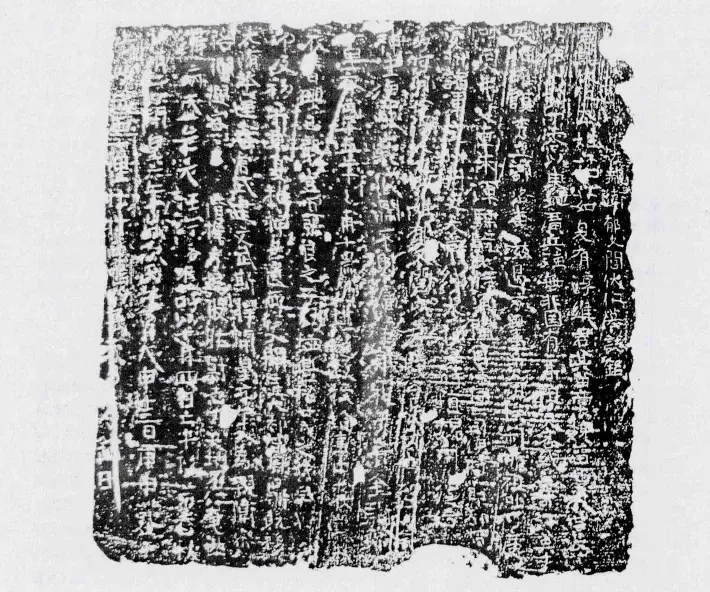
元恪
Yuan Ke (元恪, 483–515), posthumously honored as Emperor Xuanwu (宣武皇帝) with the temple name Shizong (世宗), was the eighth monarch of the Northern Wei dynasty and the second son of Emperor Xiaowen (Yuan Hong). In 497, after his elder half-brother Yuan Xun was deposed and executed for plotting resistance against Sinicization reforms, Yuan Ke was formally designated crown prince. In 499, Emperor Xiaowen fell fatally ill during a…
Yuan Ke (元恪, 483–515), posthumously honored as Emperor Xuanwu (宣武皇帝) with the temple name Shizong (世宗), was the eighth monarch of the Northern Wei dynasty and the second son of Emperor Xiaowen (Yuan Hong). In 497, after his elder half-brother Yuan Xun was deposed and executed for plotting resistance against Sinicization reforms, Yuan Ke was formally designated crown prince. In 499, Emperor Xiaowen fell fatally ill during a southern military campaign and passed away at Luyang; Yuan Ke succeeded to the imperial throne, adopting the era name Jingming. During the initial period of his reign, state affairs were dominated by a regency council of six senior ministers headed by Prince of Xianyang Yuan Xi. In 501, Yuan Ke collaborated with Imperial Guard Commander Yu Lie to stage a swift palace coup, stripping the imperial princes of their executive power and establishing direct personal autocratic rule. Upon assuming personal control, Yuan Ke consolidated his father's Sinicization policies, prohibiting relocated Xianbei aristocrats from returning to the former northern capital of Pingcheng. In urban construction, he directed a massive expansion of Luoyang's outer perimeter, designing over 320 residential wards alongside major commercial complexes including the Sitong Market, establishing the tripartite walled ward-and-market urban blueprint that profoundly influenced subsequent Chinese and East Asian capitals. He founded the Foreign Quarters (Siyi Guan and Siyi Li) to host envoys and merchants from tens of nations along the Silk Road, elevating Luoyang into a premier international metropolis. Militarily, he repelled the Rouran Khaganate and constructed nine defensive frontier bastions, while launching sweeping southern campaigns against the Liang dynasty, capturing Hanzhong, Yiyang, Jiange, and northern Sichuan to bring Northern Wei's territory and geopolitical prestige to its zenith. In institutional governance, he abolished the barbaric customary practice of executing mothers when their sons were designated heirs. In 515, Yuan Ke passed away in the Shiqian Hall at the age of thirty-three and was interred at Jingling.
Born in the northern capital Pingcheng as the second son of Emperor Xiaowen, displaying early composure and intellectual acumen.
Designated Crown Prince following the deposition and execution of his elder brother Yuan Xun, moving into the Eastern Palace.
Ascended the imperial throne at Luyang upon Emperor Xiaowen's death, changing the era name to Jingming under the guidance of six designated regents.
Received the surrender of Shouchun offered by Pei Shuye, dispatching Yuan Xie and Wang Su to defeat southern counteroffensives.
Mobilized imperial guards under Yu Lie to strip regent princes of command, inaugurating direct personal governance and initiating the expansion of Luoyang.
Commenced the Zhongli and Yiyang campaigns, nationalizing revenues from Hedong salt pools and initiating agrarian military colonies along the southern frontier.
Dispatched senior general Yuan Huai to repel 120,000 Rouran cavalry at Yunzhong, adding nine defensive fortress cities between the Northern Six Garrisons; recaptured Liang Province and Hanzhong.
Directed commander Wang Zu to advance into northern Sichuan, seizing the mountain pass of Jiange and besieging Fucheng, incorporating thirteen commanderies and over fifty thousand households.
Promulgated an imperial edict establishing the National University, Directorate of Education, and Four Gates Elementary Schools to cultivate classical scholarship.
Abolished the institutionalized execution of mothers of imperial heirs, designating Yuan Xu (Emperor Xiaoming) as Crown Prince.
Silk Road diplomacy reached its zenith with regular embassies from over twenty western states trading at the Sitong Market and residing in the Foreign Quarters.
Died of sudden illness on the thirteenth day of the first month at age thirty-three; posthumously honored as Emperor Xuanwu with the temple name Shizong, interred at Jingling.
Yuan Ke was born in the northern capital of Pingcheng as the second son of Emperor Xiaowen. At the time of his birth in 483, the Northern Wei court still rigidly practiced the customary steppe tradition of executing the biological mother whenever an imperial son was designated successor. Shortly after the birth of Yuan Ke's elder half-brother Yuan Xun, his mother Lady Lin was put to death in accordance with this rule, and the infant was raised by Empress Dowager Feng. In 493, as Emperor Xiaowen launched his sweeping Sinicization program and moved the imperial capital to Luoyang, ten-year-old Yuan Xun was designated crown prince and left to oversee the new metropolis. However, Yuan Xun was attached to traditional Xianbei customs, loathed the scorching heat of the Central Plains, and resisted wearing Han clothing.
In 496, the thirteen-year-old prince secretly fled north to Pingcheng with the support of conservative Xianbei nobles who opposed relocation and cultural assimilation. Emperor Xiaowen suppressed the attempted insurrection, demoting Yuan Xun to commoner status and placing him under house arrest at Heyang, before ordering his execution by forced suicide. Following this crisis, Emperor Xiaowen officially invested the fourteen-year-old Yuan Ke as Crown Prince in the first month of 497. Yuan Ke was quiet, observant, and deeply respectful of Confucian court ceremonies, demonstrating steadfast loyalty to his father's reformist policies while residing in the Eastern Palace.
In the third month of 499, Emperor Xiaowen fell grievously ill during an expedition against the Southern Qi. On the twenty-eighth day, the dying emperor instructed Prince of Pengcheng Yuan Xie to summon Crown Prince Yuan Ke to the military headquarters at Luyang to assume imperial power. The emperor appointed a regency council consisting of four imperial princes—Yuan Xi, Yuan Xiang, Yuan Cheng, and Yuan Jia—alongside two prominent Han ministers, Wang Su and Song Bian, to jointly direct administration. Emperor Xiaowen passed away on the first day of the fourth month; on the twelfth day, Yuan Ke ascended the imperial throne at Luyang as Emperor Xuanwu, inaugurating the Jingming era.
At the start of his reign, Emperor Xuanwu was only sixteen years old and found himself entirely constrained by the regency council. Soon after his accession, the scholar Song Bian passed away prematurely, while Wang Su, a southern defecting aristocrat favored by Emperor Xiaowen, became the target of fierce jealousy from Prince of Rencheng Yuan Cheng. Exploiting this division, Prince of Xianyang Yuan Xi and Prince of Beihai Yuan Xiang joined forces to accuse Yuan Cheng of abusing power, securing his dismissal from court. As Prince of Guangyang Yuan Jia was a distant relative incapable of asserting leadership, supreme political authority fell into the hands of Yuan Xi, who enriched his faction and sought complete hegemony over the state.
To cement his dominance, Yuan Xi repeatedly demanded command of the imperial palace guards from Commander of the Imperial Guards Yu Lie. Yu Lie, an incorruptible veteran loyal to the dynasty, categorically refused to surrender military authority. Frustrated by this resistance, Yuan Xi attempted to reassign Yu Lie as Regional Inspector of Heng Province, but Yu Lie repeatedly petitioned to remain in the capital. Emperor Xuanwu recognized that the conflict between Yuan Xi and Yu Lie presented an ideal opportunity to reclaim imperial authority. He privately summoned Yu Lie's son Yu Zhong, asking him to deliver a secret message to his father regarding the elimination of the regency. When Yu Lie met privately with the emperor, Yuan Ke asked whether he was prepared to lead palace troops against the overbearing princes; Yu Lie pledged his life to the emperor's service.
In the first month of 501, during the annual imperial ancestral sacrifice, Emperor Xuanwu executed his counter-coup. At the emperor's command, Yu Lie led more than sixty elite palace guards into the administrative offices, arresting Prince of Xianyang Yuan Xi, Prince of Pengcheng Yuan Xie, and Prince of Beihai Yuan Xiang, escorting them under armed guard directly into the emperor's presence. Emperor Xuanwu publicly denounced their factionalism and ordered their immediate retirement to private residences. Through this decisive action, the young monarch dismantled the regency, recovered absolute imperial prerogative, and established direct autocratic control over the Northern Wei government.
Upon consolidating personal power, Emperor Xuanwu initiated an urban expansion project that permanently transformed Luoyang. Following Emperor Xiaowen's relocation in 494, the imperial administration had functioned within the confines of the old Han-Wei city walls, which were inadequate for accommodating the hundreds of thousands of relocated officials, garrisons, and international merchants. In the second month of 501, Emperor Xuanwu mobilized fifty-five thousand laborers from the capital region to construct an outer perimeter wall surrounding the ancient city. The newly completed outer city measured twenty leagues east-to-west and fifteen leagues north-to-south, encompassing nearly one hundred square kilometers and establishing Luoyang as the largest metropolis in the world at that time.
Within this urban landscape, Emperor Xuanwu pioneered the structured walled ward system. The entire expanse of the outer city was systematically divided into over 320 residential wards. Each ward was designed with standard dimensions of three hundred paces per side, forming a square of one square league, surrounded by continuous earthen walls with gates on all four sides. Ward headmen were appointed to supervise local administration, tax collection, and nighttime curfews. This walled grid design effectively resolved urban security and administrative challenges, serving as the foundational prototype for the capital layouts of the Sui and Tang dynasties in Chang'an and Luoyang, as well as influencing later capitals across East Asia.
To stimulate commerce, Emperor Xuanwu established three primary commercial zones: the Grand Market, the Small Market, and the Sitong Market. Surrounding the Grand Market, he designated eight specialized wards accommodating distinct trades: commodity grains in the east, brewing in the west, performing arts in the south, mortuary crafts in the north, and luxury silk and precious metals in adjoining quarters. Furthermore, the Sitong Market, situated strategically at the confluence of the Yi and Luo rivers, provided extensive berths for water transport, attracting foreign merchants and tributary embassies from across Eurasia.
Throughout his reign, Emperor Xuanwu capitalized on the political instability of the southern dynasties to execute an aggressive, expansionist foreign policy. In 500, amidst the tyrannical reign of the Southern Qi emperor Xiao Baojuan, Pei Shuye, Regional Inspector of Yu Province, surrendered the vital fortress of Shouchun to Northern Wei. Emperor Xuanwu seized this strategic advantage, dispatching Prince of Pengcheng Yuan Xie with one hundred thousand troops to secure the city and decisively repelling repeated southern counterattacks, permanently anchoring Northern Wei control over the Huai River basin.
In 503, Emperor Xuanwu launched the massive Zhongli and Yiyang campaigns, appointing Minister of Personnel Yuan Ying as General Who Pacifies the South to lead operations against the newly established Liang dynasty under Xiao Yan. Over a year of intense warfare, Yuan Ying crushed southern armies, killed Liang generals including Pan Dianlian, and captured the strategic fortress of Yiyang in 504. Emperor Xuanwu organized the conquered territory into Ying Province, pushing the northern defense perimeter directly to the northern bank of the Yangtze River. To sustain these forward garrisons, he issued agrarian decrees establishing extensive military farming colonies along the Huai River, mandating alternate plantings of wheat in autumn and rice in spring to achieve self-sufficiency for border troops.
Simultaneously, Northern Wei forces achieved historic breakthroughs in the southwest. Following the surrender of Hanzhong by Liang administrator Xiahou Daocan in late 504, Emperor Xuanwu ordered General Xing Luan and Commander Wang Zu to launch a western offensive into Sichuan. In 505, Wang Zu's armies captured the formidable pass of Jiange and besieged Fucheng, prompting thirteen commanderies in Liang's Yi Province to capitulate and incorporating more than fifty thousand households onto Northern Wei tax rolls. In the north, senior general Yuan Huai successfully deterred a major Rouran cavalry invasion at Yunzhong, constructing nine intermediate garrison cities across the northern steppes. Under Emperor Xuanwu's energetic leadership, Northern Wei's imperial borders reached their maximum historical extent.
Alongside his military campaigns, Emperor Xuanwu was a passionate devotee and patron of Buddhism. Early in his reign, he promulgated the Jingming Prohibition, forbidding the unauthorized construction of Buddhist temples within the capital to prevent monastic estates from encroaching upon civilian farmland. However, as the empire prospered, his personal devotion deepened, leading him to relax these restrictions. The emperor frequently invited eminent Buddhist scholars into the Qingliang Hall of the imperial palace, ascending the lecture platform in person to expound the sutras and debate metaphysical doctrines, with court scribes compiling these sessions into the Inner Diary (Neiqiju).
Under imperial patronage, Buddhist architecture and cave excavation flourished. Emperor Xuanwu personally commissioned the carving of the central Binyang Cave at Longmen Grottoes to honor his deceased parents, Emperor Xiaowen and Empress Dowager Wenzhao, creating one of the supreme masterpieces of world religious art. By the Yanchang era, the empire contained over thirteen thousand Buddhist temples, supporting tens of thousands of ordained monks and nuns. While this patronage stimulated cultural synthesis, the vast tax exemptions enjoyed by monastic estates began to strain imperial revenues.
Emperor Xuanwu was equally mindful of the cruelty inherent in traditional steppe customs. When his consort Lady Hu gave birth to his son Yuan Xu, rather than allowing her to be executed under the customary practice of eliminating the heir's mother, Emperor Xuanwu formally abolished the ancestral rule, preserving her life and elevating the imperial succession onto humane Confucian principles. In early 515, Emperor Xuanwu fell suddenly ill, passing away on the thirteenth day of the first month in the Shiqian Hall at the age of thirty-three. He was posthumously honored as Emperor Xuanwu, given the temple name Shizong, and buried at Jingling on Mount Mang north of Luoyang.
Emperor Xuanwu's most celebrated institutional achievement was his radical conceptualization and construction of the tripartite walled capital at Luoyang. Recognizing that the ancient Han-Wei city enclosure could not accommodate the vast demographic expansion resulting from Emperor Xiaowen's relocation, Emperor Xuanwu organized the building of an immense outer city in 501. Enclosing an area of approximately one hundred square kilometers, the new perimeter established a hierarchical spatial architecture composed of the Palace City, the Inner City, and the Outer City, creating the classic tripartite walled city plan that defined East Asian metropolitan architecture for the next millennium.
Within the outer city, Emperor Xuanwu introduced a standardized geometric grid of over 320 residential wards. Each ward was planned as a square measuring three hundred paces per side, enclosed by durable stamped-earth walls and accessible through four guarded gates. Residential wards operated under designated headmen who maintained household registers and monitored security. This enclosed ward system enabled the centralized state to maintain public order, regulate trade, and mobilize labor across a sprawling population, directly influencing the layout of Chang'an and Luoyang under the Sui and Tang dynasties.
Furthermore, Emperor Xuanwu integrated sophisticated hydraulic engineering into the city's design. Channeling the Luo and Yi rivers through the urban core, the administration constructed stone-lined canals, extensive grain warehouses, and bustling transshipment basins. This urban planning demonstrated the highest technological achievements of medieval China, harmonizing defensive fortifications with economic vitality and aesthetic symmetry.
In his organization of urban trade, Emperor Xuanwu displayed visionary economic insight through the creation of the Sitong Market. Located south of the Luo River near the junction of waterways, the market served as the commercial nexus of the empire. Emperor Xuanwu encircled the market with specialized residential wards housing merchants, artisans, and entertainers, creating a harmonious ecosystem where manufacturing, wholesale trading, and commercial living operated in close physical proximity.
To manage the unprecedented influx of foreign merchants and diplomatic delegations traveling along the Silk Road, Emperor Xuanwu established the institutionalized Foreign Quarters, known as the Four Barbarian Hostels (Siyi Guan) and Four Barbarian Wards (Siyi Li). The hostels were divided regionally: Jinling for southern defectors, Yanran for northern nomads, Fusang for eastern islanders, and Yanzi for Central Asian and western merchants. Envoys were initially accommodated in these hostels; those choosing permanent residence were granted land in the corresponding wards after three years.
According to contemporary records in the Record of the Buddhist Monasteries of Luoyang (Luoyang Qielan Ji), over one hundred kingdoms from the Pamir Mountains to Persia and the Roman Empire (Daqin) maintained tributary and trading relationships with Northern Wei. More than ten thousand foreign merchant families settled in Luoyang, filling the avenues with cosmopolitan diversity. Emperor Xuanwu also sanctioned official cross-border border markets with the southern dynasties and northeastern peoples, cementing Luoyang's position as a global trading hub.
In military strategy, Emperor Xuanwu fundamentally resolved Northern Wei's long-standing geopolitical vulnerability to two-front warfare. On the northern frontier, when the Rouran Khaganate launched an invasion with 120,000 cavalry in 504, Emperor Xuanwu dispatched veteran general Yuan Huai to Yunzhong. Following the retreat of the nomadic forces, the emperor adopted Yuan Huai's strategic proposal to construct nine intermediate fortified garrison towns across the steppe gaps separating the Northern Six Garrisons, pairing military vigilance with agricultural storage to secure permanent peace along the northern border.
On the southern front, Emperor Xuanwu conducted a sequence of masterfully executed offensive campaigns. In 500, he absorbed Shouchun following Pei Shuye's defection, repelling southern counterattacks and securing Northern Wei dominance over the Huai River. In 503, he initiated the Yiyang campaign, directing Prince of Zhongshan Yuan Ying to crush southern armies, breach the Three Mountain Passes, and establish Ying Province. His implementation of military farming colonies along the border ensured that forward garrisons remained self-sustaining through alternating crops of autumn wheat and spring rice.
In the southwest, Emperor Xuanwu achieved Northern Wei's greatest territorial expansion into Sichuan. After receiving the submission of Hanzhong in late 504, he ordered Commander Wang Zu to advance through the mountains, capturing the impregnable pass of Jiange and establishing control over northern Sichuan. The campaign resulted in the surrender of thirteen commanderies and fifty thousand households, securing the upper Han River valley and paving the way for northern dynasties to dominate the southwestern interior.
Emperor Xuanwu made monumental contributions to statecraft through humanitarian legal reform and educational revitalization. Since the founding of the dynasty by Tuoba Gui, Northern Wei had maintained the ruthless steppe convention of executing the biological mother of any imperial prince designated heir apparent. This practice had caused immense suffering in the inner palace, prompting consorts to abort pregnancies to save their own lives. When Consort Hu gave birth to Yuan Xu, Emperor Xuanwu abolished this bloody custom by imperial decree, realigning the imperial succession with Confucian principles of filial piety and familial humanity.
In cultural policy, Emperor Xuanwu worked tirelessly to institutionalize Confucian classical scholarship. In 507, with frontier wars stabilized, he promulgated an edict establishing the National University (Guozixue), the Imperial Academy (Taixue), and Four Gates Elementary Schools in Luoyang, recruiting learned scholars to serve as Erudites and reviving state sacrificial rites honoring Confucius.
Emperor Xuanwu also firmly resisted attempts by conservative Xianbei nobles to reverse his father's reforms. When disgruntled aristocrats attempted to sell their Luoyang estates and return to Pingcheng during the summer months, Emperor Xuanwu accepted the counsel of Yuan Hui, issuing an absolute ban on seasonal residence in the north and binding the Xianbei elite permanently to the soil of the Central Plains.
FIGURES ASSOCIATED WITH THIS DYNASTY