Birth in a Literary Lineage
Born into a scholar-official family in Xiurong, Taiyuan, and adopted by his uncle Yuan Ge at seven months of age.
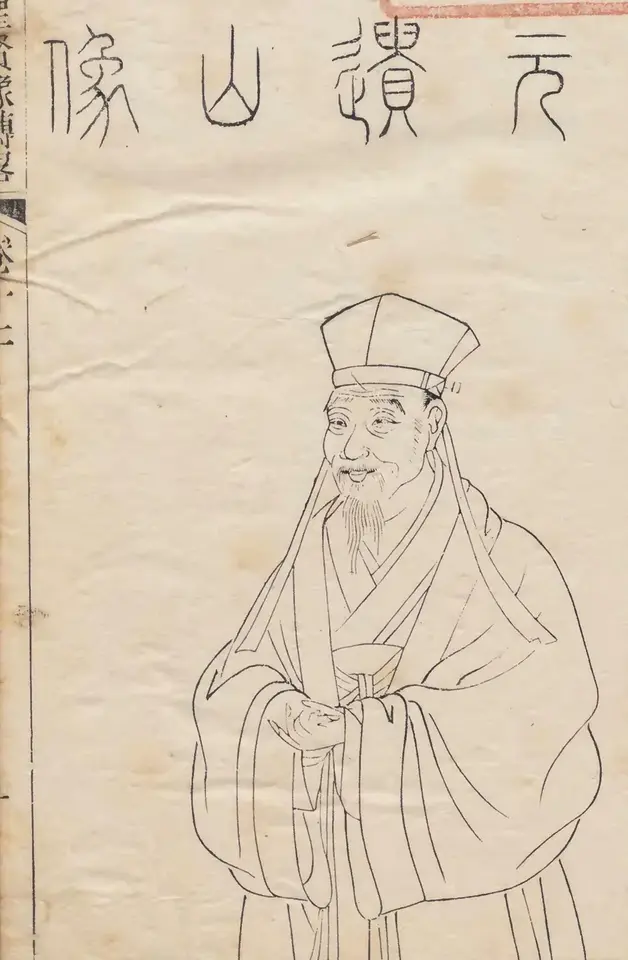
元好问
Yuan Haowen (元好问, 1190–1257), courtesy name Yuzhi (裕之) and art name Yishan (遗山), known posthumously as Master Yishan, was a native of Xiurong in Taiyuan (modern Xinzhou, Shanxi Province). He was the preeminent literary figure, historian, and cultural leader of the Jin-Yuan transitional period. Endowed with precocious brilliance, he gained immense acclaim across northern China in his youth with masterworks such as *Ode to…
Yuan Haowen (元好问, 1190–1257), courtesy name Yuzhi (裕之) and art name Yishan (遗山), known posthumously as Master Yishan, was a native of Xiurong in Taiyuan (modern Xinzhou, Shanxi Province). He was the preeminent literary figure, historian, and cultural leader of the Jin-Yuan transitional period. Endowed with precocious brilliance, he gained immense acclaim across northern China in his youth with masterworks such as Ode to Mount Ji and Ode to Qintai, earning high praise from literary titan Zhao Bingwen and the moniker "Yuan the Genius." In 1221, Yuan Haowen passed the regular imperial examinations as a jinshi and subsequently passed the Grand Dictum Examination in 1224. He held administrative and compiler posts including Provisional Compiler of the Institute of National History, Magistrate of Zhenping, Neixiang, and Nanyang, and Vice Director of the Left Bureau of the Department of State Affairs. During the catastrophic fall of the Jin capital Bianjing to Mongol armies, he was captured and relocated under custody to Liaocheng, Shandong for several years. In his twilight years, he resolutely declined political appointments under the Mongol regime, retired to his ancestral homeland, built the Yeshi Pavilion (Wild History Pavilion), and dedicated himself to gathering institutional records, poetry, and memoirs from across the fallen Jin dynasty. His compilation of Zhongzhou ji (Anthology of the Central Land) and historical manuscripts provided the foundational primary material for the later official compilation of the History of Jin. Renowned as the "Literary Hero of the North" and "Master of an Era," his poetry of wartime devastation (sangluan shi) stands as a towering monument of realistic historical verse.
Born into a scholar-official family in Xiurong, Taiyuan, and adopted by his uncle Yuan Ge at seven months of age.
Traveled to Bingzhou for the imperial examinations and composed the famous Yanqiu ci (Wild Goose Tomb Lyric) upon witnessing a devoted goose sacrifice its life.
Fled wartime chaos to Henan, traveled to Bianjing for exams, and won widespread acclaim from Zhao Bingwen and Yang Yunyi.
Achieved the jinshi degree, but refused bureaucratic posting due to factional controversies and retired to Mount Song and Dengfeng.
Recommended by high officials, passed the Grand Dictum Examination, and entered official service as Provisional Compiler in the Institute of National History.
Served successively as Magistrate of Zhenping and Neixiang in Henan, implementing benevolent rule and aiding displaced refugees.
Governed Nanyang with exceptional administrative order, before being summoned to the imperial capital as Vice Director of the Left Bureau.
The capital Bianjing fell when Cui Li rebelled and surrendered; Yuan Haowen wrote to Yelü Chucai to successfully protect fifty-four prominent scholars.
Escorted north into detention at Liaocheng and Guanshi in Shandong, where he began systematically compiling the Zhongzhou ji.
Steadfastly refused official appointments under the Mongols, returned to Shanxi, and erected the Yeshi Pavilion to collect Jin dynastic records.
Granted audience with Prince Kublai, advocated Confucian statecraft, and honored Kublai with the title "Grand Master of Confucian Learning."
Died at his lodging in Huolu at age sixty-eight, and was interred at the foot of Mount Xizhou in Han'yan Village, Xinzhou.
Yuan Haowen traced his paternal ancestry to the imperial Tuoba clan of the Northern Wei dynasty, as recorded by the scholar Hao Jing in his funerary inscription. Over successive generations, his forebears served as scholar-officials and migrated from Luoyang through Ruzhou and Pingdingzhou, before settling in Xinzhou during the lifetime of his great-grandfather Yuan Chun. His grandfather Yuan Zishan served as Vice Magistrate of Roufu in 1157 during the Jin dynasty. His biological father, Yuan Deming, was well versed in classical scholarship and poetry; although repeatedly unsuccessful in the imperial examinations, he sustained himself by teaching local village academies and authored the literary collection Dongyan ji.
On August 10, 1190, Yuan Haowen was born into this scholarly household in rural Xinzhou, being the third son among his brothers. Because his second uncle Yuan Ge was childless, seven-month-old Yuan Haowen was formally given over as an adopted son according to lineage custom. Yuan Ge brought the infant along to his official posting as Magistrate of Yexian in Shandong. Yuan Ge treated Yuan Haowen as his own flesh and blood, nurturing his talents and providing him with an exceptional early scholarly environment.
From early childhood, Yuan Haowen displayed astonishing intellectual gifts, learning to compose poetry at age seven and earning wide renown across the locality as a child prodigy. When he was eleven years old, his adoptive father was transferred to Jizhou. There, Lu Ze, an Academician Reader-in-waiting of the Hanlin Academy and Administrator of the Public Petitioners Court, took a strong liking to his bright and upright demeanor, personally mentoring him in the art of classical prose composition.
In 1203, at age fourteen, Yuan Haowen became the disciple of Hao Tianting, a celebrated Confucian master from Lingchuan. Hao Tianting possessed profound erudition and rigorous pedagogical standards. Yuan Haowen studied diligently under his direct tutelage in Lingchuan for six years, mastering the Four Books, Five Classics, historical dynastic treatises, and the philosophical works of the pre-Qin masters. When Yuan Ge was dismissed from his magistrate post in Lingchuan, the family chose to remain there for two additional years until Yuan Haowen concluded his formal training at age nineteen.
Beginning at age sixteen, Yuan Haowen embarked upon the imperial examination circuit. In 1205, taking advantage of an imperial decree waiving prefectural preliminary screenings, he journeyed directly to Bingzhou to sit for the prefectural exam, but did not pass. During this journey along the Fen River, he encountered a bird catcher who related the suicide of an escaped wild goose that plunged to its death after its mate was killed. Deeply moved, the sixteen-year-old scholar bought the dead bird, buried it beside the river, erected a stone marker inscribed "Tomb of the Goose," and composed the immortal lyric Yanqiu ci.
In 1208, at age nineteen, Yuan Haowen traveled to Chang'an for the examinations, failing once again. In 1210, he returned to Xinzhou, constructed a thatched study at Mount Yishan in Dingxiang, and adopted the art name "Hermit of Yishan." In 1212, he traveled to the central capital Zhongdu for his third examination attempt, which likewise ended in failure.
That same year, Mongol armies crushed three hundred thousand Jin troops at the Battle of Yehuling and swept into the northern heartland. Mongol cavalry sacked Xiurong, slaughtering over one hundred thousand residents; Yuan Haowen's elder brother Yuan Haogu perished in the bloodshed. To preserve his surviving family, Yuan Haowen escorted his mother southward into Henan, settling temporarily in Fuchang and later moving to Mount Song and Dengfeng.
In 1214, as Mongol forces encircled Zhongdu, Emperor Xuanzong fled south to Bianjing. Yuan Haowen traveled to Bianjing to prepare for the autumn examinations. Although he did not pass, his five-character ancient poems Ode to Mount Ji and Ode to Qintai drew immense admiration from Minister of Rites Zhao Bingwen. Zhao Bingwen vigorously championed his genius and introduced him to senior literati officials such as Yang Yunyi, Lei Yuan, and Li Yan, establishing his fame throughout the capital as "Yuan the Genius."
In 1217, at age twenty-eight, Yuan Haowen sat for the examinations in Bianjing again, but remained unlisted. Continuing his resolute studies, he finally achieved the jinshi degree in 1221 at age thirty-two. However, severe factional disputes erupted in the examination hall, and censorate officials falsely accused him of partisan collusion as a "Yuan Faction Member." Indignant at this slander, Yuan Haowen refused to report for official appointment, departing the capital to live in retirement at Dengfeng.
During this retreat, he wrote Dushi xue (Studies on Du Fu's Poetry), compiling chronologies and critical commentaries on Du Fu from the Tang and Song dynasties to reflect his admiration for classical poetic resilience. In 1224, backed by the strong sponsorship of Zhao Bingwen, the thirty-five-year-old scholar passed the Grand Dictum Examination with high honors and formally entered government service as Provisional Compiler of the Institute of National History in Bianjing.
In 1226, Yuan Haowen was appointed Magistrate of Zhenping, and in 1227 was reassigned as Magistrate of Neixiang. Faced with war-torn conditions and heavy taxation, he reduced levies, conciliated displaced vagrants, rectified bureaucratic malpractices, and earned profound gratitude from local commoners. When his adoptive mother passed away, he resigned to observe mourning at Bailuyuan in Neixiang. During his mourning period, Yici Yuan, Military Commissioner of Dengzhou, invited him to serve on his staff; when Mongol forces took Fengxiang and Yici Yuan surrendered, Yuan Haowen promptly resigned to preserve his political integrity.
In 1231, Yuan Haowen was recalled to govern Nanyang, which was then overcrowded with over one hundred thousand soldiers and displaced civilians. Applying both authority and benevolence, he reorganized local governance, suppressed unruly elements, and swiftly restored order across the border district. Local gazetteers recorded that his administrative virtue and prestige were extraordinarily acclaimed.
In late 1231, due to his stellar governance in Nanyang, Yuan Haowen was summoned to the central court in Bianjing, serving as Clerk in the Department of State Affairs, then rising to Bureau Administrator and Vice Director of the Left Bureau. However, the Jin dynasty was hurtling toward collapse. In 1232, Mongol armies surrounded Bianjing, subjecting the city to a catastrophic siege marked by famine and pestilence. In December, Emperor Aizong fled eastward to Guide.
In January 1233, Jin commander Cui Li launched a mutiny in Bianjing, executed resisting ministers, surrendered the city to the Mongols, and proclaimed himself King of Zheng. Cui Li coerced the remaining court officials to erect a stone monument celebrating his treason, commanding Hanlin Academician Wang Ruoxu to draft the text. Wang Ruoxu and Yuan Haowen considered this a disgrace to their integrity and deflected the task to university student Liu Qi, whose draft was then minimally edited by Yuan Haowen and Wang Ruoxu before being inscribed over an erased imperial monument of Song Emperor Huizong.
In April 1233, Mongol forces occupied Bianjing. Recognizing that Han scholarly traditions faced complete annihilation, Yuan Haowen risked his life to petition Mongol Chancellor Yelü Chucai. He drafted a detailed memorandum recommending fifty-four leading northern scholars, including Wang Ruoxu and Liu Qi, earnestly requesting that the Mongol administration grant them relief, protection, and employment. His intervention successfully prevented dozens of prominent Han intellectuals from being massacred or enslaved.
In 1234, the southern stronghold of Caizhou fell, Emperor Aizong committed suicide, and the Jin dynasty was officially extinguished. As a captive former official, Yuan Haowen and his family were marched north alongside other surrendered courtiers and detained in Liaocheng, Shandong, where they remained under surveillance for several years before relocating to Guanshi.
Despite enduring severe poverty and witnessing the tragic dispersion of former colleagues, Yuan Haowen maintained the resolute conviction that "when a dynasty perishes, its history must rise." He made it his personal mission to preserve the historical memory of the Jin dynasty. In Liaocheng, he forged connections with northern Han military commanders Yan Shi and Zhao Tianxi, which gradually eased his restrictions. He utilized every opportunity to interview surviving elders, gather scattered manuscripts, and officially begin compiling his monumental poetic anthology Zhongzhou ji.
In the autumn of 1239, Mongol Chancellor Yelü Chucai invited Yuan Haowen to serve in the Mongol central bureaucracy, but the fifty-year-old scholar firmly refused, choosing to preserve his allegiance. Allowed to return to his ancestral home in Shanxi, he constructed a library named Yeshi Pavilion (Wild History Pavilion) at Han'yan Village in Xinzhou, devoting himself entirely to private scholarship.
At the Yeshi Pavilion, literati from across northern China sought his literary inscriptions and ancestral genealogies. Yuan Haowen collected imperial daily records, edicts, and memoirs, accumulating more than a million words of historical source materials titled Records of the Words and Deeds of Jin Monarchs and Ministers, and completed the historical chronicle Renchen zabian, laying the foundational bedrock for the later official History of Jin.
In 1252, Yuan Haowen traveled to the imperial pastures between Huanzhou and Fuzhou to receive an audience with Prince Kublai. Yuan Haowen passionately urged Kublai to embrace Confucian statecraft and adopt Han administrative institutions, and led the northern literati in conferring upon Kublai the honorific title "Grand Master of Confucian Learning." This bold political initiative greatly elevated the safety and status of Chinese intellectuals under Mongol rule. On October 12, 1257, Yuan Haowen passed away peacefully at his lodging in Huolu at age sixty-eight. His remains were returned to Xinzhou and buried at the foot of Mount Xizhou in Han'yan Village.
Yuan Haowen left an immense body of literary output, with over one thousand surviving poems that positioned him as the supreme poetic master of the Jin-Yuan era. Drawing upon Du Fu as his core model while absorbing the stylistic breadth of Su Shi and Huang Tingjian, his verse is distinguished by its profound emotional gravity, robust vigor, and unadorned elegance. The zenith of his poetic achievement lies in his poetry of wartime turmoil (sangluan shi), composed during the downfall of the Jin empire.
His major cyclical works, including Three Poems on Qiyang, Five Poems on the Imperial Flight in the Twelfth Month of Renchen, Three Poems on Crossing North on the Third Day of the Fifth Month of Guisi, and Fifteen Miscellaneous Chants at the Xuexiang Pavilion, provide a harrowing historical record of war, siege, and conquest. In Qiyang, he recorded the desolation of Shaanxi with lines mourning bones tangled in wild vines and tears flowing beside the Long River. In his northern crossing verses, he vividly portrayed chained prisoners collapsing along the roads and weeping palace ladies escorted by foreign cavalry. Praised by the Qing dynasty scholar Zhao Yi with the celebrated adage "A nation's misfortune is a poet's fortune; lines reach perfection only when describing ruin," Yuan Haowen's poems achieved an unprecedented peak of realistic historical testimony.
Yuan Haowen was equally preeminent as a ci lyricist, leaving behind over 370 compositions—the largest corpus of any Jin poet, spanning an unmatched breadth of themes and aesthetic registers. Modeled after the expressive grandeur of Su Shi and Xin Qiji, his lyrics integrated heroic masculine sweep with tender pathos across meditations on history, landscape descriptions, rural leisure, romance, and philosophical introspection. His historical lyrics, such as Mulanhuaman, evoked tragic grandeur, while his youthful masterpiece Yanqiu ci (Tune: Mofang'er) immortalized the line "Ask the world, what is love, that makes beings pledge their lives until death?"
At the inception of the sanqu genre during the Jin-Yuan transition, Yuan Haowen utilized his prestigious literary stature to pioneer early northern aria compositions. His celebrated song to the tune Xiaoshengyue (Sudden Rain Beating Fresh Lotus) artfully synthesized colloquial lyricism with high poetic grace. Widely performed by courtesans and admired by later masters such as Zhao Mengfu, his compositions catalyzed the rise of Yuan dynasty musical theater. The authoritative drama treatise Taihe zhengyin pu honored him among the foremost early sanqu masters, describing his musical style as standing tall like an isolated pine against freezing stars.
Beyond creative writing, Yuan Haowen was an astute literary critic and theorist. Following Du Fu's precedent of utilizing poetry to evaluate poetry, he authored the renowned Thirty Poems on Poetry, alongside scholarly treatises such as Dushi xue, Dongpo shiya, and Letter on Literature to Bureau Director Zhang Zhongjie. In his Thirty Poems on Poetry, he evaluated major literary traditions and figures from the Han and Wei dynasties through the Tang and Song eras using concise seven-character quatrains, providing insightful critiques of Cao Zhi, Tao Yuanming, Xie Lingyun, Li Bai, Du Fu, Han Yu, Bai Juyi, and Su Shi.
Theoretically, Yuan Haowen championed genuine human emotion and unforced natural simplicity over artificial ornamentation, pedantic erudition, and obscure syntax. His celebrated aesthetic maxim, "A natural utterance remains timelessly fresh; once lavish brilliance falls away, authentic purity appears," established a robust poetic ideal that rejected the cramped, twisted mannerisms of late Song Jiangxi and Jianghu poetic sects, setting a lasting stylistic compass for northern Chinese literature.
Following the fall of the Jin dynasty, Yuan Haowen recognized that with governmental archives largely incinerated, the history and cultural heritage of the north faced imminent erasure. Committed to the conviction that "when a dynasty perishes, its history must rise" through poetic preservation, he spent decades recovering scattered manuscripts and completed the ten-volume anthology Zhongzhou ji (Anthology of the Central Land). The work compiled 2,116 poems and lyrics by more than 250 authors, ranging from Jin emperors and high ministers to recluse scholars and commoners.
Crucially, Yuan Haowen attached rigorous biographical sketches to each author, detailing their ancestry, official careers, personal character, and experiences during the dynastic collapse. Combining the structural virtues of dynastic annals with literary anthologies, Zhongzhou ji preserved an invaluable treasure trove of primary historical data. When the Yuan court compiled the official History of Jin, its biographies of literati were directly copied from Zhongzhou ji, and editors of the Annotated Catalog of the Siku Quanshu lauded it as an indispensable pillar of Jin historiography.
In addition to formal poetry and historical chronicles, Yuan Haowen made significant contributions to classical narrative fiction through his four-volume anomaly collection Xu Yijian zhi (Sequel to the Records of the Listener), containing 202 tales. Drawing upon the narrative lineages of the Liezi, Soushen ji, Tang classical tales, and Hong Mai's Southern Song Yijian zhi, the work recorded social anecdotes, bureaucratic anomalies, popular lore, and extraordinary phenomena spanning the Daiding era of Jin Emperor Shizong to the reign of Möngke Khan.
Far from being mere superstitious gossip, Yuan Haowen's collection was conceived as a vehicle for historical preservation and moral castigation. The tales documented harsh wartime policies such as forced land seizures, military conscription, and camel confiscations, while exposing the ruthless violence of early Mongol military rule. The work also preserved unique empirical records regarding geography, astronomy, archaeological discoveries, and medical formulas, providing valuable insights into the daily life of northern society during the Jin-Yuan transition.
Amid the devastation of the Jin collapse, Yuan Haowen deployed his immense moral stature and intellectual authority to shelter the Han scholar-official class and preserve the continuum of Chinese learning. During the catastrophic surrender of Bianjing, he bravely petitioned Mongol Chancellor Yelü Chucai, recommending fifty-four leading northern scholars. As a direct result of his appeals, prominent figures such as Wang Ruoxu and Liu Qi were spared from execution or enslavement, later becoming instrumental in establishing civil institutions and compiling state historical records under the early Yuan empire.
In his later years at the Yeshi Pavilion, Yuan Haowen opened his doors to aspiring scholars, mentoring a generation of northern talents and forming the influential Hefen Poetic School. When Prince Kublai took charge of the northern administration, Yuan Haowen personally met him to advocate civil governance and bestowed upon him the honorific title "Grand Master of Confucian Learning." This strategic move convinced the Mongol court of the necessity of Confucian governance, laying vital ideological groundwork for Kublai Khan's subsequent adoption of Han administrative systems and the founding of the Yuan dynasty.
FIGURES ASSOCIATED WITH THIS DYNASTY