Birth in Siming
Born into a celebrated Confucian lineage in Yin County; his father Yuan Xie was a premier master of the School of the Mind.
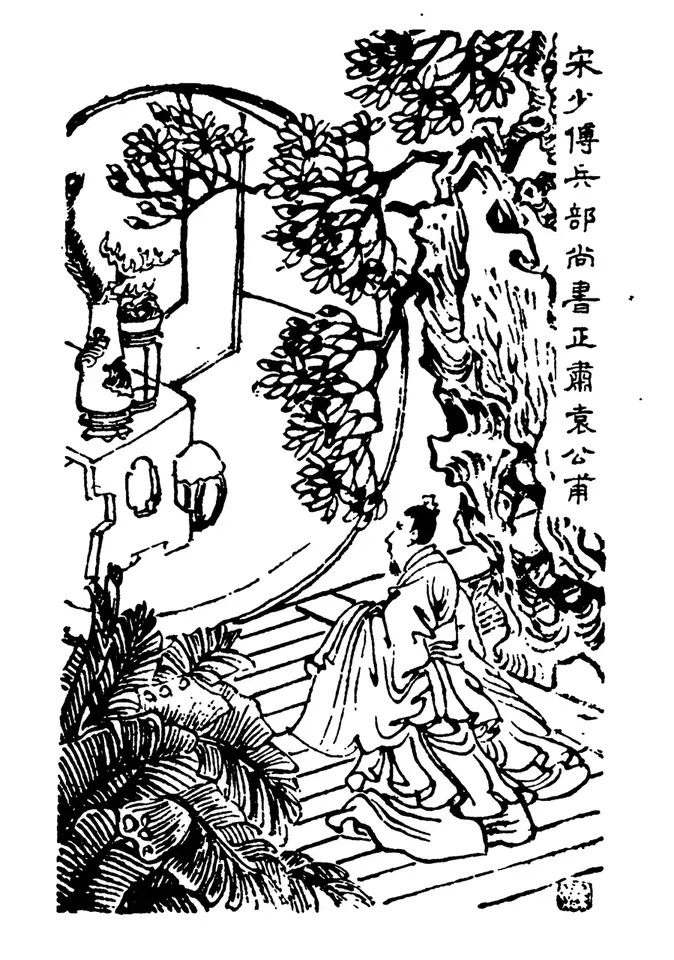
袁甫
Yuan Fu (袁甫, 1185–1240), courtesy name Guangwei, literary name Mengzhai, posthumous name Zhengsu, was a native of Yin County in Qingyuan Prefecture (modern Ningbo, Zhejiang). He was a prominent Southern Song Neo-Confucian thinker, statesman, and scholar. Born into an illustrious academic lineage, his father Yuan Xie was a foremost disciple of Lu Jiuyuan and one of the revered "Four Masters of Siming." Reared in this…
Yuan Fu (袁甫, 1185–1240), courtesy name Guangwei, literary name Mengzhai, posthumous name Zhengsu, was a native of Yin County in Qingyuan Prefecture (modern Ningbo, Zhejiang). He was a prominent Southern Song Neo-Confucian thinker, statesman, and scholar. Born into an illustrious academic lineage, his father Yuan Xie was a foremost disciple of Lu Jiuyuan and one of the revered "Four Masters of Siming." Reared in this intellectually rich tradition, Yuan Fu mastered the classical teachings of the Northern Song masters alongside Lu's School of the Mind, integrating moral metaphysics with practical statecraft. In 1214, Yuan Fu achieved first place as Optimus (Zhuangyuan) in the palace examination presided over by Emperor Ningzong, presenting an extensive memorial addressing decaying frontier defense and administrative laxity. He began his administrative career as administrative assistant in Jiankang before being called to Lin'an as collator and proofreader in the Palace Library. Throughout his career, Yuan was known for his unbending uprightness, incorruptible conduct, and courage in remonstrating against court malfeasance, repeatedly presenting detailed memorials concerning defense finance and bureaucratic discipline. During the Duanping and Jiaxi eras under Emperor Lizong's personal rule, known historically as the "Duanping Restoration," Yuan was elevated to diary drafter, grand drafter, minister of War, and minister of Personnel concurrently with prefect of the imperial capital of Lin'an. At the Ministry of War, amid the Mongol destruction of the Jurchen Jin Empire and their subsequent southward offensive, Yuan presciently resisted rash plans to advance into northern Henan, championing the consolidation of riverine defenses along the Huai and Yangtze rivers. As prefect of Lin'an, he vigorously curbed aristocratic corruption, stabilized grain prices, and reformed personnel evaluations. In 1240, he was named signatory manager of the Bureau of Military Affairs, but passed away from overwork before assuming office at the age of fifty-six. He was posthumously honored with the title Grand Master for Thorough Service and the posthumous name Zhengsu. His writings are preserved in the twenty-volume Collected Works of Mengzhai.
Born into a celebrated Confucian lineage in Yin County; his father Yuan Xie was a premier master of the School of the Mind.
Ranked first overall as Zhuangyuan after delivering a trenchant policy memorial on imperial virtue and defense.
Appointed administrative assistant to the Jiankang Military Command, auditing fiscal registers and organizing famine relief.
Summoned to the imperial capital as proofreader in the Palace Library, presenting memorials against political favoritism.
Elevated to diary drafter and compiler of dynastic history, serving as imperial lecturer to instruct the sovereign.
Appointed minister of War, organizing defense lines across the Huai and Yangtze rivers and advising against ill-fated northern campaigns.
Promoted to minister of Personnel concurrently with prefect of Lin'an, eradicating bureaucratic corruption and restraining imperial relatives.
Named signatory manager of the Bureau of Military Affairs; passed away in his official residence at age fifty-six, posthumously named Zhengsu.
Yuan Fu was born in 1185 in Yin County of Qingyuan Prefecture. The Yuan clan of Siming had been a leading intellectual dynasty of southeastern China since the early Southern Song. His father, Yuan Xie (known respectfully as Master Jiezhai), alongside Yang Jian, Shu Lin, and Shen Huan, was acclaimed as one of the "Four Masters of Siming" who transmitted the intuitive philosophy of Lu Jiuyuan. Raised in this scholarly environment, Yuan Fu mastered the Confucian canon, early historical chronicles, and institutional history, cultivating a synthesis of inner self-rectification and outer statecraft.
In 1214, Yuan Fu sat for the palace examinations at Lin'an. Emperor Ningzong tested candidates on heavenly omens, frontier security, and the sovereign's personal cultivation. In an essay exceeding ten thousand characters, Yuan argued that an emperor must begin by purifying his inner intentions, selecting genuine scholars, clarifying penal administration, and revitalizing border armies rather than relying on empty bureaucratic rituals. Highly impressed, Ningzong personally designated Yuan the first-ranked Zhuangyuan of the class.
He was initially assigned as administrative assistant in Jiankang (modern Nanjing), a premier strategic bastion guarding the lower Yangtze. There, he assisted the regional defender in disciplining garrisons, auditing treasury shortfalls, and distributing relief grain, restoring order to local governance.
From the end of the Jiading era through the Baoqing period, Yuan was recalled to the central court to fill prestigious literary offices, including proofreader, collator, and compiler in the Palace Library. At the time, Grand Councilor Shi Miyuan held near-monopolistic power, fostering political complacency and servility among courtiers.
Occupying editorial and remonstrance positions, Yuan showed no fear of political retribution. He submitted dozens of sealed memorials, declaring that the greatest danger to the dynasty lay in civil officials shunning responsibility out of fear of criticism, and in runaway bureaucratic expenditures that depleted public coffers while impoverishing commoners. He urged deep reductions in palace luxury expenses, strictly forbade inner court eunuchs from meddling in state affairs, and demanded higher ethical standards in imperial examinations. Although his candid remonstrances irritated influential figures, his immaculate integrity and academic prestige shielded him from reprisal.
In 1234, Emperor Lizong commenced his direct personal rule, an era celebrated by contemporaries as the "Duanping Restoration." Eager to revitalize dynastic administration, Lizong summoned distinguished scholars to court, promoting Yuan to diary drafter, grand drafter, and imperial lecturer.
Following the joint Song-Mongol campaign that extinguished the Jurchen Jin dynasty, several ambitious commanders and courtiers urged an immediate military foray into the Central Plains to recover the ancient Northern Song capitals of Luoyang, Kaifeng, and Shangqiu. Yuan Fu displayed penetrating strategic judgment, repeatedly memorializing against this reckless venture. He warned that the north was ravaged, agricultural lands lay fallow, and logistics were nonexistent, while the Mongol cavalry was formidable and undefeated. He warned that dispatching isolated forces would court disaster. Despite his warnings, the court launched the disastrous "Duanping Expedition," which resulted in the near-total destruction of the Song army near Luoyang.
Chastened by the defeat, Emperor Lizong acknowledged Yuan's prescience and appointed him minister of War to repair the empire's fractured defense. Yuan worked tirelessly, submitting his famous Eight Essentials of Frontier Defense, proposing fortified defense networks along the Huai and Yangtze rivers, retiring unfit troops, and expanding military farming colonies to secure local supply lines.
In 1239, Yuan was promoted to minister of Personnel, the premier post among the Six Ministries, while concurrently serving as prefect of Lin'an. As the imperial seat, Lin'an was crowded with imperial in-laws, high nobles, and powerful military retinues, rendering it notorious for corruption and civil defiance.
Yuan governed the metropolis with uncompromising legal fairness. Imperial clansmen and military officers who violated laws were prosecuted without leniency; simultaneously, he cracked down on grain hoarders and market speculators, stabilizing commodity prices and aiding the poor. In the Ministry of Personnel, he enforced strict merit-based evaluations, eradicating bribes and backdoor recommendations.
In the spring of 1240, Emperor Lizong issued an edict appointing Yuan signatory manager of the Bureau of Military Affairs, inducting him into the supreme state council. However, decades of unrelenting toil had ruined his health. Before he could assume his new duties, he passed away in his Lin'an residence at the age of fifty-six.
Emperor Lizong was deeply grieved, suspending court audiences in his honor. The emperor conferred upon him the posthumous title Grand Master for Thorough Service and the posthumous name Zhengsu.
Awarded first place Zhuangyuan in the 1214 palace examinations after presenting a comprehensive memorial on royal self-cultivation, administrative rectitude, and frontier defense.
Accurately predicted the catastrophic collapse of the premature Song northern offensive in 1234, counseling the throne to husband strength behind the Yangtze and Huai rivers.
Formulated the strategic Eight Essentials of Frontier Defense as minister of War, restructuring garrisons and reinforcing riverine lines against Mongol incursions.
Directed the Ministry of Personnel and the capital prefecture of Lin'an, punishing lawbreaking aristocrats, eliminating venal appointments, and stabilizing the municipal economy.
FIGURES ASSOCIATED WITH THIS DYNASTY