Preserving Liangzhou
Opposed Deng Zhi's plan to abandon Liangzhou, convincing the court that Liangzhou was essential to protect the capital.
虞诩
Yu Xu (虞诩, ?–137 CE), courtesy name Shengqing, childhood name Ding'an, was a native of Wuping County, Chen Kingdom (modern northwest of Luyi, Henan). He was an outstanding military commander, frontier strategist, and statesman of the middle-to-late Eastern Han Dynasty. He served successively as Magistrate of Chaoge, Magistrate of Huai County, Grand Administrator of Wudu, Colonel Director of Retainers, Vice Director of the…
Yu Xu (虞诩, ?–137 CE), courtesy name Shengqing, childhood name Ding'an, was a native of Wuping County, Chen Kingdom (modern northwest of Luyi, Henan). He was an outstanding military commander, frontier strategist, and statesman of the middle-to-late Eastern Han Dynasty. He served successively as Magistrate of Chaoge, Magistrate of Huai County, Grand Administrator of Wudu, Colonel Director of Retainers, Vice Director of the Department of State Affairs, and Prefect of the Masters of Writing. Descending from a lineage of merciful judicial officials, his grandfather Yu Jing named him Shengqing in the hope that his descendants would reach the Nine Ministers. Yu Xu mastered the Book of Documents at age twelve and was celebrated for devotedly nursing his ninety-year-old grandmother. After her passing, Defender-in-chief Li Xiu summoned him to imperial service as a Gentleman. In 110 CE, during Emperor An's reign, General-in-Chief Deng Zhi proposed abandoning Liangzhou due to costly Qiang invasions. Yu Xu strongly opposed the proposal, arguing that relinquishing Liangzhou would turn the capital commanderies into vulnerable borders and expose the imperial ancestral tombs. His strategic insight persuaded the court to revoke the evacuation order. Slandered by Deng Zhi, Yu Xu was dispatched to perilous Chaoge as magistrate, where he coined the famous maxim "without gnarled roots and tangled knots, how can one distinguish a sharp blade?" He suppressed the entrenched banditry through innovative recruitment and intelligence tactics. In 115 CE, appointed Grand Administrator of Wudu, he reversed Sun Bin's stratagem of reducing stoves by multiplying camp stoves to project strength, while using small crossbows to bait enemy assaults before decimating ten thousand Qiang horsemen with concentrated volleys. He constructed 180 forts and opened river navigation along the Jialing River, securing the border. Under Emperor Shun, he served as Colonel Director of Retainers and Prefect of the Masters of Writing, fearlessly impeaching corrupt grandees and surviving nine dismissals and three prison terms. He was later enshrined in the Song military classic Hundred Generals of the Seventeen Histories.
Opposed Deng Zhi's plan to abandon Liangzhou, convincing the court that Liangzhou was essential to protect the capital.
Appointed Magistrate of Chaoge; recruited reformed bandits and applied secret markers to eliminate rebel gangs.
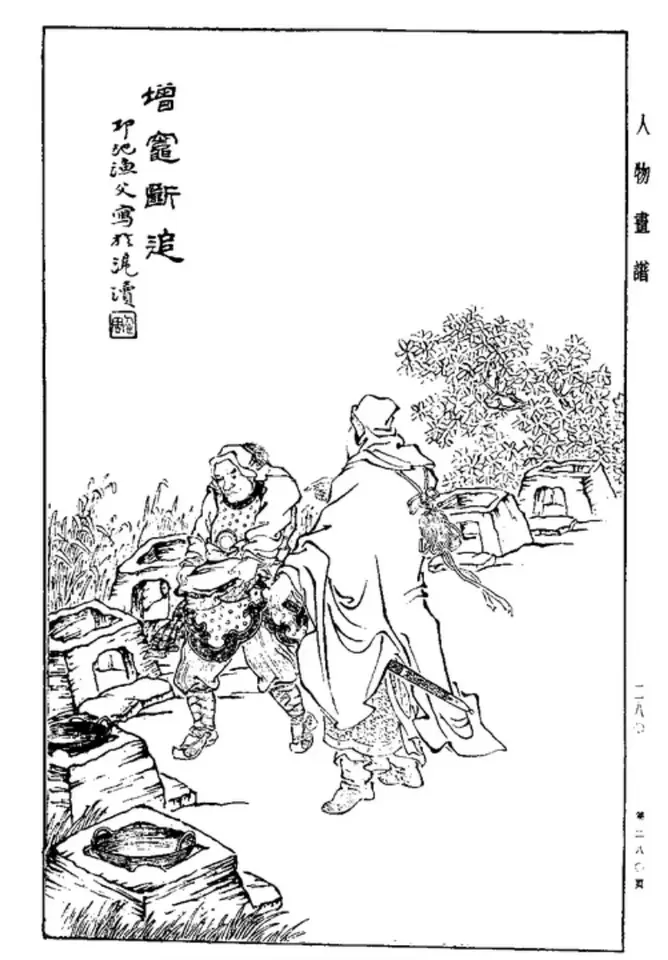
Appointed Grand Administrator of Wudu; multiplied stoves to deter pursuit and broke the siege of Chiting.
Appointed Colonel Director of Retainers; aggressively impeached corrupt imperial tutors and eunuchs.
Bound himself to demand the execution of eunuch Zhang Fang; sentenced to penal labor before being cleared by scholar protests.
Served as Prefect of the Masters of Writing; died in office, expressing deathbed remorse for past rebel casualties.
Yu Xu was born in Wuping County, Chen Kingdom. His grandfather, Yu Jing, had served as a local judicial official for sixty years, renowned for treating prisoners with benevolence and weeping whenever reviewing capital sentences in autumn. Yu Jing often remarked to his family that Yu Gong of Donghai had earned high honors for his descendants through judicial leniency, predicting that his own descendants would likewise rise to the Nine Ministers; for this reason, he bestowed the courtesy name Shengqing upon Yu Xu.
Possessing remarkable intellect, Yu Xu mastered the nuances of the Book of Documents at age twelve. Having lost his parents at an early age, he devoted himself to caring for his ailing grandmother. The Chancellor of Chen Kingdom commended his exceptional filial piety and sought to recruit him into administrative service, but Yu Xu declined on the grounds that his grandmother was over ninety years old with no other caretakers. Only after his grandmother passed away and the full mourning period concluded did Yu Xu accept Defender-in-chief Li Xiu's summons to become a Gentleman in the capital.
In 110 CE, Xianling Qiang tribes and allied nomadic groups rebelled on an enormous scale across Bingzhou and Liangzhou. General-in-Chief Deng Zhi, weary of the protracted warfare and draining logistics, convened imperial councils to propose the total abandonment of Liangzhou to concentrate defense on the northern frontier. Deng Zhi argued that like a damaged garment, sacrificing one sleeve might preserve the rest. Intimidated by Deng's clout, most ministers concurred.
Hearing of this proposal, Gentleman Yu Xu immediately sought an audience with Defender-in-chief Zhang Yu, warning that abandoning Liangzhou was a fatal error. He argued that the ancestral emperors had labored painstakingly to acquire the western territories, and abandoning them would transform the Three Capital Commanderies into front-line borders, leaving ancestral tombs undefended. Moreover, he noted that Liangzhou produced the empire's fiercest martial commanders; alienating its population would force them to ally with the Qiang and march eastward against the dynasty. Persuaded by his logic, Zhang Yu presented Yu Xu's strategy at the ministerial council, prompting the court to preserve Liangzhou. Offended by this public repudiation, Deng Zhi and his brother harbored enduring resentment toward Yu Xu.
At that time, bandit chieftain Ning Ji led thousands of outlaws in Chaoge County, killing local magistrates, defeating imperial garrisons, and plundering the Central Plains for years. Seeking to eliminate Yu Xu through hazardous deployment, the Deng brothers arranged his appointment as Magistrate of Chaoge. Friends and colleagues lamented his misfortune, with General of the Household Ma Leng remarking that a distinguished scholar belonged in the imperial court rather than in perilous Chaoge. Yu Xu laughed and responded: "Without gnarled roots and tangled knots, how can one distinguish a sharp blade? It is the duty of a minister to face difficulties rather than seek ease. Chaoge lies near Mount Taihang and the Yellow River, but the rebels lack strategic foresight to seize state granaries or block the gorges. I can easily defeat them."
Upon arriving in Chaoge, Yu Xu instituted a three-tier recruitment system to enlist formidable local outlaws, offering pardons and rewards to robbers, thieves, and impoverished fugitives. Gathering over a hundred hardened fighters, he hosted a banquet in their honor, absolved their crimes, and dispatched them into Ning Ji's camps to act as double agents and sow internal discord. When the rebel gangs split and raided, Yu Xu's concealed troops ambushed and slaughtered hundreds of them.
Simultaneously, Yu Xu secretly employed impoverished women skilled in needlework to make garments for the outlaws, instructing them to stitch colored silk threads into the hems as concealed identification marks. Whenever bandits wearing these clothes entered city markets, constables recognized the markers and arrested them immediately. Convinced that the magistrate possessed supernatural prescience, the remaining outlaws scattered in terror, and the multi-year insurrection in Chaoge was pacified within months. In recognition of his success, Yu Xu was transferred to govern Huai County.
While at Huai County, Leader of the Court Gentlemen Ren Shang took command of the frontier garrison in the capital region. Yu Xu advised Ren Shang that marching infantry against swift nomadic cavalry was futile, proposing instead that twenty soldiers pool funds to purchase a warhorse, forming a mobile cavalry corps of ten thousand riders. Ren Shang implemented the advice, successfully routing the Qiang commander Du Jigong at Dingxi.
In 115 CE, Qiang armies invaded Wudu Commandery in Longyou, besieging administrative offices and slaughtering local inhabitants. Aware of Yu Xu's strategic genius, Empress Dowager Deng appointed him Grand Administrator of Wudu. Several thousand Qiang cavalry intercepted Yu Xu at the Xiaogu Gorge in Chencang, blocking the mountain pass. Yu Xu halted his forces and loudly proclaimed that he had petitioned the court for heavy reinforcements, feigning an intention to await their arrival. Believing the Han army immobilized, the Qiang split their forces to plunder neighboring districts.
Seizing this opportunity, Yu Xu ordered his troops to march night and day, covering over a hundred li in rapid forced marches. During the journey, he commanded every soldier to dig two camp stoves on the first day, four on the second, and double the number each subsequent day. Perplexed officers asked: "Sun Bin reduced stoves to deceive the enemy with weakness, yet you multiply stoves; furthermore, military manuals prescribe daily marches of no more than thirty li, yet we travel nearly two hundred li. What is the reason?" Yu Xu replied: "Our troops are few while the enemy is numerous. Advancing slowly invites encirclement. When the Qiang see our stoves multiplying, they will assume commandery reinforcements have joined us and will fear pursuing. Sun Bin showed weakness to lure, while I project strength to deter." The Qiang scouts were indeed intimidated by the multiplying stoves and abandoned pursuit.
Arriving at Wudu, Yu Xu commanded fewer than three thousand troops, while more than ten thousand Qiang horsemen surrounded the commandery seat at Chiting. Yu Xu instructed his archers to refrain from using powerful crossbows, deploying only small crossbows with weak range. Believing the garrison exhausted and out of ammunition, the Qiang launched a mass frontal assault. Once the enemy was within lethal range, Yu Xu raised his battle standard and ordered twenty heavy crossbows to fire concentrated volleys at single enemy commanders. Chieftains and cavalry fell in droves, shattering enemy morale. Yu Xu led shock troops out of the city gates, routing the enemy and killing thousands.
Following this victory, Yu Xu implemented long-term defense infrastructure across Wudu. He surveyed the mountain terrain, erecting 180 fortified watchposts, and opened water navigation along the Jialing River to transport military provisions, dropping grain prices from one thousand coins per bushel to normal levels. He actively rehabilitated displaced refugees, distributing land and grain. Under his administration, Wudu's population grew from barely a thousand households to over ten thousand, restoring lasting stability to the frontier.
In 126 CE, during the reign of Emperor Shun of Han, Yu Xu was elevated to Colonel Director of Retainers. Within months of assuming capital surveillance duties, he fearlessly impeached Grand Tutor Feng Shi, Defender-in-chief Liu Xi, and several powerful eunuchs, including Cheng Huang and Li Run. The Three Excellencies retaliated by accusing him of arresting innocent citizens during the summer heat. Yu Xu defended his record before the throne, declaring that statutory penalties were the essential bulwarks of society. Persuaded by his integrity, Emperor Shun dismissed Minister of Works Tao Dun instead.
Later, the corrupt eunuch Regular Attendant Zhang Fang extorted vast fortunes through bribery. When Yu Xu gathered evidence to prosecute him, eunuch intermediaries suppressed his memorials. In righteous indignation, Yu Xu bound himself in chains and surrendered to the prison of the Commandant of Justice, submitting a memorial warning that tolerating Zhang Fang would bring dynastic ruin comparable to the disastrous reign of Emperor An. Zhang Fang wept and counter-accused Yu Xu before Emperor Shun, who sentenced Yu Xu to hard labor at the Left Workshop.
Zhang Fang plotted to murder Yu Xu in custody, issuing four interrogation orders within two days. Prison wardens urged Yu Xu to take poison to escape torment, but he firmly refused, declaring he would rather face execution than take his own life in secret. Recognizing his virtue, eunuch official Sun Cheng and over a hundred National University scholars led by Yu Xu's son Yu Kai gathered at the palace gates to petition for his release. Convinced of his innocence, Emperor Shun pardoned Yu Xu, executed his false accusers, banished Zhang Fang, and elevated Yu Xu to Vice Director of the Department of State Affairs.
Serving as Vice Director, Yu Xu continued to champion administrative reforms. At that time, local commanderies forced citizens accused of minor infractions to pay exorbitant redemption sums termed "righteous funds," ostensibly to assist the poor but routinely pocketed by greedy magistrates. Yu Xu submitted an urgent memorial demanding the abolition of this extortionate levy, prompting Emperor Shun to issue an edict banning righteous funds and punishing corrupt governors.
When a county clerk from Ningyang appealed against a venal magistrate after six years of bureaucratic obstruction, writing that he had nowhere else to turn except the Xiongnu Shanyu, court ministers demanded the clerk's execution for treason. Yu Xu defended the clerk, arguing that the outburst stemmed from administrative failure and suppressed petitions. Emperor Shun relented and spared the clerk's life. Furthermore, Yu Xu championed regional quota equality in the recruitment of imperial secretariat gentlemen, dismantling aristocratic monopolies.
In the early Yonghe era, Yu Xu was promoted to Prefect of the Masters of Writing. Throughout his tumultuous career, he was dismissed from office nine times and sentenced to prison three times, never compromising his outspoken integrity. After resigning from his final post, Emperor Shun summoned him again, but Yu Xu succumbed to illness before the edict arrived.
On his deathbed in 137 CE, Yu Xu addressed his eldest son Yu Gong, saying: "I have served the Han court with selfless rectitude, harboring no guilt toward heaven or humanity. My sole lifelong sorrow is that during my time as Magistrate of Chaoge, I orchestrated the deaths of hundreds of outlaws; among them, there must have been some who were wrongly executed. I fear this may compromise the blessings of my descendants. In your lives, administer justice with mercy and avoid excessive slaughter." He then passed away peacefully.
During the debate over abandoning Liangzhou in 110 CE, Yu Xu single-handedly overturned General-in-Chief Deng Zhi's policy. By articulating the geopolitical importance of Liangzhou as the shield of the capital commanderies and the cradle of martial leaders, he prevented the imperial collapse of the western provinces.
As Magistrate of Chaoge, Yu Xu proved his maxim that sharp blades are tested on tangled knots. He recruited reformed outlaws into intelligence networks and deployed covert thread markers to dismantle Ning Ji's multi-year insurrection within months, establishing a classic model of counter-insurgency warfare.
Serving as Grand Administrator of Wudu, Yu Xu inverted Sun Bin's military manual by multiplying camp stoves to deter pursuers, and utilized weak bows to bait and obliterate ten thousand besieging Qiang warriors. His subsequent construction of 180 forts and opening of Jialing River waterways transformed Wudu into a secure and prosperous frontier commandery.
Twice serving as Colonel Director of Retainers and heading the imperial secretariat, Yu Xu fearlessly impeached grand tutors and eunuchs, braving imprisonment and penal labor. He eradicated the corrupt "righteous funds," defended marginalized clerks, and established regional recruitment parity for secretariat gentlemen.
FIGURES ASSOCIATED WITH THIS DYNASTY