Birth in Hubei
Born in Qiniangshan Village, Jiuzihe, Luotian County, Hubei Province, with the ancestral lineage name Yu Kailong.
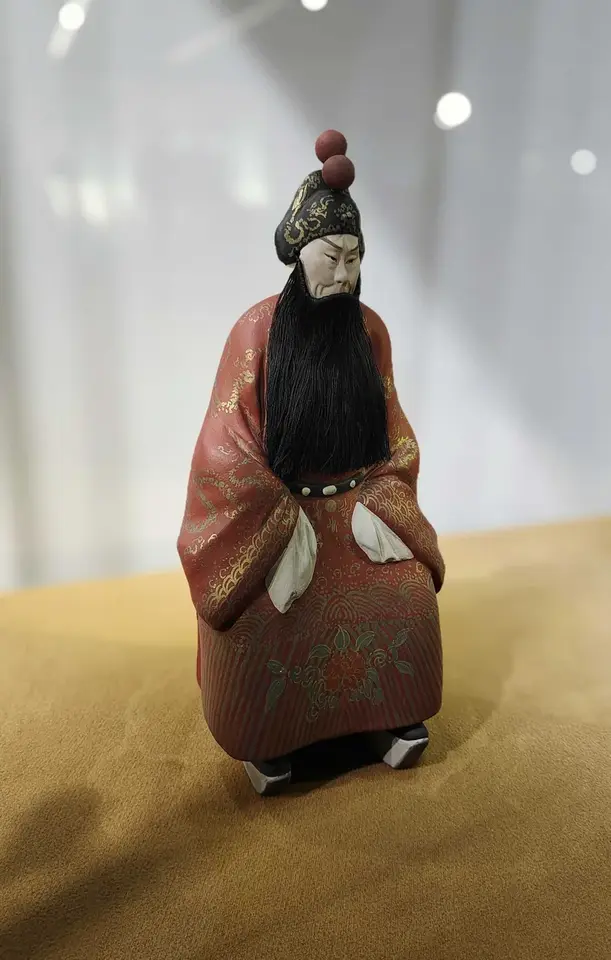
余三胜
Yu Sansheng (1802–1866), registered in family genealogy records as Yu Kailong, was a native of Luotian County, Hubei Province. He was an eminent theatrical performing artist of the Qing dynasty and a foundational architect of the vocal music and stage phonological framework of early Peking Opera. Alongside Cheng Changgeng and Zhang Erkui, he was celebrated as one of the "Three Laureates of Laosheng" (or the Three Great…
Yu Sansheng (1802–1866), registered in family genealogy records as Yu Kailong, was a native of Luotian County, Hubei Province. He was an eminent theatrical performing artist of the Qing dynasty and a foundational architect of the vocal music and stage phonological framework of early Peking Opera. Alongside Cheng Changgeng and Zhang Erkui, he was celebrated as one of the "Three Laureates of Laosheng" (or the Three Great Laosheng Masters) during the formative decades of Peking Opera. In his youth, Yu entered the Han opera training troupe at Huanggangwei, Hubei, mastering the mo and laosheng role types. During the Daoguang era, he journeyed north to Beijing and joined the Chuntai Troupe, one of the famed Four Great Anhui Troupes, where his peerless talent quickly elevated him to leading star and troupe manager. During the historical convergence of Anhui and Han opera troupes that gave birth to Peking Opera, Yu broke past conventional role boundaries. Using Han opera Pi-huang as the core matrix, he synthesized the strengths of Anhui melodies, Kunqu opera, and Qinqiang opera, pioneering the expressive "Fan-Erhuang" melodic mode and fluid, ornamental "flower melodies" that revolutionized the traditionally stark and rigid laosheng singing style. Simultaneously, Yu creatively integrated Hubei phonology with the standard northern rhyme system of Beijing, laying the bedrock rules for theatrical pronunciation and tones. He systematically refined and staged central laosheng repertoires, propelling the theatrical focus from female roles toward leading male roles. Yu's consummate artistry established the Han-school laosheng tradition and directly mentored legendary successors such as Tan Xinpei. His family lineage culminated in the renowned "Yu School" founded by his grandson Yu Shuyan, exerting an enduring and transformative influence on the history of Chinese performing arts.
Born in Qiniangshan Village, Jiuzihe, Luotian County, Hubei Province, with the ancestral lineage name Yu Kailong.
Entered the Huanggangwei Han opera training troupe to study the mo role, also mastering laosheng and wai techniques.
Completed his formal apprenticeship and performed across market towns in Huanggang, Hankou, and along the Yangtze River, building a strong regional reputation.
Traveled north to Beijing with fellow Han opera artists and joined the Chuntai Troupe, swiftly rising to principal laosheng.
Revolutionized laosheng vocal music by creating the "flower melody" and "Fan-Erhuang" modes, earning the acclaim of equaling the legendary Mi Yingxian.
Rose to the pinnacle of theatrical acclaim alongside Cheng Changgeng and Zhang Erkui, establishing the three foundational performance schools of early Peking Opera.
Invited to lead performances at the Guanghecheng Troupe, actively organizing, preserving, and transmitting classical repertoires during his mature years.
Passed away from illness in Beijing at the age of sixty-four, laid to rest in the southern suburbs and leaving behind an illustrious artistic dynasty.
Yu Sansheng was born in 1802 (the seventh year of the Jiaqing reign) into a commoner family in Qiniangshan Village, Jiuzihe, located in Luotian County of Hubei Province. Nestled at the southern foot of the Dabie Mountains, the region possessed a vibrant tradition of grassroots theater, where Chu melodies and Han opera troupes frequently staged lively performances at rural festivals and bustling markets. Yu exhibited keen musicality and a clear, resonant vocal timbre from early childhood.
Around 1812 (the seventeenth year of the Jiaqing reign), the ten-year-old Yu entered the esteemed Han opera training troupe at Huanggangwei. Under strict traditional apprenticeship, he focused primarily on the mo role while rigorously practicing the demanding fundamentals of laosheng and wai roles. This rigorous training imparted a comprehensive mastery of Han opera Pi-huang vocal phrasing, rhythmic meters, physical deportment, and articulation, providing an unshakable technical foundation for his subsequent musical innovations.
Following his graduation from the troupe, Yu joined traveling rural troupes, performing at bustling river ports and market towns along the Han and Yangtze Rivers. At that time, Hankou was a bustling commercial metropolis where Han opera Pi-huang enjoyed immense popularity. As contemporary poems chronicled, Han opera captivated audiences across the central Yangtze basin with energetic Xipi and plaintive Erhuang melodies. Through wide stage exposure, Yu acquired extensive performance experience and intuitive responsiveness to popular tastes.
During his years touring with traveling troupes, Yu frequently performed across eastern Hubei towns and riverside villages. Facing diverse audiences, he observed human mannerisms and emotions in everyday life, incorporating authentic vernacular details into his stagecraft. This deep familiarity with grassroots sentiments provided valuable artistic material for his later portrayals of historic protagonists.
During the early Daoguang era, the theatrical scene in Beijing was undergoing profound transformations following the arrival of the Four Great Anhui Troupes. Pioneering Hubei Han opera performers such as Li Liu and Mi Yingxian had previously introduced Han melodies into the Anhui troupes, captivating Beijing audiences with vigorous Pi-huang rhythms. Eager to expand his artistic horizon, Yu decided to follow this path, journeying north along waterways to the imperial capital.
Upon arriving in Beijing, Yu auditioned for the celebrated Chuntai Troupe, one of the Four Great Anhui Troupes, winning immediate acceptance thanks to his sonorous vocal power and refined stage presence. While Chuntai had historically focused on youthful male and female roles, Yu rapidly established himself as an indispensable headliner. By adapting Han melodies to northern aesthetic expectations, he secured widespread acclaim and was hailed by peers and audiences as matching the great Mi Yingxian.
Before long, Yu's artistic mastery, literary literacy, and diplomatic skill earned him the consensus role of troupe manager for Chuntai. As troupe leader, he recruited prominent artists, reformed stage practices, and championed compelling historical plays centered on the laosheng role. Under his guidance, Chuntai maintained a prominent standing amid fierce competition with rival companies such as Sanqing, Sixi, and Hechun.
While leading Chuntai, Yu instituted rigorous backstage discipline and elevated production values. He instituted rehearsals and strict punctuality, eradicating slipshod habits on stage. Under his governance, Chuntai enjoyed commercial success and received numerous imperial invitations to perform at court, solidifying his stature as a premier troupe manager in the capital.
During the Xianfeng era, Yu reached the zenith of his professional prestige, standing alongside Cheng Changgeng of the Sanqing Troupe and Zhang Erkui of the Shuangqing Troupe as the renowned "Three Laureates of Laosheng." Each represented a distinct aesthetic tradition: Cheng championed the Anhui style with solemn, robust grandeur; Zhang utilized straightforward northern vocal delivery marked by rustic strength; and Yu embodied the Han school, celebrated for supple melodic embellishment, lyrical sweetness, and delicate emotional shading.
Yu's stage work was distinguished by psychological nuance and meticulous characterization. He rejected the prevailing practice of prioritizing either vocal virtuosity or physical acting in isolation, insisting instead on a seamless balance of both. Whether performing at private aristocratic mansions or public theater playhouses, his appearances reliably attracted capacity crowds and rapturous applause.
In this dynamic theatrical landscape, Yu engaged in open and collaborative exchanges with fellow luminaries like Cheng and Zhang. Their frequent joint performances accelerated the artistic synthesis of Anhui melodies, Han tunes, Kunqu opera, and Qinqiang clapper opera in Beijing, establishing the foundational musical and aesthetic framework of the emerging genre of Peking Opera.
Theatrical records describe how audiences flocked to joint performances of the three masters. Cheng's imposing gravity, Zhang's robust clarity, and Yu's graceful melodic beauty complemented one another, creating legendary theatrical spectacles that nurtured a spirit of mutual respect and artistic innovation in early Peking Opera.
In 1863 (the second year of the Tongzhi reign), the sixty-one-year-old Yu was invited to join the Guanghecheng Troupe. Despite his advanced age, he remained active on the capital stage, maintaining exquisite vocal control while devoting significant energy to systematizing core plays and mentoring younger performers. His modest demeanor and generosity toward junior artists won him profound respect throughout the theatrical fraternity.
In his final years, Yu resided near Chunshu Hutong outside Xuanwumen in Beijing, where promising performers frequently visited to seek his artistic guidance. Unencumbered by narrow sectarian boundaries, he generously imparted vocal secrets. He nurtured his son, Yu Ziyun, who blossomed into a celebrated performer, while offering crucial personal guidance to the young Tan Xinpei regarding subtle vocal modulation and breath control, which later proved vital in Tan's creation of the revolutionary Tan School.
In 1866 (the fifth year of the Tongzhi reign), Yu passed away from illness in Beijing at the age of sixty-four. Guild colleagues across the capital mourned his loss and organized a dignified funeral, laying him to rest in the southern suburbs. His artistic legacy remained vibrant, carried forward across three generations through his son Yu Ziyun and grandson Yu Shuyan, culminating in the classical Yu School during the Republican era and securing an enduring place in Chinese cultural history.
One of Yu Sansheng's most pivotal contributions was the comprehensive integration of Han and Anhui musical styles, establishing the bedrock vocal system of Peking Opera Pi-huang. Prior to his work, although Han melodies had reached Beijing, their vocal delivery remained rustic and percussive, described by contemporary poets as thunderous shouting that offered limited emotional versatility.
Possessing sophisticated musical intuition, Yu rooted his approach in the Xipi and Erhuang modes of Han opera while absorbing the stately strength of Anhui tunes, the refined lyrical contours of Kunqu opera, and the impassioned energy of Qinqiang clapper opera. Blending these disparate traditions, he introduced ornate passing notes and varied decorative phrasing into laosheng singing, creating the celebrated "flower melody" style characterized by rhythmic vitality and melodic fluidity.
Yu's flower melodies were never empty displays of technical virtuosity; rather, they directly served the emotional expression of stage characters. By incorporating delicate melodic lifts and subtle tonal inflections within standard meters, he imbued the laosheng role with both heroic dignity and lyrical tenderness. This innovation expanded the musical palette of the role and dispelled northern preconceptions regarding Pi-huang melodies, becoming a cornerstone of nascent Peking Opera music.
To ensure broad public appeal and durability for his new vocal creations, Yu refined the structural transitions between rhythmic meters through extensive stage practice. He eliminated clumsy interludes and dragging passages, designing well-proportioned filler notes and dramatic pauses aligned with dramatic action. This made his vocal phrasing flow naturally, rewarding contemplation while inviting widespread imitation, effectively elevating Peking Opera music from rustic beginnings to classical maturity.
In vocal production, Yu emphasized scientific breath support, teaching performers to anchor their breath deep in the diaphragm to drive clear enunciation. By utilizing subtle vibrato and controlled intake on extended melodic runs, he maintained brilliance in upper registers without hoarseness and warmth in lower registers, setting the standard for laosheng vocal technique.
Among his musical innovations, Yu's most renowned legacy is the invention of the "Fan-Erhuang" melodic mode for laosheng roles. In traditional Han and Anhui theatrical music, regular Erhuang was primarily utilized for calm, solemn narratives, offering constrained emotional range when conveying harrowing sorrow, tragic despair, or intense internal conflict.
Relying on his profound musical instincts, Yu altered traditional Erhuang string tunings and fingerings, reversing modal intervals to formulate Fan-Erhuang. This new mode provided a broader vocal compass, deeply mournful melodic contours, and dramatic harmonic shifts, creating an unprecedented vehicle for profound psychological tragedy and elevated moral heroism on the Chinese stage.
Masterpieces premiered and popularized by Yu utilizing Fan-Erhuang included Li Ling's Stele (also known as Striking the Stele), The Black Basin, and The Red Mark. In Li Ling's Stele, the tragic martyrdom of the elderly general Yang Jiye, trapped by enemies and dying against a monument, found unforgettable expression through Yu's mournful, plaintive Fan-Erhuang arias, which have remained an indispensable benchmark for subsequent generations of laosheng performers.
The creation of Fan-Erhuang produced an immediate sensation in the capital and became a lasting musical asset subsequently embraced by female and young male role types. The aesthetic duality of poignant sorrow and unyielding moral dignity infused into this mode by Yu granted theatrical music unprecedented emotional depth, vastly expanding the aesthetic horizons of tragic sublimity on the Chinese stage.
Through Fan-Erhuang, Peking Opera transcended plot-driven storytelling to touch the audience's emotional core through evocative musicality. Today, this mode remains the definitive musical vehicle for high tragedy in classical repertoires, demonstrating enduring vitality.
The formation of any mature dramatic genre requires a standardized linguistic medium. In the early stages of Peking Opera, performance language was fractured by regional dialects: Anhui actors spoke with southern Huizhou accents, Han actors used Hubei colloquialisms, and northern spectators spoke Beijing vernacular. These language barriers hindered the broader regional expansion of Pi-huang drama.
Capitalizing on his rhetorical eloquence and literary literacy, Yu led a sustained language reform during his decades on stage. While retaining the distinct entering tones and resonant cadence of Hubei pronunciation suited to theatrical rhythm, he pruned obscure provincialisms and incorporated the phonological standards of Beijing vernacular and Zhongzhou rhymes, formulating a standardized "stage Mandarin" for theater.
This unified stage phonology allowed capital audiences to comprehend dramatic lyrics while preserving the musical richness and heroic cadence of Pi-huang drama. The rules Yu formulated regarding enunciation, rhyme ending resolution, sharp-rounded consonant distinctions, and stage pronunciation norms became foundational canons for Peking Opera laosheng performers, removing a decisive communication barrier to the genre's nationwide adoption.
Another major breakthrough achieved by Yu lay in elevating spoken dialogue to a sophisticated poetic standard. He insisted on crisp articulation and flowing cadence, delivering introductory verses, set poems, and extensive dramatic monologues with impeccable rhythm and expressive nuance. Even with closed eyes, listeners could follow every shade of dramatic tension through his vocal dynamics.
This phonological synthesis integrating southern rhymes with Beijing vernacular became the universally accepted standard for subsequent generations. It ensured that Peking Opera could be understood throughout northern China while remaining adaptable to southern playhouses, providing a crucial institutional foundation for its nationwide expansion.
When the Four Great Anhui Troupes first entered Beijing, the capital stage was largely dominated by female roles. Following the decline of Kunqu opera, Qinqiang and Anhui female impersonators enjoyed immense popularity, often focusing on romantic or domestic farces while laosheng performers played minor supporting parts. However, around 1845 (the twenty-fifth year of the Daoguang reign), theatrical tastes experienced a foundational shift toward male-led historical narratives.
In this historic transition, Yu played a decisive and anchoring role. Among the seven prominent theatrical troupes of Beijing at the time, six were led by celebrated laosheng masters, including Cheng Changgeng of Sanqing, Yu Sansheng of Chuntai, Zhang Erkui of Sixi, Wang Honggui of Hechun, Zhang Rulin of Songzhu, and Xue Yinxuan of Xinxing Jinyu. Contemporary theatrical records documented over eighty major plays staged by these troupes, more than half of which were centered on laosheng protagonists.
Yu took the lead in creating and performing a vast array of core laosheng plays. His celebrated repertoire included over a dozen enduring classics, such as Dingjun Mountain (starring as Huang Zhong), Pawning the Mace and Selling the Horse (starring as Qin Qiong), The Battle of Fancheng and The Fish Intestine Sword (starring as Wu Zixu), Beating the Drum to Curse Cao Cao (starring as Mi Heng), Silang Visits His Mother (starring as Yang Yanhui), Double Loyalty (starring as Li Guang), Capturing and Releasing Cao Cao (starring as Chen Gong), Striking the Stele (starring as Yang Jiye), The Qionglin Banquet (starring as Fan Zhongyu), and The Black Basin (starring as Liu Shichang).
In his interpretations, Yu seamlessly fused vocal excellence with expressive physical acting. In Capturing and Releasing Cao Cao, he captured Chen Gong's vacillation, disillusionment, and resolute indignation through subtle eye movements and deliberate footsteps. In The Yellow Crane Tower, he conveyed Liu Bei's apprehension and regal composure through intricate vocal inflections, decisively transcending the rough conventionality of earlier acting methods.
Thanks to Yu's meticulous revisions, these classical plays became staple attractions across Beijing troupes. The stage broke free of trivial vulgarities to champion epic themes of loyalty, righteousness, and statecraft, elevating the social standing and literary stature of Peking Opera.
Yu Sansheng's artistic generosity and expansive vision nurtured generations of performers. Although he did not establish a rigid, formal school of disciples during his lifetime, his open-minded spirit and groundbreaking vocal techniques deeply influenced both contemporaries and successors throughout the theatrical world.
In late Qing theatrical history, the pivotal master Tan Xinpei benefited directly from Yu's personal instruction. While Tan absorbed stylistic traits from Cheng Changgeng and Zhang Erkui, his melodic framework and nuanced vocal ornamentation were rooted in Yu's teachings. Tan frequently expressed reverent gratitude for Yu's musicianship, and the eventual triumph of the Tan School represented a direct continuation and maturation of Yu's Han-school aesthetic.
Moreover, the Yu family maintained an extraordinary theatrical lineage across three successive generations. Yu's son, Yu Ziyun, attained fame as a celebrated dan performer immortalized in the famed portrait Thirteen Icons of the Tongzhi and Guangxu Reigns. His grandson, Yu Shuyan, ascended to the summit of laosheng artistry in the Republican era, establishing the rigorously classical Yu School. From Yu Sansheng's groundbreaking innovations to Yu Shuyan's classical perfection, the Yu family served as an enduring pillar of Peking Opera laosheng history.
Beyond Tan Xinpei and the Yu descendants, numerous late Qing laosheng masters such as Wang Guifen and Sun Juxian drew vital inspiration from Yu Sansheng's vocal models and enunciation methods. Through his broad synthesis and innovative courage, Yu infused lasting vitality into this emerging national theatrical genre, leaving an indelible beacon in Chinese cultural history.
Yang Maojian recorded in Memories of the Capital (Menghua Suobu): "During the Daoguang and Xianfeng reigns, laosheng performers were anchored by the triumvirate of Yu Sansheng, Cheng Changgeng, and Zhang Erkui. Yu's vocal delivery was mellifluous and defined by exquisite ornamental melodies; his enunciation was crisp and authentic, leaving listeners utterly enchanted and transported."
Wang Zhizhang observed in Chronicles of Chinese Peking Opera (Zhongguo Jingju Biannianshi): "The inception of the Fan-Erhuang melodic mode in Peking Opera laosheng singing traces its origins directly to Yu Sansheng. His harmonious fusion of Anhui and Han melodies to generate novel acoustic forms constitutes an immortal service to the theatrical fraternity, revered as a timeless model for subsequent generations."
Qi Rushan remarked in The Evolution of Peking Opera (Jingju zhi Bianqian): "Yu Sansheng excelled at adapting antiquated tunes; with every new production, he inevitably introduced innovative musical phrases. Those who studied his art in later years not only learned his melodies, but absorbed his spirit of artistic adaptability, cementing his immense credit in the flourishing of Peking Opera."
FIGURES ASSOCIATED WITH THIS DYNASTY