Birth in Yanling
Born into the elite Yingchuan Yu clan; displayed precocious intellect, strict adherence to propriety, and a fondness for Laozi and Zhuangzi.
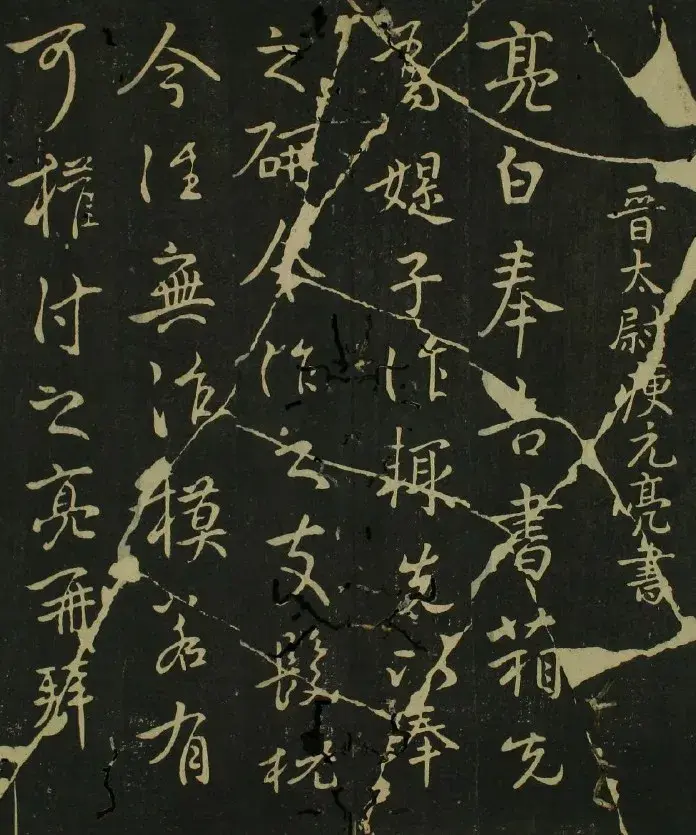
庾亮
Yu Liang (庾亮, 289 – February 18, 340), courtesy name Yuangui, was a native of Yanling County, Yingchuan Commandery (modern Yanling County, Henan Province). He was a preeminent statesman, imperial in-law, military commander, and Xuanxue philosopher during the early Eastern Jin Dynasty. The elder brother of Empress Mingmu (Yu Wenjun), he stood at the apex of the Eastern Jin aristocratic oligarchy during the golden age of…
Yu Liang (庾亮, 289 – February 18, 340), courtesy name Yuangui, was a native of Yanling County, Yingchuan Commandery (modern Yanling County, Henan Province). He was a preeminent statesman, imperial in-law, military commander, and Xuanxue philosopher during the early Eastern Jin Dynasty. The elder brother of Empress Mingmu (Yu Wenjun), he stood at the apex of the Eastern Jin aristocratic oligarchy during the golden age of aristocratic factional politics. Hailing from the prestigious Yingchuan Yu lineage, Yu Liang fled south following the collapse of Western Jin. Famed for his handsome countenance, refined demeanor, and mastery of Daoist philosophy, he earned the deep trust of Emperor Yuan (Sima Rui) and Emperor Ming (Sima Shao). On his deathbed, Emperor Ming appointed Yu Liang, alongside Chancellor Wang Dao, to act as co-regents for the five-year-old Emperor Cheng. Serving as Director of the Secretariat, Yu Liang exercised supreme central executive power, pursuing aggressive centralizing measures to rein in regional warlords. In 327, his forceful recall of warlord Su Jun provoked the cataclysmic Su Jun Rebellion, during which the capital Jiankang was sacked and ancestral shrines burned. Demonstrating resilience amid disaster, Yu Liang escaped to Xunyang, joined forces with Wen Qiao and Tao Kan to assemble a loyalist coalition, and eventually crushed the insurrection. Following the suppression of the rebellion, Yu Liang voluntarily relinquished central office and assumed command of the western marches, serving as Commander-in-Chief of Military Affairs for the six provinces of Jiang, Jing, Yu, Yi, Liang, and Yong, governing from Wuchang. There, he fortified strategic defenses, rehabilitated displaced refugees, and commanded the primary defensive forces along the middle reaches of the Yangtze. In 339, his planned northern expedition faltered when the advance outpost of Zhucheng fell to the Later Zhao armies under Shi Hu. Stricken with remorse, Yu Liang passed away in February 340 at age fifty-one, receiving posthumous honors as Grand Preceptor with the posthumous title Wenkang. Combining philosophical elegance with administrative rigor, Yu Liang left an indelible mark on the political and cultural history of the Six Dynasties.
Born into the elite Yingchuan Yu clan; displayed precocious intellect, strict adherence to propriety, and a fondness for Laozi and Zhuangzi.
Moved south to Kuaiji with his father; Sima Rui summoned him as Assistant in the Western Bureau and betrothed his daughter to Crown Prince Sima Shao.
Appointed Secretariat Drafter and Imperial Lecturer to Crown Prince Sima Shao; formed a close friendship with Wen Qiao and urged the prince to avoid harsh Legalist doctrines.
When warlord Wang Dun rebelled, Yu Liang served as Commander of the Palace Guard, defending the imperial residence and earning the title Marquis of Duting.
Following Emperor Ming's demise, Yu Liang was named co-regent alongside Wang Dao, serving as Director of the Secretariat and directing imperial policy.
Forcefully summoned regional warlord Su Jun to the capital; Su Jun and Zu Yue revolted, advancing on Jiankang under the pretext of purging Yu Liang.
After Jiankang fell, Yu Liang escaped by boat to join Wen Qiao in Xunyang, successfully persuading Tao Kan to assume leadership of the loyalist alliance.
Loyalist armies killed Su Jun and eliminated Zu Yue, restoring Emperor Cheng; Yu Liang declined central office and requested transfer to govern Jiangzhou.
Succeeded the late Tao Kan as Commander-in-Chief of Six Provinces and Governor of Jingzhou, garrisoning Wuchang and commanding the western military host.
Dispatched troops to garrison Zhucheng as a northern expedition base; Later Zhao forces under Shi Min and Kui An captured the fortress, causing heavy losses.
Stricken with deep regret over the Zhucheng defeat, passed away on New Year's Day at age fifty-one; posthumously honored as Grand Preceptor with the posthumous title Wenkang.
Yu Liang was born in 289 into the prominent Yingchuan Yu lineage in Yanling County, Henan. His father, Yu Chen, had served as Prefect of Kuaiji during the Western Jin. For generations, the Yu family had maintained scholarly traditions and held high ministerial offices. From youth, Yu Liang was celebrated for his striking countenance, aristocratic elegance, and self-disciplined demeanor. In domestic life, he upheld Confucian propriety without requiring parental admonition, prompting contemporaries to compare his personal bearing with Wei dynasty luminaries Xiahou Xuan and Chen Qun.
Beneath his adherence to Confucian decorum, Yu Liang cultivated a deep affinity for the philosophical texts of Laozi and Zhuangzi, demonstrating exceptional eloquence in philosophical debate. In 307, sixteen-year-old Yu Liang accompanied his father across the Yangtze River to escape northern turmoil, settling in Kuaiji (modern Shaoxing, Zhejiang). Sima Yue, the Prince of Donghai, offered him an appointment, but Yu Liang declined, choosing solitary study. Local gentry admired his moral austerity and approached him with circumspect reverence.
In the same year, Sima Rui, the Prince of Langye, established his headquarters in Jiankang as General Who Stabilizes the East. Learning of Yu Liang's reputation, Sima Rui appointed him Assistant in the Western Bureau. When they met, Sima Rui was captivated by Yu's eloquence and noble presence, immediately proposing that his daughter, Yu Wenjun, marry heir apparent Sima Shao. Although Yu Liang modestly declined, Sima Rui insisted on the match. Later, Yu served as Adjutant to the Chancellor and participated in the suppression of Hua Yi, earning the title Marquis of Duting.
Following the founding of the Eastern Jin Dynasty in 318, Yu Liang was appointed Secretariat Drafter, Director of the Editorial Bureau, and Lecturer in the Eastern Palace, instructing Crown Prince Sima Shao in classical texts. His accessible and penetrating exegesis won wide acclaim. Concurrently, he forged an enduring friendship with Crown Prince Companion Wen Qiao, forming an influential circle around the future monarch.
At that time, Emperor Yuan, seeking to curb disorder, presented the Legalist text Han Feizi to the crown prince. Yu Liang advised Sima Shao that the harsh doctrines of Shen Buhai and Han Fei damaged public virtue and should not guide an imperial ruler. Sima Shao accepted this counsel and prioritized Confucian statecraft. Yu Liang subsequently advanced through posts including Cavalier Attendant, Gentleman of the Yellow Gate, and Cavalier Attendant-in-Ordinary.
When powerful general Wang Dun garrisoned Wuhu and displayed overbearing ambitions, Emperor Yuan dispatched Yu Liang to confer with him. Wang Dun was initially dismissive, but during their discussion of statecraft, he was deeply impressed by Yu's intellect and moved his seat closer, remarking that Yu's wisdom surpassed that of Pei Wei. Wang Dun then recommended Yu Liang as Commander of the Palace Guard.
In 324, Wang Dun rebelled and advanced toward Jiankang. Emperor Ming appointed Yu Liang General of the Left Guard, tasking him alongside Wen Qiao with defending the capital and the palace quarter. Yu Liang personally donned armor to direct the garrison, maintaining security against internal conspiracies and repelling rebel detachments. Following the defeat of the rebellion, he was rewarded with the hereditary rank of Marquis of Duting.
In 325, twenty-seven-year-old Emperor Ming fell critically ill. He issued an edict commanding Yu Liang, Chancellor Wang Dao, General Bian Hu, and other dignitaries to act as joint regents for five-year-old Emperor Cheng. With Empress Dowager Yu Wenjun holding nominal regency, Yu Liang assumed the office of Director of the Secretariat, exercising central administrative power.
As imperial uncle and chief minister, Yu Liang sought to restore central imperial authority and eliminate the entrenched factional laissez-faire of the elite lineages. Regional commanders Su Jun in Liyang and Zu Yue in Shouchun commanded private armies composed of northern exiles, exhibiting defiance toward the central government. Convinced that armed frontier warlords represented an existential threat to the crown, Yu Liang resolved to disarm them.
In 327, despite vigorous objections from Wang Dao, Wen Qiao, and other senior ministers, Yu Liang issued an imperial decree summoning Su Jun to Jiankang as Minister of Agriculture to strip him of his command. Recognizing the summons as a trap, Su Jun forged an alliance with Zu Yue and launched an all-out insurrection under the banner of eliminating Yu Liang.
In February 328, Su Jun's veterans breached the defenses of the Yangtze, stormed the Xuanyang Gate of Jiankang, and burned imperial palaces and shrines. General Bian Hu fell in battle, and Emperor Cheng and Empress Dowager Yu were captured. Empress Dowager Yu died of grief and terror while in captivity. Yu Liang led surviving detachments in a failed stand at Mount Fuzhou before escaping across the Yangtze by boat. This disastrous miscalculation proved the most catastrophic crisis of his career.
Arriving in Xunyang, Yu Liang was welcomed by his close ally, Jiangzhou Governor Wen Qiao. Wen Qiao set aside recriminations, providing troops and logistical support to launch a counter-offensive. However, the most formidable military forces in the realm remained under Jingzhou Governor Tao Kan.
Tao Kan harbored grievances against Yu Liang, suspecting that Yu had excluded his name from the regency council. Setting aside personal pride, Yu Liang visited Tao Kan's headquarters with Wen Qiao, openly shouldering blame for the disaster and pleading for national preservation. Yu Liang urged Tao Kan to assume the role of supreme commander of the loyalist coalition, winning his complete commitment.
Tao Kan mobilized the veteran Jingzhou navy and marched down the Yangtze. In ferocious engagements at Baishi and Chapu, Yu Liang fought alongside the vanguard. In September 328, Su Jun was killed in battle at Baishi when he was struck by a spear and decapitated. By February 329, loyalist armies eliminated the remaining rebel detachments under Zu Yue and liberated Jiankang.
With the rebellion suppressed, court ministers urged Yu Liang to resume his regency in Jiankang. Deeply remorseful over the destruction of the capital, Yu Liang declined central office, submitted memorials taking full responsibility, and requested an assignment to the frontier. In recognition of his integrity, the court appointed him Commander-in-Chief of Military Affairs for Jiangzhou, Governor of Jiangzhou, and General Who Conquers the West, ennobling him as Duke of Yongchang County.
In 334, following the demise of Tao Kan, Emperor Cheng and Chancellor Wang Dao appointed Yu Liang to succeed him as Commander-in-Chief of Military Affairs for the six provinces of Jiang, Jing, Yu, Yi, Liang, and Yong, concurrently serving as Governor of Jingzhou and Jiangzhou, stationed at Wuchang.
Governing the middle reaches of the Yangtze, Yu Liang directed vast administrative domains and commanded a veteran force of over one hundred thousand soldiers. He rebuilt defensive fortifications at Wuchang, established agricultural colonies, remitted peasant taxes, and settled thousands of northern refugees who fled southward from the Later Zhao dynasty.
During his administration, Yu maintained military discipline while governing civilians with benevolence. Meanwhile, Wang Dao pursued lenient policies in Jiankang, leading to relaxed enforcement of laws among elite families. Frustrated by bureaucratic slackness, Yu Liang considered leading his armies downstream to purge corrupt ministers, corresponding secretly with Grand Commandant Chi Jian. Chi Jian refused, arguing that renewed civil conflict would destroy the dynasty, and Wang Dao handled the challenge with magnanimity, leading Yu Liang to abandon the maneuver. At the same time, Yu indulged his intellectual passions, gathering luminaries including Wang Xizhi and Yin Hao at the South Tower in Wuchang to debate Xuanxue philosophy, giving rise to the famous cultural phrase "South Tower Pure Discourse."
Throughout his tenure in Wuchang, Yu Liang harbored ambitions to recover northern China. In 339, observing political instability within the Later Zhao regime of Shi Hu, Yu Liang submitted a memorial proposing to advance his western armies to Xiangyang to initiate a northern campaign.
To establish an advance outpost, Yu Liang dispatched generals Mao Bao and Fan Jun with ten thousand troops to garrison Zhucheng (modern Huanggang, Hubei) north of the Yangtze. However, Zhucheng was isolated and logistically vulnerable. Senior ministers in Jiankang warned against overextending forces, but Yu Liang persisted.
Shi Hu responded by dispatching generals Shi Min and Kui An with fifty thousand cavalry to besiege Zhucheng. The fortress was encircled and relief forces dispatched from Wuchang were delayed. When Zhucheng fell, Mao Bao and thousands of soldiers drowned attempting to cross the Yangtze, resulting in total defeat.
The catastrophe shattered Yu Liang's northern ambitions and brought widespread criticism. He submitted memorials requesting self-demotion, which Emperor Cheng declined. Broken by grief, political frustration, and remorse, Yu Liang fell critically ill and passed away at his headquarters in Wuchang on New Year's Day, February 18, 340, at age fifty-one. Emperor Cheng suspended court and posthumously granted him the rank of Grand Preceptor with the posthumous title Wenkang.
Yu Liang's primary political objective was to correct the aristocratic dispersion of power summarized by the saying "the Wang and Sima clans share the empire," re-establishing central monarchical control. Following Emperor Ming's death, Yu Liang leveraged his authority as imperial regent to enforce legal codes and check aristocratic privilege.
As Director of the Secretariat, he audited household registers, discharged redundant officials, and revitalized central governance, seeking to counter the pervasive escapism of Jiangdong elites. Although his aggressive recall of Su Jun triggered catastrophe, his efforts to assert central authority over regional warlords profoundly shaped subsequent debates on dynastic stability.
During the Su Jun Rebellion, the most perilous domestic crisis of early Eastern Jin, Yu Liang demonstrated extraordinary political tenacity.
Escaping to Xunyang, he set aside old feuds with Tao Kan, forged an effective loyalist alliance, and ceded supreme military command to Tao Kan to ensure unity. In fierce field engagements, Yu Liang fought at the vanguard, ultimately crushing the insurrection, retaking Jiankang, and preserving the Eastern Jin state.
After the rebellion was suppressed, Yu Liang declined supreme central ministerial authority and requested assignment to the provincial frontiers, creating the institutional model of powerful aristocratic leaders governing the middle reaches of the Yangtze.
Stationed in Jingzhou and Jiangzhou with formidable military forces, his western command functioned as a strategic check on central chancellors in Jiankang (such as the Langye Wang clan). This dynamic balance between the upstream military commands and downstream civil administration persisted for over a century, providing structural resilience for Eastern Jin rule.
During his years governing Wuchang, Yu Liang achieved notable administrative and military successes. Directing military affairs across six provinces, he expanded fortifications, built riverine strongholds, and organized agricultural colonies to revive the regional economy.
He integrated northern refugees into military units and civil registers, building an effective army that deterred Later Zhao northern incursions and shielded the southern dynasty.
The relationship between Yu Liang in Wuchang and Chancellor Wang Dao in Jiankang formed the central axis of Eastern Jin politics in the 330s. While Wang Dao governed with leniency and consensus, Yu Liang advocated strict legal enforcement and disciplined administration.
When Yu Liang contemplated marching east to purge the court, Grand Commandant Chi Jian's refusal and Wang Dao's inclusive diplomacy preserved stability. This dynamic balance demonstrated Yu Liang's political conviction and cemented the upstream-downstream equilibrium that characterized Eastern Jin governance.
In Wei-Jin cultural history, Yu Liang was an intellectual luminary of Pure Discourse (Qingtan) and Xuanxue philosophy. Well-versed in the Laozi and Zhuangzi, he conversed with leading cultural figures including Wang Xizhi, Wen Qiao, and Yin Hao.
His nocturnal philosophical gatherings at the South Tower in Wuchang were celebrated in A New Account of the Tales of the World (Shishuo Xinyu), which records numerous anecdotes praising his refined bearing, magnanimity, and moral discipline as a quintessential representative of the Six Dynasties intellectual spirit.
FIGURES ASSOCIATED WITH THIS DYNASTY