PROFILE
Yu Jiaxi (余嘉锡, 1884–1955), courtesy name Jiyu (季豫) and literary name Yu'an (迂庵), was a native of Changde (常德), Hunan. He was a preeminent modern Chinese classical bibliographer, philologist, textual critic, and historian. In 1901 (the 27th year of the Guangxu era), he passed the provincial civil service examination as a juren graduate, and in the late Qing Dynasty, he served as Main Secretary in the Department of Civil Appointments of the Ministry of Personnel (Li Bu Wenxuan Si Zhushi).
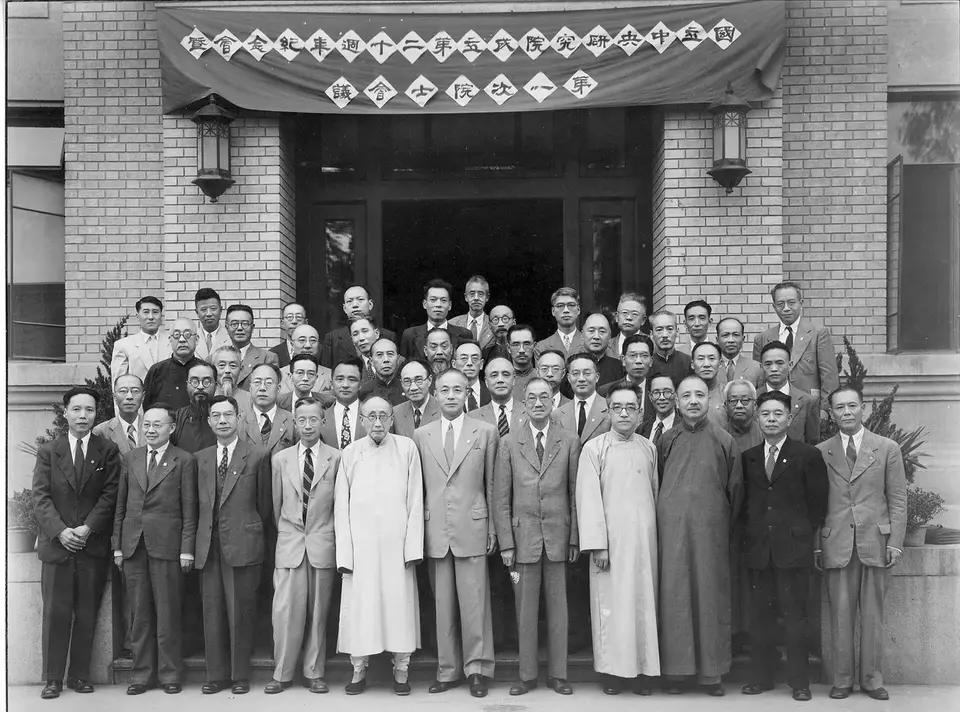
During the Republican era, Yu Jiaxi served as professor, chair of the Department of Chinese Language and Literature, and Dean of the College of Arts at Fu Jen Catholic University, while also lecturing at Peking University and Beijing Normal University. In 1948, he was elected as an Academician in the inaugural cohort of Academia Sinica, and in 1955, he was appointed to the Department of Philosophy and Social Sciences of the Chinese Academy of Sciences. Yu Jiaxi devoted his entire lifetime to classical bibliography, textual criticism, and the scholarly analysis of traditional historiography. His monumental works, including Critical Evidential Commentary on Siku Quanshu Zongmu Tiyao, Commentary on A New Account of the Tales of the World, Foundations of Classical Bibliography, and General Principles of Ancient Books, are celebrated as foundational classics of modern Chinese classical philology.
- Courtesy Name
- Jiyu (季豫)
- Literary Name
- Yu'an (迂庵)
- Ancestral Home
- Wuling County, Changde Prefecture, Hunan (湖南常德府武陵县, present-day Changde, Hunan)
- Birth Date
- February 9, 1884 (13th day of the 1st lunar month of the 10th year of the Guangxu era of the Qing Dynasty)
- Death Date
- December 23, 1955
- Age at Death
- 71
- Major Offices
- Main Secretary in the Department of Civil Appointments of the Qing Ministry of Personnel (Li Bu Wenxuan Si Zhushi, 吏部文选司主事), Dean of the College of Arts of Fu Jen Catholic University (Furen Daxue Wenxueyuan Yuanzhang, 辅仁大学文学院院长)
- Historical Identity
- Modern Chinese philologist, bibliographer, critical textual scholar, Academician of Academia Sinica (1948)
BIOGRAPHY
Chronology
- 1884 (Guangxu 10) | Birth in Changde | Born into an elite scholar-gentry official family in Changde, Hunan, receiving rigorous classical education under strict paternal tutelage.
- 1901 (Guangxu 27) | Provincial Graduate | Succeeded in the Hunan provincial civil service examinations, earning the juren degree at the young age of eighteen.
- 1908 (Guangxu 34) | Official in Ministry of Personnel | Selected through imperial metropolitan examinations and appointed as Main Secretary in the Ministry of Personnel.
- 1912 (Republic 1) | Return to Hunan | Following the 1911 Xinhai Revolution and abdication of the Qing Emperor, he returned to Changde to teach at the local middle school and provincial normal school.
- 1928 (Republic 17) | Academic Post in Peking | Accepted an invitation to lecture at Peking University, pioneering academic university curricula in classical bibliography.
- 1931 (Republic 20) | Professorship at Fu Jen | Joined Fu Jen Catholic University as full professor and Chair of the Chinese Department, directing linguistic and historical curricula.
- 1942 (Republic 31) | Dean of College of Arts | Elevated to Dean of the College of Arts at Fu Jen Catholic University, steadfastly maintaining Chinese cultural integrity under Japanese military occupation.
- 1948 (Republic 37) | Elected Academician | Elected as an Academician of Academia Sinica in recognition of his peerless philological and bibliographic scholarship.
- 1955 (Year 1955) | Death in Beijing | Appointed member of the Department of Philosophy and Social Sciences of the Chinese Academy of Sciences; passed away in Beijing in December at the age of seventy-one.
Biography
Family Pedigree and Early Examination Career
Yu Jiaxi was born into an illustrious scholar-gentry household in Changde, Hunan. His father, Yu Songqing, earned his metropolitan jinshi degree in 1876 (the 2nd year of the Guangxu era) and served as magistrate of Shangqiu, Henan, acquiring widespread renown for his profound mastery of classical literature and historiography. Under his father's direct daily tutelage, Yu Jiaxi mastered the Five Classics, the Songs of Chu, and the Selections of Refined Literature, subsequently perusing the Four Early Histories and Sima Guang's Comprehensive Mirror in Aid of Governance. Endowed with extraordinary diligence and intellectual curiosity, Yu Jiaxi devoured his family's vast private library, laying an unshakeable foundation in traditional evidential scholarship.
In 1901 (the 27th year of the Guangxu era), eighteen-year-old Yu Jiaxi passed the Hunan provincial examinations, earning the juren degree. In 1908 (the 34th year of the Guangxu era), he journeyed north to the imperial capital, passed ministerial civil selection, and received appointment as Main Secretary in the Department of Civil Appointments of the Ministry of Personnel. In Beijing, Yu utilized his spare time to systematically study private and public collections, focusing particularly on the Qing Dynasty imperial catalogue Siku Quanshu Zongmu Tiyao, where he detected numerous chronological discrepancies, erroneous attributions, and superficial judgments, prompting his lifelong ambition to rectify the imperial bibliography.
Dynastic Transition and Provincial Teaching
Following the outbreak of the Xinhai Revolution in 1911 and the establishment of the Republic of China, Yu Jiaxi resigned from administrative office and returned to his native Hunan. He dedicated the next sixteen years to secondary and higher education in western Hunan, teaching Chinese literature, classical philology, and Chinese history at Changde Prefectural Middle School and Hunan Provincial Second Normal School.
Living in seclusion away from the turmoil of regional warlord conflicts, Yu Jiaxi applied the rigorous evidential methodologies of the Qianlong-Jiaqing Han Learning school to classical bibliographical classification. He meticulously collated variant editions of A New Account of the Tales of the World and cross-examined hundreds of ancient philosophical texts, producing voluminous scholarly research notebooks that matured his critical methodology.
Teaching in Peking and Dean of Fu Jen
In 1928, Yu Jiaxi moved north to Peking upon receiving an appointment as lecturer in the College of Arts at Peking University, introducing rigorous courses in classical bibliography and textual collation to university undergraduates. In 1931, he accepted a permanent professorship at Fu Jen Catholic University, concurrently serving as Chair of the Department of Chinese Language and Literature.
During the Second Sino-Japanese War, after Peking fell under Japanese military occupation, Fu Jen Catholic University was able to maintain relative operational autonomy due to its Holy See affiliation. Yu Jiaxi adamantly refused all collaboration overtures from the puppet collaborationist regime, closing his doors to outside social activities and dedicating himself to unremitting scholarship. In 1942, he was promoted to Dean of the College of Arts at Fu Jen, safeguarding countless patriotic Chinese students and rare classical manuscripts throughout the occupation years.
In 1948, based on imperial-scale achievements in evidential philology, textual criticism, and historical bibliography, Yu Jiaxi was elected as an Academician of Academia Sinica. Following the establishment of the People's Republic of China, Fu Jen was incorporated into Beijing Normal University, where Yu continued his academic mentorship, while serving as senior advisor to the Institute of Linguistics of the Chinese Academy of Sciences. In 1955, he was elected to the Department of Philosophy and Social Sciences. He passed away peacefully in Beijing on December 23, 1955, at the age of seventy-one.
Major Achievements
Siku Tiyao Bianzheng: Monument of Critical Bibliography
Yu Jiaxi's magnum opus, representing several decades of relentless evidential collation, is the monumental four-volume Critical Evidential Commentary on Siku Quanshu Zongmu Tiyao, encompassing several million characters. While the Qing Qianlong imperial catalogue compiled under Ji Yun stood as a colossal synthesis of pre-modern Chinese bibliography, its rushed completion had introduced thousands of plagiarized passages, inaccurate biographical chronologies, corrupted book titles, and fabricated institutional facts.
Beginning in the late Qing Dynasty, Yu Jiaxi cross-examined over a thousand classical titles against all surviving dynastic histories, stone inscriptions, local gazetteers, and rare Song-Yuan imprints. Adhering strictly to the evidentiary maxim that "no assertion can be accepted without solid corroborating evidence," Yu corrected more than ten thousand specific factual errors in the Qing imperial catalogue. Siku Tiyao Bianzheng is unanimously revered by international Sinologists as the pinnacle of evidential bibliography in modern Chinese history.
Shishuo Xinyu Jianshu: Definitive Evidential Commentary
In medieval Chinese historiography and literature, Yu Jiaxi achieved another enduring milestone with his Commentary on A New Account of the Tales of the World. Although Liu Yiqing's fifth-century collection of Six Dynasties anecdotes had received detailed annotations from Liang Dynasty scholar Liu Xiaobiao, the extensive loss of medieval texts left subsequent generations baffled by intricate aristocratic genealogies, bureaucratic nuances, and factional struggles.
Building upon Liu Xiaobiao's annotations, Yu Jiaxi conducted comprehensive investigations across surviving dynastic histories, fragmentary Six Dynasties miscellanies, and excavated tomb epitaphs. He exhaustively documented the lineage, official appointments, and precise historical dates of every historical figure mentioned in the text, unraveling numerous thorny medieval historical controversies and establishing an indispensable foundation for the study of medieval Chinese aristocratic politics, Xuanxue philosophy, and Wei-Jin aesthetics.
Formulation of Modern Classical Bibliography
Through his foundational theoretical treatises, Foundations of Classical Bibliography and General Principles of Ancient Books, Yu Jiaxi elevated traditional Chinese bibliography from an empirical cataloguing craft into an exacting modern academic science. He reaffirmed the classical maxim that the true purpose of bibliography is to "delineate academic lineages and trace ideological sources".
By analyzing the dissemination and compilation mechanisms of pre-Qin, Han, and Tang writings, Yu systematically elucidated universal textual principles, including ancient practices regarding the absence of generic chapter titles, retrospective titular additions by later compilers, independent transmission of individual chapters, and cross-attribution among philosophical schools. His theoretical formulations transformed Chinese bibliographical study into a systematic, objective academic discipline.
Personal Relationships
- Father: Yu Songqing, jinshi graduate of 1876 and former magistrate of Shangqiu, who provided Yu Jiaxi with comprehensive classical training.
- Eldest Son: Yu Xun, celebrated historian and professor of history at Peking University specializing in Han and Tang dynastic history.
- Scholarly Contemporary: Chen Yinke, preeminent historian and Academician of Academia Sinica who deeply respected Yu's rigorous evidential scholarship.
- Scholarly Contemporary: Chen Yuan, eminent historian and President of Fu Jen Catholic University, Yu's lifelong university collaborator and intimate confidant.
- Distinguished Disciple: Zhou Zumo, prominent Chinese philologist, historical linguist, and Peking University professor who studied under Yu Jiaxi.
Historical Evaluation
- Chen Yinke, Preface to Commentary on A New Account of the Tales of the World: "Master Jiyu possesses an encyclopedic mastery of classical literature and unmatched acuity in evidential criticism. His commentary on Shishuo Xinyu is meticulous, exhaustive, and truly a peerless masterpiece."
- Chen Yuan, Preface to Siku Tiyao Bianzheng: "For decades, Master Jiyu immersed himself in the Siku catalogue, correcting falsehoods and illuminating obscure truths. His monumental contributions stand fully alongside those of Hui Dong, Dai Zhen, Duan Yucai, and Wang Niansun."
- Qi Gong, Remembrances of Master Yu Jiaxi: "Master Yu approached scholarship with unyielding rigor and austere simplicity. Every word was backed by indisputable textual evidence, opening boundless avenues for younger generations—truly a quintessential master of the era."
- Department of Philosophy and Social Sciences, Chinese Academy of Sciences: "Master Yu Jiaxi was a titan of modern Chinese classical bibliography and philology; his expansive scholarship has nourished generations of Chinese humanities researchers."
Related Entries
- Siku Tiyao Bianzheng
- Shishuo Xinyu Jianshu
- Muluxue Fawei
- Fu Jen Catholic University (Furen Daxue)
- Chen Yuan
FIGURES ASSOCIATED WITH THIS DYNASTY